Note: This website was automatically translated, so some terms or nuances may not be completely accurate.
 From MIT Media Lab! The Future of Humans and Technology [2/3]
The era of print, the era of broadcast, the era of the internet, and beyond.
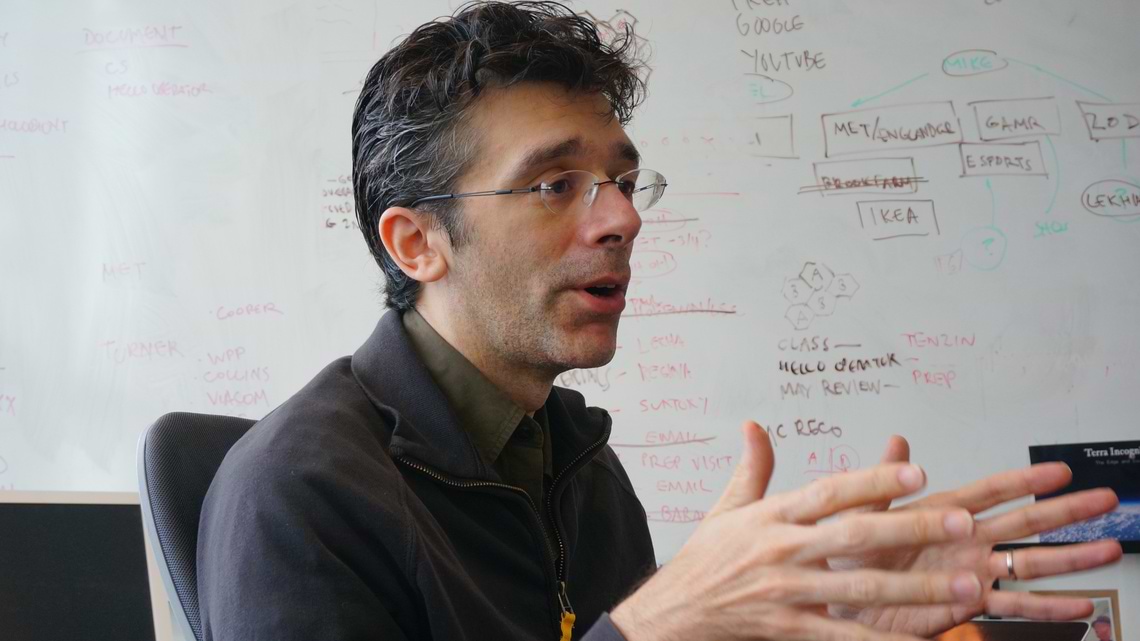
This is the second installment in a series themed around the MIT Media Lab. Associate Professor César Hidalgo, featured this time, advances various projects utilizing cutting-edge data analysis and devices unique to the Media Lab, while also engaging in philosophical reflections on questions like "What is information?" We asked him to discuss the challenges and possibilities of current digital technology as seen from his perspective, which spans the historical scale of humanity's transition from the age of print to the age of the internet.
*Christian Hara-Figueroa, a member of Hidalgo's research group, was also present during the interview.
[Project Introduction]
One of his projects, "Collective Memory," aims to analyze how events like the birth of printing, the Industrial Revolution, and the invention of the telephone and television transformed humanity's "collective memory." This is done by creating a database of materials related to many historical figures. The research group "Macro Connections," led by Mr. Harra-Figueroa, also works on projects like "Data USA," which provides users with interactive visualizations of public data covering the entire United States.
What is the new type of "celebrity" created by the internet?
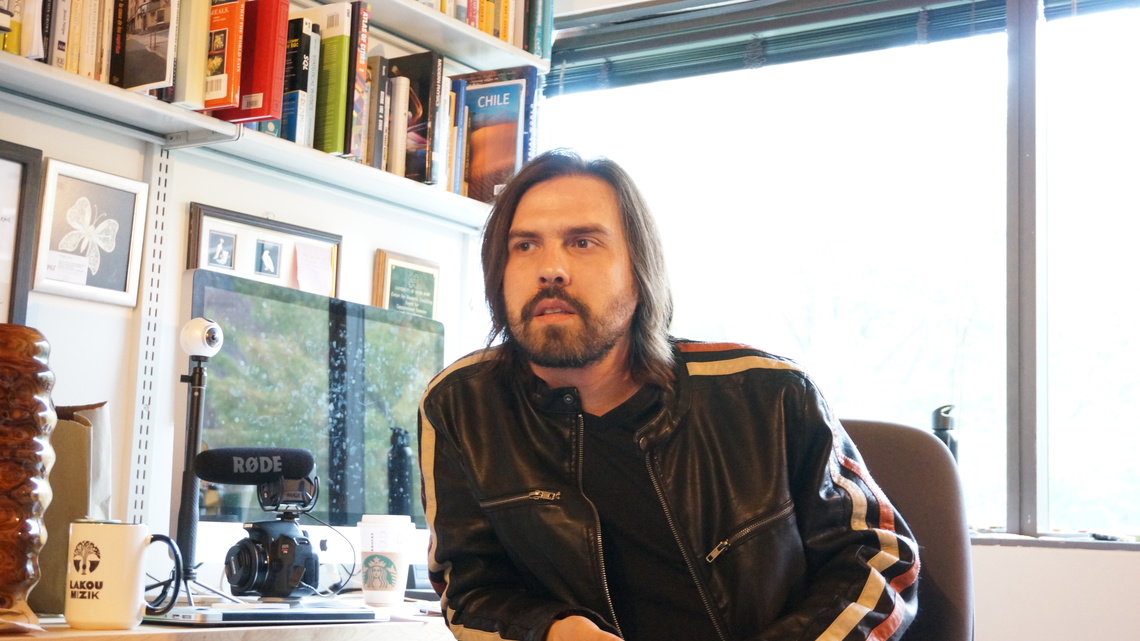
Ono: You focus on the grand perspective of technological transformation, like the shift from the age of print to the age of the internet.
Hidalgo: The underlying idea is that the technology shaping communication between people is the technology shaping society. When technology brings new forms of communication, whatever it may be, it reconnects us in new ways. The best way to understand human history is to divide it into periods based on the nature of communication. The idea of who is important in our society—that is, who we are—has always been changing.
Ono: You've pointed out that in the pre-print era, kings and nobles were the celebrities; with the advent of printing technology, scientists and artists became celebrities; and in the radio and television era, performers rose to fame. So, what kind of celebrities will emerge in the internet era?
Hidalgo: One type is entrepreneurs who became pioneers in uncharted territory, like the founders of social media, since the internet itself is a new medium. Another type is the rise of porn stars, driven by the expansion of personal media consumption. That's something my research team discovered in the data.
Figueroa: Furthermore, the data shows that last year, for the first time, YouTubers and video gamers joined the ranks of celebrities. In other words, people who can quickly spread messages online are becoming famous.
Hidalgo: Looking deeper, one change the internet has brought is that many more people are being recorded, and everyone can participate in actions that get recorded. As a result of many people engaging in creating paintings or music, and people's attention getting distributed, a large number of moderately famous people are produced. From now on, we probably won't see celebrities at the level of Van Gogh or The Beatles anymore.
Ono: Do you really think we won't see anyone as famous as the Beatles again?
Figueroa: Twenty years ago, before the internet was widespread, everyone watched the same TV programs at home. But now, people watch different things they want to see at home, right?
Hidalgo: Even so, people who become incredibly famous for a very short time will continue to appear. That's because the systems shaping our society are designed to generate fame. For example, in the U.S. presidential election, regardless of whether information is disseminated via radio, television, or social media, candidates attract the attention of many people.

The next stage of the internet, created by virtual reality experiences
Ono: Scientists and artists in the print era created content like science and art. Performers in the television era created content like films, programs, and records. What kind of content will YouTubers, video gamers, and bloggers in the internet era create?
Hidalgo: The internet overlaps significantly with traditional media. It still contains a lot of text and remains heavily print-oriented.
But at the same time, it's steadily advancing to the next stage. Things that are experienced, rather than just described in text, are emerging. Virtual Reality (VR) will become more widespread, and experiences and spaces will be shared by many people. And the people who can design those experiences will become famous.
Ono: What should we call these people who design such experiences?
Hidalgo: I'd like to call them "experience makers."
Figueroa: The internet is a unique medium. Print, radio, and television were all one-way forms of communication, but in the internet space, people can come together to create content. This is something truly new.
Ono: Does that mean the influence of social media like Facebook and YouTube will only grow stronger?
Hidalgo: The world is becoming increasingly globalized. Families are scattered across different countries, and interactions between people of different nationalities are expanding. Therefore, there is a strong need for networks that connect people across distances. I envision a future where my family, scattered across the globe, can spend Christmas together in a VR space.
Ono: Regarding VR, some people think it won't spread that widely. That is, they believe it's limited to entertainment like games.
Hidalgo: Current VR content often feels like being strapped into a wild roller coaster or helicopter ride, right? But it lacks the emotional depth that the technology itself could inherently provide. I believe VR is better suited for more human content like dramas or comedies. While this area remains largely unexplored, that's precisely what will drive VR's explosive growth as a medium.
Ono: There's also the prediction that VR will start being used for advertising.
Hidalgo: Predicting the future of a new medium is a bit tricky, but what advertising must do is create high-quality experiences consumers desire. With VR, you can test if this chair fits in your living room or try on a jacket from an online shop—things impossible with current media. This will spread alongside the VR trend.
AI-driven sudden changes can be traumatic, but we shouldn't treat them as exceptional
Ono: The mainstream trend in internet advertising has been improving accuracy through algorithms. Will VR and other technologies change that?
Hidalgo: The trend toward greater precision will continue as long as there are no factors to halt it. Historically, such targeting was difficult because the data didn't exist. But we now have more data on more people, enabling personalized advertising. We can advertise the exact clothing someone desires.
Ono: The evolution of AI is also driving this trend. In your talks, you've pointed out that we shouldn't use our current moral standards to judge AI.
Hidalgo: I firmly believe that. Human understanding is incredibly limited, and therefore our moral judgments inevitably reflect the times. For example, actions that are routine for us today might have been punished in the 15th century, perhaps even leading to burning at the stake like in witch trials. Similarly, I think we shouldn't judge actions concerning the future, like AI, based on our current morality, precisely because of our ignorance.
I see artificial intelligence as just one of many changes in history. Like the invention of language, fire, money, or community. Compared to these other changes that humanity has experienced—changes that greatly separated us from other species—I don't believe the change AI will bring is particularly large. However, because this change will occur over such a short period, there will likely be difficult phases that could cause trauma.
Ono: In your book, you mention the birth of your daughter and describe childbirth as akin to time travel. That is, a fetus existing in a very primitive state is suddenly transported into a world surrounded by incredible 21st-century technology. This suggests a vast gap between humans as biological beings and technology. How do you think this gap will evolve?
Hidalgo: We might feel like technology is overwhelming us and tearing the world apart. But I think everyone throughout history has felt the same way. Just like when printing emerged around 1450 and changed everything, everyone thought, "Damn it, how are we supposed to live now?"
Figueroa: In ancient Greece, when writing emerged as a technology, the philosopher Socrates was deeply concerned. He argued that writing couldn't capture the back-and-forth of conversation, making it one-sided and worthless. Surely, someone reading a book in ancient Greece must have seemed as strange as someone wearing goggles and immersed in a VR world today.
Will AI lead humanity to ruin, or to happiness?
Ono: Certainly, every era has had fears about new technology. But what makes artificial intelligence a bit different, I think, is the possibility that AI could run amok, beyond human control. What do you think?
Hidalgo: AI possesses autonomy, but there are two levels to this. The first is the autonomy specialized AI systems have over individual objects. Think self-driving cars, or AI controlling smartphones, refrigerators, and other household appliances. The second level, though a bit further in the future, involves AI that manages entire organizations. But the emergence of such AI completely replacing humans won't happen anytime soon. Rather, it will amplify human capabilities like communication, collaboration, and the ability to possess trustworthy information.
Ono: I think self-driving cars are a good example. Drawing a clear line between what humans and machines should do is quite difficult. Will we ever be able to draw that line?
Hidalgo: Regarding that issue, an article by Tim Harford recently published in The Guardian was quite insightful. It discussed an airplane accident where the pilot, having trusted AI autopilot for years, lacked the skills to handle a dangerous situation. This led to a minor mechanical issue escalating into a catastrophic crash. The point is, AI is often reliable. But a major problem with AI is that when it fails, it can make the situation more disastrous. Because AI has stripped humans of their ability to handle difficult situations.
Ono: If that's the case, can technology truly make humans happy?
Hidalgo: I don't fundamentally believe technology makes people happy. Only humans can make other humans happy; technology is merely a tool to assist in that.
Here's a good example. I filmed my 3-year-old daughter in VR and showed it to her 88-year-old grandfather. He was happy. But what made him happy? Was it the VR, or was it my daughter? The answer is obvious. So, if you think technology will make you happy, that's a major misunderstanding of what evolution is all about.
Was this article helpful?
Share this article


Newsletter registration is here
We select and publish important news every day
For inquiries about this article
Back Numbers
Author

MIT Media Lab
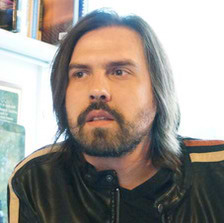
César A. Hidalgo
MIT Media Lab
Associate Professor
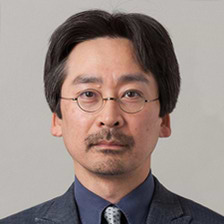
Yuzo Ono
Dentsu Inc.
Business Process Management Bureau