Note: This website was automatically translated, so some terms or nuances may not be completely accurate.
 Ventures create the future [3/4]
[The Essence of FinTech] Aiming for a Cashless World
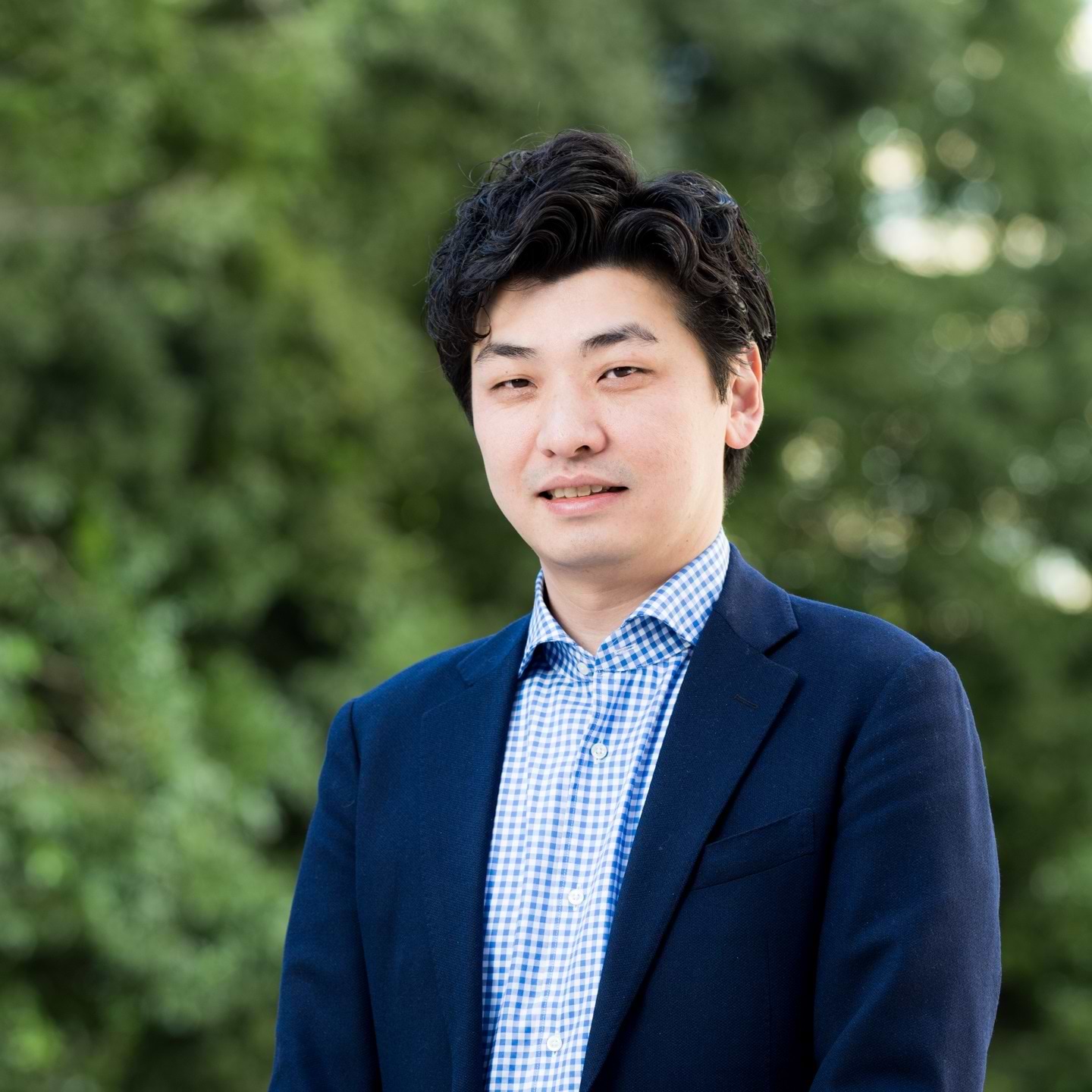
Maruyama Hiroki
Infcurion Group Co., Ltd.
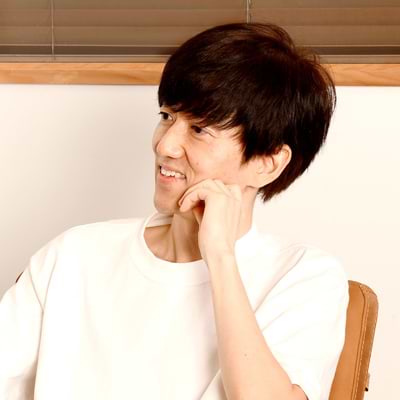
Tomoya Okuya
Dentsu Inc.
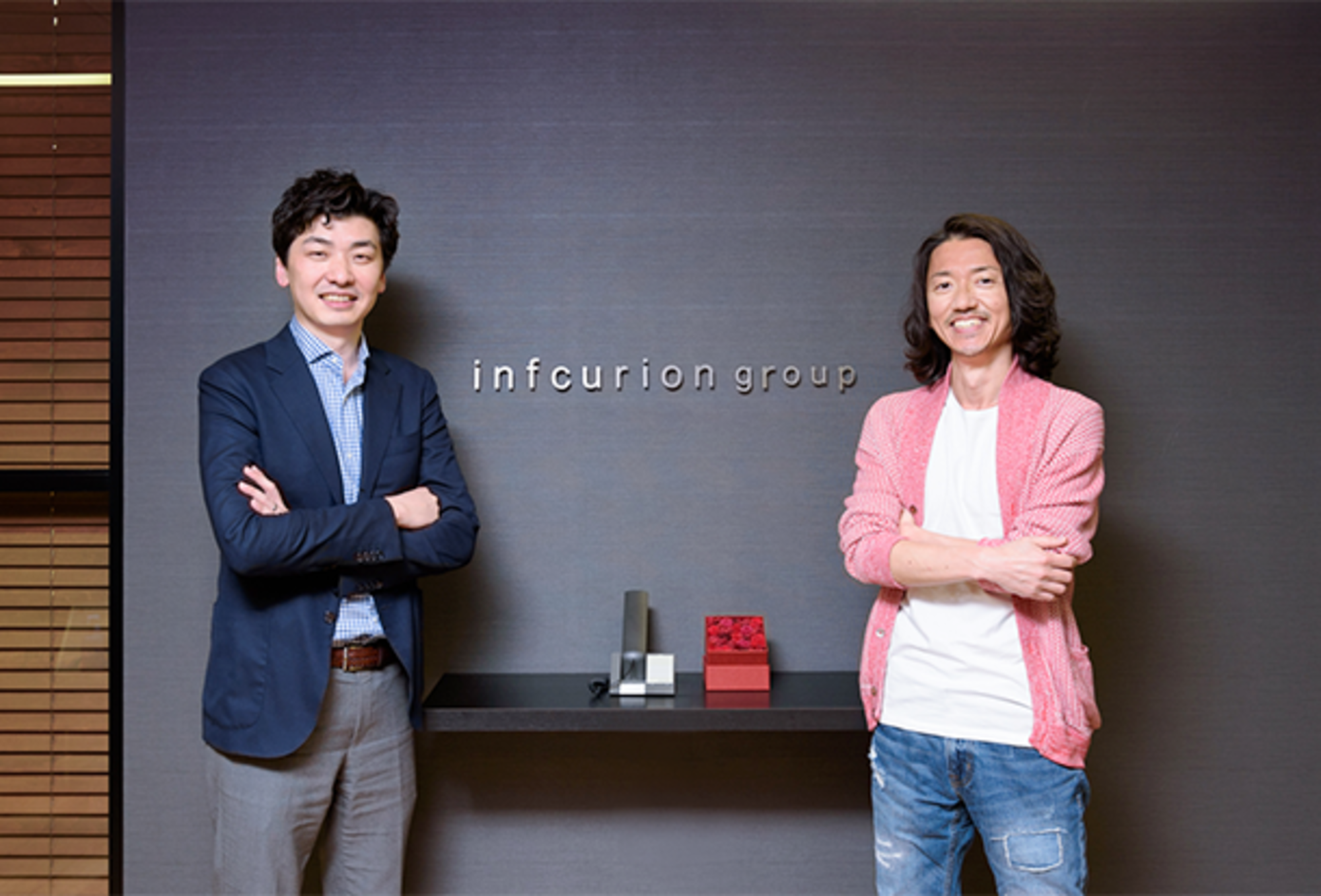
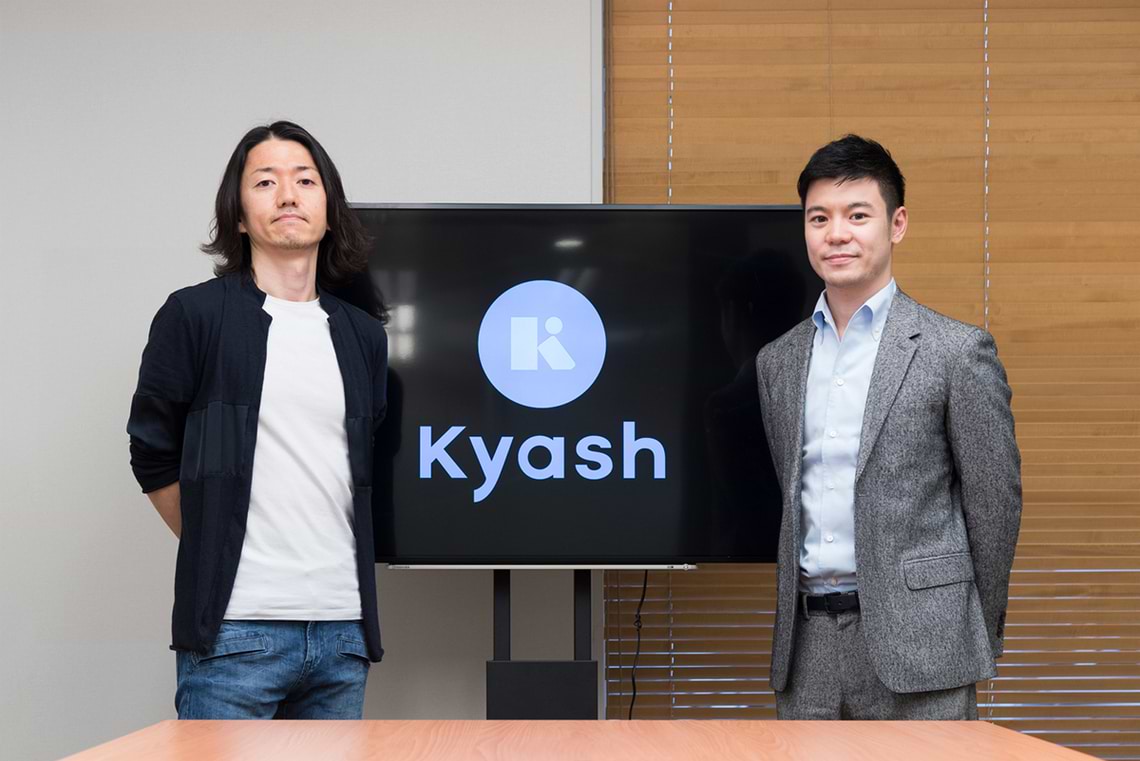
Infcurion Group operates across diverse fields, from payment and financial consulting to savings app development. Its representative, Hiroki Maruyama, who also serves as the representative director of the FinTech Association, states, "I want to eliminate cash from society. That would make people's lives happier." What is the true meaning behind this? Tomoya Okutani of Dentsu Inc. spoke with him.

Why "Cashless" Makes Life More Enjoyable
Okutani: Mr. Maruyama, you founded Infcurion in 2006 and now operate four group companies.
Maruyama: Yes. My main reason for starting the company was "to eliminate cash transactions." Cash is cumbersome, and I think it's a hassle for users. That's why I decided to aggressively pursue new ventures in the payment sector. Without setting rigid frameworks, we just focus on creating services. This background is also why we coined the company name "Infinity + Curiosity." It's a tongue-twister, though (laughs).
Okutani: "Eliminating cash" is an interesting concept.
Maruyama: Many people say, "Cash feels reassuring because you can touch it." But looking back, once you experience things like ETC on highways or IC cards for trains, no one wants to go back to the old ways. For payments and such, simpler and automated is definitely better. That's why we aim for a cashless society as our ultimate goal.
Okutani: So life will change as a result.
Maruyama: We should let technology handle the numbers part more and more, and just focus on the excitement and fun behind it. I truly believe that would make us happier.
Okutani: So that's your vision. By the way, when do you think a cashless world will become a reality?
Maruyama: China, for example, has seen a rapid increase in electronic payment rates, and in Sweden and Denmark, cashless banks are growing. Given that trend, it might happen sooner than you'd expect. By 2025, if not everything, the landscape should be significantly different.
Okutani: Once people overcome their initial fears and anxieties, it could happen all at once, right? Another question: if cash actually disappears, what kind of new businesses do you think will emerge?
Maruyama: It really comes down to how we use data. Without cash, we'll gather massive amounts of consumption data. While consumers worry about their data being collected, if we manage it properly and leverage it effectively, it will spawn new services one after another, which in turn will generate more data. Once this cycle is established, launching new services will accelerate, leading to a society even more vibrant with innovation.

A Business Model Born from the Immediate Aftermath of the Lehman Shock
Okutani: Could you please explain the businesses each group company operates, one by one?
Maruyama: First is Infcurion, which provides payment and financial consulting to corporations and supports new business launches.
We offer broad support to companies, extending beyond payment solutions to include planning and launching C2C marketplaces, and using sales data accumulated through electronic payments to propose procurement strategies. We also handle corporate lending, point exchange services, and cryptocurrency implementation.
Okutani: What types of companies do you consult with most often?
Maruyama: We do a lot of hands-on work with large corporations. While society often associates innovation and new products with startups, large corporations offer users greater peace of mind and can achieve faster scale.
Okutani: You're right. Leveraging a large corporation's assets allows for much faster scaling.
Maruyama: I started my business in 2006, but the Lehman Shock immediately wiped out all business ideas. That's when I decided, "Instead of going it alone, let's create new ventures together with large corporations." When aiming for the goal of "transforming society," it's not necessary to do everything ourselves. However, when we do get involved, we don't just stop at proposals; we operate with the conviction that "we will definitely turn it into a business." I believe this has become one of our defining characteristics and is what has earned us recognition.
Okutani: We also value not just consulting, but taking ideas all the way through to execution.
A "Strength" for Surviving in the Highly Competitive Payment Market
Maruyama: Since new ventures inherently carry risk, large corporations sometimes hesitate to commit. So we decided to build the service first. That's why we launched our second company, Link Processing, in 2010. We create the product and case studies upfront, then invite companies to join us later. Through this approach, we now have business partnerships with companies like NTT Docomo.
Okutani: For companies, new ventures carry high uncertainty, so having the product ready upfront is extremely clear and straightforward. What kind of business are you actually engaged in?
Maruyama: To expand electronic payment infrastructure, we provide various payment terminals and functionalities. This includes enabling credit card payments via smartphones and tablets, as well as offering integration with POS registers.
Okutani: Many players are entering the electronic payment space right now. What's your competitive edge?
Maruyama: The breadth of our terminal lineup and the variety of connection points we offer. Payment methods are constantly evolving, but not everyone uses the latest methods. There's credit card payment, QR code payment, and some people still prefer cash. The ideal for a store is to handle all of these with one affordable terminal. In this regard, I believe our diverse lineup is a strength.
Okutani: That's an excellent perspective—not just focusing on the cutting edge.
Maruyama: Another differentiator is our "Pay-easy" service, which enables account transfers from smartphones or other devices using cash cards. While credit card payments are widespread, account transfers often still involve filling out paper forms and stamping seals. Among companies offering payment services, very few support Pay-easy.
Why develop a "savings app" rather than a payment service?
Okutani: Within the group, there are two companies: Card Wave and Nest Egg.
Maruyama: Card Wave was acquired from another company in 2014. It conducts research and disseminates information to raise awareness about fintech and electronic payments. Nest Egg is a company focused on savings and frugality services. Last December, it released the automatic savings app "finbee."
Okutani: Could you tell us more specifically about the "finbee" service?
Maruyama: Sure. It's an app designed for saving. Users first set a savings goal and timeframe, like "Save ¥300,000 for a trip within three months." Its key feature is setting "saving rules" – defining when and how much to save. It creates unique automatic savings mechanisms, like "Save ¥1,000 if you walk over 10,000 steps today." The app links to bank accounts, depositing money into a dedicated savings account. It also includes features like "shared savings" for saving together with friends.
Okutani: Why did you focus on "savings" rather than payments?
Maruyama: Saving and payments aren't unrelated. The consumption process involves a key point: figuring out how to allocate money. So, we thought an app that automatically connects saving to purchasing would be interesting. By linking it to the final payment and analyzing the app data, we can understand in advance what actions people take throughout the consumption process.
Okutani: How do you envision utilizing the data collected through finbee?
Maruyama: One use is for our recommendation engine. For example, if someone has saved only 50% of the money needed for a trip with 80% of the time remaining until departure, what will they do? They might change their destination or extend the trip date. Understanding their behavioral data in this situation should enable a different kind of advertising model compared to traditional recommendations.
Okutani: Apps that establish causal relationships between psychology and behavior are fascinating.

Even if it's another company, I'll help if it's for the betterment of society
Okutani: Mr. Maruyama, while developing your own group's businesses, you've also dedicated significant effort to advancing the FinTech industry as a whole. Serving as the representative director of the FinTech Association is one example. What drives you to pour your energy into this?
Maruyama: Simply put, I want to see more interesting and good services emerge. Also, a world where more people take on challenges is exciting, right? Even if it's another company, I have no qualms about helping them if it's for the betterment of society.
Okutani: You're also passionate about open innovation, aren't you? Yet I feel Japan still faces many challenges in this area.
Maruyama: Open innovation isn't just about partnering with anyone externally. I believe it's about unique entities collaborating to spark unimaginable innovation. I'd be thrilled if more people understood it extends beyond single partnerships to encompass the broader API economy where diverse companies connect.
Okutani: It's crucial that it's truly innovation, not just an alliance. What efforts are you making toward that?
Maruyama: Take finbee, for example. It connects with banks, right? Using this, we could share traveler data with regional banks and local governments, potentially leading to revitalized regional economies. I explain these kinds of expansive use cases and possibilities. Initiatives like "FINOLAB Inc.," operated as a FinTech hub, are also fantastic.
Okutani: FINOLAB Inc. expanded and relocated this year, accelerating the creation of new financial services through corporate collaboration.
Going forward, it would be great if open innovation becomes even more active, led by the Infcurion Group and the FinTech Association, and including FINOLAB Inc., so that better services keep emerging.
Was this article helpful?
Share this article


Newsletter registration is here
We select and publish important news every day
For inquiries about this article
Back Numbers
Author
Maruyama Hiroki
Infcurion Group Co., Ltd.
President and CEO
Tomoya Okuya
Dentsu Inc.
Director of Integrated Marketing Production