Note: This website was automatically translated, so some terms or nuances may not be completely accurate.
 Thinking About the Future of Advertising Agencies at Stanford [1/5]
Why is "diversity" necessary for organizations?
Hello everyone, my name is Sohei Shinomiya from Dentsu Inc. Utilizing my company's overseas study program, I am currently studying at Stanford Graduate School of Business in California, USA, for one year starting at the end of June 2017. I hope to share some of the discoveries and insights gained from learning at the forefront of business administration, and to be of some use to you all, through a series of columns.
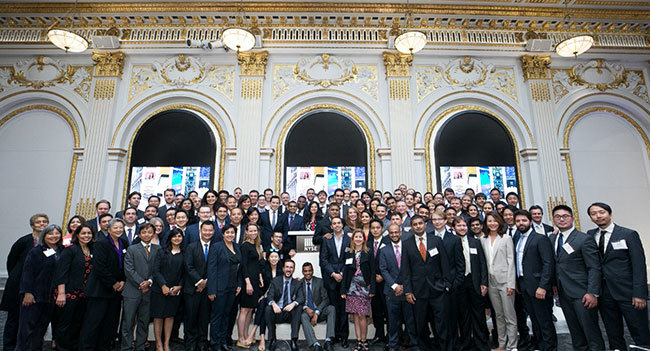
A business school gathering talent from 38 industries and 28 countries
Stanford, adjacent to Silicon Valley, is an institution that has produced many entrepreneurs, including Google's founders. Those who have visited may have sensed it: the campus is open and flexible to all ideas, opinions, and passions. The entire community brims with entrepreneurial spirit, bringing together people from around the world with vastly different cultural and professional backgrounds, achieving true diversity.
I belong to the Master of Science in Management for Experienced Leaders program, commonly known as MSx. This one-year Master of Business Administration degree targets mid-career professionals with an average of over 12 years of work experience and managerial roles. It brings together diverse talents: startup founders, executives from major corporations, civil servants, military personnel, doctors, architects, engineers, and more. Among my 104 classmates (about 20% female), representing 38 industries and 28 countries/regions, I am the only one from the advertising industry. There are only five Japanese students, including myself.
This is probably what a truly diverse organization looks like.
Different industries bring different knowledge and experience; different origins and cultures bring different ways of perceiving and communicating. Many differences combine to form one organization. But you might think that would just lead to chaos, right? That's not the case. Through learning with my classmates, I've come to realize that diversity brings tremendous energy to an organization.
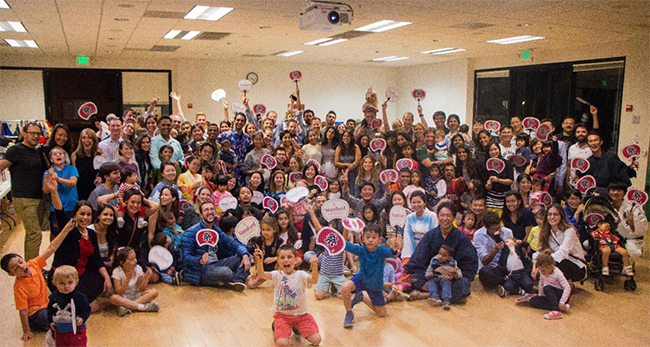
Why is it important to ensure diversity?
Many people now say that diversity is necessary for organizations. Just the other day in class, Eric Schmidt, former CEO of Google and former chairman of Alphabet, and Antonio Lucio, CMO of Hewlett Packard, emphasized the importance of diversity. However, I have rarely heard a clear explanation of why it is important.
When I asked Mr. Lucio, he prefaced his answer by saying that it wasn't based on research, but that "teams with high diversity in terms of gender, race, etc. generate a variety of perspectives and stimulate lively discussion," and that "we strongly urge not only our own company but also our advertising agency partners to ensure employee diversity." It's good that top executives are enthusiastic about this, but I got the impression that there is a lack of explanation about the benefits of diversity.
According to a McKinsey survey of 366 companies: "Organizations in the top 25% for racial diversity in leadership outperform the median of their industry peers by 35%." "Organizations in the top 25% for gender diversity in leadership outperform the median of their industry peers by 15%," and "Organizations in the bottom 25% for racial and gender diversity in leadership fail to reach the industry average performance level." This suggests diversity may function as a direct competitive advantage linked to performance.
Source: www.mckinsey.com/business-functions/organization/our-insights/why-diversity-matters
Furthermore, the LGBT Marketing Lab highlights the positive impacts of embracing diversity as follows (quoted from a 2014 Scientific American article, emphasis added):
Interacting with people different from ourselves makes us more creative, tolerant, and hardworking. Decades of research by scientists, psychologists, sociologists, economists, and demographers have proven that diverse groups (in terms of race, ethnicity, gender, sexual orientation, etc.) are more innovative than homogeneous ones. It is widely accepted that when tackling extraordinary and complex problems, groups with diverse expertise outperform homogeneous groups. Social diversity should be regarded as important as expertise. However, despite scientific proof that social diversity offers similar advantages, this is not widely recognized. This is not only because people from diverse backgrounds bring new information. Simply interacting with people from different groups cultivates perspectives that transcend conventional wisdom and trains us to overcome the difficulty of reaching consensus.
Source: http://lgbt-marketing.jp/2017/03/22/howdiversitymakeyousmart/
Two Benefits of Diversity Experienced at Stanford
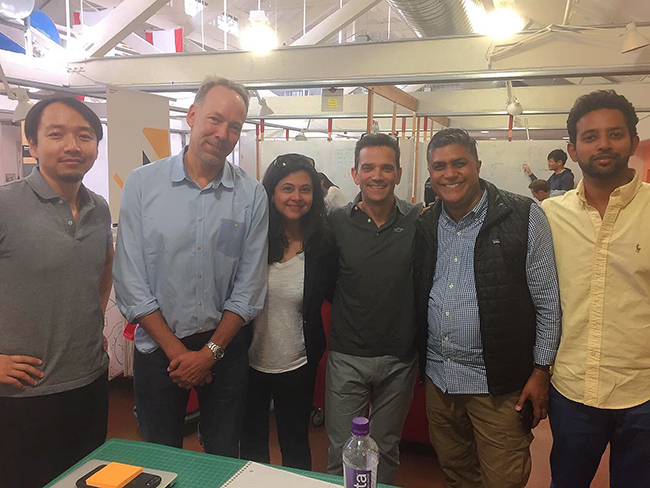
Through a specific project, I'll share what I personally experienced as a Japanese individual collaborating with my diverse Stanford classmates.
Our team consisted of an Indian-American male IT serial entrepreneur, a German-American male military officer, an Indian-American female consultant, an Indian-Singaporean male investment banker, and a Japanese male advertising executive (myself). Together, we tackled the challenge of innovation for the outdoor brand Patagonia, and I gained two key insights.
First, because each person's professional background was completely different, their skill sets and approaches to problems varied. This meant that even with difficult challenges like this one, where there was no single right answer, we often found a breakthrough from somewhere.
For instance, a classmate who was a serial IT entrepreneur led the discussion on applying open-source software development methodologies to spread Patagonia's environmentally conscious supply chain practices across the apparel industry. Meanwhile, another classmate, a former Air Force special forces member with little business experience, demonstrated strong leadership by accurately assessing the situation and setting clear deadlines: "We absolutely must do this by this date."
Even if we hit a wall, someone on the team could break the deadlock with ideas or actions others couldn't. I realized that projects rarely stagnated, and we could reach consistent outputs at a rapid pace.
The second realization was how little common ground existed due to our diverse professions, races, and cultural backgrounds. Consequently, everything essential for effective communication had to be explicitly stated. Frank opinions and feedback flowed freely without reservation, and this eventually became the norm.
For instance, it's commonplace for me to make a point only to have someone immediately counter with "I disagree with you" or to witness classmates having such direct exchanges. Gradually, hesitations like "I want to say this but can't" or "How will they react if I say this?" fade away. The result is clear communication with extremely high efficiency, and because people speak honestly, discussions naturally progress to the core issues. Furthermore, I feel that stating things clearly and decisively has the benefit of making one's resolve and stance obvious to those around them, making it easier to translate into actual action in various ways.
Diversity becomes the force that creates new things
When forming teams within a workplace, homogeneity tends to increase. For example, the most common attribute pattern in meetings at Dentsu Inc. is likely "advertising industry background × Japanese × male." This can lead to issues like: "being constrained by industry conventions, everyone gets stuck at the same point and can't move forward," or "because everyone's experience, skills, and perspectives are similar, it becomes difficult to find new breakthroughs." But what if we added people who switched careers from different industries, individuals from overseas, members of different generations, or others with distinct attributes? I believe the potential and value of that meeting would change significantly.
For certain challenges, a homogeneous team might function well. However, for problems with no clear-cut answers or those demanding entirely new ideas, I believe a diverse team is more likely to achieve results. Maintaining diversity within an organization may grant it the power to create new things and, ultimately, the ability to reflect on itself and drive change.
Next time, I'd like to touch on the rapidly changing "American media industry."
Was this article helpful?
Share this article


Newsletter registration is here
We select and publish important news every day
For inquiries about this article
Author

Sohei Yonomiya
Dentsu Inc.
Corporate Planning Division