
Note: This website was automatically translated, so some terms or nuances may not be completely accurate.
 Thinking About the Future of Advertising Agencies at Stanford [5/5]
Digital is the most wonderful thing that ever happened to advertising.
Hello, everyone.
Since this is the final session, I'd like to conclude by reflecting on "advertising" through what I've learned at Stanford.

Advertising is indispensable to the internet
How do people in Silicon Valley and at Stanford perceive advertising? Interacting with professionals in tech, media, and advertising, I feel their shared perspective is encapsulated in the above statement. "It's the real compensation for content and freemium services," "It's like the oxygen that keeps the web alive." People express it in various ways. In fact, the majority of revenue for two of the world's leading companies, Google and Facebook, comes from advertising. Not just these two, but internet companies worldwide benefit from advertising income.
When you think about it, advertising is truly a business with immense influence. The challenge of "how to evolve the advertising monetization system?" holds significant value, and the world awaits the emergence of new mechanisms. Isn't it the mission of advertising companies to research these evolutionary possibilities and continue experimenting?
Digital has provided the ultimate catalyst for advertising's evolution
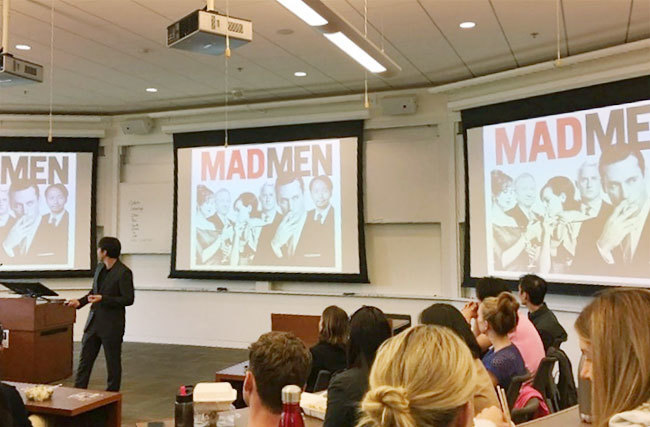
Stanford University offers a course titled "Advertising and Monetization." A guest speaker for this course was John Durham. Durham has been active in the American advertising industry, worked at Carat Group within Dentsu Aegis Network, and now operates his own company in San Francisco, providing communication consulting for top management, including CEOs and CMOs. Particularly memorable were the words from this veteran, who thrived during the heyday of the four major media and knows the industry inside out:
"I believe digital is the most wonderful thing that has happened to advertising. Thanks to digital, we can finally understand each individual consumer, deliver customized information, and measure its effectiveness. This is the ideal environment for leveraging the creativity our industry has cultivated, and nothing could be more gratifying."
Beyond the advertiser lies each individual consumer. Considering that delighting consumers is the advertiser's business purpose, the future of advertising—communication that brings people happiness—emerges from digitalization.
And the ability to measure effectiveness means that even if there are failures, we can learn from them and improve. As we've seen in previous columns, the cycle of challenge, failure, and learning is the path to innovation. Advertising has now acquired the tools to reach that innovation.
However, digital also brings negative aspects. Fraud, privacy breaches, and non-viewable ad placements are new problems we now face. "When trust is lost, the market shrinks." As economics teaches us, securing trust is essential for the further growth of this new digital market. Trust is synonymous with brand. Building it will become even more crucial.
The essence of good communication lies in understanding people
Recently, I spoke with Professor Suzy Fan, who comes from the advertising industry and now teaches marketing at Stanford. We discussed how "the essence of any business lies in understanding human desires. And isn't the value of an advertising agency precisely this deep insight into people, accompanied by empathy?"
This is also one of the key points for enhancing the replicability of successful businesses, as discussed in the third column on entrepreneurship. The globally acclaimed business idea generation method, Design Thinking, originating from Stanford, is taught to future entrepreneurs precisely because it centers on "deep insight into people, accompanied by empathy."
Business schools often use the terms "Quants & Poets" to broadly categorize students. The former represent quantitative, logical, science-based thinking; the latter, qualitative, intuitive, art-based thinking. This distinction carries a nuance similar to the divide between STEM and liberal arts fields. The management field is based on strategic thinking and ultimately must be expressed in numbers, so Quants tend to be valued. Indeed, looking at the backgrounds of business school students, those from finance and consulting make up a significant proportion. In contrast, those from marketing or advertising backgrounds are still a minority.
This trend is likely connected to the growing attention given to methodologies like design thinking within business schools, which are closer to the marketing domain. What we might take for granted within our industry can hold immense value when viewed from the outside. It's precisely in areas like startups, where marketing and advertising have traditionally been less familiar, that infinite growth opportunities may lie.
What Mature Entities Need to Change
Business schools heavily rely on case studies. A business case is, in essence, the life story of a company. Over this past year, I've witnessed the life stories of diverse companies. While each has its unique differences, there are also commonalities. Every company goes through "Birth = Startup," "Growth = Scale," "Maturity = Mature," and eventually ages.
Take Dentsu Inc., founded in 1901. 117 years ago, it was a Startup. It transformed its business model from telecommunications to advertising, took risks and challenged itself during the dawn of mass media, expanded domestically and internationally, and became what it is today.
It's natural for the entrepreneurship that creates new things to attract attention and be celebrated. But what happens to organizations that mature and grow large? Do the old soldiers simply depart, or can they reinvent themselves to enter a new cycle of growth?
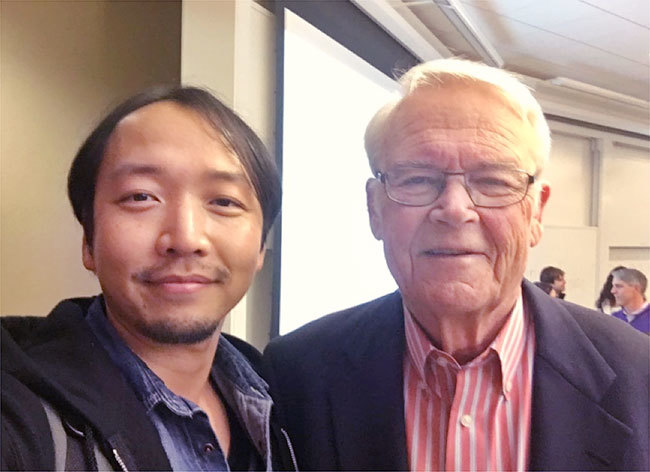
David Aaker, a leading authority on marketing and branding with close ties to Dentsu Inc. His daughter, Professor Jennifer Aaker, teaches marketing at Stanford Business School. One of her innovative initiatives in marketing and management is the popular lecture "Rethinking Purpose," which challenges individuals and organizations to reexamine their purpose for working. Appearing as a guest speaker in the lecture, David Aaker emphasized the importance of organizations confronting themselves and re-examining their purpose: "What matters most to me?"
"Why do I work? People who are clear about this are strong. And organizations with a purpose that employees can truly resonate with are strong. Organizations must grasp their purpose at a higher level—as added value to society—and make it something employees can connect with. They must align all activities consistently toward achieving that purpose. And they must communicate the way such an organization lives out its purpose as a unique story to its employees and society."
Reevaluating what we previously considered our purpose. Creating a new purpose if necessary. This is essential for an organization to transform. However, to achieve this, sincere communication with customers, consumers, employees, investors, and all involved parties is indispensable. People engaging deeply with each other on an equal footing, at the level of "how we live." I strongly felt that this fundamental attitude is essential for organizational innovation.
Was this article helpful?
Share this article


Newsletter registration is here
We select and publish important news every day
For inquiries about this article
Back Numbers


Author

Sohei Yonomiya
Dentsu Inc.
Corporate Planning Division
