Note: This website was automatically translated, so some terms or nuances may not be completely accurate.
 Thinking About the Future of Advertising Agencies at Stanford [3/5]
The concept of "encouraging failure" to spark innovation
Hello, everyone. Our theme today is "Innovation." Innovation is a management challenge every company and organization aspires to achieve. Looking back a bit, companies like Apple, Google, Facebook, and Amazon succeeded in innovation and made their names known worldwide. More recently, companies like Uber, Airbnb, and Netflix have done the same.
The drivers of this type of radical innovation—creating entirely new value never seen before—are not large corporations overflowing with capital, talent, and networks. Instead, they are primarily startups born from nothing, symbolized by the home garage. Stanford University, where I am currently studying business, and Silicon Valley are precisely the epicenter that continues to produce these startups (while incremental innovation, the type of improvement built upon existing products common in large corporations, is called incremental innovation).
Why does Silicon Valley produce so many startups? What is the necessary soil, the secret to innovation success? I report on what I learned and realized through entrepreneurship courses and programs at Stanford Business School.
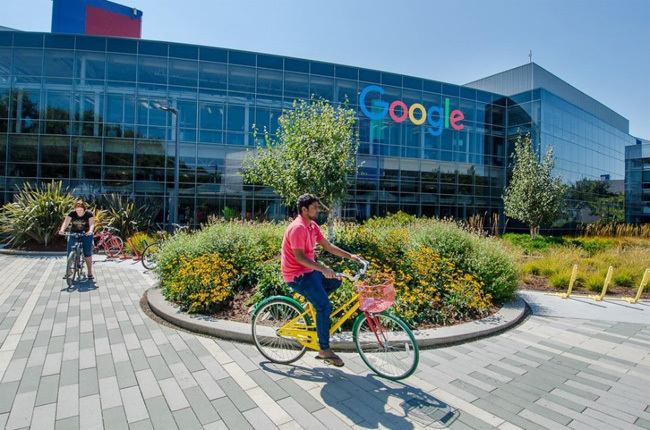
The probability of success increases with repeated attempts at entrepreneurship
Here, you realize that innovation happens because it's meant to happen. For innovation to occur, certain conditions must be met. These include talented, ambitious young entrepreneurs; mentors, including professors, who guide and support them; diverse investors—especially venture capitalists—willing to bet on these entrepreneurs; engineers and programmers who bring products to life; and partner companies and customer companies that support startup ventures. Only when these people and organizations come together can a startup truly flourish. Silicon Valley is the epicenter of innovation precisely because it possesses the complete ecosystem of elements necessary to create and nurture startups.
Furthermore, it is difficult for a company to achieve innovation alone; collaboration and cooperation with various players within the ecosystem are essential.
At Stanford Graduate School of Business, considered the core of the Silicon Valley ecosystem, methodologies for creating startups are researched, and education continues to produce entrepreneurs. For example, in the course I'm taking, "Entrepreneurship: Formation of New Ventures," we learn about the decisions entrepreneurs face using real business case studies. These include: what qualities are required of an entrepreneur; how to generate business ideas; how to select co-founders and founding team members; when and how to raise capital; what points investors focus on; how to scale an organization; and how to approach an exit.
The entrepreneurs featured in the cases themselves come to class to share their real-life experiences: what they were thinking, the decisions they made, and the outcomes. Just recently, a senior who founded a used car sales brokerage service shared his own failure story. He started the business because customer tests during the idea generation phase were positive. However, his customer sample was heavily skewed toward Stanford students. When it came time to scale, he encountered unforeseen operational and cost issues, forcing him to pivot the idea itself later on.
Learning from the experiences of past entrepreneurs, building networks with them, and seeking their mentorship or support are commonplace within Silicon Valley's ecosystem. Students who took classes years ago graduate, become entrepreneurs themselves, and then return as instructors to teach current students. This cycle repeats itself.
Data presented in the course suggests that the probability of success tends to increase with the number of attempts at entrepreneurship. While innovations with the impact of Google are admittedly rare, I feel this is not by chance. Rather, it is an inevitable outcome born from the vast number of challenges and failures within the ecosystem, and the learning that comes from those failures.
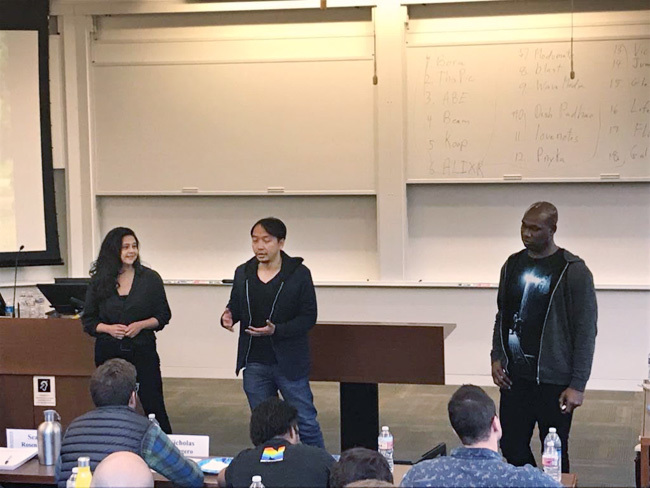
The "magic words" that drive young people to innovation

Creating something entirely new carries the risk of failure. It's often said that 90% of startups fail. Data introduced in class indicates that even among startups that successfully secure Series A funding—the first round of venture capital investment—60 to 70% ultimately fail to generate sufficient returns for investors and collapse due to funding shortages.
Yet, thanks to the ecosystem described above, young entrepreneurs from Stanford continue to emerge relentlessly. Why can they overcome this fear and take action, even knowing statistically it's a highly unfavorable challenge?
A strong desire for success is undoubtedly a factor. Success brings immense wealth and fame. But that's not the whole story.
There are cultural elements, repeated like a mantra during one's time at Stanford, that seem essential for fostering innovation. These are "Fail First" and "Mission-Driven." I feel this mindset holds a magic that propels us toward risky challenges.
First, "Fail First" literally means "fail early." It's not just "don't fear failure," nor even "accept failure." It's an encouragement to fail. In Japan, failure is generally seen as something to avoid, right? But in Silicon Valley, failure resulting from taking risks is viewed as a good thing. Why? Because failure is a treasure trove of learning. "Fail First" is the mindset of fearlessly challenging yourself until you fail, knowing that learning from that failure brings you closer to the next success. Silicon Valley also has a strong feedback culture, where "negative feedback is a treasure" is often said. Everyone actively seeks others' opinions on their performance or actions, asking, "How was my performance? Please give me your feedback." Just like learning from failure, people learn and grow from critical opinions too.
Imagine your boss at work saying, "Keep challenging yourself to fail quickly!" instead of "Don't you dare fail." Doesn't that make you think, "Maybe I should try, even if it means overcoming my fear..."?
The second point, "mission-driven," literally means "driven by a mission—a social purpose." Silicon Valley entrepreneurs possess a sense of mission to solve major societal problems and create a better world. When conceptualizing startup ideas, emphasizing being "mission-driven" fosters empathy among employees and collaborators, including yourself, and generates strong motivation: "Let's succeed for this great mission!"
For example, world-renowned innovation companies have missions like these:
Google: Organize the world’s information and make it universally accessible and useful.
Tesla: Accelerate the world’s transition to sustainable energy.
Facebook: Bring the world closer together.
*Quotes sourced from respective company websites.
Notice how all of them target the "World"? Does that sound overly ambitious? Not at all—they're completely serious. They set incredibly grand dreams and lofty ideals. The CEOs chant them daily, plaster them on office walls, embed them in proposal templates, discuss them constantly with colleagues, and truly believe in them. This "mission-driven" approach generates a positive energy that seems to propel innovation within these companies.
Take Dentsu Inc., for example. They state their mission as: "Using the power of creativity-driven communication, we confront all societal challenges to create a richer, happier world." To achieve this mission, they break free from existing methods, test entirely new approaches and ideas, and embrace a "fail fast" mentality to challenge themselves continuously. Doesn't it make you feel like anything is possible, and get you excited...?
Next time, I'd like to touch on the innovation efforts seen at Google and other large corporations that refuse to rest on their laurels and strive to generate further innovation.
Was this article helpful?
Share this article


Newsletter registration is here
We select and publish important news every day
For inquiries about this article
Back Numbers


Author

Sohei Yonomiya
Dentsu Inc.
Corporate Planning Division