Note: This website was automatically translated, so some terms or nuances may not be completely accurate.
 Thinking About the Future of Advertising Agencies at Stanford [4/5]
Learning from Global Companies: "Key Success Factors for Innovation"
Hello everyone. Last time, I introduced Silicon Valley's ecosystem and its "culture that encourages failure," which supports innovation in startups. This time, I'll share examples of innovation within large corporations that I learned firsthand through the renowned Stanford Business School course "Strategic Management of Technology and Innovation," taught by Professor Robert Burgelman, a leading authority on business strategy.
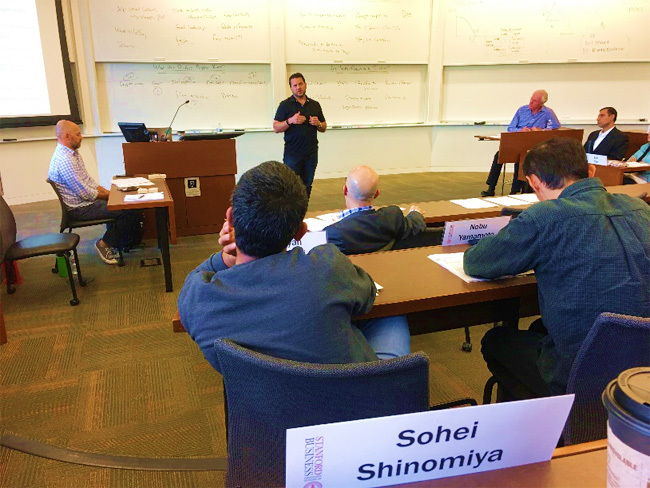
Case Study 1: The Challenges of X (formerly X), Alphabet's Innovation Workshop
Among the many case studies, the most memorable was that of X (pronounced "ex"), a unique organization operating as an innovation workshop under Alphabet, Google's holding company. Alphabet is a giant corporation boasting a market capitalization over three times larger than Japan's largest company, Toyota Motor Corporation (approximately ¥25 trillion), standing at $752 billion (approximately ¥83 trillion) as of May 9, 2018. X plays a key role in supporting this growth.
Launched under the strong backing of Google co-founder Larry Page, X's mission is to create seeds for innovative new businesses, known as "moonshots" (*). For example, the autonomous driving field was deeply cultivated by X before being spun off into the business company Waymo.
Moon shot... Over 50 years ago, U.S. President John F. Kennedy inspired the world's dreams with these words: 'Our nation will commit itself to achieving the goal, before this decade is out, of landing a man on the moon and returning him safely to Earth.'" Thus, the term "moonshot" (referring to the moon rocket launch) came to signify "a difficult or enormously costly endeavor that, if achieved, promises significant impact."
Source: Excerpt from Diamond Harvard Business Review "Moonshot: Innovative Goals Backward-Calculated from the Future"
Three key factors for X's success are "organizational independence," "speed-focused processes," and "a culture that encourages failure."
Needless to say, large corporations survive because of profits from existing businesses. Shaking this foundation is the most avoidable scenario, requiring constant focus to maintain competitiveness. However, management must simultaneously consider creating new business value—that is, innovation. The tricky part about innovation efforts is that they don't necessarily generate immediate profits. Given the various costs involved, including personnel expenses, employees focused on existing businesses might feel compelled to ask, "Who do you think is putting food on the table?" This friction is one reason why the organization driving innovation requires independence.
To fulfill the mission of generating innovation, it is essential to create an environment that maintains a suitable distance from the surrounding organization, enables startup-like rapid decision-making, and fosters a Silicon Valley-style organizational culture. X was originally established as a sort of R&D division within Google. However, with the creation of the holding company Alphabet, it separated from Google and became a completely independent company. Reporting directly to Alphabet CEO Larry Page, it gained the freedom to pursue challenges without hesitation or concern for other business units.
Furthermore, speed is paramount in X's innovation process. Promising ideas are given a budget of several hundred thousand yen and a few weeks' leeway to immediately create prototypes and test feasibility. This speed is likely due to having engineers and programmers in-house; they don't spend half a year or a year building prototypes. Most ideas are eliminated during this initial testing phase. Those that pass are given further budget and time to develop into full projects. While it reportedly goes through four steps before final commercialization, the most distinctive feature is undoubtedly the speed: as mentioned earlier, "securing funding early in the idea stage to rapidly build and test prototypes."
Furthermore, deeply rooted in X's culture is the "Fail First" principle, which I introduced last time. This speed-focused process truly embodies that philosophy. X places immense value on "encouraging failure." When an idea is rejected, the team involved is applauded by managers and colleagues for "failing fast!" and, remarkably, even receives a bonus. It makes you think, "Do they really go that far?" But this system stems from a firm belief that "encouraging failure (and learning from it) is essential to continuously creating new things."
In this independent environment, they rapidly cycle through challenge, failure, and learning. From many failures, a handful of successes emerge. X is one mechanism Google/Alphabet employs to ensure they don't rest on past laurels, but instead continue generating radical innovation (more groundbreaking innovations that lack continuity with existing technologies) well into the future.

Case 2: Axel Springer's Regenerative Innovation as a Traditional German Media Group
Another case I'd like to introduce is that of Axel Springer, a German media group founded in 1946. It monopolized major newspapers within Germany, expanded its influence abroad, and became a powerful media entity known throughout Europe. However, the media it owned centered on print newspapers and magazines. Consequently, starting in the late 1990s, the spread of the internet and the digitization of content placed it in a difficult business situation.
Yet, under the strong leadership of Matthias Döpfner, who became CEO at the unusually young age of 39 in 2002, the company successfully adapted to digitalization and globalization. It continues to pursue further growth today. This represents a successful innovation case study for a traditional, large corporation with a 70-year history. It is a valuable example, studied as a case study even at Stanford Business School.
The company's innovation falls under what is termed incremental innovation (building upon and improving existing offerings), as opposed to the radical innovation mentioned earlier. In advancing the digital transformation of its media business, it fundamentally reexamined its corporate mission and undertook efforts to rebuild its strategy, organization, and culture. This serves as a reference case for large corporations, such as Dentsu Inc., where existing businesses hold significant presence.
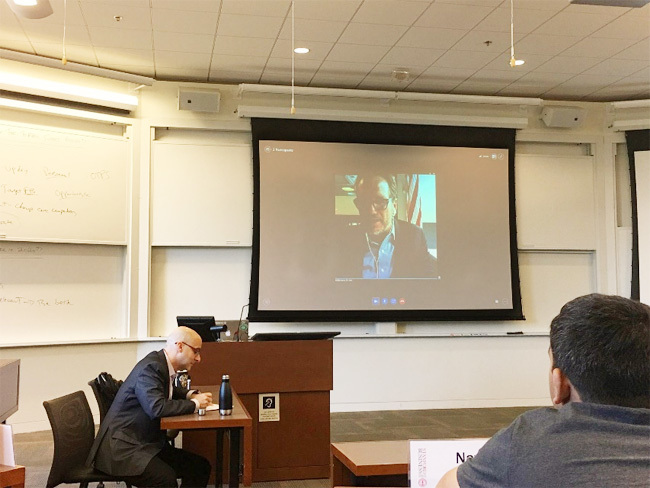
The most significant factor in the company's innovation success was confronting the fundamental question of its raison d'être: "Who are we? Why are we essential to society?" This led to a redefinition of its corporate mission. The company clarified its core purpose: "Our true calling is journalism."
Building on this, the company shifted its focus from its traditional competitive advantage—its media "network"—to defining content itself as the "capability to strengthen." It concentrated on enhancing content quality, redefined its relationship with technology platforms like Facebook, and tackled the challenge of how to monetize content.
Furthermore, it is promoting various "learning mechanisms through external engagement rather than self-reliance," such as creating a Visiting Fellow Program that sends employees to Silicon Valley to learn directly from startups.
Re-examine our raison d'être and core capabilities. Then, reach outward without retreating into our own shell. Axel Springer continues to evolve into an innovative company by learning daily through close external partnerships.
In the fifth and next installment, I'd like to summarize my learnings from Stanford while also reflecting on advertising.
Was this article helpful?
Share this article


Newsletter registration is here
We select and publish important news every day
For inquiries about this article
Back Numbers


Author

Sohei Yonomiya
Dentsu Inc.
Corporate Planning Division