Note: This website was automatically translated, so some terms or nuances may not be completely accurate.
 【Continued】Local Gurgle [157/208]
Is it not enough to just generate "profits"?

A friend from Akita gave me some "Chorogi." I knew it was a "lucky food" often included in New Year's osechi dishes, but I'd always avoided it, finding its appearance somewhat eerie and unsure if it was artificial or natural.
But when I finally tried it, it was crunchy and refreshing. Perfect as a little palate cleanser. I learned it's a tuber-like "corm" that grows on a plant in the mint family, commonly cultivated in the Tohoku region. You really shouldn't judge things without trying them.
Speaking of auspicious things, my junior from both my student club and company days, Mr. Takanori Yano ( see Article #55 ), is leaving Dentsu Inc. to pursue entrepreneurship in Vietnam. He'll be focusing on his specialty, the e-commerce field.
It's a bit sad, but his bright new start is cause for celebration. So, we gathered old members for a farewell party. As expected, the guest of honor was the center of attention for only the first five minutes. After that, the conversation blossomed into all sorts of random topics.
A friend who recently started a financial venture before Yano spoke up first.
"A company is a group formed to make profits, right? So, even though we're working hard to generate solid profits, it's always the staff who graduated from 'good universities' who start nagging, 'What's this company's vision?' or 'What kind of justice are we fighting for with this business?' If you want to do good in the world, wouldn't it be far more efficient to make money first and then donate it to social contribution activities?"
Honestly, this raises the question: "Do companies even need a vision?"
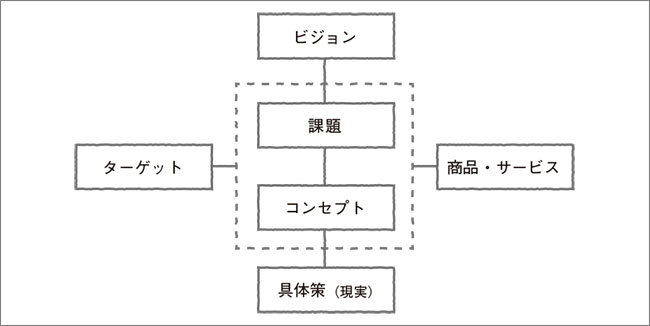
Frankly, I completely understand why a newly founded company's management is consumed by the pursuit of sustainable profits. There's likely no room for "fundamental values and purpose beyond mere money-making." Even so, a vision remains indispensable for two reasons.
First, for the relationship between customers and the company. If you want to carve out a unique position in the market (to avoid fierce price competition), you must become an entity that provides unique value. Vision is the most fundamental driving force behind creating that.
The second is for the relationship with staff. Creating unique value requires intense motivation from members, but "mere profit-making" is insufficient as motivation. If other companies offer higher salaries, talent will likely leave.
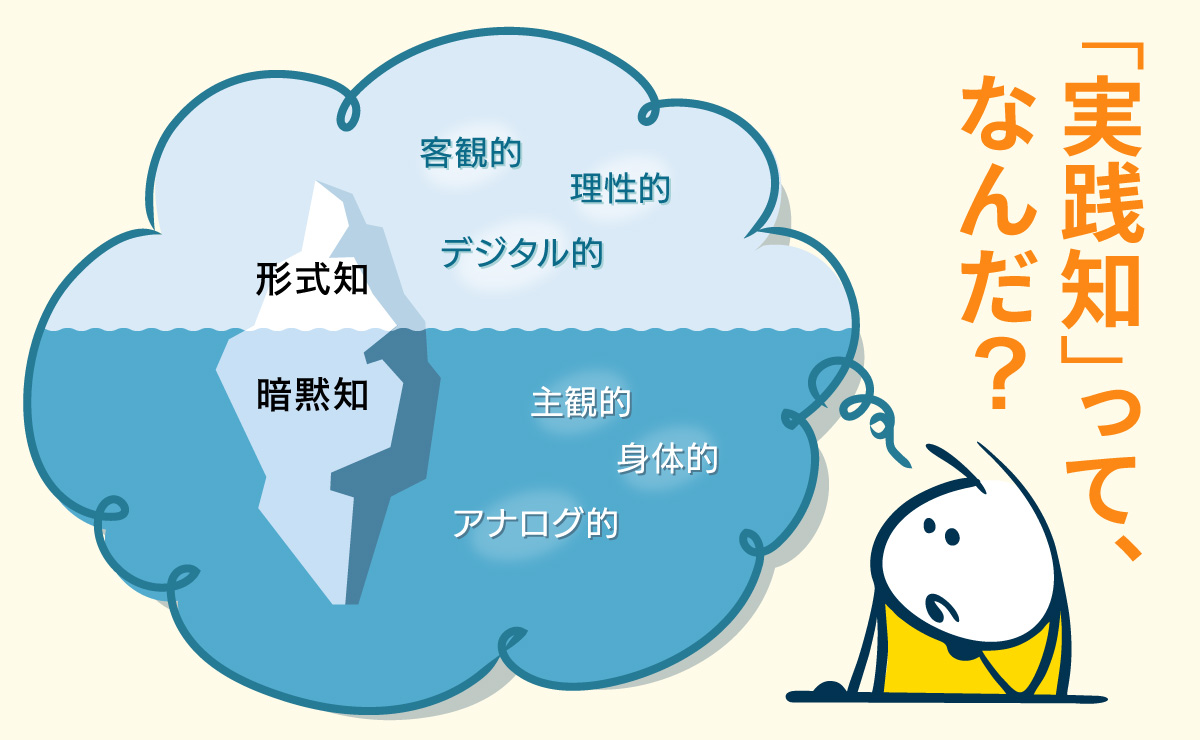
Management scholar Professor Ikujiro Nonaka identifies "phronesis" (practical wisdom) as an essential capability for managers. He argues that in real business, mere "techné" (practical knowledge) like know-how, or "episteme" (objective knowledge) – scientifically and universally correct knowledge – are insufficient. Management must also demonstrate a judgment criterion based on subjective sensibilities of truth, goodness, and beauty: what value is deemed "good"?
Hmm. Honestly, even if you understand the theory, it's tough, right? In the hustle and bustle of starting a business, there's no time to spare for philosophical pursuits of truth, goodness, and beauty.
In times like that, what I recommend is to "temporarily place" your vision. And even after that, don't just frame it and fix it in place; constantly strive to improve it somewhere in your mind.
Of course, expecting "newly minted entrepreneurs" to possess advanced practical knowledge like "phronesis" is a bit much. That's a skill that grows through countless interactions with the market. If you consistently work on refining your vision and consciously articulate it, your score should naturally improve.
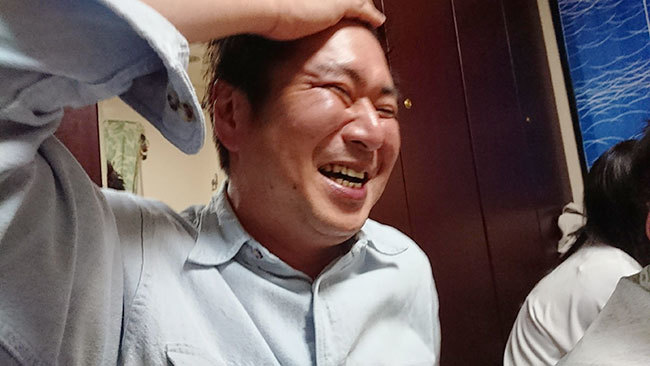
Incidentally, at Yano-san's farewell party, even my somewhat complicated remarks were drowned out by everyone's laughter.
Now, how will this beloved man evolve into a phronetic leader on Vietnamese soil? The anticipation never ends.
Please, help yourself!

Was this article helpful?
Share this article


Newsletter registration is here
We select and publish important news every day
For inquiries about this article
Back Numbers
Author

Sōo Yamada
Dentsu Inc.
First CR Planning Bureau
Creative Director