Note: This website was automatically translated, so some terms or nuances may not be completely accurate.
 【Continued】Local Gurgle [165/208]
Radical Work Methods Transform Organizations

This summer vacation, I was invited by a junior from my university to visit the United States. I spent time in Stanford, a suburb of New York blessed with both ocean and mountains.
Among my most memorable experiences was attending the US Open Tennis Championships for three consecutive days. What struck me most was the sight of top-tier players relentlessly chasing down every ball, giving it their all—truly going the extra mile! That slight difference actually shifts the venue's atmosphere and the flow of the match. Since many first and second-round matches can be watched right beside the court, the intensity felt especially palpable.

Now, marketers and creators often referred to internally as "in-house staff" are like entertainers or actors, each with their own distinct personality. They wait to be booked by business producers according to the needs of each project. In my case, I've long been told, "Yamada is a potent medicine, you know..." Well, I suppose you could call that a personality trait.
Of course, sometimes I focus purely on creating ad campaigns. But often, I go beyond that scope and stick my nose into questions like, "Is this product even the right one?" or "What is the core value this company promises?" That's probably why I get that label.
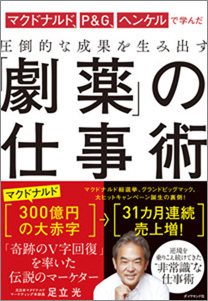
...Just as I was thinking that, I came across a book titled "The 'Drastic Measures' Work Method" (Diamond Inc.). The author is Hikaru Adachi, a marketer who has delivered overwhelming results at numerous companies. In it, I found this passage:
"To dramatically cure a company with severe symptoms, you need a potent remedy. However, a healthy company doesn't need a potent remedy."
However, the work methods Adachi introduces in this book are, in themselves, extremely sound—quite different from the impression the term "drastic measures" might suggest.
For instance, at McDonald's, where sales were slumping, he fought against the urge to discount items just to boost short-term revenue. He shifted the focus of promotions from limited-time items to the core regular menu items that underpin the business's profitability. He then meticulously strategized how to make these changes "trending topics," and always implemented a rigorous PDCA cycle afterward. Looking back now, each of these steps makes perfect sense – "Of course, that's how it should be done."
On the other hand, his approach to work was quite intense. For instance, he reportedly saw heavy snowfall as an opportunity to forge unforgettable relationships, deliberately venturing out into the city at night. He also acted on what he believed was right, without hesitation toward colleagues or headquarters.
Thinking about it now, even the strategies that seem perfectly reasonable today must have faced fierce headwinds back then: "If we don't hit the numbers right now, we're screwed!" "How are you going to promote a regular product with no newsworthy angle?" "We don't have time for PDCA cycles!" The raw, visceral process of overcoming that resistance – that "Do you really have to go that far?!" intensity – is precisely the most compelling part of this book, written by the practitioner, Mr. Adachi.
Seeing this "senior who uses drastic measures" always makes me feel I need to steel myself and cultivate more "resolve that doesn't fear criticism."
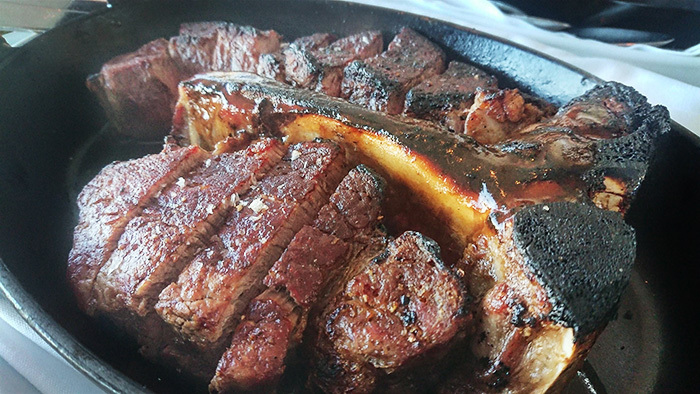
Come to think of it, this summer vacation. While fusion cuisine and South American dishes were good, you just can't skip a thick, juicy steak. I admit eating it three times during my stay was excessive, but the essential accompaniment was "creamed spinach." The charm lies in how generously butter and cream are used – it's like, "Wow, they really went all out!" Placing this sauce-like topping on a juicy chunk of meat and taking a big bite... Ahh!!
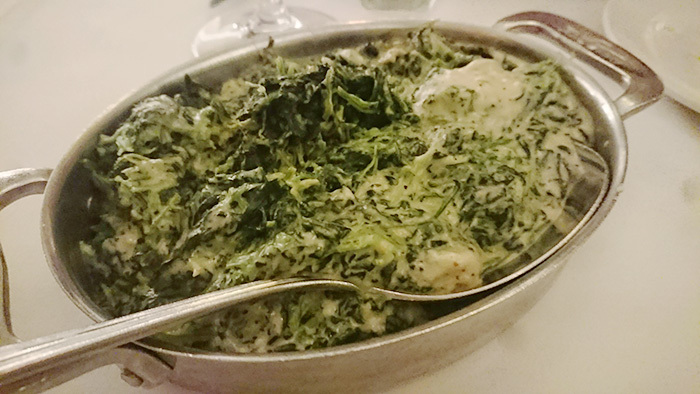
Enjoy!

Was this article helpful?
Share this article


Newsletter registration is here
We select and publish important news every day
For inquiries about this article
Back Numbers

Author

Sōo Yamada
Dentsu Inc.
First CR Planning Bureau
Creative Director