Note: This website was automatically translated, so some terms or nuances may not be completely accurate.
 Where Brands and Consumers Meet—The Era of Social Commerce is Here! [1/2]
What is Social Commerce? Brands and consumers connect and buy on social media.
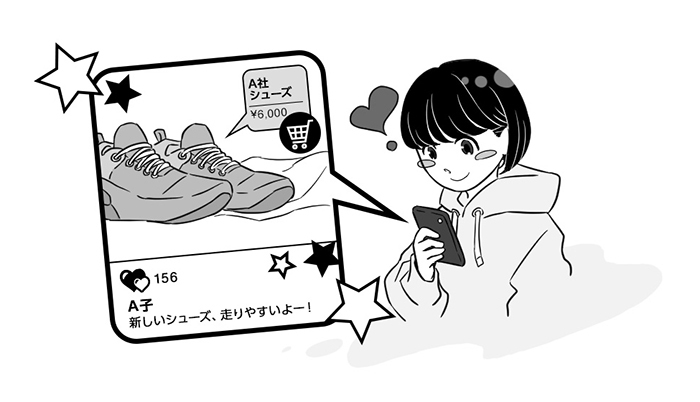
The pandemic has increased the time consumers spend at home.
As a result, purchasing goods and services online has become more commonplace than ever before, and opportunities to encounter information on social media have also increased.
Social commerce is where consumers and brands communicate on social media platforms like SNS, and products and services are sold right there.
In this article, Yong-Kook Kim, leader of the social commerce-focused project team within the Dentsu Group's virtual cross-organizational unit "Dentsu Commerce Room," explains the fundamentals of social commerce that companies need to know now. He also introduces initiatives in the United States, China, and South Korea.
<Table of Contents>
▼ Social Commerce: Directly Purchasing Products from SNS Posts
▼ "Live Commerce" Enabling Two-Way Communication Between Sellers and Viewers
▼The Potential of Social Commerce to Recover Massive Lost Opportunities in E-Commerce
▼ Facebook Rapidly Expanding Its Social Commerce Capabilities
▼The Era of Selling Cars and Real Estate via Social Commerce
Social commerce enabling direct product purchases from social media posts
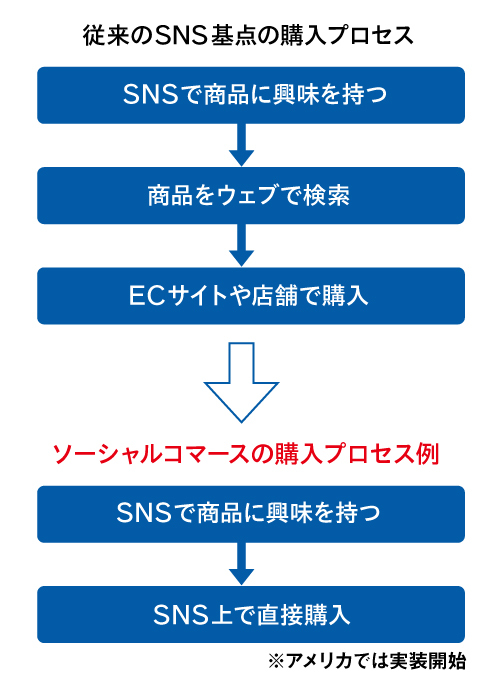
The most straightforward form of social commerce is when a "post" by someone on social media includes a purchase button for the featured product or service, allowing users to complete payment instantly if they want it.
Major overseas platforms, starting with Facebook, are accelerating efforts to implement this "direct payment functionality on social media."
For example, imagine seeing a product recommended by a friend on social media. Traditionally, you'd search for the product online and buy it from an e-commerce site or store. With social commerce, you can purchase the product directly from your friend's post.
Even before the pandemic, SNS had become deeply integrated into daily life, particularly among younger generations. People actively gathered information about desired products and services on SNS, referenced word-of-mouth reviews there, and saw trending products emerge from celebrity accounts.
The pandemic accelerated this digital shift in shopping. Consequently, social media—previously a platform for information gathering and exchange—is rapidly evolving into an environment enabling seamless shopping experiences.
Live Commerce: Creating Two-Way Communication Between Sellers and Viewers
Currently, "live commerce"—where influencers and others sell products and services in real time while streaming live on video platforms—is thriving in the US, China, and South Korea. It's also gradually gaining momentum in Japan. This live commerce is a form of social commerce.
However, hearing this description alone might make many people think of traditional TV shopping.
The most significant difference between live commerce and traditional infomercials is that live commerce content is shaped by "two-way communication" between sellers and viewers.
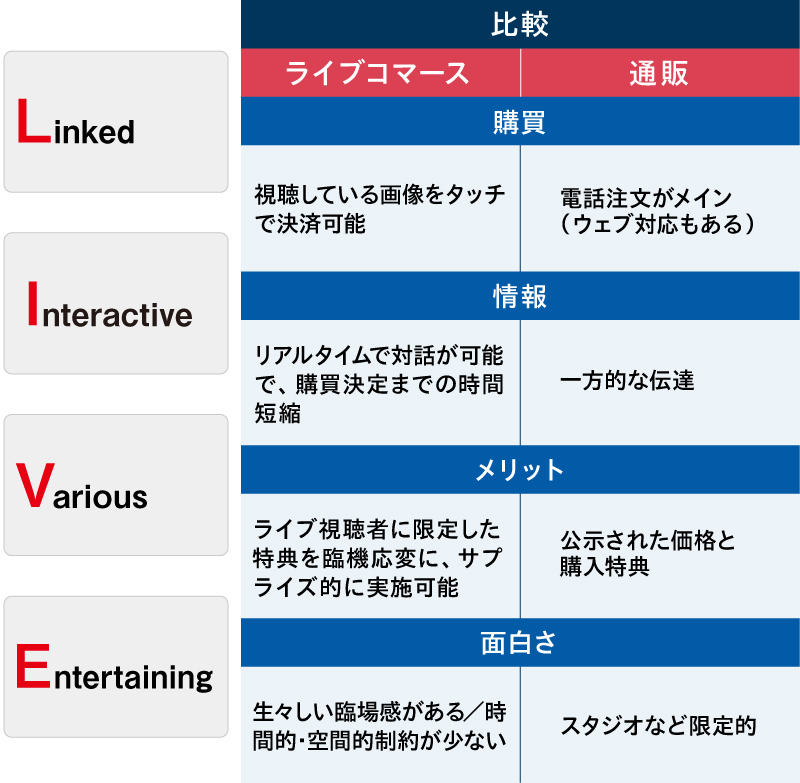
In TV shopping, a skilled presenter introduces products unilaterally. In live commerce, viewers use chat functions to ask questions in real time, and the presenter answers them on the spot.
Additionally, presenters can flexibly adjust their content based on viewer numbers and comments, or surprise viewers with unexpected bonuses, creating an immersive experience.
A major feature of live commerce is that viewers can touch the screen to make an immediate purchase right when they want to buy— .
The potential of social commerce to recover massive lost opportunities in e-commerce
According to multiple studies in Europe and the US (*), the rate of items left in shopping carts without purchase—known as "cart abandonment"—reaches approximately 70% on e-commerce sites.
One major factor causing cart abandonment is the complexity of the checkout process. By simplifying the payment flow and improving the design, it is believed that approximately 35% of these 70% losses can be recovered.
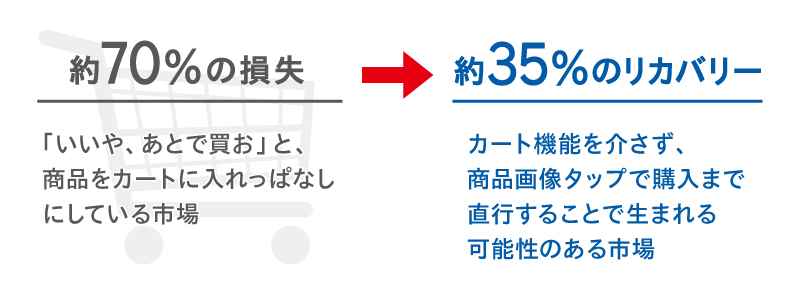
Social commerce offers an extremely simple process from awareness to purchase, and features enabling direct payment within social networks are also beginning to be established. In other words, the spread of social commerce has the potential to significantly boost the entire e-commerce market.
The author believes the essence of social commerce lies in transforming the nature of communication within marketing activities.
First, while traditional e-commerce and promotions primarily involved one-way information dissemination from companies, social commerce enables two-way communication between businesses and consumers by leveraging social media platforms like SNS.
For many consumers, SNS platforms are primarily for enjoying personal hobbies and communities. Rather than aggressively pushing products or services there, communicating while conveying a brand's worldview and story allows companies to continuously build positive relationships with consumers.
Furthermore, it fosters not just information from companies, but also "consumer-to-consumer" information sharing. In recent years, many consumers increasingly reference information from close friends, acquaintances, and influencers when making purchasing decisions.
Moreover, if a system can be designed where users receive incentives when products they post about are purchased, posts attractively introducing favorite products and services will proliferate. For businesses, social commerce has the potential to become a crucial channel for increasing purchase likelihood.
- Reducing Opportunity Losses from "Cart Abandonment"
- Enhancing Brand Image Through Two-Way Communication with Consumers
- Expanding the sales channel of "consumer-centric commerce"
These are the benefits the author believes companies gain from utilizing social commerce.
Social commerce is a marketing approach that can meet the needs of various companies, regardless of industry or business type.
- Aiming to rejuvenate the brand and strengthen relationships with younger demographics.
- Want to expand new channels without relying solely on e-commerce platforms.
- Want to start e-commerce or begin small.
- If you feel traditional digital marketing or mass marketing is becoming less effective.
If your company faces these challenges, why not consider implementing social commerce?
Facebook is rapidly expanding its social commerce capabilities
To gauge how the social commerce market will evolve, let's examine the trends of Facebook in the US, which is leading the charge ahead of Japan.
Currently attracting significant attention in the U.S. is the expansion of social commerce features on "Facebook" and "Instagram."
First, in the U.S., they implemented a "Checkout feature" that allows users to purchase and pay for products directly on Facebook or Instagram without redirecting to external e-commerce sites.
Additionally, they released the "Facebook Shops" feature, allowing businesses to set up a free, unified online store across platforms like Facebook and Instagram. This service launched in Japan starting this June.
Instagram has offered its "Shopping feature" in Japan since 2018. This allows users to tag products in posts like feeds or stories. Tapping a tagged item displays details like the product name and price, enabling a seamless transition to the product's e-commerce site.
Furthermore, Facebook is actively testing new features in the US to promote social commerce. These include its proprietary payment system "Facebook Pay" to support these services, a feature allowing influencers and publishers to add shopping tags (tags displaying products and prices) to posts for companies they collaborate with, and "Live Shopping," which enables sellers to display products and make sales while interacting with fans during live streams.
Linked to this expansion of social commerce features, Facebook is also actively releasing new advertising services. Examples include:
■ Branded Content Ads... Companies collaborate with influencers to deliver ads from the influencer's account.
■Dynamic Ads... Deliver ads dynamically based on users' browsing history.
■Collaboration Ads: Use dynamic ads to drive direct traffic to e-commerce sites or apps.
As evident from the above, social commerce enables consumers to "purchase products recommended by trusted individuals right there on the social media platforms they always access," significantly enhancing convenience.
Furthermore, as introduced earlier, social commerce also offers significant benefits for companies, creating a win-win situation.
Platform providers offering the "space" for social commerce can also expect increased revenue streams from commissions and advertising fees. Platforms like Facebook, which are focusing on social commerce features, will likely grow globally.
The Era of Selling Cars and Real Estate via Social Commerce
Finally, let's discuss the booming social commerce scene in China.
In China, where OMO(※) has accelerated further during the pandemic, various companies are expanding live commerce, creating a major boom.
※ OMO
Online Merges with Offline. A marketing concept meaning the integration of online and offline, eliminating barriers between the internet and physical stores (online and offline), and designing the customer journey from the customer's perspective.
Moreover, it's not just celebrities or influencers known as KOLs (Key Opinion Leaders) who are doing live streaming. There's a rapid increase in cases where a company's own "customer service experts"—like department store salespeople or apparel store staff—are conducting live broadcasts.
Products sold range widely from fashion and cosmetics targeting younger demographics active on social media, to cosmetics, furniture, and home appliances. Recently, even cars and real estate—categories previously considered completely unrelated to e-commerce—are now being sold via social commerce.
While some may be surprised to see high-priced items handled via social commerce, looking at the situation overseas reveals that luxury brands—whose worldview and story significantly influence purchasing behavior—actually seem particularly well-suited to social commerce.
In the US and China, many high-end and luxury brands are already fully leveraging social commerce to build engagement with fans and drive traffic from social media to their brand sites. Some companies even operate over 20 distinct Instagram accounts tailored to specific target demographics.
I believe this trend will spread to Japan in the near future. In other words, the conventional wisdom that "selling on social media is for youth-oriented products" will change. An era is coming where all kinds of industries and products—including cars, real estate, and home appliances, which were previously considered difficult to purchase online—will be bought as a matter of course on social media.
Considering the continued advancement of technology and the increasing integration of social media into daily life, the potential of social commerce is immeasurable. Companies would be foolish not to actively leverage it.
That said, since this area hasn't fully penetrated the Japanese market yet, many companies may be unsure where to start.
Next time, we'll explain key points Japanese companies should grasp to effectively leverage social commerce moving forward.
For those interested in learning more about the 'Dentsu Group Project Team Specializing in Social Commerce,' be sure to check out this roundtable discussion article!
Was this article helpful?
Share this article


Newsletter registration is here
We select and publish important news every day
For inquiries about this article
Author

Kim Yong-guk
Dentsu Inc.
Business Transformation Division Global Commerce Strategy Department