Note: This website was automatically translated, so some terms or nuances may not be completely accurate.
 "Introductory Easy Japanese" for Communicating with Foreigners [2/4]
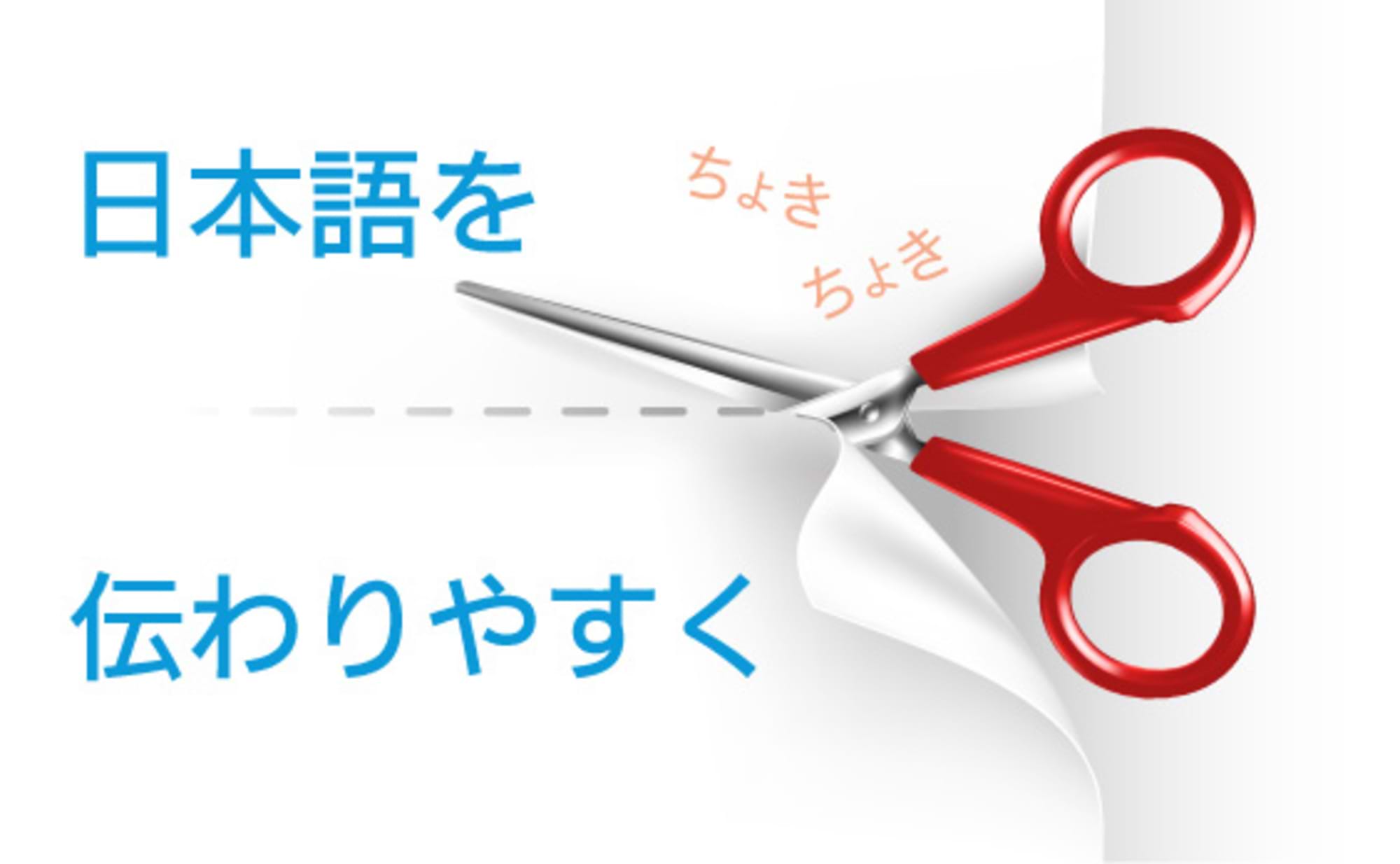
The foundation of Easy Japanese is the "Scissors Principle."
Hello, I'm Akira Yoshikai, the "Easy Japanese Producer" at Dentsu Inc. Diversity Lab. Last year, I published a book titled "Introduction to Easy Japanese."
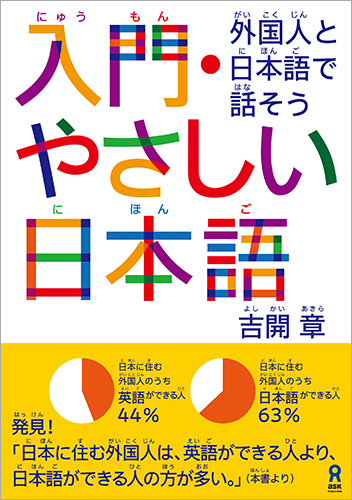
Easy Japanese refers to Japanesethat has been adjusted in terms of vocabulary, grammar, and other aspects for people who face some difficulty communicating in Japanese, such as foreigners for whom Japanese is not their native language.
Last time, we looked at survey results on foreigners' Japanese skills and introduced how Easy Japanese is a more effective way to communicate with foreigners living in Japan than English. This time, I'll share tips for speaking Easy Japanese.
Using the "Scissors Rule" makes Japanese easier for foreigners to understand
The most important principle for speaking in Easy Japanese is the " Scissors Rule." It comes from the first characters of: Say clearly (ハ), Say completely (サイ), and Say briefly (ミ).
" Say clearly " means opening your mouth properly to pronounce sounds. This is different from "speaking slowly." Speaking too slowly can actually make things harder to understand.
" Say it clearly " means speaking properly until the end of the sentence. Half-hearted phrasing like "That's a bit..." or "That's not right" confuses the listener.
" Say it concisely " means literally shortening sentences, and it's the most important part of the Scissors Rule. If sentences are too long, the other person can't fully grasp them, and the message becomes hard to convey.
Let me give you an example.
Two years ago, I ate okonomiyaki in Shibuya with a friend who lives in Osaka. He said, "I could make something tastier than this myself," and when I visited Osaka last year, he hosted an okonomiyaki home party for me.
Anyway, that's long. Applying the Scissors Principle to shorten it, it becomes:
My friend lives in Osaka.
My friend and I went to Shibuya two years ago.
My friend and I ate okonomiyaki.
But my friend said, "This isn't tasty. Mine tastes better."
I went to Osaka last year.
My friend threw an okonomiyaki home party for me.
By keeping sentences short like this, both speaking and writing become much easier to understand. Furthermore, short sentences can be translated into English using grammar learned in the first or second year of junior high school. They also become easier to translate into various languages using AI translation.
Avoid honorifics and humble language. Use forms like "~です," "~ます," and "~ください."
Many foreigners learning Japanese find Japanese honorifics difficult. Especially "honorifics" (which elevate the actions or status of the person being spoken to or the subject of the topic) and "humble language" (which makes the speaker seem humble) are hard for foreigners to grasp.
Examples of honorifics include:
"服を着る" → "服をお召しになっています"
"sleeping" → "resting"
Examples of humble language include:
Examples of humble language include:
"to go/come" → "I will be going"
"See" → "I will take a look"
These are some examples.
Both are difficult to use correctly, and people unfamiliar with them often don't understand what they mean.
Additionally, honorific forms sometimes exist for the names of things.
"Company" → Honorific: "御社" (gosha), Humble: "弊社" (heisha)
"考え" → Honorific: "ご高見 (gokōken)", Humble: "私見 (shiken)"
Even native Japanese speakers often mix them up.
A key point of easy Japanese is to avoid using difficult honorifics from the start and instead speak using simple, polite language like "desu/masu" forms.
Regarding honorifics, foreigners sometimes use them incorrectly.
Foreigners don't use incorrect honorifics with the intention of being rude. They simply don't fully understand how to use them correctly. However, some Japanese people react by getting angry or seeming to look down on the speaker when they hear incorrect honorifics.
Some Japanese people say they are not good at speaking English. This might be because they think, "If I make a mistake in English, it's embarrassing, and I'll be looked down upon." Conversely, this might also mean they think, "People who make mistakes in Japanese are embarrassing and will be looked down upon." Furthermore, when foreigners make mistakes with honorifics, sometimes the content of their speech isn't listened to. These attitudes can sometimes lead to discrimination against people who struggle with Japanese, so it's something to be mindful of.
Use native Japanese words, not kanji-derived terms
For many foreigners studying Japanese, kanji are truly difficult. Writing them is hard, but homonyms—kanji with the same reading but different meanings—are often hard to understand even when heard. For example, "招集する" (summon people) and "消臭する" (deodorize an unpleasant smell) both read "shōshū suru."
In easy Japanese, we use native Japanese words ("Wago") that directly convey meaning whenever possible. Saying "gather people" instead of "招集する" (shōshū suru) or "eliminate the smell" instead of "消臭する" (shōshū suru) makes the meaning clear and simple.
Avoid onomatopoeia (sound-effect words)
Words that represent sounds, like "pouring down" (zaa zaa) or "drizzling" (shito shito), are called "onomatopoeia." Words that describe states, like "shiny" (pika pika) or "slippery" (tsuru tsuru), are called "mimetic words." Together, they are called "onomatopoeia."
There are countless onomatopoeic expressions, each used perfectly suited to the situation. In Japanese homes, parents and children use onomatopoeia daily in conversation, so children learn it quickly. However, for foreigners, learning onomatopoeia is as difficult as learning kanji, and it's endless.
"Pouring down" means "raining heavily," while "drizzling" means "raining steadily in small amounts" is easier to understand. When cleaning, "make it sparkling clean" or "make it smooth" can simply be "clean it thoroughly." A fundamental rule of easy Japanese is to avoid using onomatopoeia.
Avoid idioms
The phrase "raise one's arm" (腕を上げる) doesn't just mean physically raising an arm; it also means "to become skilled." Similarly, "having a tight mouth" (口が固い) means "always keeping secrets," and "the neck becomes steady" (首が座る) means "a baby's neck becomes firm." These expressions, which have meanings beyond their literal words, are called "idioms." Idioms can create very rich expressions by combining simple words. However, they are also very difficult for foreigners to understand. In easy Japanese, we avoid using idioms.
Add furigana to kanji
It's not just homophones; kanji with multiple readings are also very difficult.
When reading the sentence "アメリカ人の方の方が背が高いです" (Americans are taller), foreigners might think the two "方" characters are a typo. Without the furigana reading "アメリカ人の方(かた)の方(ほう)が," it remains unclear.
Similarly, in the sentence "彼は、実家のことを大事に思っています" (He values his family home), whether "大事" is read as "dai-ji" (important) or "ō-goto" (a big deal) changes the meaning entirely. "Dai-ji ni omoiteiru" means "he thinks it's important," while "ō-goto ni omoiteiru" means "he thinks it's a big deal and troublesome."
In easy Japanese, kanji are given furigana. More furigana makes it easier for foreigners to read and also helps them study kanji. My book "Introduction to Easy Japanese" (Ask Publishing) uses furigana on all kanji to make it easy to read.
These are some key points of easy Japanese. Mastering just these will make communicating in Japanese with foreigners much easier. In today's world, more people want to befriend foreigners or work alongside them. I hope easy Japanese helps you build better relationships.
Was this article helpful?
Share this article


Newsletter registration is here
We select and publish important news every day
For inquiries about this article
Author
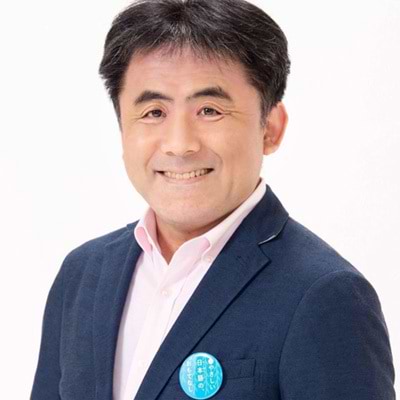
Akira Yoshikai
Dentsu Inc.
Dentsu Inc. Diversity Lab
Easy Japanese Producer