
Note: This website was automatically translated, so some terms or nuances may not be completely accurate.
 Let's change how we create jobs! [3/7]
Shintaro Uchinuma × Shusaku Hirota: Work Techniques for Those Who Step into Marginal Spaces

Shintaro Uchinuma
numabooks

Shusaku Hirota
Henge Inc.
In this era of rapid change, where even the near future is unpredictable, we must find new roles and ways of working within society ourselves, rather than following precedent or convention. Shusaku Hirota from Dentsu Inc. Platform Business Bureau goes to hear from people who are finding and practicing such new ways of working, not just in the advertising industry. This time, the interviewee is Shintaro Uchinuma, founder of numabooks, who works as a book coordinator. We asked Uchinuma, who has created unprecedented ways of engaging with books, about what led him to work in marginal spaces.
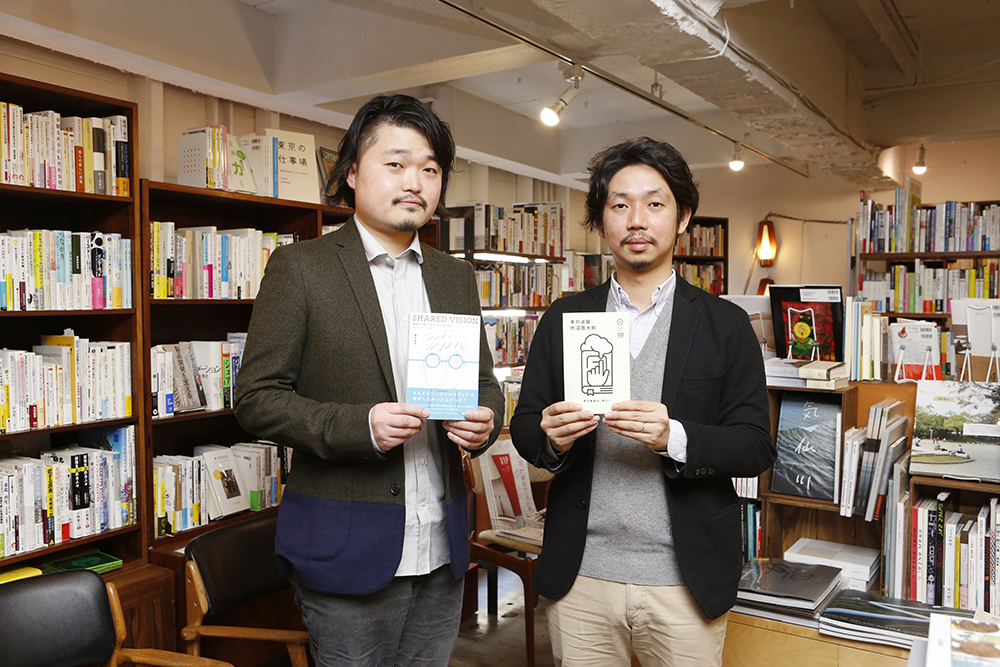
Theme① What led you to become a "Book Coordinator"?
Hirota: Actually, Uchinuma-san was my senior in a university club.
Uchinuma: The club that published the free paper 'PLUS'.
Hirota: We're the same age, but since I joined the club later, Uchinuma-san is technically my senior. First, could you explain what your work involves?
Uchinuma: It started with creating book sections in non-bookstores like clothing shops and variety stores. Then, I began receiving requests to build libraries in apartment complexes, corporate reception areas, and commercial facilities, which expanded into designing bookshelves. As I pursued these activities, I was increasingly asked for opinions on books and the publishing industry, leading to speaking engagements, writing, and consulting work. Then, in July 2012, I opened "B&B" in Shimokitazawa with Koichiro Shima from Hakuhodo Kettle.
Hirota: Right after I joined, Uchinuma-san quit the circle and started his own magazine, so we only worked together for a short time, right?
Uchinuma: I quit the PLUS editorial department because I wanted to create a paid magazine that would sell well in bookstores. It was then that I first learned about the publishing distribution system and realized the industry was said to be in recession. I loved books, and whenever I went to a bookstore, I saw many customers just like me. So, it was the first time I learned the industry was supposedly crumbling. Yet, when I looked around, it seemed no one was actively trying to get people who didn't read books to start reading. If no one was doing it, I thought I wanted to be the one to take on that job.
Theme② Commonalities Between the Publishing and Advertising Industries
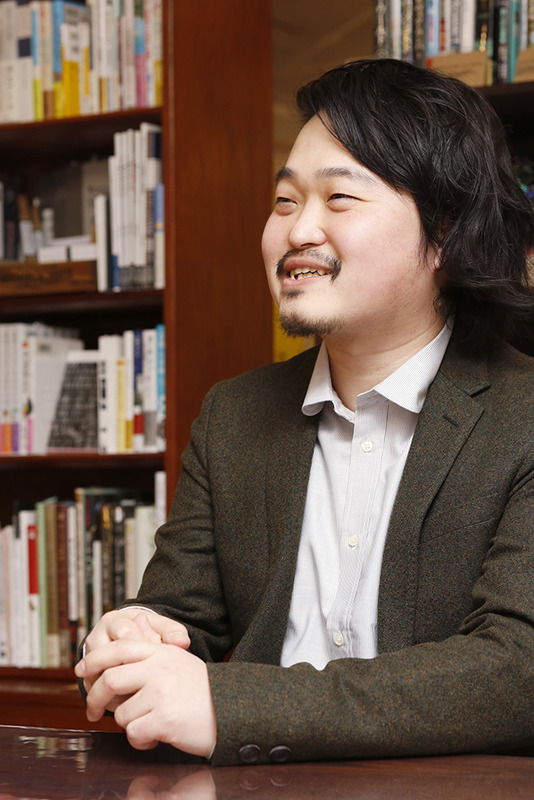
Hirota: What I found fascinating about Mr. Uchinuma's book The Book's Counterattack (published by Asahi Shuppansha last December) was that if you replaced every instance of "book" with "advertisement," the meaning still held true throughout. Just as there was a time in publishing when books would sell simply by being made and placed on store shelves, there was a time in advertising when products would sell just by being created and aired. So, we were satisfied just making ads. But as media multiplied and the world's information volume increased, advertising came to be required to "move people" more effectively. That's why the concept of "communication design" emerged around the early 2000s. And I realized there's a connection between the concerns of those in the advertising industry who aspire to "communication design" and Mr. Uchinuma's perspective.
Uchinuma: Looking at Twitter, I saw readers saying things similar to what Hirota-kun mentioned—comments like, "The same applies to music, right?" or "The same applies to theater, right?" As an author, it's gratifying to see readers applying the ideas to their own fields.
Hirota: Even though the era where simply putting a book on store shelves guarantees sales is over, people inside the system often struggle to break it down. But those who recognized the problem stepped outside that system and started working. That's why new jobs were created in marginal spaces.
Theme③ The Future of the Publishing Industry Might Be Bleak, But the Future of Books Is Bright
Hirota: The phrase Uchinuma-san wrote in his book, "The future of the publishing industry may be bleak, but the future of books is bright," really resonated with me.
Uchinuma: Everyone says, "The future of publishing is bleak. There's no clear path forward." But that's only because the future seems unclear when viewed as an extension of the industry's existing systems and methods. It doesn't mean books themselves have no future. People within the industry, continuing to work within the traditional systems, feel like everything is failing. But looking back at history, both books and advertising communication have constantly changed how they're made and sold. It's impossible for any system at a given point in time to last forever.
Hirota: Precisely because the environment is changing, can't we see both what has changed and what remains fundamentally unchanged? The environment surrounding books is undergoing drastic upheaval, but because Uchinuma-san is keeping pace with that change, I think he can see what remains constant, the essence.
Uchinuma: My concern is that "if change happens in the wrong way, even the fundamental value itself can be altered." If we go against the flow of the times and try to forcibly preserve the existing systems of the existing industry, I fear we might end up with no readers at all. With advertising, if you keep making the effort to catch someone's eye, you might achieve something. But with books, unlike advertising, if people don't actively pick them up, they will never be read.
Hirota: Strangely, people should be protecting the value within the value chain, yet they tend to focus only on the chain itself and try to protect the chain above all else. When you're inside that industry, the chain itself can start to look like the value.
Theme④ Redefining the Starting Line for Book-Related Careers
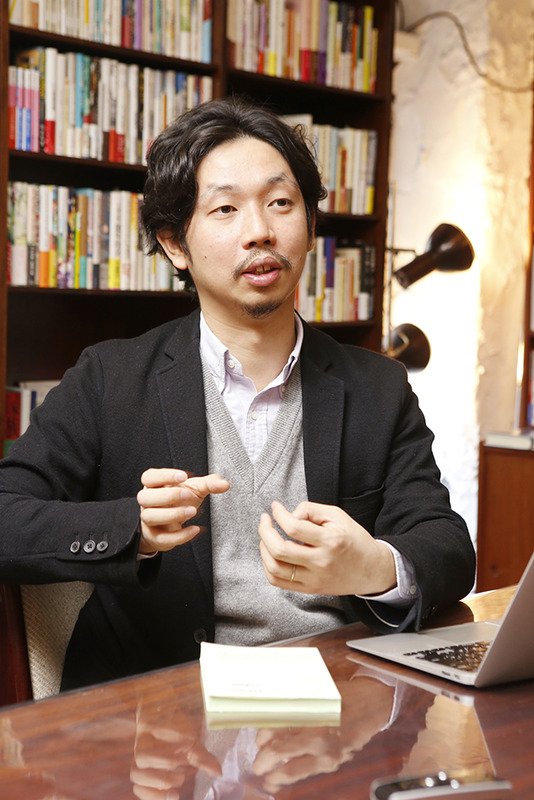
Uchinuma: Adults in the publishing industry often tell young people who say, "I want to work with books," that "publishing is a declining industry, so you shouldn't get into it." But saying that only leads to the entire sector truly declining. Especially since the advent of e-books, books have become harder to clearly define. So, when someone says, "I want to work with books," I think the nature of the work will change from what it was before. The number of people who can make a living purely by working with physical books might decrease, but the range of jobs and activities related to books is actually expanding.
In my book, I wanted to redefine the starting line for these book-related careers. Even if you don't work in a bookstore, people who volunteer to read books aloud, or those who introduce books on blogs – all of them are selling books, communicating books, and in that sense, they are booksellers. Increasing the number of such people is what will create a richer future for books, isn't it?
Hirota: Japan has traditionally valued the stoic pursuit of a single path as a virtue. But I believe people who engage in diverse activities are better positioned to find work in niche areas, and such talent is needed now.
Read the full conversation on AdTie!
Was this article helpful?
Share this article


Newsletter registration is here
We select and publish important news every day
For inquiries about this article
Back Numbers


Author
Shintaro Uchinuma
numabooks
Representative of Numabooks
Shusaku Hirota
Henge Inc.
CEO / Director