Note: This website was automatically translated, so some terms or nuances may not be completely accurate.
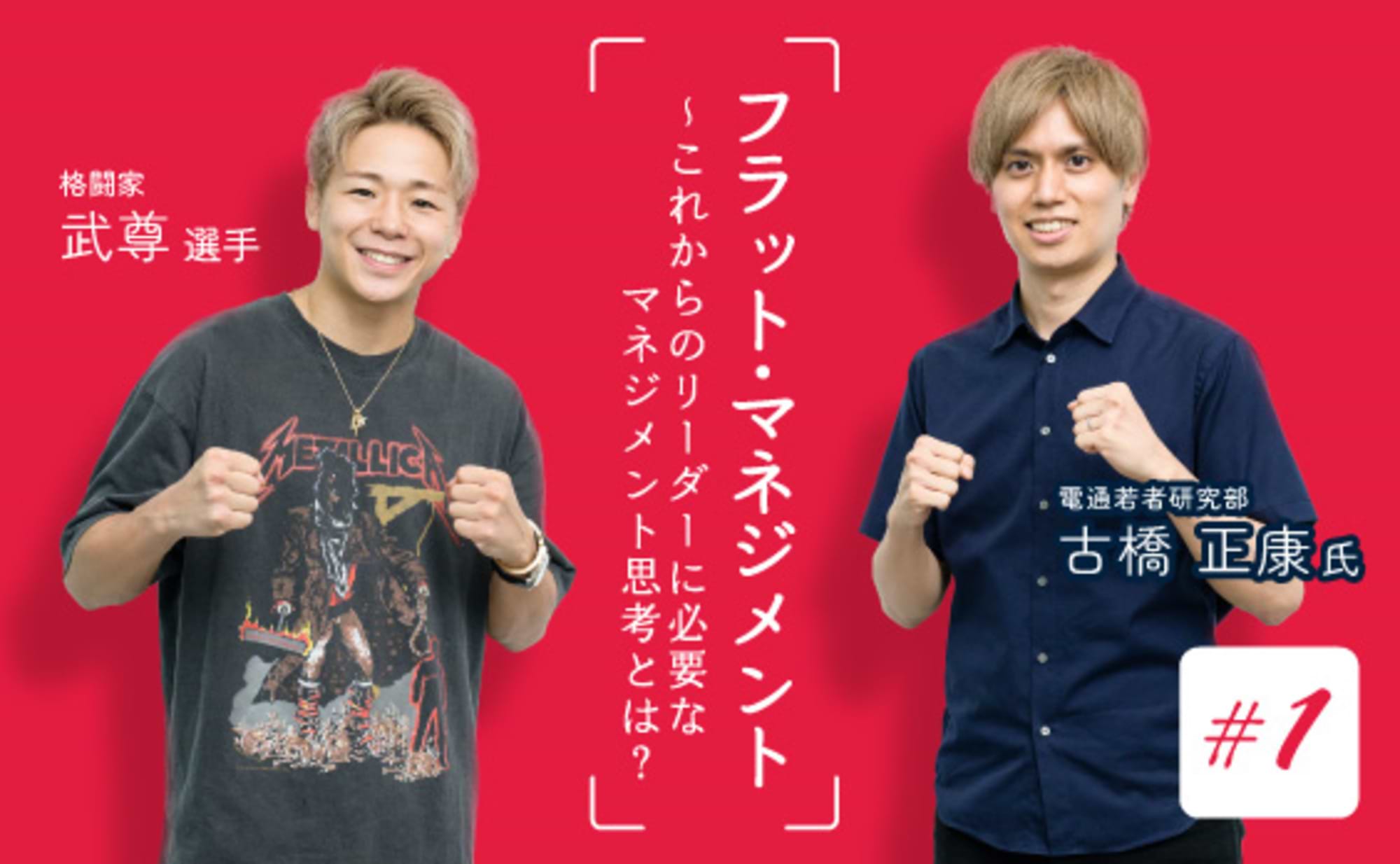
 "Flat Management"—What Management Thinking Do Future Leaders Need? [1/8]
Asking Fighter Takashi: What Kind of Leader Is Needed Now?
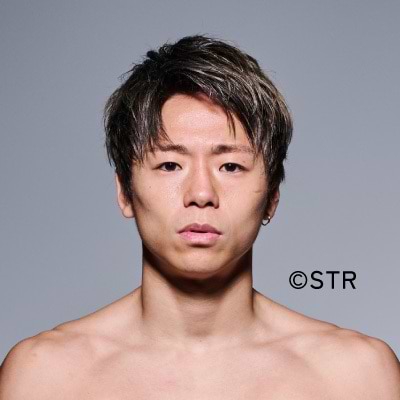
Mount Tate
fighter
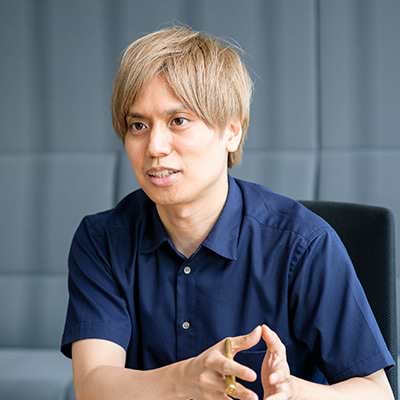
Masayasu Furuhashi
Dentsu Inc.
Dentsu Inc. Youth Research Department "Wakamon" (hereafter Wakamon), a planning and creative unit exploring emerging values under the vision "Designing the Future with Young People," researches the management mindset essential for future leaders.
This research led to the concept of "Flat Management." Its core idea is that leaders should respect their subordinates and team members, engaging with them on an equal, horizontal level, rather than imposing opinions top-down, to create a "comfortable team."
This series features dialogues between WAKAMON members and prominent figures practicing this "Flat Management." The first installment features fighter Takashi. We spoke with Takashi, a top fighter who achieved an unprecedented feat in K-1 history by becoming the first champion to win titles in three weight classes, drawing on his real-life experiences.
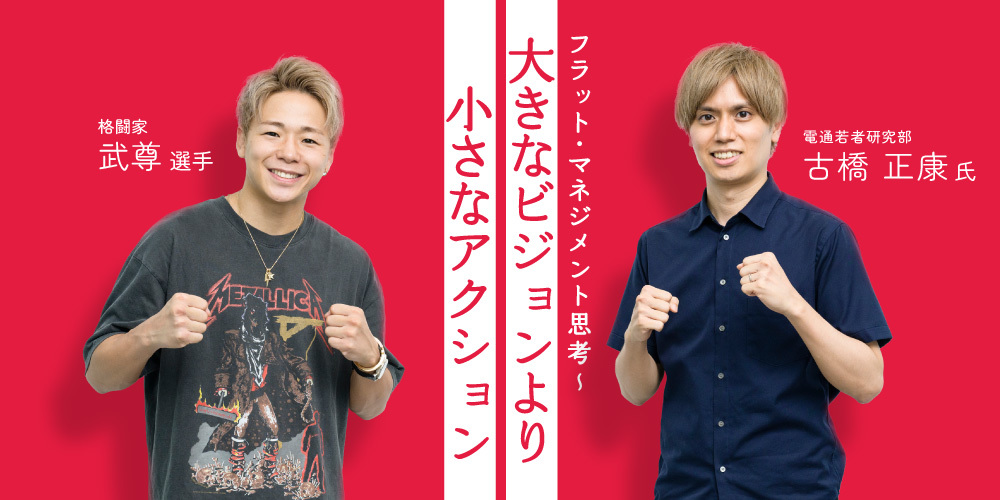
When you take action, those around you respond. Your vision moves closer to realization.
Furuhashi: One core principle of "flat management" is "small actions over grand visions." With the spread of social media, hiding things has become difficult, and our era is often called the "age of transparency." Companies or leaders who only talk big without actually doing anything, or whose actions don't match their words, are quickly seen through and lose trust. Because of this, I feel the importance of demonstrating through action has grown significantly.
Takashi achieved the first three-weight class championship in K-1 history and realized "THE MATCH 2022" in June 2022. Furthermore, in November, he announced his future challenge as a fighter transcending national and organizational boundaries. He launched team VASILEUS with his regular training partners. He truly demonstrates so many things through action, doesn't he?
Takashi, what are your thoughts on the idea of "small actions over big visions"? Do you consciously focus on demonstrating through action rather than just voicing opinions in your daily life?
Takashi: Yes, that's true. For example, even if there's an opponent I want to fight, simply declaring publicly "I want to fight them" won't make it happen. I've come to realize that the steady, groundwork-level effort – the actions – that lead to that point are what truly matter.
That said, I do sometimes deliberately voice a big vision first. By saying it out loud, I take on responsibility, and then I act to fulfill that responsibility. Ultimately, it still comes down to valuing action.
Furuhashi: How do the people around you change when you actually take action?
Taketaka: In a company context, I'd say it's the "subordinates." In my case, people around me become more willing to cooperate. Taking action prompts reactions from others, and together we move toward making things happen.
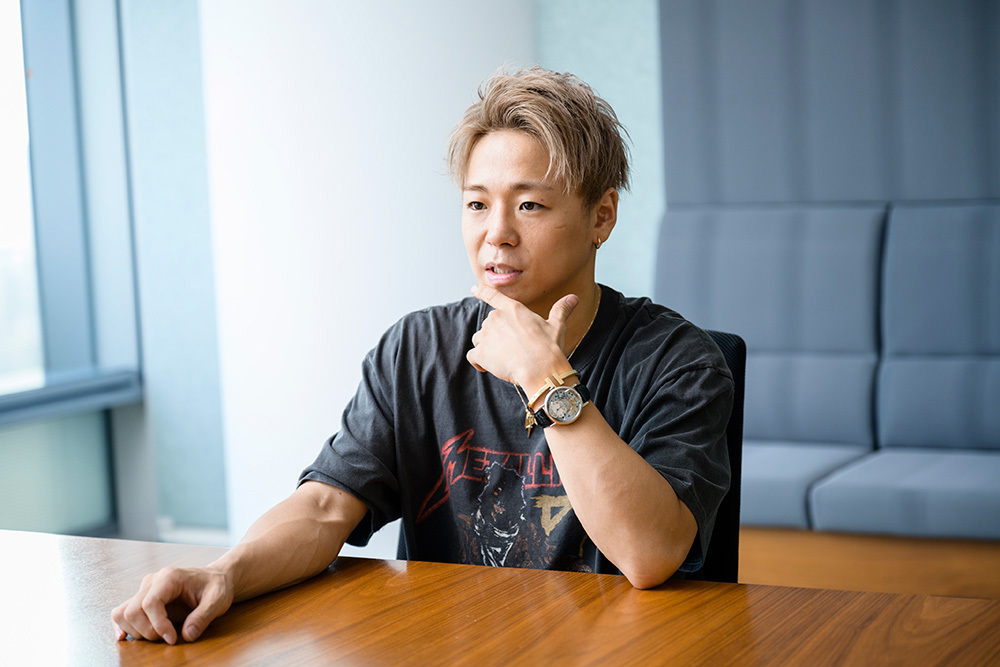
When people get the chance to test their own ideas, they can grow.
Furuhashi: In the past, there was a lot of junior training that younger generations found unreasonable. Things like being scolded very harshly. But nowadays, younger generations won't follow that approach, and fundamentally, it's a big problem. Taketora, do you feel any change in the qualities needed for the older generation or leaders, comparing when you started martial arts to now?
Takashi: Even now, some gyms in the martial arts world still use old-school coaching methods that suppress fighters, telling them "this is the right way" or "do this." Fortunately, the gym I belonged to treated everyone equally—the chairman and the fighters alike. It's precisely because of that environment that I was able to grow this much.
Furuhashi: What kind of specific guidance did you receive from your gym's chairman?
Takashi: Masakazu Watanabe, the president of K-1 Gym Sagamiono KREST where I trained, never forced his will on us with "Do this." Instead, he'd ask, "What do you want to do?" When I suggested ideas, he'd respond with "Then let's try it this way," fostering equal discussion. It felt like talking on the same level, not from above. He's my ideal leader.
Ultimately, the fighter himself knows himself best, right? So the chairman respected us by saying, "Trust your instincts." I think that's how trust was built, creating an atmosphere where fighters feel comfortable voicing their opinions.
Furuhashi: How does an environment that gives athletes the chance to try their own ideas impact their growth?
Taketora: First, being allowed to pursue what you want fosters a sense of responsibility. And if you fail, precisely because it was your own idea, you delve deeper into why it happened. That leads to growth.
Conversely, I feel people who only do what's imposed on them from above don't grow beyond that. They can execute everything they're taught, but they can't deliver results in matches. Ultimately, I think the adaptability needed in practice only comes from thinking for yourself and taking action. If we practice "flat management," I believe more people will grow.
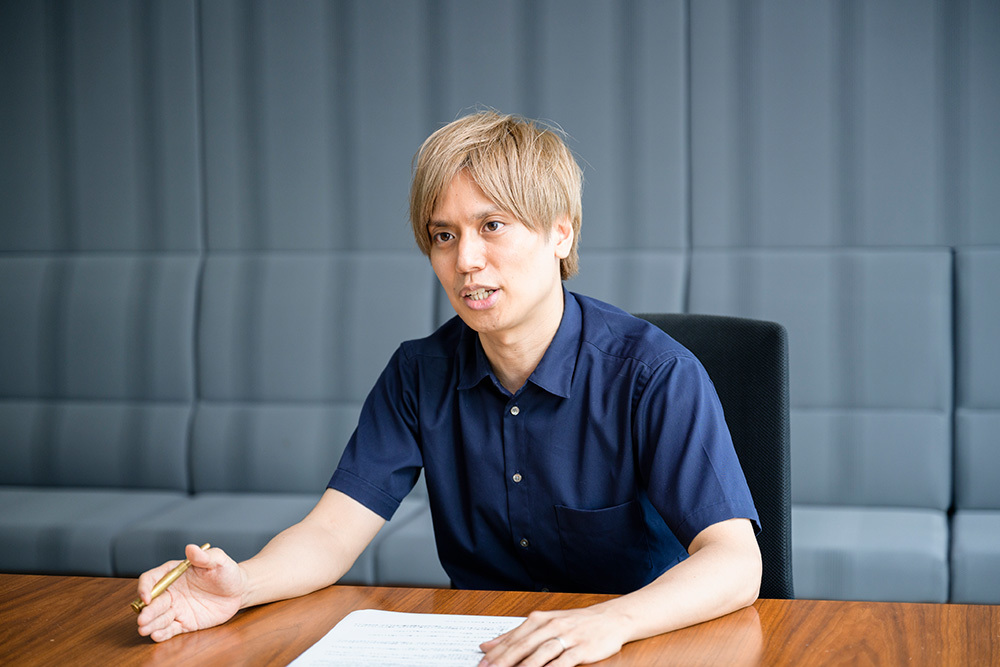
Showing vulnerability can sometimes inspire courage
Furuhashi: In "flat management," we prioritize "polite honesty" over "polite pretense that avoids disliking" when drawing out members' true feelings and gaining their trust. For example, "showing your vulnerable, raw self" is part of that. After "THE MATCH 2022," Takashi announced his break during the press conference. He publicly revealed his raw self for the first time, including his struggles with depression and panic disorder. After that, I think more fans felt, "I want to support him even more than before." What are your thoughts on the importance of showing your vulnerable, raw self?
Takashi: Beyond making myself feel better, I believe that by letting everyone know everything and having them watch my future matches, it might also give them the courage to overcome their own struggles. Showing your vulnerable, raw self can sometimes empower people facing similar worries or problems.
Furuhashi: In your fight against Tenshin Nasukawa, you, Takemitsu, who had been winning consistently, experienced your first loss in ten years. I think that was also about "showing your vulnerable, raw self." Did you experience any changes in your mindset or learn anything from that?
Takashi: Honestly, it was nothing but lessons. When you keep winning, you lose sight of so many things. Winning becomes expected of you, and winning is all that's demanded. Losing is absolutely forbidden. I found myself increasingly bound by that situation.
Even when fans offered kind words, somewhere inside I felt, "But if I lose, they'll probably leave me." That's precisely why I trained to escape the fear of losing and fought matches to avoid defeat. For better or worse, it became a cycle, but the negative aspects were overwhelming. I was constantly dominated by fear.
Losing actually felt like a release from that pressure. My desire to win hasn't changed—I still want to win, I have to win. But now I see that even after a loss, so many people still support me without wavering. Some even tell me they "got power" from me. I learned that winning isn't the only thing that gives people power. And now that the fear of losing is gone, I think I can finally play and train with even more freedom.
Furuhashi: So showing your true self was good for both you and your opponent, right?
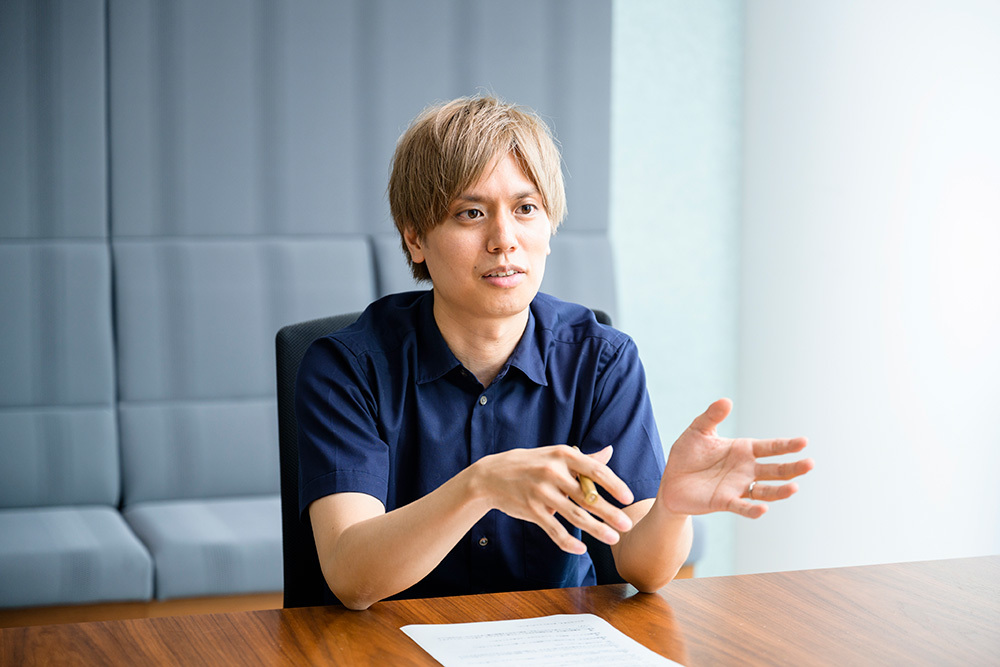
Flat relationships for the next generation. Comfortable relationships spread.
Furuhashi: Taketora-san, you've been winning consistently for ten years. Doesn't that success become a shackle? For example, in regular companies, the more success someone has had in the past, the more their thinking tends to solidify as they age, making it harder to let go of that past success. As a result, they end up imposing their own ideas on the younger generation and, without realizing it, gradually become labeled as "old fogies." Taketora, you're still quite young, but you've achieved great success that few have ever accomplished. As you get older, do you ever feel that sense of crisis?
Taketora: Not really. For instance, I might advise someone on diet, saying "This approach might be better," but what suits a person's body or enhances performance varies from individual to individual. Understanding that, I don't force my opinions. It's similar to how the gym chairman respects the athletes.
Furuhashi: So this flat, respectful relationship transcends generations. On the other hand, you've incorporated new tactics yourself, like trying calf kicks (low kicks targeting the calf area) in your match against Leona Petas. Are you always conscious of absorbing new things?
Takashi: Yes. I'm still not perfect, and I have a strong desire to learn new techniques. Going overseas to train is also about absorbing new things, things I lack. I always keep that mindset.
Furuhashi: You launched team VASILEUS in November, marking a fresh start as a fighter. As a leader guiding the martial arts world, if there's a philosophy you prioritize when interacting with younger fighters, please share it.
Takashi: I often get asked in interviews, "Any words for the younger fighters?" and I usually just say, "Nothing really" (laughs). I don't really teach younger fighters much, nor do I give them special words of advice. I just hope they'll absorb what they want to from watching me train and compete alongside them. There's absolutely no need for them to copy me; I think it's best if they express what they want to do in their own fights. Because as times change, the martial arts scene changes, the audience changes, and the feelings of those watching change. There's something suited to each era, so I don't feel I need to say anything.
Furuhashi: Not imposing your own success stories and always maintaining an attitude of absorbing new things—this aligns with the fundamental idea of "flat management," which prioritizes "small actions over grand visions." It's likely that Takashi's approach guides and contributes to the growth of the younger members.
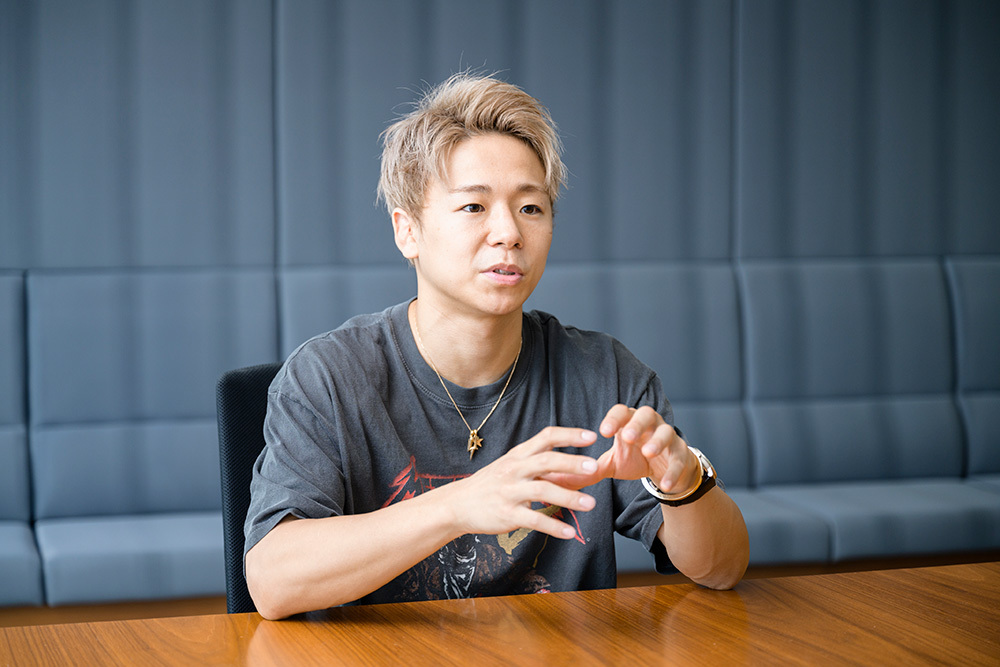
It's precisely because we clash seriously as equals that we can become a team free of friction.
Furuhashi: So, what kind of team represents the ideal for Takashi?
Taketora: The gyms I've been part of before gathered top-level fighters. Since there were competitors in the same weight class, we had to fight for spots in tournaments, so there was competition within the team too. That meant sparring sessions were intense, with hard hits and sometimes brutal, almost destructive fights. But after practice ended, everyone got along incredibly well.
That kind of positive team dynamic is my ideal. Even in regular companies, I think employees within the same department can grow tremendously when there's healthy competition and constructive conflict. Obviously, we can't literally punch each other (laughs). But even if there are disagreements at work, I think the best teams are those where everyone can aim high together while maintaining a good relationship.
Furuhashi: Is there a belief that "not clashing seriously would actually be disrespectful"?
Taketora: Yes. Precisely because we respect each other, we clash seriously, and conversely, that's how we maintain a conflict-free relationship. If either side started talking behind each other's backs or avoided direct confrontation, problems would inevitably arise. I think the importance of clashing with full force applies across any industry.
Furuhashi: That connects to what you said earlier about "honest feelings over polite pretense to avoid being disliked." If a boss and subordinate don't clash wholeheartedly and only have superficial conversations, they can't build a good relationship. I really think this is something businesspeople should hear. Finally, could you share your aspirations for the future?
Takashi: As I mentioned on social media on November 1st, moving forward, I want to challenge myself as a fighter, transcending national and organizational boundaries. I've been with K-1 for over ten years now, and I feel I've accomplished quite a bit in Japan. Next, I'm thinking about competing and being active overseas.
Furubashi: It's precisely because you maintain this sincere attitude of never stopping your actions that you gain the trust of younger fighters and fans alike. I'm really looking forward to seeing what you do next! I'm rooting for you!
In this series, we'll be talking to people active in various industries about "Flat Management." Stay tuned!
Casting: Mint'zPlanning

Was this article helpful?
Share this article


Newsletter registration is here
We select and publish important news every day
For inquiries about this article
Author
Mount Tate
fighter
Team VASILEUS
Masayasu Furuhashi
Dentsu Inc.
Business Co-creation Bureau
Business Designer