Note: This website was automatically translated, so some terms or nuances may not be completely accurate.
 "Flat Management"—What Management Thinking Do Future Leaders Need? [2/8]
"Everyone wants to be treated as a special individual" ~ Hotel Producer Shoko Ryuzaki's Management Principle

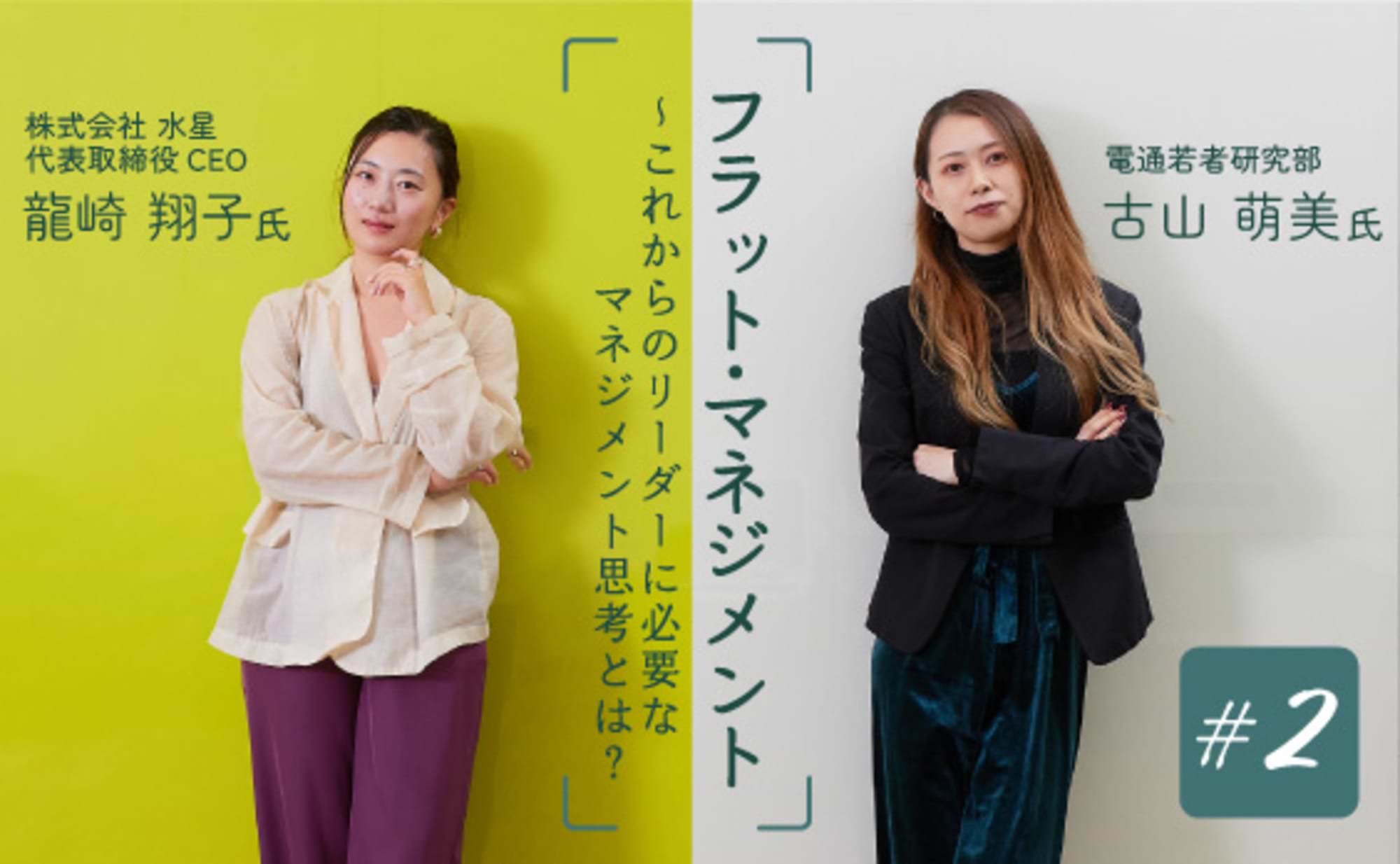
Ryuzaki Shoko
Mercury Co., Ltd. President and CEO
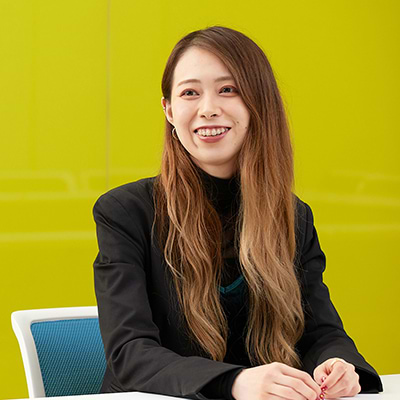
Furuyama Moemi
Dentsu Inc.
Dentsu Inc. Youth Research Department "Wakamon" (hereafter Wakamon), a planning and creative unit exploring emerging new values with the vision "Designing the Future from the Perspective of Young People," researches the management mindset necessary for future leaders.
This research led to the concept of "Flat Management." Its core idea is to create a "comfortable team" not by leaders imposing their opinions top-down, but by respecting subordinates and team members and engaging with them on an equal, horizontal level.
This series features dialogues between Wakamon members and prominent figures practicing such "Flat Management." In the second installment, Wakamon's Moe Furuya interviews entrepreneur and hotel producer Shoko Ryuzaki, who advocates for "Social Hotels" – next-generation lodging facilities connecting guests with hosts, guests with each other, and guests with local culture – thereby redefining the hotel experience. What does "management" mean for Ryuzaki, whose staff are mostly older than her?
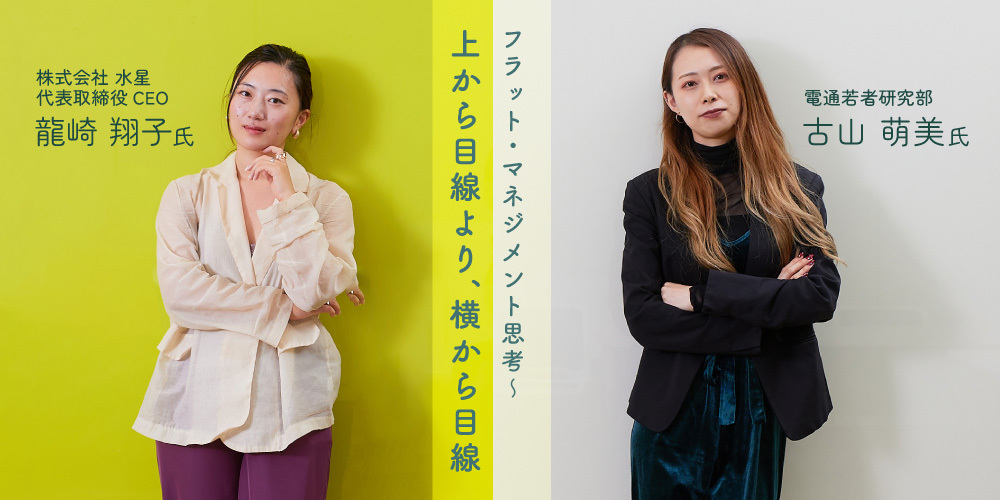
"The underlying sentiment is 'I need your help'"
Furuyama: Ms. Ryuzaki, you started your business at 19 and likely had many opportunities to manage employees older than yourself. As a leader, how have you communicated with your staff?
Ryuzaki: As a premise, I don't really think "I'm going to manage them." My communication with team members is more like, "I'm struggling with this. I need your help," or "I need your expertise." So age differences—whether older or younger—don't really matter.
Furuya: I see. So you consciously focus on a person's "skills" rather than judging by age. Flat management advocates communication that aligns with the other person's perspective, like "a sideways view rather than a top-down view." What do you consciously practice in your daily communication?
Ryuzaki: Yes. Fundamentally, I prioritize the stance of saying, "We're currently lacking this specific piece. If you could step in here, I think it would make a huge difference. Could you lend your strength?"
Furuya: So you're very specific about the role you're offering. Was there any difficulty when hiring someone older than you?
Ryuzaki: Since they knew I was younger when they applied, it wasn't an issue. In fact, since everyone had more experience than me, I didn't need to teach them the job from scratch. We worked together to organize the initial chaos of starting the company while greatly benefiting from their expertise.
Furuya: By the way, what management experience did you have before starting the company?
Ryuzaki: None. If I had to say, it was my middle school experience. For events like choir competitions, plays, and sports festivals, my classmates would entrust me with leadership roles. I would communicate with members, saying things like, "Your strength is this, so I want you to shine here." Looking back now, I feel that became the foundation of my management style.
Furuya: So you drew inspiration from your student experiences. Did you consciously study anything after starting the company?
Ryuzaki: I majored in business administration in college, so I probably studied it then, but I don't remember any of it now. If anything, I've run my organization by pulling on past memories – "What did that fun part-time job feel like?" or "What did that uncomfortable team feel like?" – and abstracting those experiences.

Whether it's a lover or an employee, I believe the reason they leave is "lack of affection."
Furuya: So you've learned management insights from leaders you've encountered in the past. What specific lessons did you gain?
Ryuzaki: During university, I worked part-time at a hotel. The manager there was someone who fostered what we'd now call "psychological safety" within the team. He always showed genuine interest in the members. For instance, he made sure to call each part-timer by name. When I was in a light music club, he'd ask, "How's practice going for your next gig?"
Furuyama: Actions that show someone is truly paying attention give a sense of security, don't they?
Ryuzaki: Yes. That's why I believe that even with flat management, it's not about treating everyone equally, but rather about giving everyone genuine attention – that "special treatment" is crucial. However, when you work together for many years, that kind of communication tends to fade.
Furuyama: That's true. And as the team grows, it's inevitable that some things get neglected. Is there anything you consciously focus on with your team, Ryuzaki-san?
Ryuzaki: Fundamentally, team members are "special individuals" who are part of the team because they are essential. So, I think it's incredibly important to continuously convey feelings like "I'm truly glad we met" and "I'm happy you're here with me." While the reasons members leave a team vary, I think "lack of affection" is one factor. It's more than just the work itself. Whether it's romance, friendship, family, or work, isn't the foundation of all human relationships fundamentally the same?
Furuya: But I don't think "maintaining constant interest" is easy. Is there anything you consciously focus on in your daily communication with team members?
Ryuzaki: I try not to take their presence for granted. In relationships, after time passes, their existence becomes "normal," right? Even things they did with good intentions start feeling like a given, and it can make you feel resentful.
Furuyama: That probably happens with anyone you're with long-term.
Ryuzaki: But just as all humans are born only to inevitably face death, once someone joins a team, they will eventually leave. Their presence in the company isn't a given. So, I approach communication with the mindset that if this person were to say "I'm quitting" at some point, I'd think, "If I could turn back time, what would I say then?" or "Imagine I'm here now, time-leaping back to stop this person from leaving" (laughs).

Preparing the company as a "stage" where that person can shine as themselves
Ryuzaki: Working together means that person is investing a valuable part of their life into this company. So, I want to create a space and environment worthy of that investment. When I think about what kind of organization I'd want to belong to, I want it to be a place where I feel empowered. I prioritize creating an environment where working here helps people discover new possibilities within themselves and leads to personal growth.
Furuya: So you really value each person's time, even their life itself.
Ryuzaki: I believe people feel most comfortable in a place where they can maintain their own identity while feeling they are truly thriving. So my role is to prepare the "stage" for members to shine. In 1on1s, I ask, "Are you able to focus on your work?" and if there are issues, I ask, "What can I do to help remove them?"
Furuyama: Leaders prepare the company stage for each individual member. Since young people today increasingly prioritize "how to make their personal time fulfilling within their lives," this approach will become even more essential.
Ryuzaki: Exactly. The most comfortable state is when what you want to do aligns perfectly with what the organization needs, and results follow. But that's not something achievable solely through individual effort. Creating an environment where everyone can thrive is a necessary investment for the company.
For experienced hires, we ask them to appropriately let go of what they learned in their previous roles.
Furuya: Regarding hiring, I understand there are almost no members with hotel experience. What's the reason for that?
Ryuzaki: It's because "we didn't want to run a typical hotel." Working at various hotels, I often noticed people falling into a mindset of "this is just how hotels are," which stifles innovation. It makes optimizing operations difficult, and sometimes the emphasis on "politeness" overshadows truly understanding and meeting the guest's core needs. To create a hotel with a distinct worldview, different from existing hotels, we hired people who could think and build the "ideal hotel" from the ground up, completely from scratch.
Furuya: I see. So, to build from scratch, you deliberately sought out inexperienced people to broaden your perspective.
Ryuzaki: Back then, we were still in the process of defining "what kind of hotel we should be." At that stage, when we hadn't yet solidified and shared a unified vision of "this is our style" among all members, having experienced hotel staff take the lead saying "this is how top-tier hotels do it" wouldn't have been beneficial for the entire team. Now that our vision for the hotel has become clearer, we also hire experienced individuals who resonate with our approach.
Furuya: What approaches have you taken with experienced hires?
Ryuzaki: When hiring experienced staff, "unlearning" is crucial. It's about helping them appropriately let go of what they learned in their previous roles. If someone says, "This is how we did it at my last job," and we respond, "That's not what we want to do here," it creates a situation where that person struggles to thrive.

It's impossible to feel attached to a job where you have no autonomy.
Furuyama: What do you think attracted the employees who joined us in this way? What did they find most appealing about you, Ryuzaki, or this company?
Ryuzaki: First and foremost, I believe the fundamental appeal was that "it seems like a fun place to work." Beyond that, they likely felt they could "create their own field to excel in." In other words, it's about having "discretion."
Furuya: I hear many of the unique events held at each hotel originate from on-site proposals.
Ryuzaki: That's right. We establish operational frameworks and then delegate authority. I believe it's impossible to feel attached to a job where you have no autonomy, so we let the frontline make decisions within a certain degree of discretion. I firmly believe that approach yields far better results.
Furuya: Conversely, what do you prioritize when hiring?
Ryuzaki: Fundamentally, it's "vibe hiring" (laughs). That means we prioritize cultural fit between the person and the company over skill sets or mindset. We assess the intuitive sense of whether their joining will deepen or dilute the worldview we envision. Another often overlooked but crucial point is "Would I want this person as my boss?" While hiring often focuses on "Can they be a subordinate or junior?" remember that someone will inevitably become their junior or subordinate in the future.
Communicate your envisioned future with high resolution and regularly
Furuya: Finally, what kind of leader do you aspire to become, Ryuzaki-san?
Ryuzaki: This might contradict some of what I've said before, but I've often found myself constantly reading people's reactions. Lately, I've realized I need to communicate my vision for the future more clearly and regularly, saying things like, "This is what I want to achieve."
Furuya: Clearly showing what the leader aims for. That also means sharing a long-term perspective as much as possible. Within what you can share now, could you tell us what kind of future vision you have?
Ryuzaki: As someone running a hotel, I've been thinking lately about moving away from being purely a tourism business. The hotel industry often feels treated like a subsidiary of the tourism sector, but I don't think that's right. If we define "staying somewhere other than your home" as lodging, then hospitals, overnight childcare, forest schools, and even airplane cabins during long-haul flights could all be considered lodging businesses.
Furuyama: I see. By broadening the concept of "lodging" beyond just travel and tourism, it opens up various business possibilities.
Ryuzaki: That's why I'm exploring how lodging services can be reimagined by focusing on specific "functions" needed at different life stages. Hotels provide all three aspects of "clothing, food, and shelter," so I believe they can address many challenges. As part of this, we operate "HOTEL CAFUNE," a postpartum care resort that integrates services related to childbirth and childcare.

Ryuzaki: And what we want to tackle next is a "stay-in children's center" where children can be cared for over several nights. When you have a three-night business trip, for example, you'd either leave them with friends, send them to your parents' house, or bring them along – all options require careful consideration. We think it would be great to have a hotel available for such situations.
Furuyama: A function-specialized hotel. That definitely seems like there's a huge need for it.
Ryuzaki: Thinking along those lines, concepts like "hotels and lifelong learning," "hotels and service-supported senior housing," or "hotels and hospices" also seem like good matches. I envision integrating hotels to help solve challenges faced by modern families and society.
Furuyama: The idea of long-term stays in spaces equipped with purpose-specific services is appealing. There are countless "little troubles" hidden within daily life. If "staying overnight" becomes one solution to these problems, it could resolve many issues and fundamentally change the concept of hotels.
Ryuzaki: We've previously proposed the "hotel as a medium" – a space connecting hosts with guests, hosts with other hosts, and further linking to local communities and cultures. Moving forward, we want to challenge ourselves to expand the concept of hotels beyond being solely facilities for tourism, aiming to embrace new lifestyles and values.
Furuyama: Adding Mr. Ryuzaki's ideas to the functions hotels already possess makes an even more compelling future vision emerge. Thank you for your valuable insights today!
In this series, we'll continue to explore "Flat Management" by interviewing leaders across various industries. Stay tuned!

Was this article helpful?
Share this article


Newsletter registration is here
We select and publish important news every day
For inquiries about this article
Author
Ryuzaki Shoko
Mercury Co., Ltd. President and CEO
Hotel Producer
Furuyama Moemi
Dentsu Inc.
Creative Planner