Note: This website was automatically translated, so some terms or nuances may not be completely accurate.
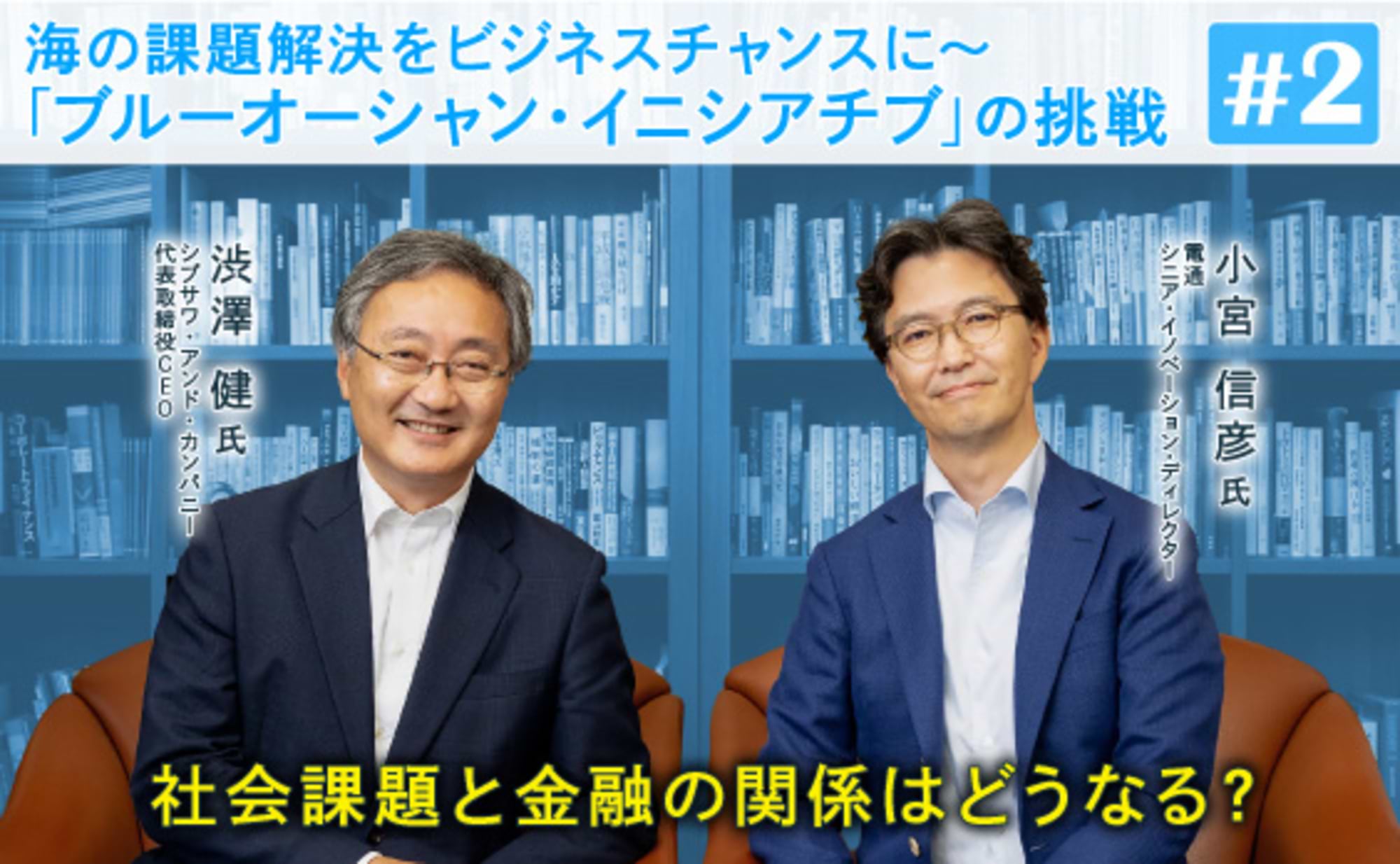
 Turning Ocean Challenges into Business Opportunities: The Blue Ocean Initiative's Challenge [2/2]
From Japan, a nation of the sea, we consider "Solving Social Issues through the Ocean" and "Finance and the SDGs."
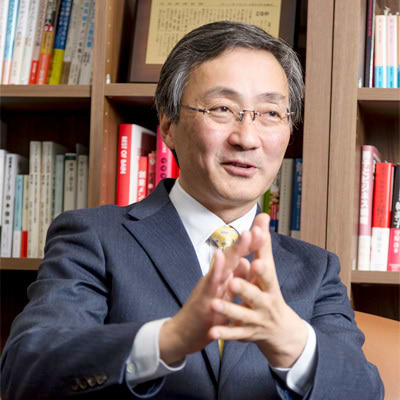
Ken Shibusawa
Shibusawa & Company, Inc.
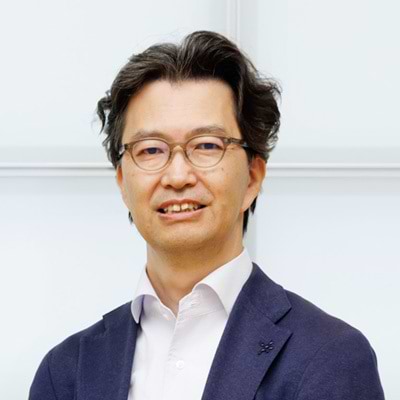
Nobuhiko Komiya
Dentsu Inc.
Today, the oceans face urgent global challenges: marine plastic pollution, illegal fishing, and climate change. Despite their abundant resources, much remains unknown. In every aspect, they remain understudied, and their potential is undergoing significant transformation or is being lost.
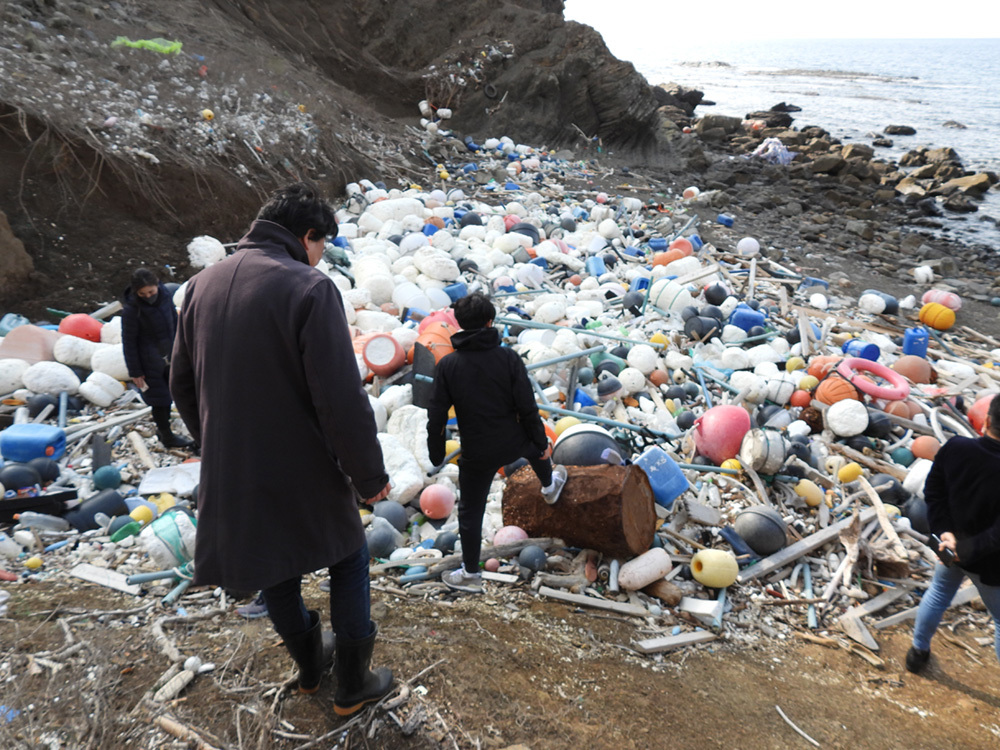
Launched in April 2023 to address this critical situation, the Blue Ocean Initiative (BOI) is a collaborative action platform by the business community aiming to balance ocean conservation and prosperity. With the 2025 Osaka-Kansai Expo, dubbed the "Ocean Expo," as a milestone, it focuses on business development, tackling social challenges not as individual companies but as a corporate alliance.
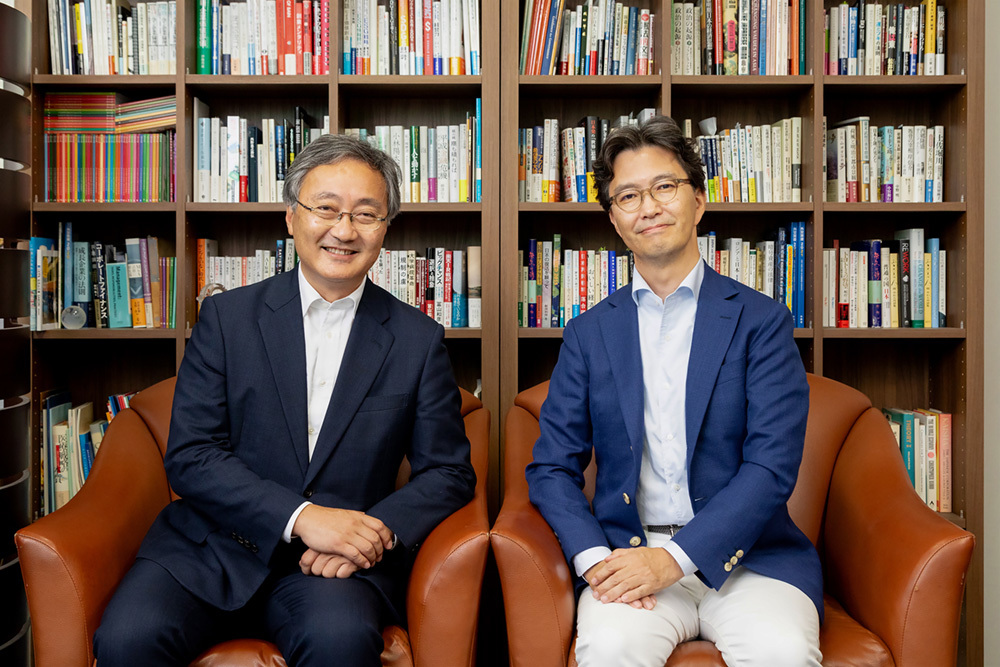
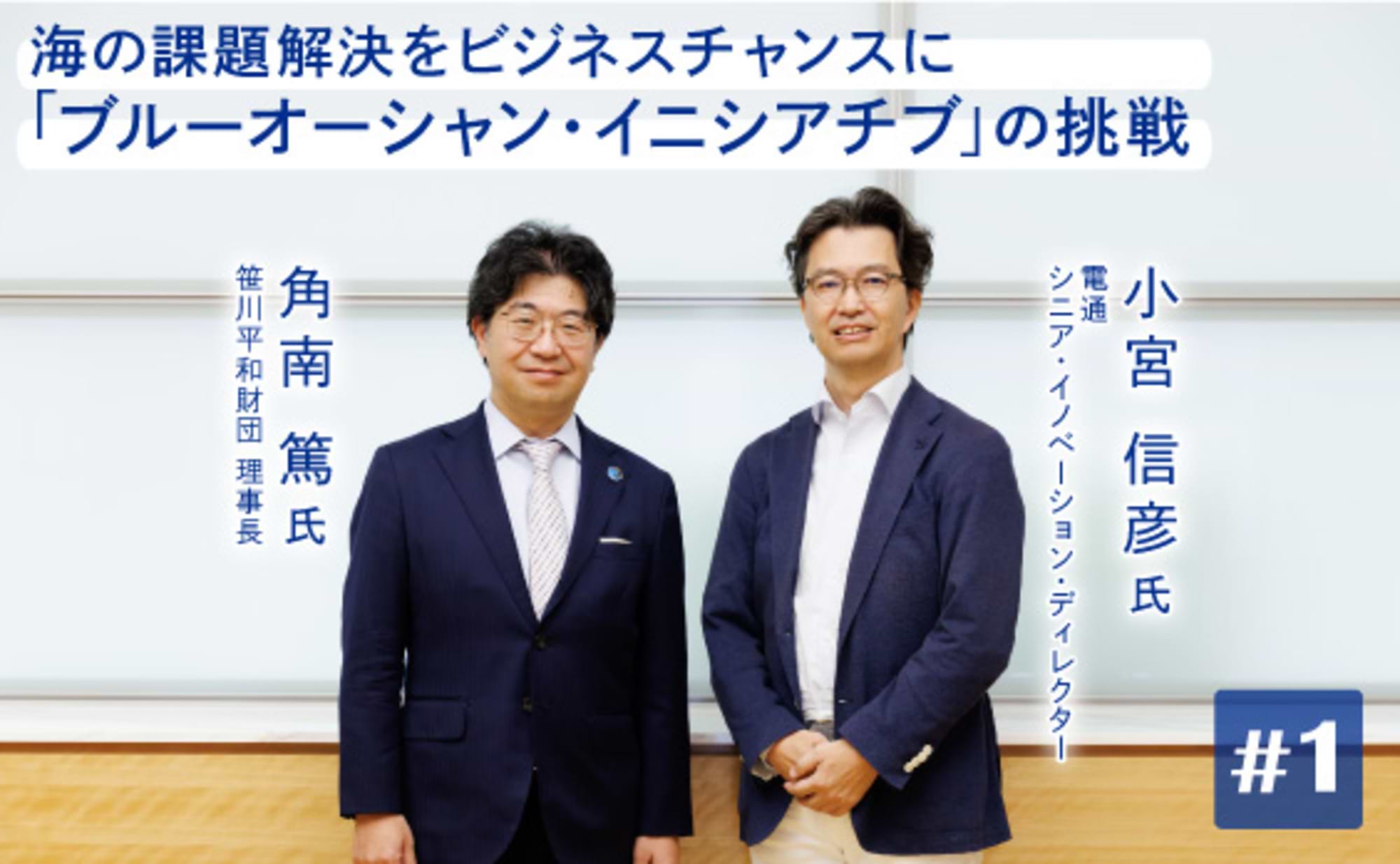
Where does the ocean's potential lie? What is the relationship between solving social issues and finance? What are the advantages of Japanese companies in conducting ocean-related business? This time, Ken Shibusawa (CEO, Shibusawa & Company), a BOI Director and known as the spiritual successor to Eiichi Shibusawa, and Nobuhiko Komiya, BOI Founder and Executive Producer at Dentsu Inc., will discuss the themes "The Ocean and Solving Social Issues" and "The Ocean and Japanese Companies."
<Table of Contents>
▼Japan's Seas Are Vast and Rich in Diversity!
▼ "Coexistence and Mutual Prosperity," "Knowing When You Have Enough." Japanese Thinking Is Essential for Solving Social Issues
▼What Will Happen to the Relationship Between Social Issues and Finance? What Is "Impact," Gaining Attention as Post-ESG?
▼What Matters Most Is Purpose and Interest. Toward a Better Society with the Spirit of "The Analects and the Abacus"
Japan's seas are vast and rich in diversity!
Komiyama: First, let's talk freely. Please share your thoughts on ocean sustainability and the relationship between the sea and business.
Shibusawa: Hearing the keyword "sea" now, what immediately comes to mind is the 2025 Osaka-Kansai Expo. Expos are crucial platforms for communicating to the world what matters most for industry in this era. For Japan, a maritime nation, to use such a stage to share the potential and developmental possibilities of the ocean feels deeply meaningful.
Why is Japan called a maritime nation? It's because Japan's seas are surprisingly vast. Both Japanese citizens and people overseas likely have the image that "Japan is a very small island nation." However, the area of its Exclusive Economic Zone (EEZ), including territorial waters, is approximately 4.47 million square kilometers. This is about 12 times the size of its land territory and ranks sixth largest in the world.
Moreover, Japan is long and narrow, stretching from Hokkaido to Okinawa. This creates tremendous diversity in terrain, ecology, culture, and every other aspect. We are in a position to fully reap the benefits of the sea and continue to pursue and develop its potential.
That's precisely why it's meaningful for Japan to use the Expo as an opportunity to communicate about societal challenges related to the sea. I have high hopes for this as a message to the world about the ocean, originating from Japan.
Komiyama: I see. Hearing that "Japan has the world's sixth-largest EEZ" and "its elongated shape fosters great diversity" really highlights why Japan is called a maritime nation and how deeply connected it is to the sea. Now, regarding sustainability, what are your thoughts? Japan and the sea, or more broadly, the world and the sea, humanity and the sea. Do you think we can continue to build meaningful relationships with the ocean?
Shibusawa: I don't know. Especially Japanese people—haven't we taken the sea for granted for too long? We talk about the "Mother Sea" or the "Great Sea," yet we've pushed it to its limits. It's precisely because we've exploited the sea that we've prospered. I think we've now entered a phase where, while expressing gratitude, we must also take responsibility.
I don't think the phrase "Save The Planet" is entirely accurate. The Earth will remain long after humanity has gone extinct. What we must do is "Save The People on The Planet." I believe this is a more precise expression.
Whether the future Earth becomes a planet without humans or remains a planet with humans depends entirely on us. Especially going forward, the rapidly growing, populous, developing nations of the Global South will see tremendous economic potential. However, if they follow the same path as developed nations, there's a significant risk of further overburdening the planet. If we continue like this, it's certain that eventually, People will no longer be able to live on the Planet.
And it is precisely in this situation that Japan's technology and expertise can be valuable. I believe we must leverage the technology, knowledge, and mindset Japan has cultivated as a maritime nation, while collaborating with many countries ( ) to "protect the oceans while advancing economic development."
"Coexistence and mutual prosperity," "knowing when enough is enough." Japanese ways of thinking are indispensable for solving societal challenges.
Komiyama: What specific Japanese technologies and mindsets do you think can be applied to "protect the oceans while advancing economic development"?
Shibusawa: Not conquering the sea, but coexisting with it. I believe such a mindset, along with a healthy flexibility, can be valuable in the international community as well.
This strays a bit from the ocean topic, but last month I was invited to France for a lecture titled "Let's Consider a New Economic Model Based on Scarcity." In my closing remarks, I mentioned: "Japan has the concept of 'knowing when enough is enough.' It's a country that values not just gratitude for the present state, but also coexistence with nature rather than conquering it." I said, "We shouldn't forget that, especially us Japanese." When I said that, I received tremendous applause. Ah, I felt, this is a message that resonates not just in Japan, but worldwide.
Japanese people have long been skilled at knowing when enough is enough, utilizing what already exists, and creating new value. Thinking back, long before the term SDGs emerged, we used the word "eco" and engaged in reuse and recycling. Our technological prowess in systems combining different elements, like renewable energy and hybrid systems, is also high. I think what's good is that flexibility, or ambiguity in a positive sense.
Their approach to meetings and such is also unique. Rather than making crisp, black-and-white decisions, they leave room for ambiguity, seeking consensus while moving forward slowly, step by step. Sometimes it's frustrating because progress is slow, but moving forward this way creates many options: "If that doesn't work, let's try this instead," "Let's backtrack a bit," "Let's test that person's idea." It allows for flexible adaptation when the unexpected happens. I believe this flexibility is a unique strength of Japan and Japanese companies.
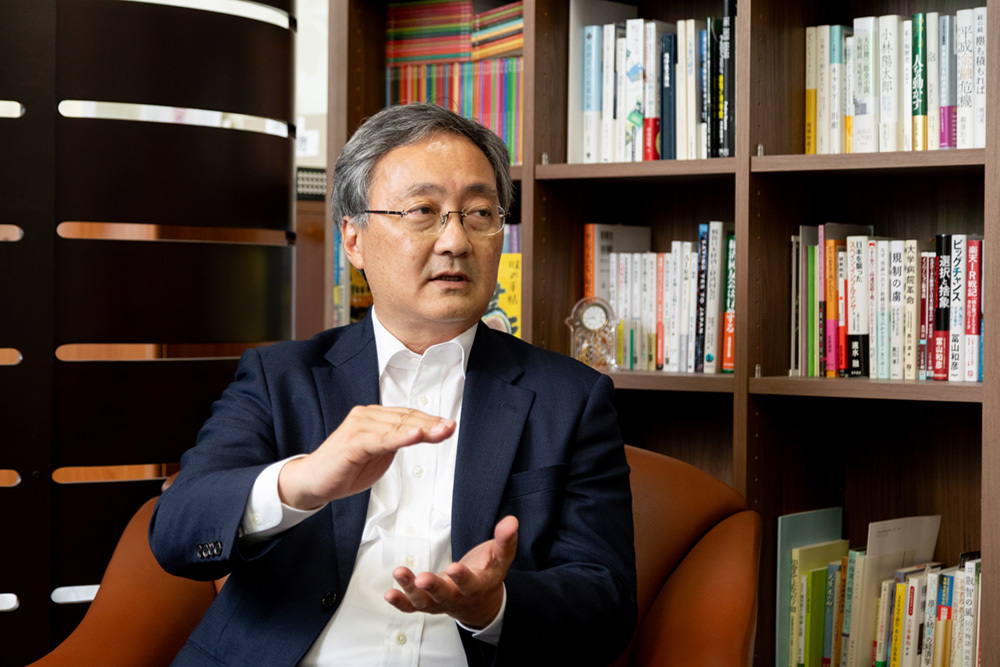
Komiyama: So it creates redundancy. Speaking of which, I've heard Japan has the world's highest number of century-old companies. Surviving a hundred years means preserving what works, coexisting, and continuously creating new value. Japanese people and companies must possess a unique, resilient strength and adaptability.
Shibusawa: I agree completely. As I mentioned at the beginning, I believe Japan has significance in communicating about the oceans. However, this isn't about Japan taking the lead or dominating. Rather, by Japan taking the initiative, I think we can create a unique, circular model for the oceans— —one that enables various nations to prosper together.
How will social issues and finance relate? What is "impact," gaining attention as the post-ESG focus?
Komiyama: Moving forward, please share your insights on finance, your area of expertise. Over the past decade or so, concepts like CSV and ESG have rapidly gained traction, transforming how we invest in companies. Could you explain the catalyst and background behind financial institutions starting to focus on CSV, ESG, and solving social issues?
Shibusawa: ESG originated from discussions at the United Nations. It became clear that the traditional capitalist economy, focused solely on sales and profits, was placing increasing strain on the planet and causing detrimental effects, eventually becoming unsustainable. This led to the idea of establishing another axis: "solving social issues."
However, "solving social issues" is extremely difficult to evaluate. Unlike sales or profits, it isn't something you can quantify with numbers. Often, companies would simply disclose information saying, "We did something good," or "We worked hard," and that was the end of it. This creates a sense of being forced to do it. It felt like companies were taking a passive stance, thinking, "We're doing this because the government told us to," or "We're disclosing information because investors asked us to."
This is where the concept of "impact," often called post-ESG, comes in. It adds a third dimension to the traditional two-dimensional visualization of value (risk/uncertainty and return/profitability). It involves setting clear goals and measuring effectiveness against this impact dimension. It's not just about disclosing that "we're doing good things." It's about clearly stating: "We aim to achieve △ by year 〇, and here's what we'll do," "Our current metrics are like this," and "We achieved/didn't achieve this."
Moving from a two-dimensional to a three-dimensional evaluation will certainly increase complexity. However, we already live in a three-dimensional world, so this isn't entirely new. We also expect companies to become more proactive and self-driven, as their value becomes visible not only through financial metrics but also through environmental and social impact, and this impact itself becomes an investment target.
Komiyama: I see. So it's the idea of visualizing and evaluating not just financial value, but also non-financial value. Is this concept gaining traction in Japan?
Shibusawa: The UN introduced the concept of ESG investing to Japan just before the Great East Japan Earthquake. At that time, the economy was in shambles, and frankly, many companies and financial institutions were in a situation where "tomorrow's livelihood mattered more than the future of the planet." That was the context. Some companies lamented, "Everyone keeps saying ESG, ESG, but the only thing they ever ask about is the G (Governance)." Well, if you can't get the G right, you certainly can't get the E (Environment) or S (Social) right...
However, when GPIF (Government Pension Investment Fund), Japan's largest stockholder, demonstrated its seriousness by signing the UN-initiated PRI (Principles for Responsible Investment) in 2015, Japanese companies finally started to move.
However, Japan has long held the concept of "sanpo yoshi" – "beneficial for the seller, beneficial for the buyer, beneficial for society." I believe this concept is fundamentally aligned with ESG and impact investing. If we could deepen the discussion, properly measure this "sanpo yoshi," and communicate from Japan that we are setting clear goals for it, it could become a truly global, important value that resonates worldwide.
What matters most is purpose and interest. With the spirit of "The Analects and the Abacus," toward a better society.
Komiyama: It seems ESG and impact investing aim to solve social issues as part of business operations. More Japanese companies are proactively offering services and products to improve society through their core businesses. What concerns me is the sincerity behind this movement. How seriously are companies engaging with this trend?

Shibusawa: That varies by company. It depends on the management and the employees. If I had to emphasize one thing, it would be that "purpose is crucial." Investors don't want to invest in companies that come across as insincere, like those saying, "We'll work hard to solve problems because we want your investment."
Without a strong conviction like, "This is our raison d'être!" or "That's why we're solving this social issue through this business in this specific way!", it's hard for their actions to feel truly sincere. They need to discuss with various stakeholders, share their vision, return to their roots, and also consider the future. I believe the concept of learning from the past to understand the new is essential.
Another crucial point is thinking long-term. While making profits now is important, we must also design systems that ensure the Earth thrives, people thrive, and sustainable, long-term, solid profits are generated.
Komiyama: So, valuing your purpose and considering business and management with a long-term perspective is crucial. Hearing all these insights has really clarified Japan's relationship with the ocean, its role in solving social issues, and financial trends.
Thinking about BOI again in this context, BOI is truly a Japanese-style co-creation space. I believe solving social issues is impossible for a single company alone. I launched it because I felt we needed a place where diverse companies and people could pool their wisdom and collaborate. However, if activities remain confined within BOI, it loses much of its meaning. I tell participating companies, "Let's create many activities that are easy for people to understand and grasp, and then expand them further."
Shibusawa: That's excellent. We've discussed various complex topics, but ultimately, I believe this boils down to curiosity and that sense of excitement. Questions like "What lies at the bottom of that ocean?" or "Where does this current flow?" – I believe these deepen as more people become curious and start asking them. I want people to pursue the "Why" relentlessly. I hope this becomes a place where we continue to explore with curiosity, unraveling the mysteries of the deep sea, discovering ways to utilize untapped resources, and finding paths and possibilities for coexisting with the ocean.
Over 100 years ago, when Japan was beginning to prosper, my great-grandfather, Eiichi Shibusawa, published a book titled "The Analects and the Abacus." It contained ideas like, "We've become wealthy, but this can't be the end," and "Neither the Analects (aspirations and ethics) alone nor the abacus (economic profit) alone is sufficient. For a better society, we need both 'Confucianism and the abacus.'" I believe this message resonates profoundly with our times. Let us return to the spirit of Confucianism and the abacus: not leaving things to others, but acting proactively and collectively. I hope BOI's activities and the resolution of social issues will advance.

Was this article helpful?
Share this article


Newsletter registration is here
We select and publish important news every day
For inquiries about this article
Back Numbers
Author
Ken Shibusawa
Shibusawa & Company, Inc.
President and CEO
Nobuhiko Komiya
Dentsu Inc.
第7マーケティング局
Senior Innovation Director / Urban Future Design Unit