Note: This website was automatically translated, so some terms or nuances may not be completely accurate.
 The Dentsu Inc. Healthcare Team's Perspective on Consumers' True Feelings [2/3]
Over 60% of Consumers Have "Low" Health Awareness!? 8 New Healthcare Clusters
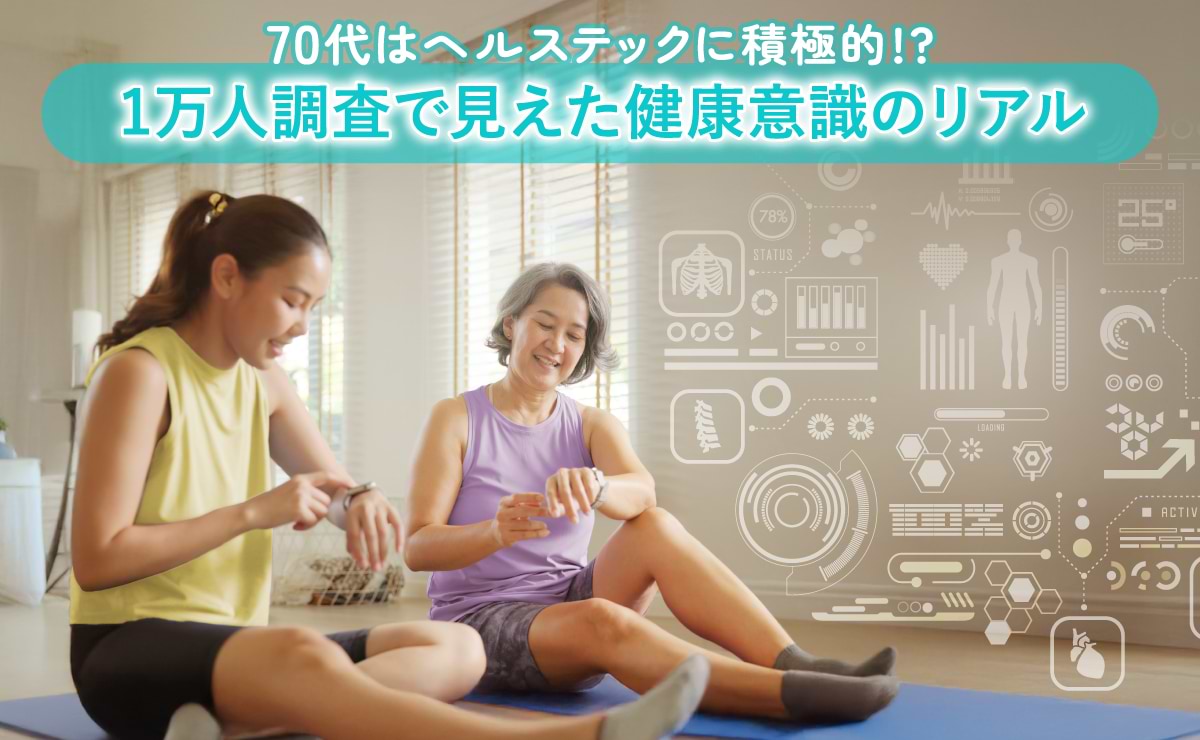
In the first installment of this series, we introduced differing health awareness by age group and some unexpected findings. This time, we'd like to explore concrete hints on "what type of person responds to what approach to trigger health behaviors," using the perspective of Dentsu Inc. Healthcare Team's original cluster analysis.
Our "Wellness 10,000 Survey" (survey overview here ) has been updated for 2025, adding individuals in their 70s to the survey population and refreshing the cluster analysis based on health awareness and behavior. We conduct cluster analysis classifying consumers into 8 distinct types using approximately 130 factors related to health awareness and health behaviors.
When designing healthcare products and services, how should the target consumer profile be practically defined? We hope this provides insights into "which segments will respond to what" when considering business and new product development strategies, as well as communication strategies.
Overview and Prevalence of Healthcare Clusters
First, let's look at the overall picture of the 8 types.
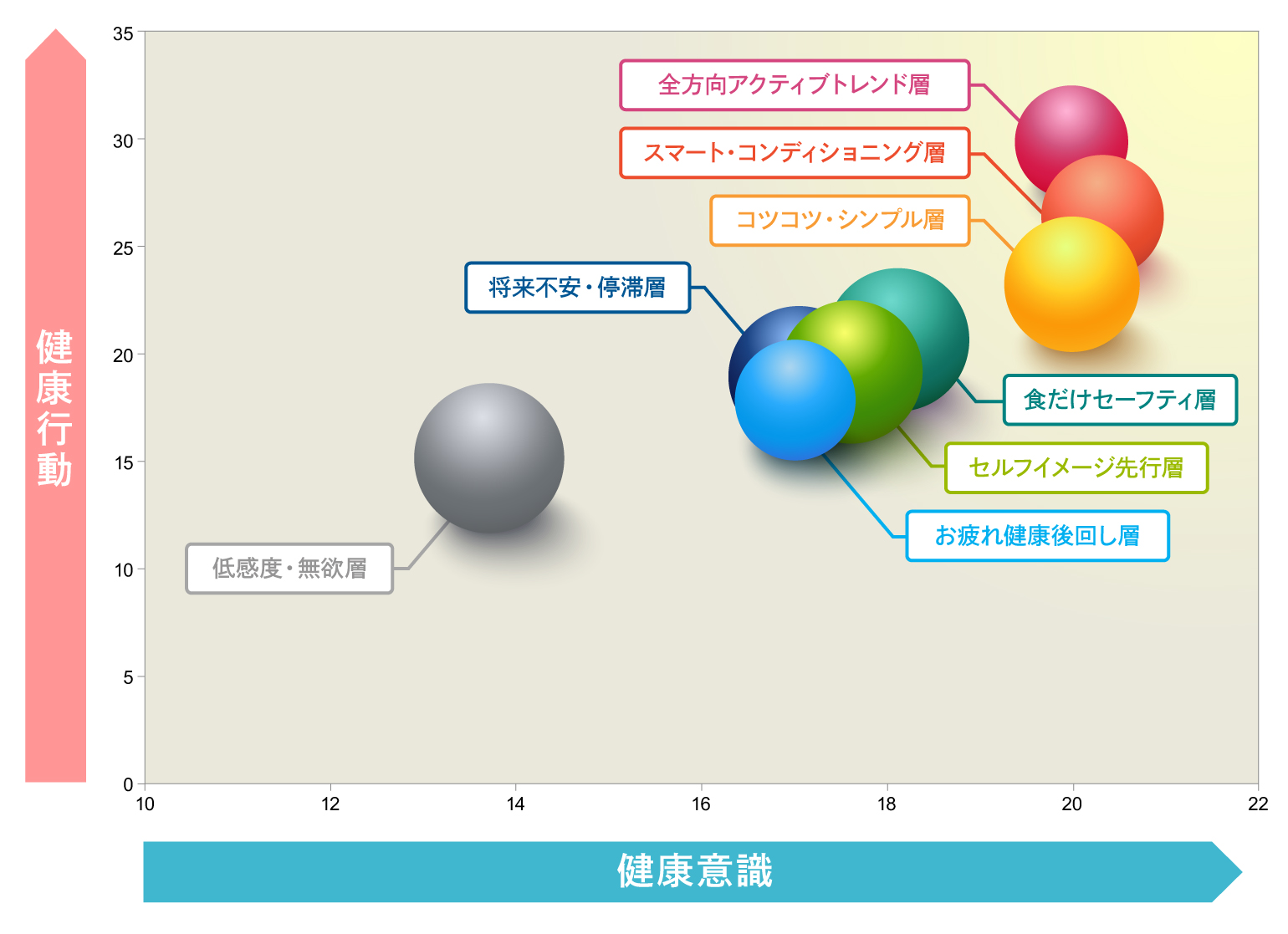
The figure below plots the average response scores for health consciousness and health behavior on the horizontal and vertical axes. In other words, clusters positioned higher on the right correspond to individuals with higher health consciousness.
Each cluster appears at the following rates.
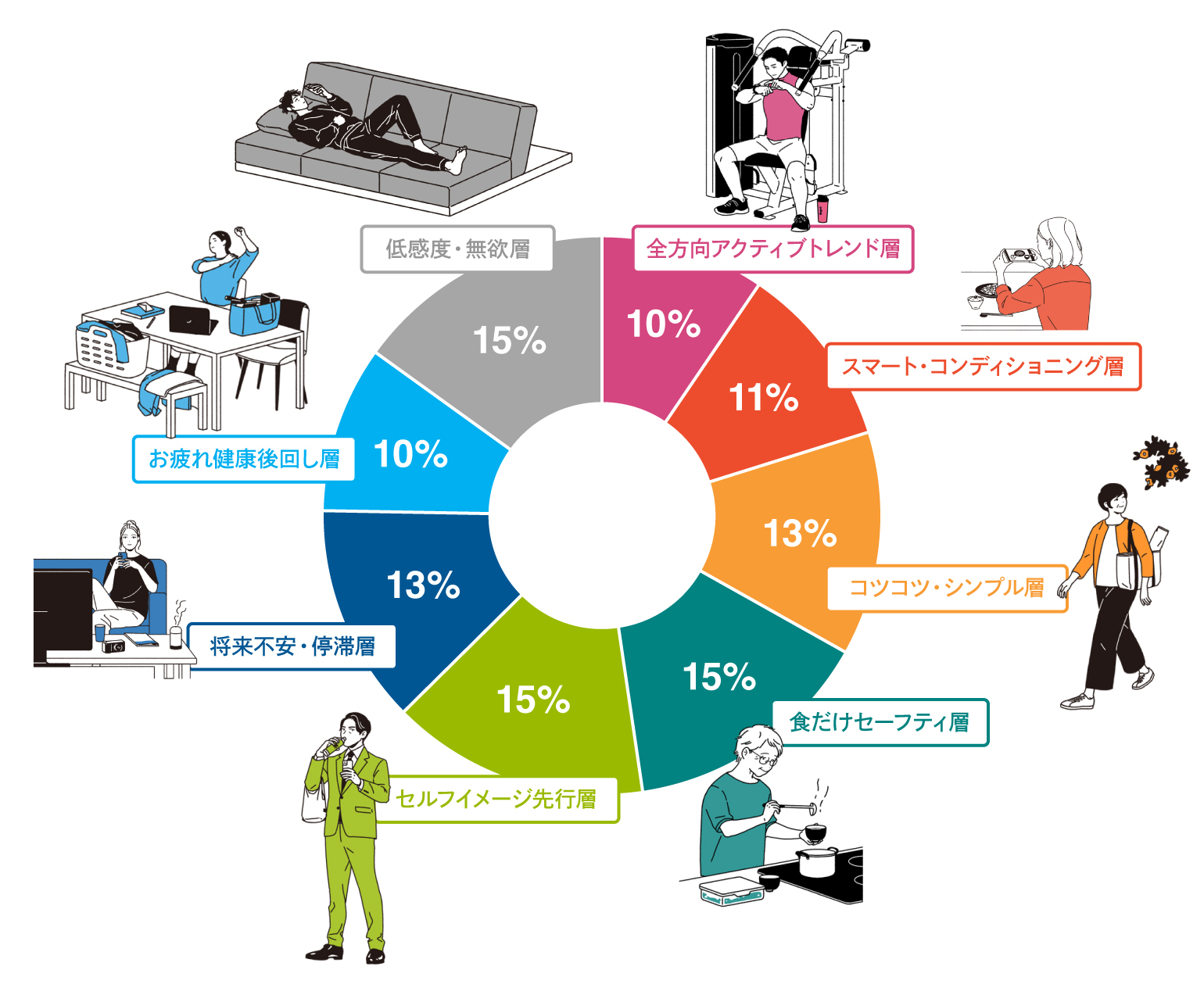
Generally, the three clusters that come to mind as the "high health awareness group" are: ① All-Around Active Trend, ② Smart Conditioning, and ③ Steady and Simple. Beyond these, five additional clusters with unique health perspectives and behavioral characteristics exist, and it has been revealed that these account for 66.9% of the total.
Even among the health-conscious, motivations vary
Now, let's introduce the characteristics of each cluster.
First, we'll introduce the three clusters generally considered to be highly health-conscious.
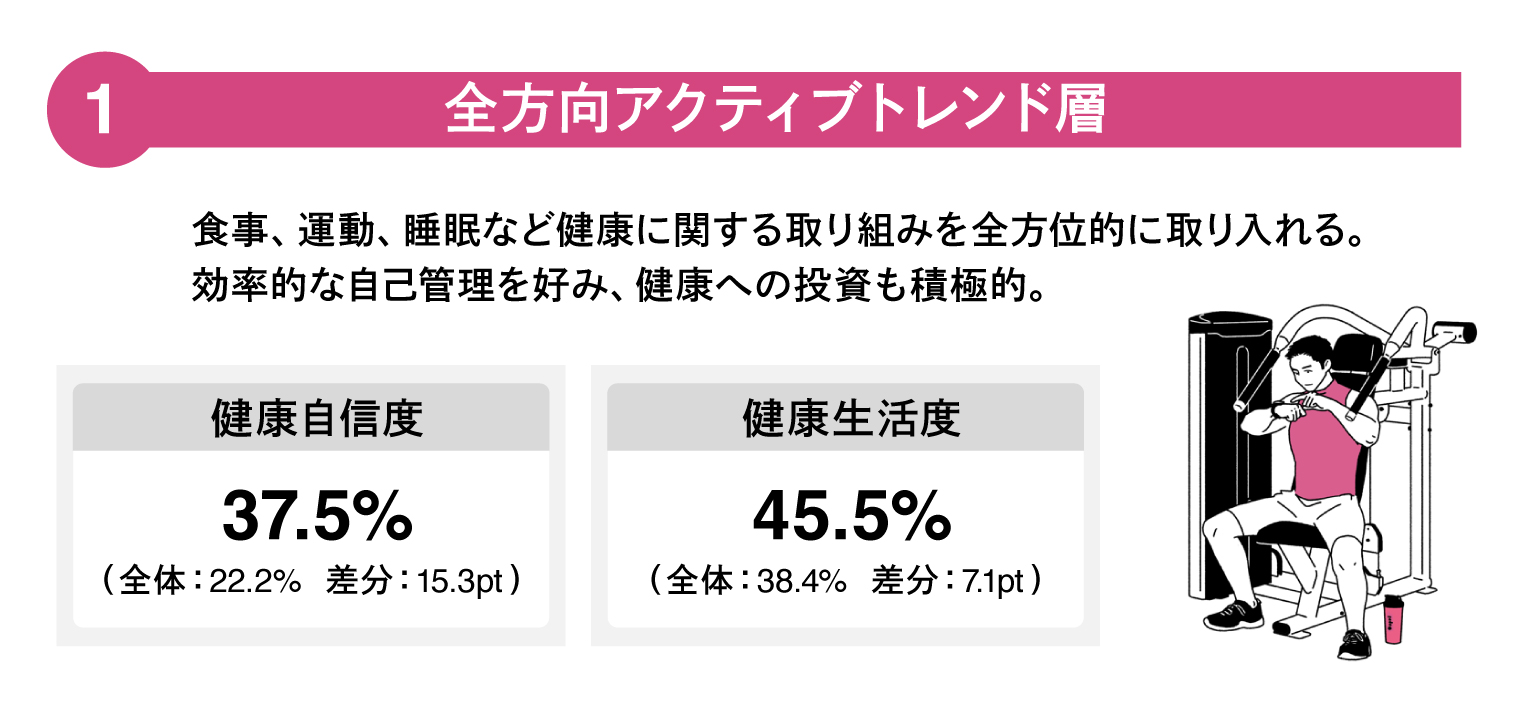
The Omni-Active Trend Group enjoys the process of efficiently managing their health by balancing actions like diet, exercise, and sleep. They spend the most on health-related items among all clusters and are notably dominated by men in their 20s to 40s.
They also show strong interest in health tech and proactively engage with emerging health tech products and services gaining prominence. Since they tend to actively try new things if convinced by the functionality, it's effective to provide experiences that visualize effects through evidence and data while incorporating the latest market trends.
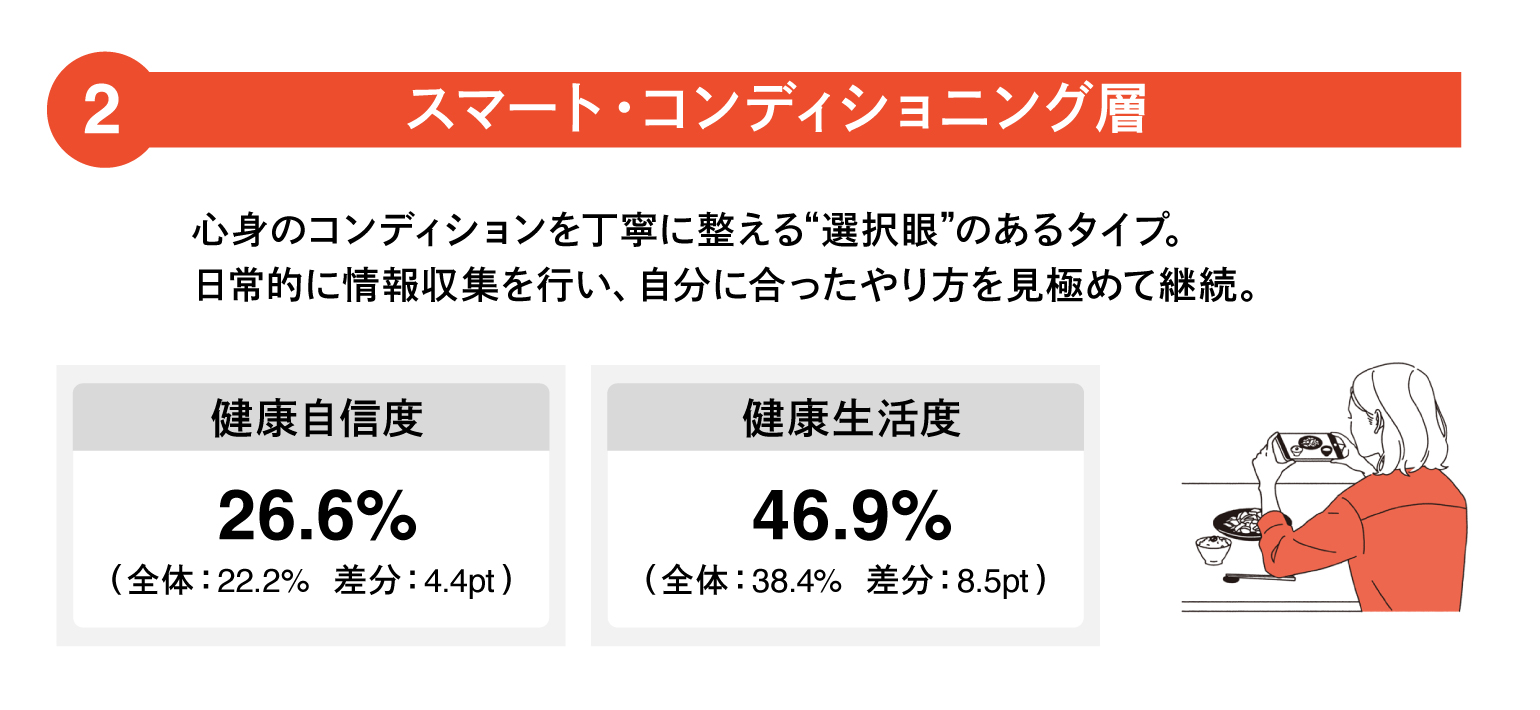
The Smart Conditioning segment epitomizes the growing trend of "optimizing physical and mental condition." Their primary motivation is improving performance in work, household chores, and learning, making them highly receptive to approaches framed within this context.
With an almost equal gender split, they consciously lead health-focused lives daily and are proactive in using health tech services and products to track and manage sleep and diet. They are also proactive in gathering information, characterized by a mindset of identifying suitable methods and committing to them consistently.
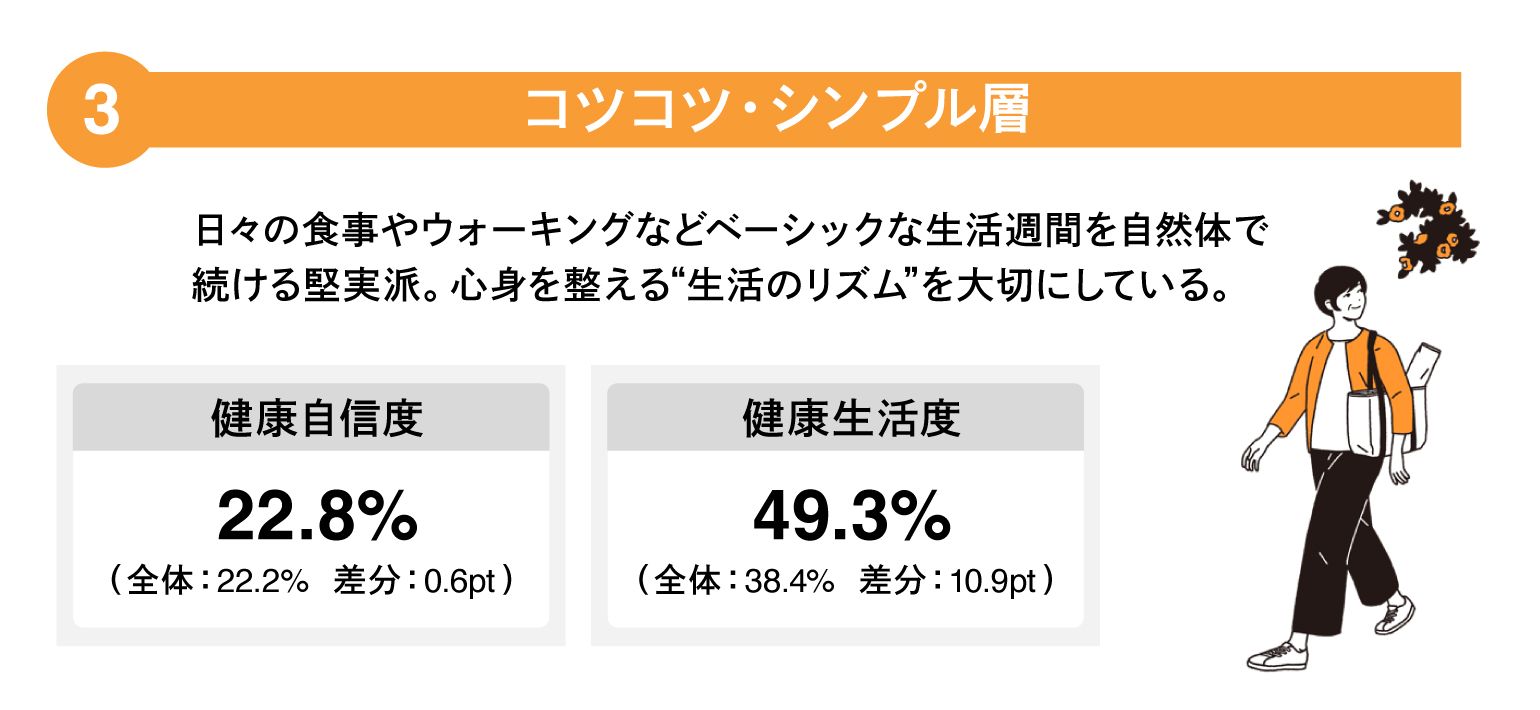
The Steady & Simple group is a middle-aged and older cluster, with women comprising about 70%. They are a solid, reliable type who value basic lifestyle habits. They also have the highest self-assessment of leading a healthy life among all clusters. They emphasize regulating their daily rhythm by carefully accumulating basic actions like daily meals and walking. They actively incorporate apps that offer points based on steps taken, making them a group that responds well to designs that fit naturally into their daily routines without strain.
Even among groups that appear less health-conscious, diverse backgrounds influence behavior
Next, we examine the remaining five clusters, each exhibiting unique tendencies in health awareness and behavior.
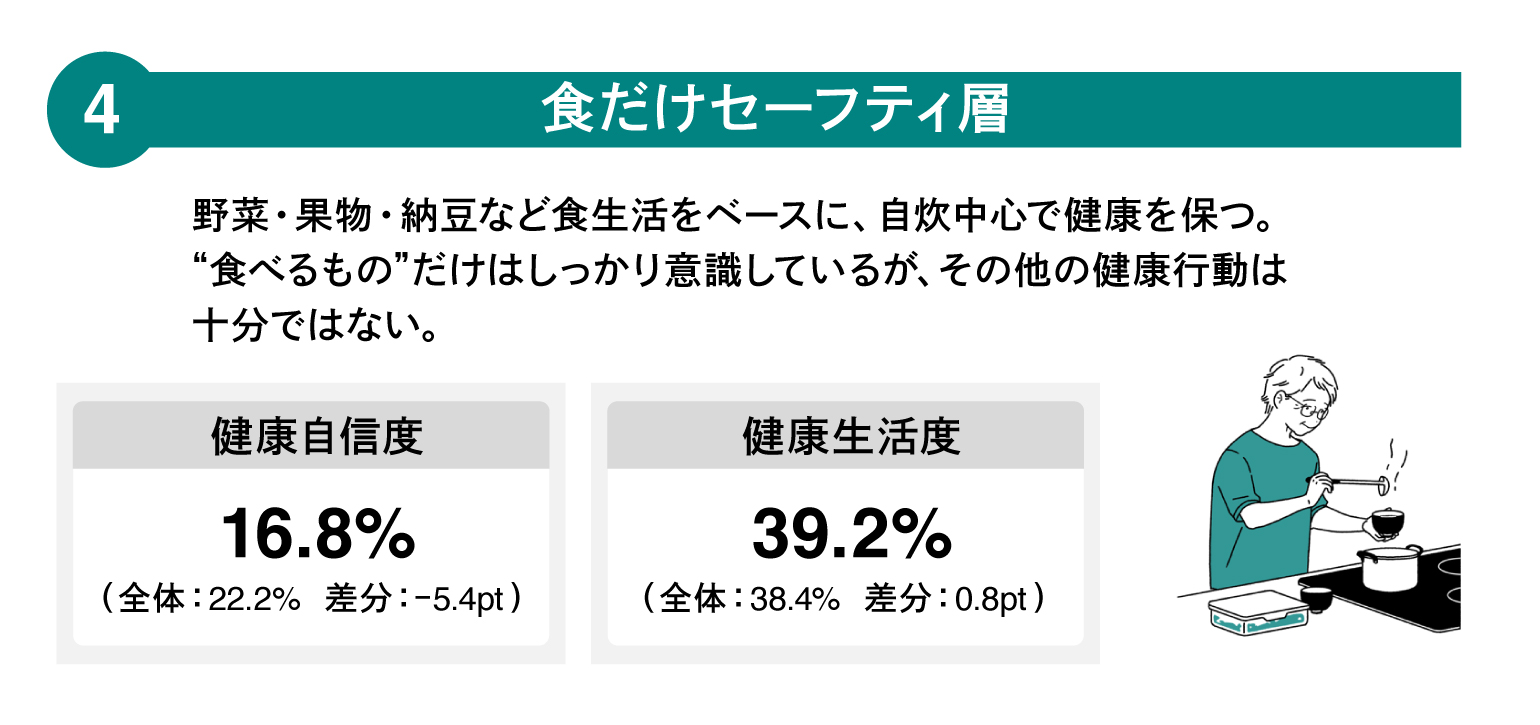
The Food-Only Safety Cluster is particularly prevalent among those in their 70s and exhibits relatively low confidence in their health. Characterized by minimal use of specific health foods or foods with functional claims, this group strongly favors maintaining health through a natural, home-cooked diet centered on familiar ingredients like vegetables, fruits, and natto.
While they pay attention to their diet, they often do not engage sufficiently in other health behaviors like exercise. Given this background, they are considered a group highly receptive to approaches emphasizing natural, reassuring elements that can be easily integrated as an extension of their daily eating habits.
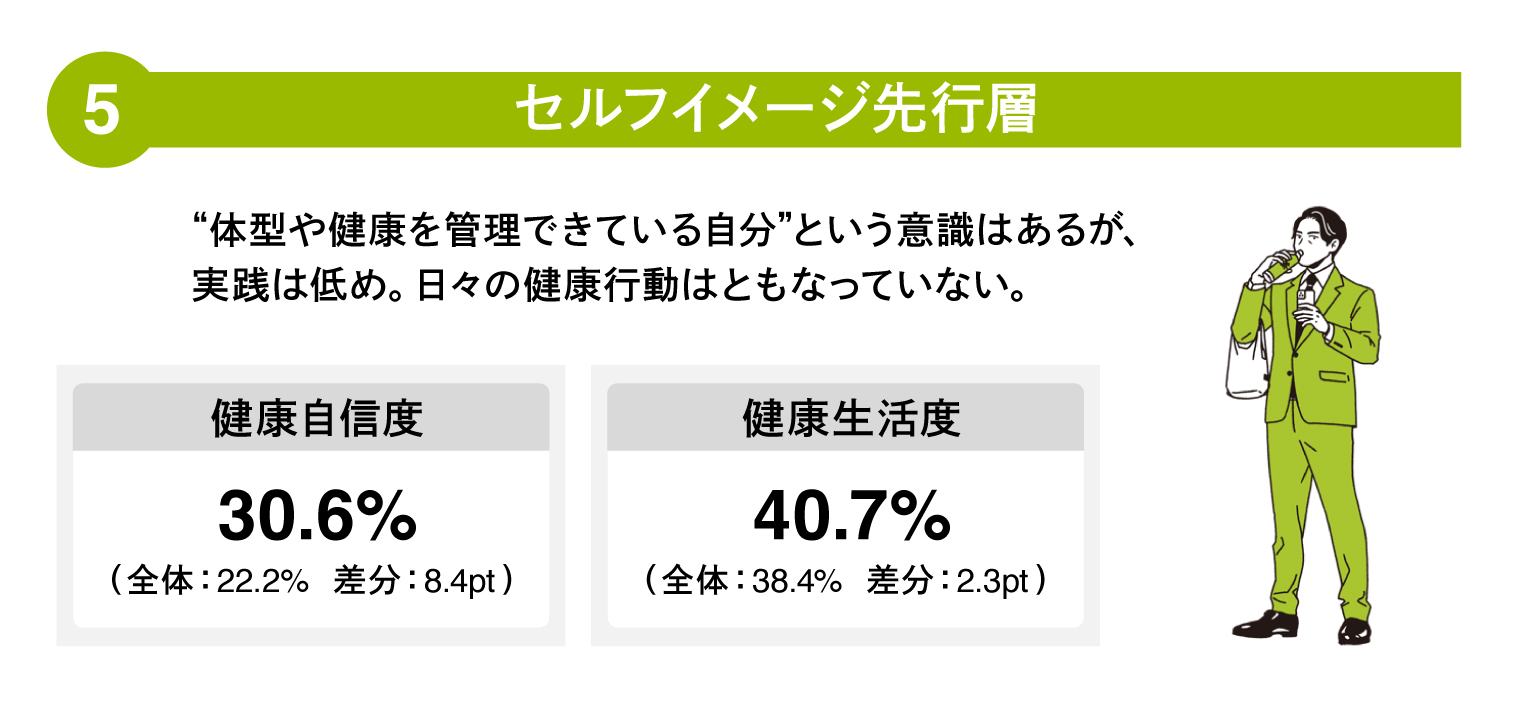
The Self-Image-Driven Cluster exhibits relatively high confidence in their health despite limited actual health behaviors. While they perceive themselves as "effectively managing their health," their actions often don't match this perception. This cluster is predominantly middle-aged and older, with men comprising about 60% of its members. Approaches presenting simple, smart health habits that resonate as personally fitting are likely effective for this group.
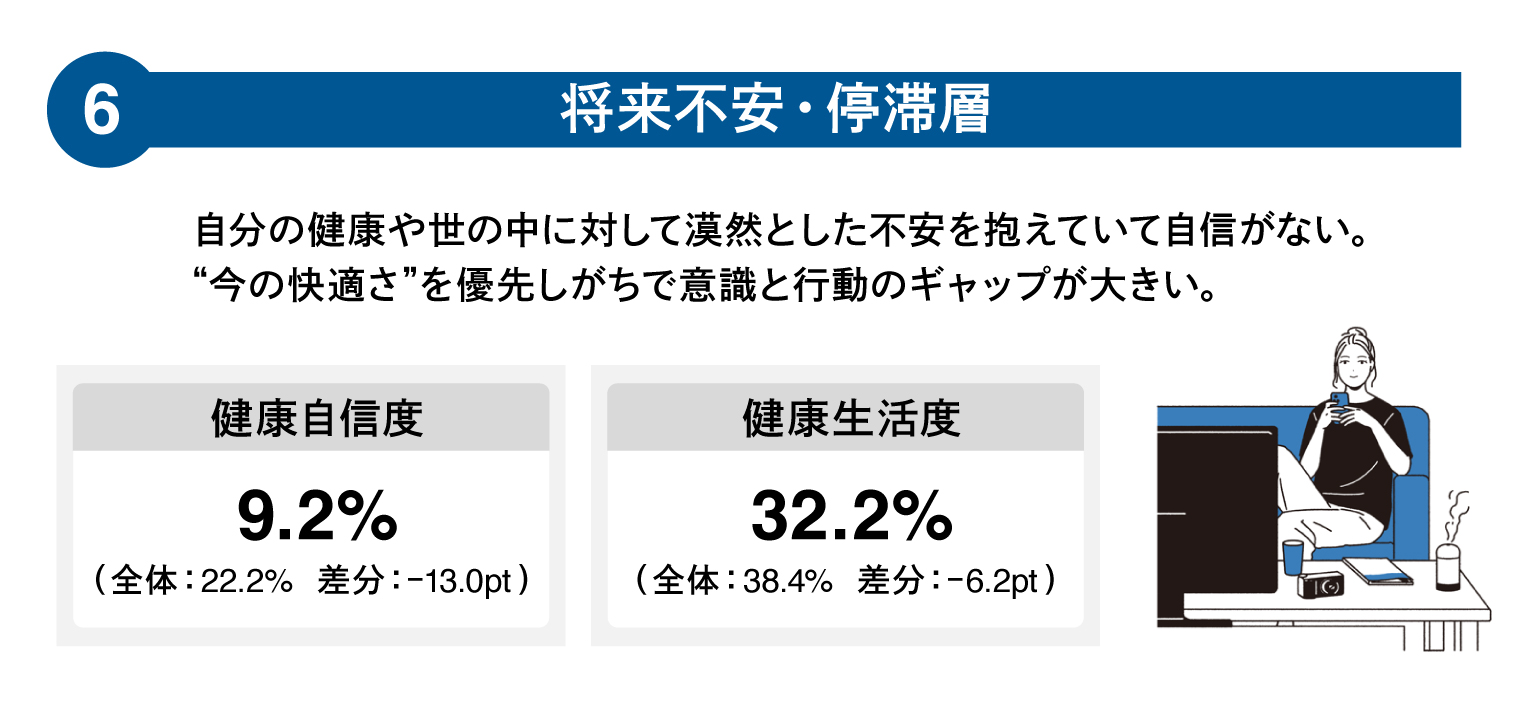
The Future Anxiety/Stagnation group experiences strong mental stress and tends to harbor vague anxieties about their own health and societal conditions. They exhibit the lowest health confidence among all clusters, with women comprising about 60% of this group, though it spans a wide age range. They also tend to prioritize immediate comfort, leading to a significant gap between awareness and action. This group is considered highly receptive to approaches focused on stress reduction and mental care.
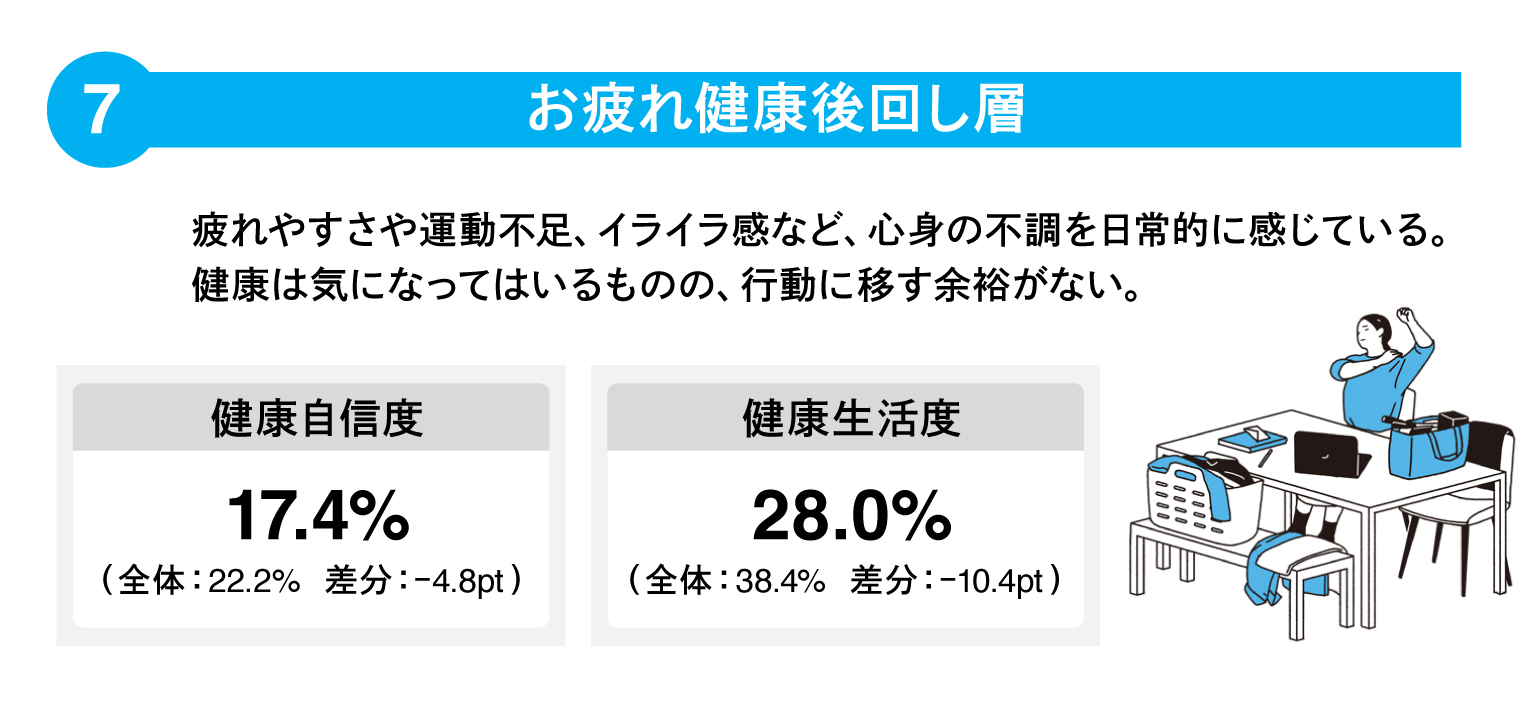
The "Exhausted Health Postponers" are people who experience discomfort but lack the capacity to engage in health-promoting behaviors. They are characterized by daily discomforts such as fatigue, lack of exercise, and irritability.Centered around middle-aged individuals of both genders, with approximately 70% being married, this demographic likely includes many at life stages lacking financial, temporal, or mental leeway—balancing work, childcare, and personal time. Consequently, their health investment tends to be the lowest among all clusters. Approaches that are low-burden, quick to implement, and help them regain themselves while alleviating discomfort may be suitable for this group.

Finally, the Low-Sensitivity/Unambitious Group. While showing little health awareness or action, they are not entirely unhealthy and occasionally engage in light exercise while watching videos. Men comprise 60% of this group, characterized by low stress and few worries; they can be described as the "unambitious" group regarding health. Representing 15.1% of the total population, they are the largest segment. Engaging this group will be crucial for the future healthcare market.
This cluster analysis reveals that simple classifications like "high health awareness" or "low health awareness" fail to accurately capture consumers' realities. Even within the high-health-awareness group, some enjoy health activities themselves, while others focus on maintaining daily conditioning. Conversely, even among groups appearing less health-conscious, the reasons for inaction vary significantly based on background and values. This underscores the essential need for a perspective that carefully interprets consumers' contexts and values.
Furthermore, it's noteworthy that the remaining five clusters, excluding the three considered highly health-conscious, account for 66.9% of the total population. Most people do not live prioritizing "health alone" amidst their busy daily lives. Rather, the natural reality for consumers—and the genuine truth we in healthcare must fully confront—is that health behaviors often get pushed aside amidst other values, pleasures, and priorities.
To truly understand consumers' health behaviors, we must look beyond the actions themselves to the underlying values and daily lives. These eight clusters should provide valuable insights.
[Survey Overview]
Survey Name: 19th Annual "Wellness 10,000-Person Survey"
Conducted: June 2025
Survey Method: Internet survey
Survey Participants: Men and women aged 20 to 70 nationwide (10,000 samples)
Survey Company: Dentsu Macromill Insight, Inc.
The information published at this time is as follows.
Was this article helpful?
Share this article


Newsletter registration is here
We select and publish important news every day
For inquiries about this article
Author
Jiang Wanqing
Dentsu Inc.
第6マーケティング局 マーケティングコンサルティング2部
Planner
Latest Healthcare Insights from the Wellness 10,000-Person SurveyHealthcare Trend Forecasts for a Healthy and Happy FuturePR-Driven Marketing "MARKETING+PRUS"The Dentsu Inc. Healthcare Team's Perspective on Consumers' True FeelingsNot just advertising! Dentsu Inc. professionals who run alongside companies and businesses