The creative capabilities and brand power that publishers have cultivated through the production of magazines and books are now attracting significant attention. In this series, we will introduce the assets and content creation strategies of publishers in today’s era—covering a variety of themes—to marketers, while offering tips on how to leverage the publishing industry.
The theme of this installment is “editorial intelligence.” Kobunsha, which publishes women’s magazines such as “CLASSY.,” “VERY,” “STORY,” and “BiST,” launched the “Dokucho Research Institute” (where “Dokucho” is short for “reader survey”) in 2025 and has been supporting companies’ marketing activities ever since.
In this article, we’ll focus on the initiatives of the Dokucho Research Institute to explore how publishers can extend their “editorial intelligence”—the ability to articulate readers’ true feelings, cultivated over many years—into marketing functions.
We welcomed Sayaka Hara and Shinichiro Takano, directors of the DENTSU SOKEN INC. Research Institute, as guests, and Erika Matsubara—a marketing planner at Dentsu Inc. and director of “Dentsu Mama Lab,” which connects real-world insights from mothers and families to solve corporate challenges—led the discussion.
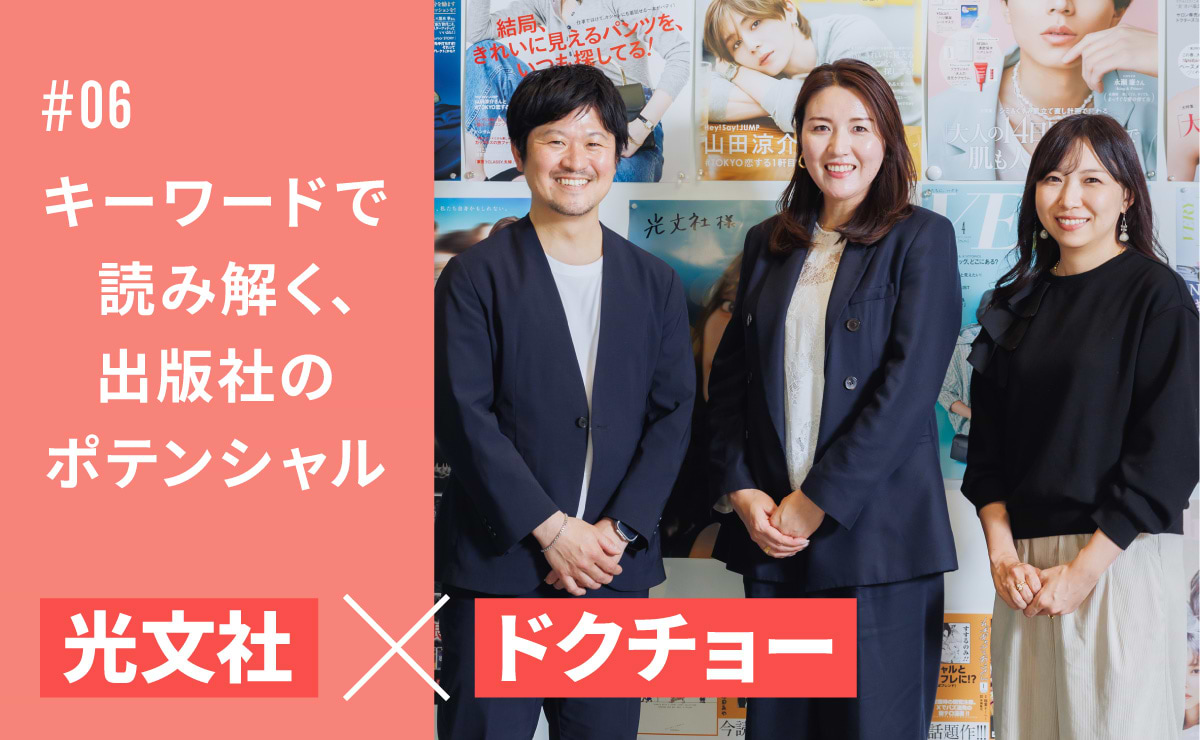
From left: Shinichiro Takano, Senior Researcher at Dokucho Research Institute; Sayaka Hara, Director of Dokucho Research Institute; and Erika Matsubara, Marketing Planner at Dentsu Inc.
Uncovering “Latent Needs” Through One-on-One Interviews with Readers
Matsubara: First, please introduce yourself.
Hara: After joining Kobunsha as a new graduate, I spent many years editing monthly women’s magazines, serving as editor-in-chief of “JJ,” head of the web editorial department for “CLASSY.”, and head of a business division. I was appointed head of the newly established Brand Business Division in 2024, and in 2025, I launched the Dokucho Research Institute, where I currently serve as director.
Takano: After working in advertising sales at a newspaper company and in advertising and content sales at an IT media firm, I joined Kobunsha driven by the belief that “there is still great value and potential in media content.” Currently, as Chief of the Brand Business Department, I am involved in supporting editorial department initiatives, including the Dokucho Research Institute.
Matsubara: Next, could you tell us about the overview of Dokucho Research Institute and its role within Kobunsha?
Hara: Dokucho Research Institute is a cross-functional organization within the company that bridges the editorial departments and corporate clients. Kobunsha’s women’s magazine editorial departments have a long history of placing great importance on one-on-one-style interviews with readers, which has given rise to content and messaging designed to support women everywhere. We believed that by combining such reader surveys and qualitative research with quantitative data from each magazine’s membership base, we could help companies solve their challenges and develop effective PR strategies for their products.
Until now, requests from companies have mainly been based on the premise of placing ads in specific publications, such as “We want to run a sponsored ad in *VERY*.” However, in response to changing times, we felt there should be a cross-functional organization that could serve as a central point of contact—one capable of understanding corporate challenges and making flexible proposals based on reader insights. This led to the establishment of Dokucho Research Institute.
Matsubara: What kind of organization is it?
Hara: Dokucho Research Institute currently consists of eight people in total. In addition to Takano and myself, staff members from the editorial departments of Kobunsha’s monthly women’s magazines and the advertising sales team in the Media Business Department also serve as “Research Institute members” on a part-time basis.
For the approximately 88,000 email newsletter subscribers across our four publications—*CLASSY.*, *VERY*, *STORY*, and *BiST*—we regularly conduct quantitative surveys through questionnaires and the like, while also inviting them to participate in focus groups for qualitative research. In addition to the reader groups and members of each publication, we also conduct qualitative research with target audiences outside the reader base who regularly interact with our writers and editors.
By combining the qualitative insights gained from these routine reader surveys with the quantitative data collected through questionnaires and other methods, we create data with a higher level of resolution. We call this “data with a human face,” and Dokucho Research Institute is a marketing organization that leverages this data to solve business challenges.
Matsubara: We, too, recognize the difficulty of capturing insights in today’s world, where values are becoming increasingly fragmented. At the same time, there’s a growing demand for “capturing the subtleties of people’s true feelings,” isn’t there? “Data with a Face” is a catchy name—but how exactly do you collect this data?
Hara: When collecting qualitative data, our editors often work alongside writers to meet with readers and members of our target demographic in person—at cafes, for example—on a daily basis to conduct interviews. During these sessions, which take place in a relaxed, casual atmosphere—much like a girls’ night out—we observe details such as what the participants are wearing, their makeup, and the perfume they’re wearing, while also paying close attention to their facial expressions and choice of words to discern their true feelings.
In addition, each publication has its own reader organization. By spending extended time with these members, we can ask about their present and future aspirations while understanding their background—such as how their perspectives have changed from last year to this year, what magazines they’ve read in the past, and what life stages they’ve gone through. In other words, I believe the ability to conduct “long-term tracking” is a strength unique to magazines.Perhaps because these are gatherings with the editorial teams of women’s magazines—which have long been attuned to readers’ lives and concerns—those invited seem to feel at ease sharing their true thoughts, and I get the impression that many of them are very open in their discussions.
I’m also always moved by the responses to our quantitative surveys—so many people fill the open-ended sections with their opinions and thoughts. This relationship with our respondents creates research methods and a depth of data that sets us apart from typical market research firms.
Matsubara: I see. So rather than simply recording words, you’re capturing a three-dimensional view of each individual—including their appearance, the atmosphere they exude, and even the “timeline” of changes in their life stages. I’m convinced that it’s precisely this accumulation of primary information that creates that “depth of data.” Has anything about companies’ reactions to this “data with a human face” particularly impressed you?
Hara: When we present quantitative data from our email newsletter subscribers alongside qualitative data based on reader surveys, companies almost always show far greater interest in the qualitative data. These days, every company already has quantitative data. Beyond that, they face the challenge of wanting “something that can’t be uncovered by quantitative data alone.” I feel we’re in an era where quality is valued over quantity when it comes to data.
A Reader’s Single Comment Can Change a Company’s Understanding of Its Target Audience
Matsubara: Moving forward, I’d like to ask about the specific step-by-step process Dokucho Research Institute follows when supporting companies with their marketing efforts. Do you often start by visualizing the company’s challenges?
Takano: That’s right. Companies typically reach out to us to discuss what we can do to address the challenges they’re facing. From there, we determine which media outlets’ readership best aligns with the company’s challenges and products. We then consult with the editorial department, conduct reader surveys if necessary, and use the editors’ insights to develop concrete outcomes.
Hara: We’re seeing an increasing number of requests from companies saying, “We’re interested—please come explain your services to us.” When we visit to explain and tell them, “We can do more than just magazine tie-ins—we can also conduct insight surveys,” they’re often surprised.
Matsubara: When conducting reader surveys based on requests from companies, have there been instances where “a single comment from a reader changed the company’s understanding of its intended target audience”?
Takano: A recent example that stands out is Kose’s “Insight Survey on Fragrance and Lifestyle.”We divided our reader group members—all in their 30s—into three groups: unmarried, married, and those with children, and held focus group discussions. During the session, participants in the group with children mentioned that they never have a moment when both hands are free due to holding their children or doing housework. They said they’d love to be able to apply fragrance using just one hand with a pump. They also voiced a desire for all hair creams and body creams to be pump-style. We hadn’t really noticed this “pump need” for fragrances before.
Hara: Another interesting case was that of Onward Personal Style (hereinafter “Onward”), with whom we’ve been collaborating on a made-to-measure suit business for the past two years. Faced with the challenge that, despite the significant increase in working women in recent years, the market for women’s made-to-measure suits has been slow to grow, we conducted qualitative and quantitative reader surveys targeting women in their 20s through 50s who read *CLASSY.*, *VERY*, and *STORY*.
We posed the hypothesis, “Don’t your partners, boyfriends, or male family members wear custom-made suits?” and asked them about it. Nearly 100% of the qualitative survey respondents answered “yes.”Some even mentioned, “I’ve accompanied my partner when he ordered a suit.” However, when they visited stores, they didn’t feel the atmosphere was welcoming for women to have suits made, so they couldn’t relate to the experience personally. On the other hand, precisely because we live in an era where people are dissatisfied with off-the-rack clothing and seek greater efficiency, many expressed positive sentiments about the experience of having their measurements taken to create a special, one-of-a-kind suit just for themselves.
We gleaned these insights from our reader survey and developed the concept “Order for Me♡ Project—Beyond ‘What Suits Me’: My Very Own Custom-Made Suit.”For example, in *CLASSY.*, we used the phrase “#MyFavoriteJK (Jacket)” to describe a custom-made piece packed with what the wearer “loves” and designed to showcase her best self. By doing so, we were able to tie together all our tools—including print pages, web articles, YouTube, and social media campaigns—under a single theme for an annual project.
Takano: As these two examples show, the key value of reader surveys lies in the fact that they “yield insights with a depth that quantitative data alone often fails to capture.”
Matsubara: In the Onward case, the hypothesis that “the men in the target women’s social circles might be wearing custom-made suits” was also very astute.
Hara: Thank you. As an editor for over 20 years, I’ve interviewed more than 1,000 people. Throughout that time, I’ve always been formulating hypotheses like, “Could there be needs, true feelings, or unconscious thoughts that we haven’t yet recognized?” I also believe it’s effective in qualitative research to immediately ask questions based on my hunch—such as, “I suspect there might be this kind of challenge or background”—and then interpret the quantitative data based on the answers received.
Thinking “What if…” and focusing on the answer from just one person out of 100
Matsubara: From what you’ve shared so far, it’s clear that you’re demonstrating “editorial intelligence”—using the editorial skills honed through magazine production to analyze insights gained from research and transform them into valuable knowledge. What are the unique strengths that an editor brings to deriving insights from reader surveys?
Hara: We use the term “insight creation,” but an editor’s key insight is that “primary information is crucial.” We place great importance on “who to ask and what to ask them” and “what the respondents—whose faces we can see—actually say.”
Furthermore, as a publishing company, we have a long history of valuing “words.” How do we transform the insights and candid opinions uncovered through qualitative research into words that truly resonate? I believe this ability to articulate ideas is also what people view as “editorial intelligence.”
Matsubara: I see. The term “Insight Creation” is very symbolic. I feel that thoroughly prioritizing primary information and possessing advanced verbalization skills are the keys to transforming these insights into knowledge that drives business. In the course of these deep conversations, are there any specific points during interviews that you, as an editor, feel you “absolutely cannot overlook”?
Hara: I tend to think, “What they say at the beginning might not be their true feelings.” Rather, I suspect that what comes out next is often their true feelings—or at least close to them. During casual conversations in our research, we sometimes share personal stories of our own. When we open up about ourselves while conversing, the research participants tend to reveal thoughts that are closer to their true feelings as well. I also wonder if there might be some underlying social issue hidden behind that individual’s story.
Takano: People tend to open up quite a bit. I think the key is that we’ve built a relationship of trust with our readers.In addition, the unique perspective of an editor is crucial. For example, in a survey or interview where 99 out of 100 people answer “black,” the general perspective—and even an AI—might conclude, “This opinion is black.” But by thinking “what if,” an editor can focus on the single person who answered “white.” I consider this to be an editor’s intuition, or a unique strength. In short, I believe the combination of a relationship of trust with readers and the editor’s expertise is what matters most.
Identifying the Hidden Concerns of Parents and Linking Them to New Product Development
Matsubara: Could you share any examples of how this has been implemented in corporate marketing?
Takano: Working with Ajinomoto Co., Inc., we identified the latent needs of mothers raising children through reader surveys and supported them all the way through the development of a new product called “Knorr® Soup Mocchi®.” Ajinomoto Co., Inc. faced the challenge of “wanting to create new consumption opportunities to reach more people with their products.” They hypothesized that this opportunity might lie in children’s “snack time.”
In response, we conducted qualitative research targeting mothers raising children who read “VERY.” What we discovered was that, as expected, children today are busy with extracurricular activities, and there is indeed a snacking window between when they return from school and when they head to their activities. However, as parents, they had significant concerns about what to serve, such as, “Even though it’s just a snack, I want them to eat something nutritious,” and “If my child has to prepare it on their own, I’m afraid to let them use the stove.”
Based on the results of this reader survey, the VERY editorial team concluded that “we are now in the era of ‘four or five meals a day.’” With this as the core concept, Ajinomoto Co., Inc. developed a “mochi soup that can be made simply by adding water and heating it in the microwave.” At a tasting event for a prototype of the new product—conducted as a second reader survey—parents shared feedback such as, “Being able to give my child a warm meal that requires just a little extra effort reduces my guilt as a parent.”And so, “Soup Mocchi®”—a product that keeps you full, provides proper nutrition, and can be prepared safely—was born.
Takano: Normally, we receive many requests along the lines of, “We want input on how to make this product stand out.” This time, however, we accompanied the client from the stage immediately preceding that—starting with their initial concerns—and helped clarify the situation to propose, “Wouldn’t it be good to create a product based on this concept?” At Dokucho Research Institute, we hope to continue creating case studies like this in the future.
A publisher’s strength lies in what comes before “being able to produce a magazine”
Matsubara: How do we discover and articulate consumers’ unmet needs? I feel that the success or failure of marketing hinges on this. To find the key to unlocking the “subtleties of consumers’ hearts,” where should marketers begin their thinking?
Hara: While Kobunsha’s magazines are strongly associated with fashion, we view them as “fashion and lifestyle magazines.” We’ve always created content with a focus on “life,” and we believe the standard approach is to establish a narrative where “because of this lifestyle, I can feel confident wearing these clothes.”
Specifically, we’ve long been considering how our products and services can address the social environment surrounding women and their concerns, and how we can empower them. Often, a single woman’s concern reflects broader, similar struggles in society, which are rooted in hidden social contexts and challenges. I believe the idea that there are certainly products and services capable of resolving these issues leads to a market-oriented way of thinking.
Matsubara: So, taking a broader, macro perspective to examine the context of the times is the first step toward gaining insights, isn’t it?In my work as the director of “Dentsu Inc. Mama Lab,” I’m constantly struck by how the environment surrounding mothers seems to be full of challenges. However, when we dig deeper into mothers’ concerns, we often find that they lead not only to solutions for mothers themselves but also to clues for addressing the challenges faced by others and even broader societal issues. Finally, could you share your thoughts on how the value that publishers can provide to businesses and society will expand in the years to come?
Hara: In magazine production up to now, we’ve focused on unnamed challenges and deep-seated insights, incorporating them into our content. By having clients use these insights as the foundation for their services and PR, I believe we can evolve into a company that delivers solutions leveraging the expertise of our editors. Furthermore, our strength lies in our ability to handle the entire process—from developing these solutions to communicating them through our media channels.A publisher’s strength lies in what comes before simply “being able to produce magazines.” Since we ourselves had not always been able to focus on this aspect, we decided to communicate it through the activities of Dokucho Research Institute.
Takano: Looking ahead, as Hara mentioned earlier, we’d like to further promote the “lifestyle” aspect of “fashion and lifestyle magazines.” Each of our publications has a readership that trusts us enough to share their honest opinions, and we use our editorial expertise to distill the insights we gather from them. We want to communicate these strengths more effectively and take on challenges that transcend the boundaries of fashion magazines.I hope we can transcend the boundaries of the publishing industry and create content that gives back to society by addressing the challenges faced by everyday consumers.
Matsubara: Listening to your remarks today, I sensed the immense potential for a publisher’s editorial expertise to contribute to corporate marketing activities.The power of “face-to-face data”—capturing the deep, honest thoughts of a single individual rather than relying on average data from 100 people—and transforming that into value. This deeply resonates with the approach Dentsu Mama Lab values: “exploring real family insights and connecting them to solutions.” I strongly sensed the potential for expanding our partnership beyond the framework of “magazine production” to jointly create value based on the challenges faced by consumers. Thank you very much for your valuable insights.
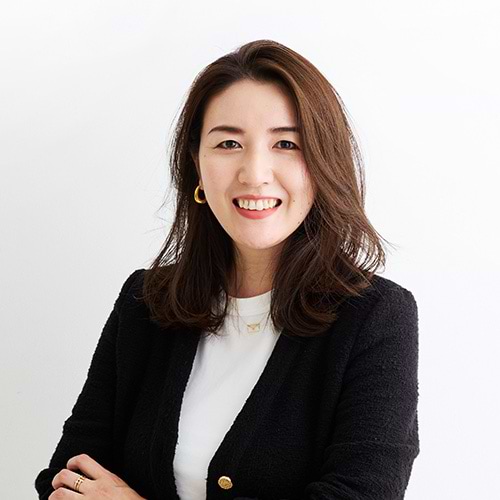
She began working as a student writer for “JJ” upon entering university and, after joining the company, became the youngest-ever editor-in-chief of “JJ” at Kobunsha in 2012.She then became Head of the Web Editorial Department at “CLASSY Web Editorial Office,” Kobunsha’s first dedicated web division for a women’s monthly magazine. Subsequently, as General Manager and Executive Editor-in-Chief of the “CLASSY Business Division,” she oversaw both the print magazine and its digital operations. In 2024, she was appointed General Manager of the newly established “Brand Business Division,” and in October 2025, she launched the “Kobunsha Dokucho Research Institute,” a position she holds to this day.
Shinichiro Takano
Kobunsha Co., Ltd.
Kobunsha Dokucho Research Institute
Chief
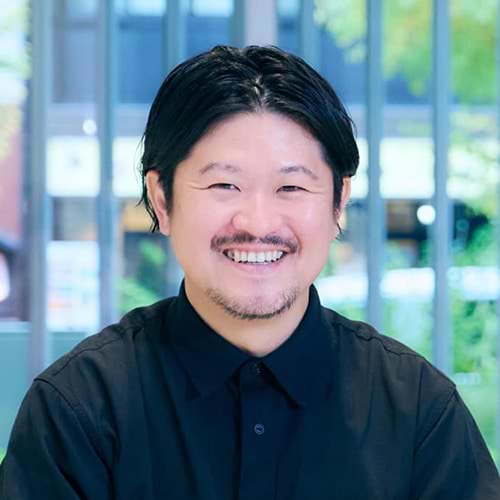
Joined a newspaper company as a new graduate and worked in advertising sales. After working in advertising and content sales at an IT media company, he joined Kobunsha in 2022. He has worked in the Advertising Department, Digital Solutions Department, and Media Business Department, and has been with the Brand Business Department since 2024.
Matsubara Erika
Dentsu Inc.
Marketing Division 8
Marketing Planner / Director, Dentsu Inc. Mama Lab
Leveraging over 10 years of experience living in France, Indonesia, the U.S., and Switzerland, he worked in Dentsu Inc.’s Marketing Division on global brand marketing strategies for a wide range of industries, strategies for entering overseas markets, and support for foreign companies entering the domestic market.Director of Dentsu Inc. Mama Lab since 2022. Under the concept, “When moms smile, Japan smiles. When moms smile, the world smiles,” he is responsible for numerous projects, including exploring real-world insights into families—the core of consumption—and brand communication.

 Unlocking a Publisher's Potential Through Keywords [6/6]