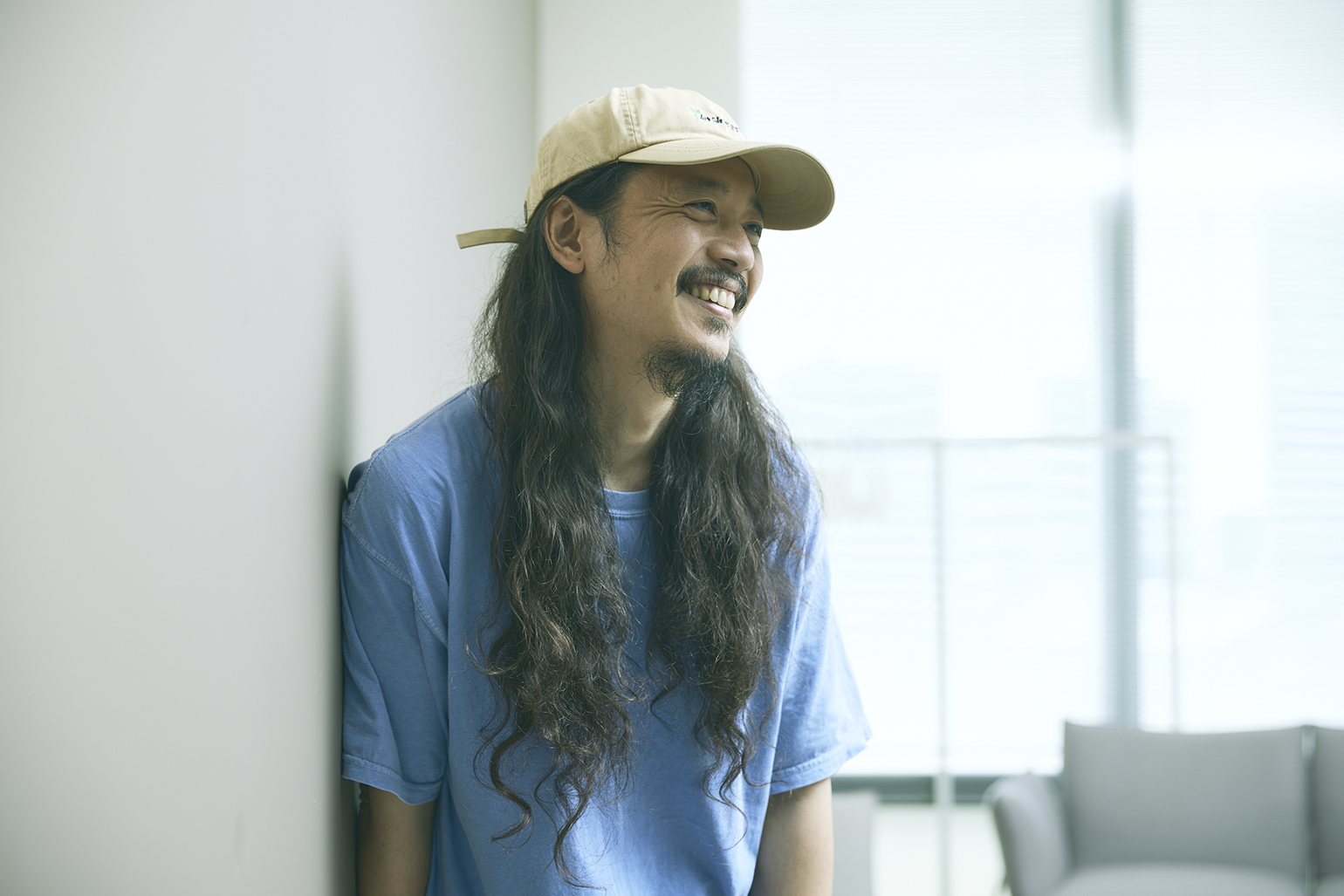
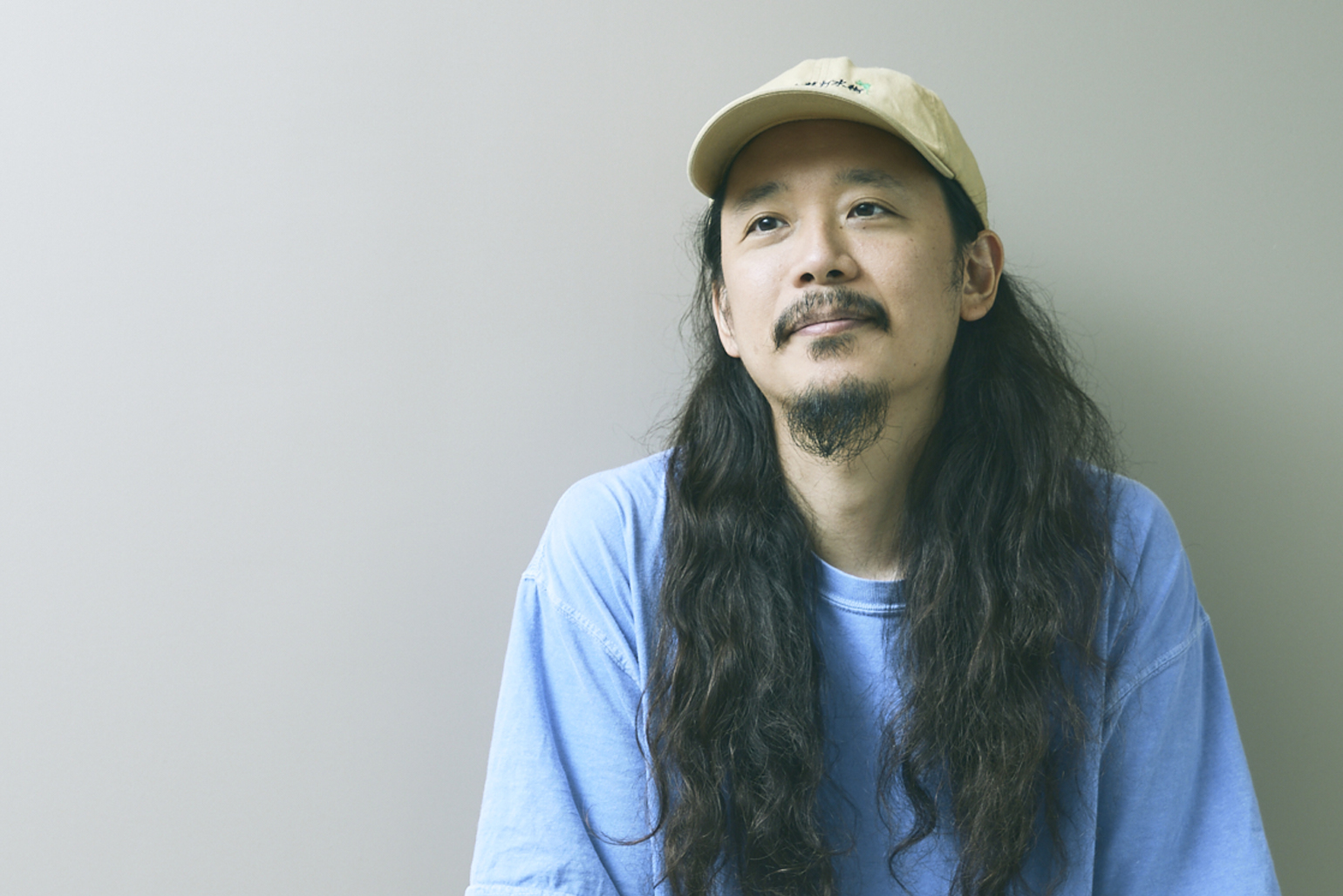
Makoto Nagahisa is both a film director and an employee at Dentsu Inc.
In 2017, his self-produced short film *And So We Put Goldfish in the Pool* won the Grand Prize in the Short Film category at the Sundance Film Festival, considered the pinnacle of independent cinema. Since then, he has continued to release works that have garnered high acclaim both in Japan and abroad.
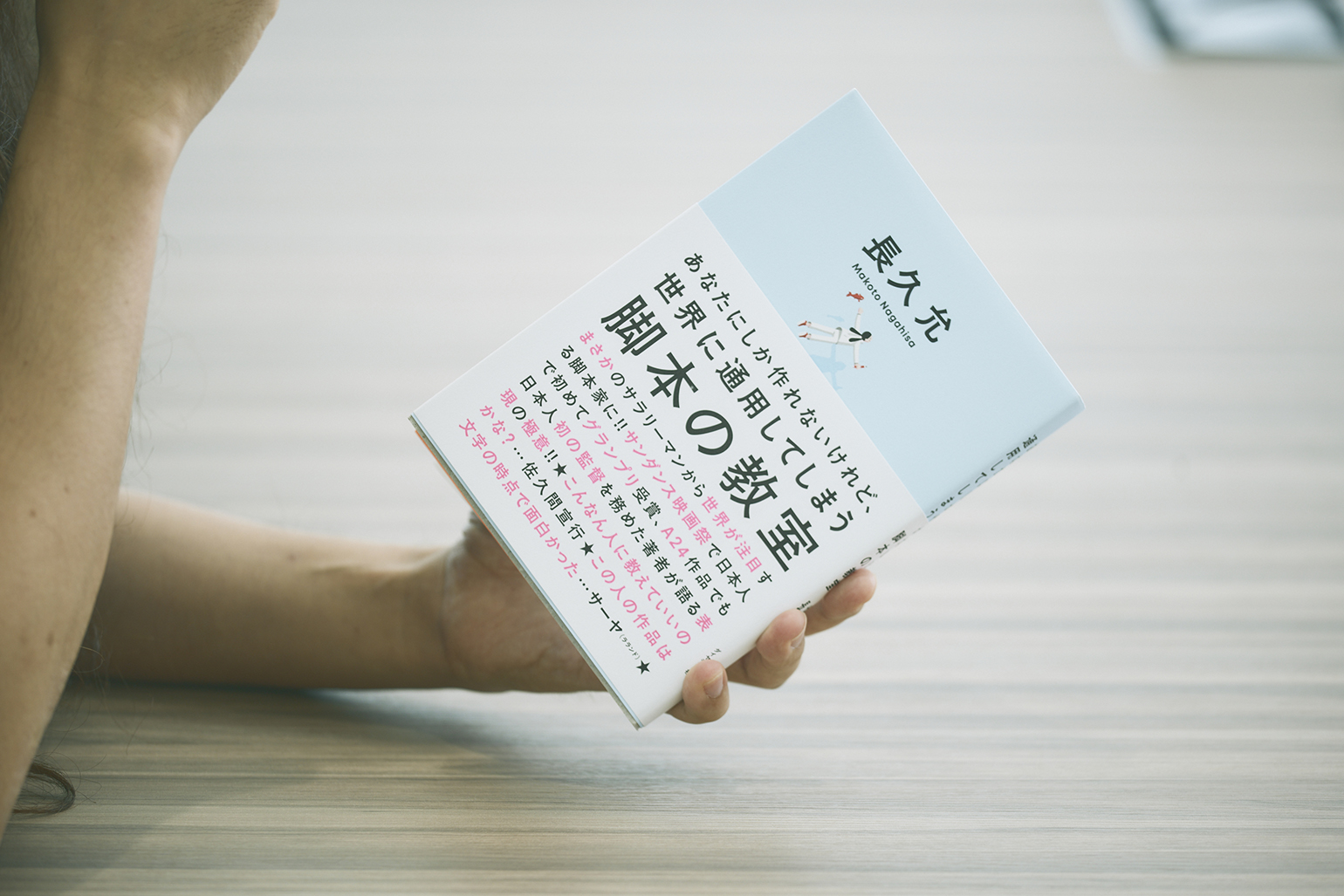
Mr. Nagahisa has now published *A Screenwriting Class: Things Only You Can Create, Yet That Will Resonate Worldwide* (Diamond Inc.).
At first glance, it appears to be a book on screenwriting techniques, but as you read on, you’ll realize it’s packed with insights that resonate with anyone who makes a living telling stories, creators, and anyone seeking their own unique form of expression.
How do stories that reach the world come to be? Surprisingly, the answer lies in “something deeply personal.”
I want to convey the message: “You are already good just as you are”
—First, this is a very fundamental question, but Mr. Nagahisa, why do you make movies?
Nagahisa: “Film” is the medium through which I’m best able to express myself. It’s not writing, music, or manga—it’s precisely because it’s film that I feel I can use all the skills I possess to convey exactly what I want to say.
My mind and my desk have always been a mess (laughs). In advertising, I was really bad at condensing things into 15 seconds or a single line of copy. But film is a medium that offers plenty of room for the audience to absorb even expressions that are incredibly information-heavy and chaotic—whether it’s visuals, sound, people’s facial expressions, or editing. That’s why it suits me so well.
──What exactly do you want to “express” through the medium of film?
Nagahisa: It varies by film, but the underlying message is , “You are already good just as you are.” I want to convey that every single person is “truly good in their own way, and there’s no such thing as being ‘bad.’”
I think children, in particular, have a narrow view of the world and may end up denying their own worth. That’s why I want to convey that message through stories that are appropriate for each moment.
“Ultra-Personal” Stories That Reached the World Once I Stopped Trying to Make Things “Look the Part”
—In your book, you also write about the failures you experienced when you were making “films that just looked like something else.”
Nagahisa: When I was a student, I used to make films by imitating the superficial aspects of what was popular at the time—things like “Tarantino-esque” or “Magnolia-esque.” But they received almost no recognition, and I didn’t feel any sense of fulfillment myself.
After that, I joined Dentsu Inc. and didn’t make any films for about 15 years, but the film I made thinking, “ This will be my last ,” was *And So We Put Goldfish in the Pool *.
At that time, I had absolutely no desire to win awards or use it to land more work; I was in a very pure state of mind, thinking, “I have something clear inside me that I want to convey, and I want to make something I personally believe is good.”
Ironically, the film I made in that way was well-received and won the Grand Jury Prize at the Sundance Film Festival. This experience gave me a profound sense of conviction.
Rather than making something I thought others might appreciate, I decided to fully express what I wanted to convey without compromising even a millimeter. I realized that, in the end, that approach is what truly reaches the world.
──I hear there was also a memorable incident at the film festival.
Nagahisa: An elderly American woman living in Utah approached me and said , “This is my story.” It was truly an unexpected event—I was surprised and incredibly happy.
The film is the story of 15-year-old girls living in Sayama City, Saitama Prefecture, and I had absolutely no intention of making it for a global audience. But it definitely resonated with her.
In my advertising work, I used to think, “To reach as many people as possible, it’s best to aim for the greatest common denominator.” But in reality, the opposite was true. Depicting a story that’s unique to a specific person—down to the finest details—actually gives it the power to reach much farther. I truly realized that people’s hearts and inner conflicts are universal and interconnected, transcending race, nationality, and the environments in which we were raised .
—So that experience led to the unique screenwriting technique described in your book, didn’t it?
One of the ultra-free screenwriting techniques introduced in the book is: “Once you’ve decided on a theme, start by writing the lyrics for the end credits—not the plot.” By writing while imagining the melody and vocal tone, the story mysteriously takes shape in your mind. From *A Screenwriting Class: Stories Only You Can Create, Yet That Resonate Worldwide* (Diamond Inc.)
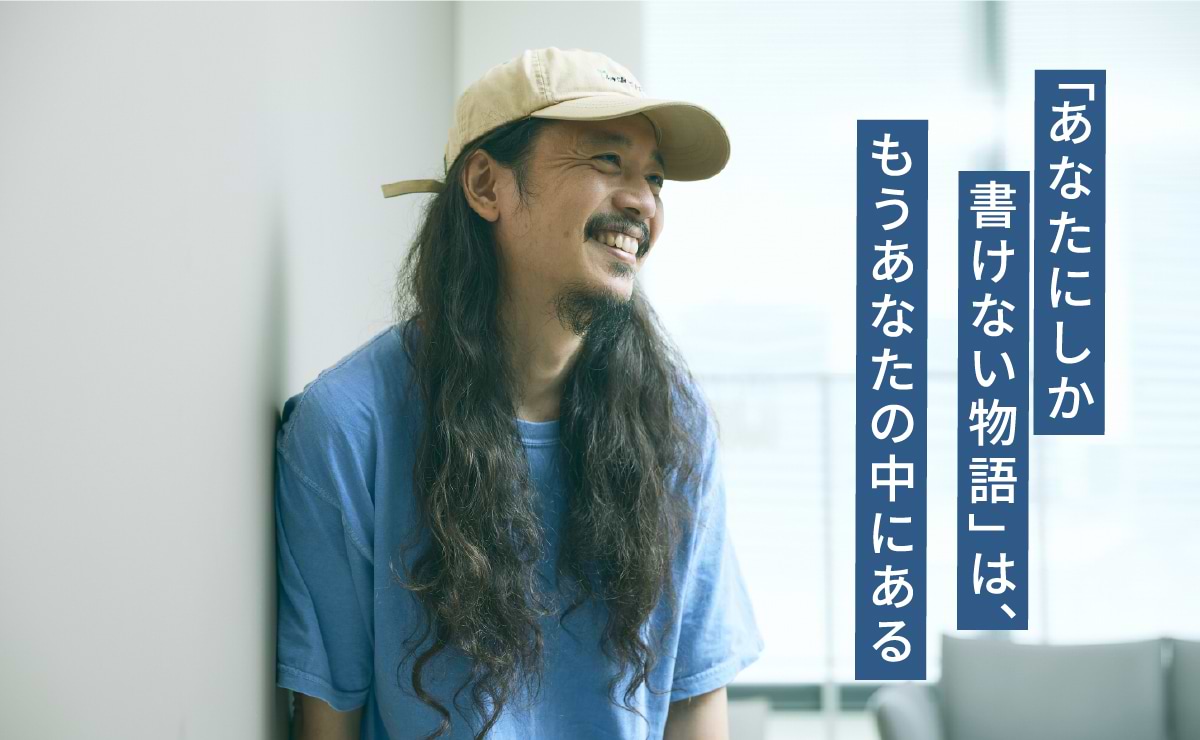
“The story only you can write” is already inside you
──Mr. Nagahisa, you also lead screenwriting workshops, and that experience led to the publication of *The Screenwriting Classroom*. Why do you encourage so many people to write screenplays? Please tell us what drives you.
Nagahisa: Well, I’m a “Yokai that makes people write screenplays” (laughs). The screenplays everyone wrote in my workshops were truly fascinating. They were completely different from the screenplays I see in my professional work; they were densely packed with details of experiences, emotions, and living environments that only the writer could capture.
The details of a person’s experiences and emotions are something no one else can fully capture, no matter how much research they do. This holds true for anyone, regardless of their profession or life path, and I became convinced that everyone possesses “something interesting that only they can write.”
As a movie fan myself, I hope the world will be filled with diverse “stories that can only be born from your own life.”
──We’ve received many comments on the book reviews saying, “I can write something like this” or “This made me want to write.”
Nagahisa: I’m truly happy and excited. Actually, there’s another reason I want everyone to write a screenplay. Writing a screenplay itself is an act that boosts self-esteem, much like therapy. It doesn’t even have to be published. I want everyone to experience the benefits of reflecting on their own lives.
Having felt a strong positive response to the workshops, Nagahisa wrote this book specifically to encourage even more people to “write their own scripts.”
The Past You Don’t Want to Face Is Your “Weapon”
—I was also struck by the “secret trick” mentioned in the book: when you can’t find the voice you want to convey, “try writing about the part of your past you least want to write about.”
Nagahisa: I don’t think you absolutely have to have a “voice,” but I shared that trick because the more painful the memory, the more vividly you remember even the details that are hard to put into words. To put it bluntly—and I hope you’ll forgive me for saying this—there’s a high probability that, even from an outsider’s perspective, those experiences are both painful and fascinating.
Your own experiences are akin to a “rich reporting experience” that no one else can replicate. As you dig deeper into them, you’ll discover things like, “I still can’t forgive that remark, even after 20 years, ” or “That moment was the brightest of my life.”That anger or that light can become your “voice.”
And above all, I gain a new perspective: the ability to view painful events objectively and even “find them interesting.” I feel this myself, and I think it’s a fascinating effect, even from the perspective of self-therapy.
Also, while it’s a big hurdle to actually confess your own experiences, movies are fiction. The audience watches without assuming it’s the creator’s real-life story. In other words, it’s an act of letting your experiences out without bottling them up inside, all while psychological safety is maintained. I think this leads to a very healthy, positive cycle.
It doesn’t matter if it’s a movie, a novel, music, or a painting. I hope you’ll try to express what’s inside you in a way that suits you best.
Of course, observing the outside world—in other words, “research”—is just as important. Meeting people and listening to their stories, coming into contact with lives different from your own. There’s plenty to write about, buried both within you and out in the world.
So it doesn’t become “as if it never happened.” The sense of mission behind the film
—Your latest film, *Enjo*, was truly born out of “research,” wasn’t it?
Nagahisa: It started with the news. However, I don’t just watch the news and leave it at that; whenever an event catches my attention, I often go out to hear people’s stories, even if it’s unrelated to my work. Looking back, I suppose you could call that “research.” With *Enjo* as well, it was while listening to the voices of so many people that I felt, “These emotions and the current system need to be portrayed in a film,” which led me to produce it.
──It’s been written that when you make a film, Nagahisa, your driving force is a sense of mission—the feeling that “I must be the one to make this.” Did you have that same strong sense of mission for this film as well?
Nagahisa: Yes, I did. What appears in the news or on social media inevitably consists only of “chaotic fragments.” But the reality—the people and their lives—was definitely there. I wanted to ensure that this wasn’t simply swept under the rug; I wanted to preserve it. That’s why I made *Enjo* with the intention of simply documenting reality, rather than making a specific statement.
I found so many things I admired about them—the cool aspects of their personalities, the sparkle in their eyes, and their philosophy of living each day by carrying the harsh realities of life with a lightheartedness.
At the same time, I also sensed their anger and sadness toward the social structures that left them with no other choice, as well as the family environments they had no control over. And I really felt their attitude toward us adults—that “There’s no way you could possibly understand us.” I made this film while respecting those feelings as well.
──The plot is quite relentless; I was really shocked.
Nagahisa: That’s because reality—your actual experiences—was truly unforgiving. Almost everything depicted in the film actually happened. Having heard those stories, it was never my intention to turn this into lighthearted, happy entertainment.
On the other hand, *Enjo* also includes many scenes of dreams and fantasy. That ’s because, for me, imagination and dreams are just as essential to life as reality. I want the film to capture not only reality but also the inner landscapes that exist within each person.
“Enjo” My latest film depicts the 150 days leading up to the time when Juri Kobayashi—a girl raised as the second-generation member of a religious group, known as “Juju”—runs away from home, ends up in Shinjuku’s Kabukicho (To-Yoko), and commits a certain crime. Currently streaming on U-NEXT.
Why I Continue Making Films While Working at Dentsu Inc.
—Mr. Nagahisa, you seem to view making films while working as a company employee in a positive light, don’t you?
Nagahisa: I think there’s tremendous meaning in making films while working a day job. Meeting all kinds of people and being exposed to different perspectives and values is, in itself, like conducting research every day. After all, I believe Kafka was able to write *The Metamorphosis* precisely because he was an insurance clerk.
Of course, there are days when I think, “If I didn’t have this job, I could write more screenplays” (laughs). But even amidst the busyness, there are things I feel I “absolutely must write.” In that sense, I feel like my job acts as a kind of filter.
Besides, there are perspectives you can only see by continuing to live your life—living with someone, worrying about work, or thinking about money. There are stories I can only write because of that everyday reality.
That’s why I don’t subscribe to the idea of “quitting my job to focus solely on writing.” I believe there’s real value in creating while cherishing my daily life.
Stories exist for the lives of their readers
—Finally, I’d like to ask you about the “reader” of a story. How should we approach stories?
Nagahisa: I think it’s perfectly fine to interpret them however you like, completely freely and on your own terms. What matters isn’t the author’s intention, but what you, the reader, take away from it.
It’s fine if you just think the lighting in a particular scene was beautiful, or if a single line of dialogue didn’t quite sit right with you. If there’s something you can’t quite accept, and it prompts you to reflect on your own values, that’s a meaningful encounter in itself.
Manga, novels, movies, and music—they’re all meant for your life.
As a “viewer” myself, that’s how I see it. So please interpret them however you like—whether you get angry, laugh, or feel encouraged—and feel free to use them in your own life.
By Makoto Nagahisa, *“A Screenwriting Class: Things Only You Can Create, Yet That Resonate Worldwide”* (Diamond Inc.) List Price: 1,980 yen (1,800 yen + 10% tax) / Publication Date: March 2026 / Pages: 240
Born in 1984 in Tokyo. In 2017, his directorial debut, “And So We Put Goldfish in the Pool,” became the first Japanese film to win the Grand Prize in the Short Film category at the Sundance Film Festival. His awards include the TCC Newcomer Award, the OCC Best Newcomer Award, and a medal in the Cannes Lions Young Lions FILM category, among others.His representative works include the feature films *WE ARE LITTLE ZOMBIES* and *Death Days*, the WOWOW original dramas *FM999* and *I’m Dead!*, the short film *Kaguya By Gucci* for Gucci, and the music video for *FOOL* by Hitsuji Bungaku. He is also active as a screenwriter and theater director. His latest work, *Enjo*, is currently streaming on U-NEXT.