Note: This website was automatically translated, so some terms or nuances may not be completely accurate.
 NRF 2026: The Latest & Cutting-Edge Report on the Retail and Commerce Sectors [4/4]
“Retail Landscape 2.0” — How Has Agentic AI Transformed Retail and Commerce? (Part 2)
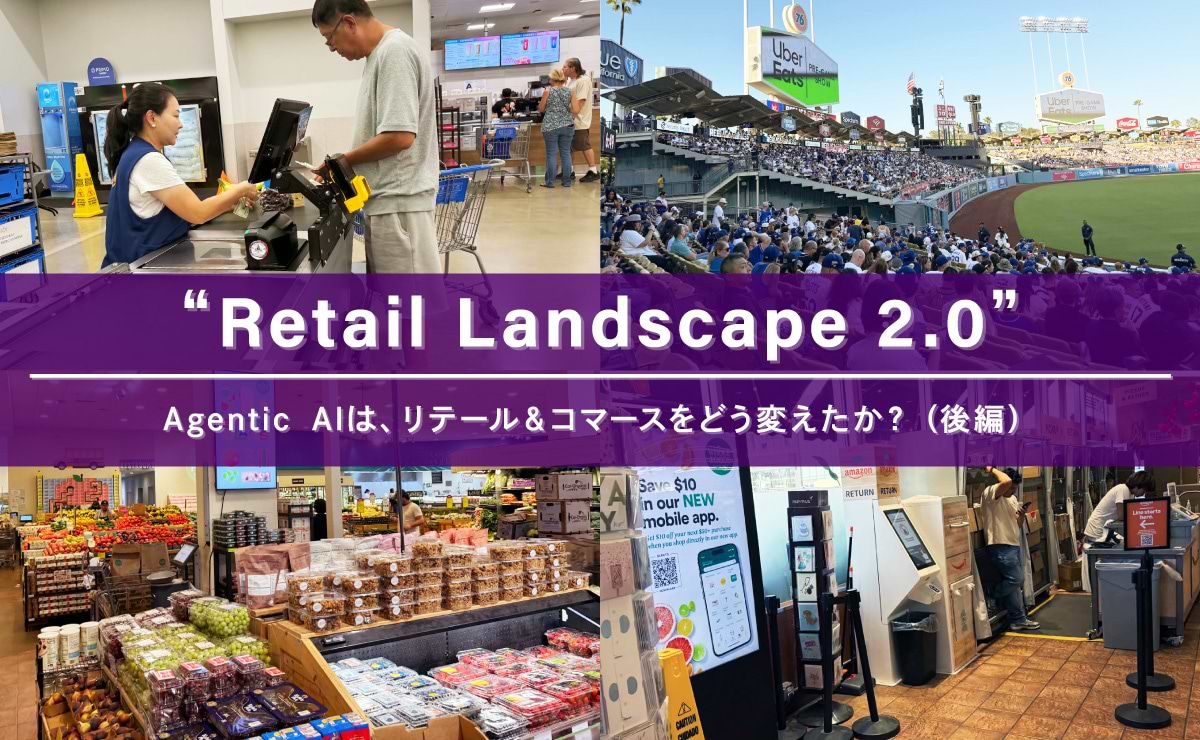
Following my visit to NRFAPAC 2026 (Singapore) in June, I had the opportunity to travel to Los Angeles on the U.S. West Coast this summer.How has the U.S. retail and commerce landscape, as observed in January, evolved since then? Drawing on insights from business sessions held on-site with Dentsu’s global retail media team and the latest trends in U.S. retail media, I’d like to delve a bit deeper into the “Retail Landscape 1.0 → 2.0” framework I discussed in my previous article.
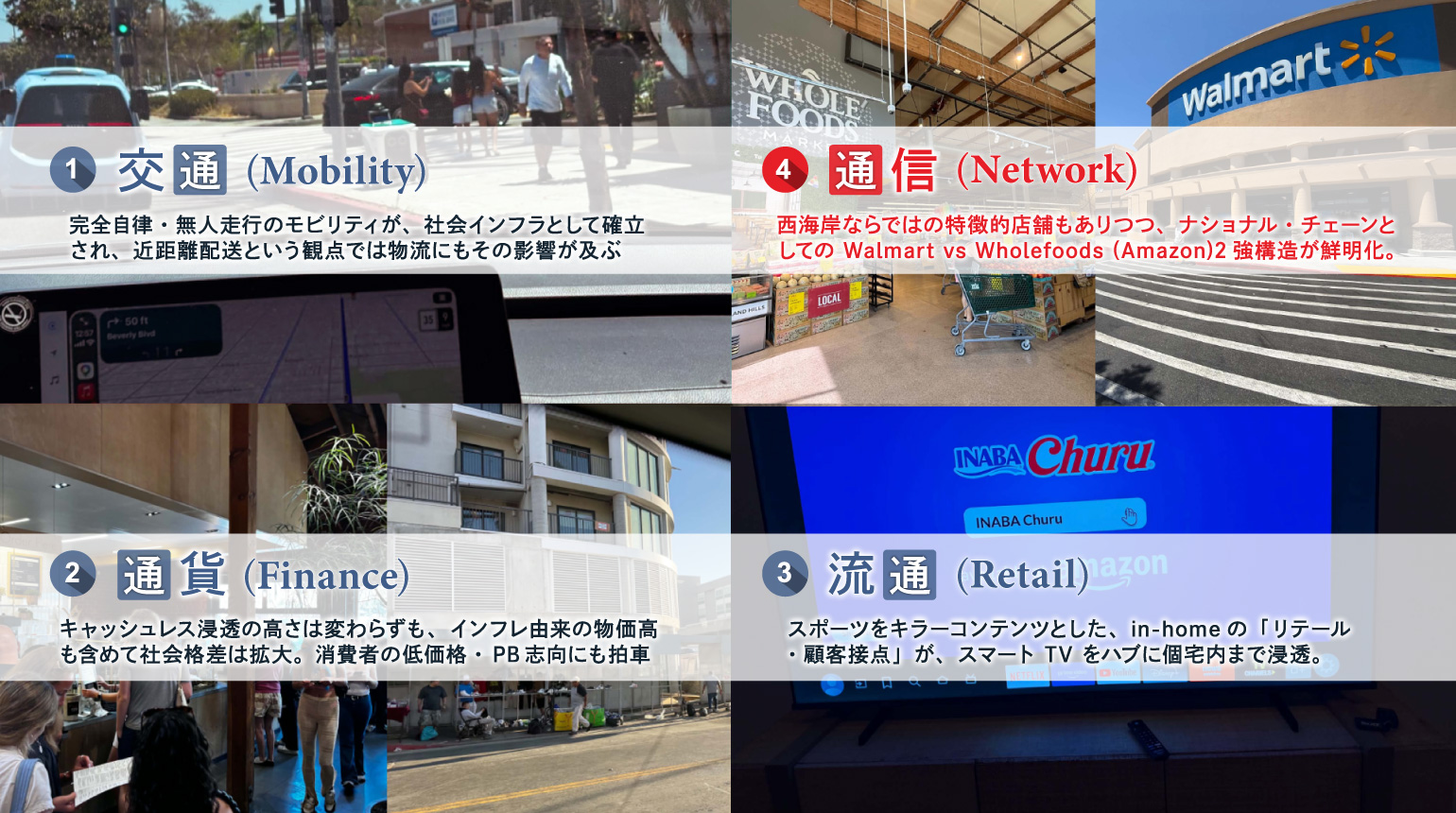
Retail Landscape 2.0 — Walmart vs. Amazon (WHM) 2026
Amid rising geopolitical risks worldwide, both Japan and the United States are grappling with high prices driven by inflation and unstable supply chains. I have summarized the “current state of American society” using a four-part framework. Even within the same country, New York City on the East Coast—where the NRF is held—presents a completely different landscape from Los Angeles on the West Coast. This rich diversity may also be considered one of the true charms of the United States.Additionally, due to the nature of my stay, I had the opportunity to observe media consumption habits in ordinary households, which proved to be a very valuable learning experience. With this in mind, let’s discuss “Retail (④)” from the four reports by comparing Walmart and Amazon (Whole Foods Market, hereinafter WFM).
Below is a comparison of Walmart and Amazon (WFM) through 2025.These two companies have led the first quarter of the 21st century in retail marketing. While Walmart can be said to have driven the BX by leveraging real-world assets—namely, “stores” and “store employees”—from an offline perspective, Amazon (Whole Foods) can be said to have driven the BX through “phygital” by creating the synergy of “e-commerce” and “retail” through M&A from an online perspective.
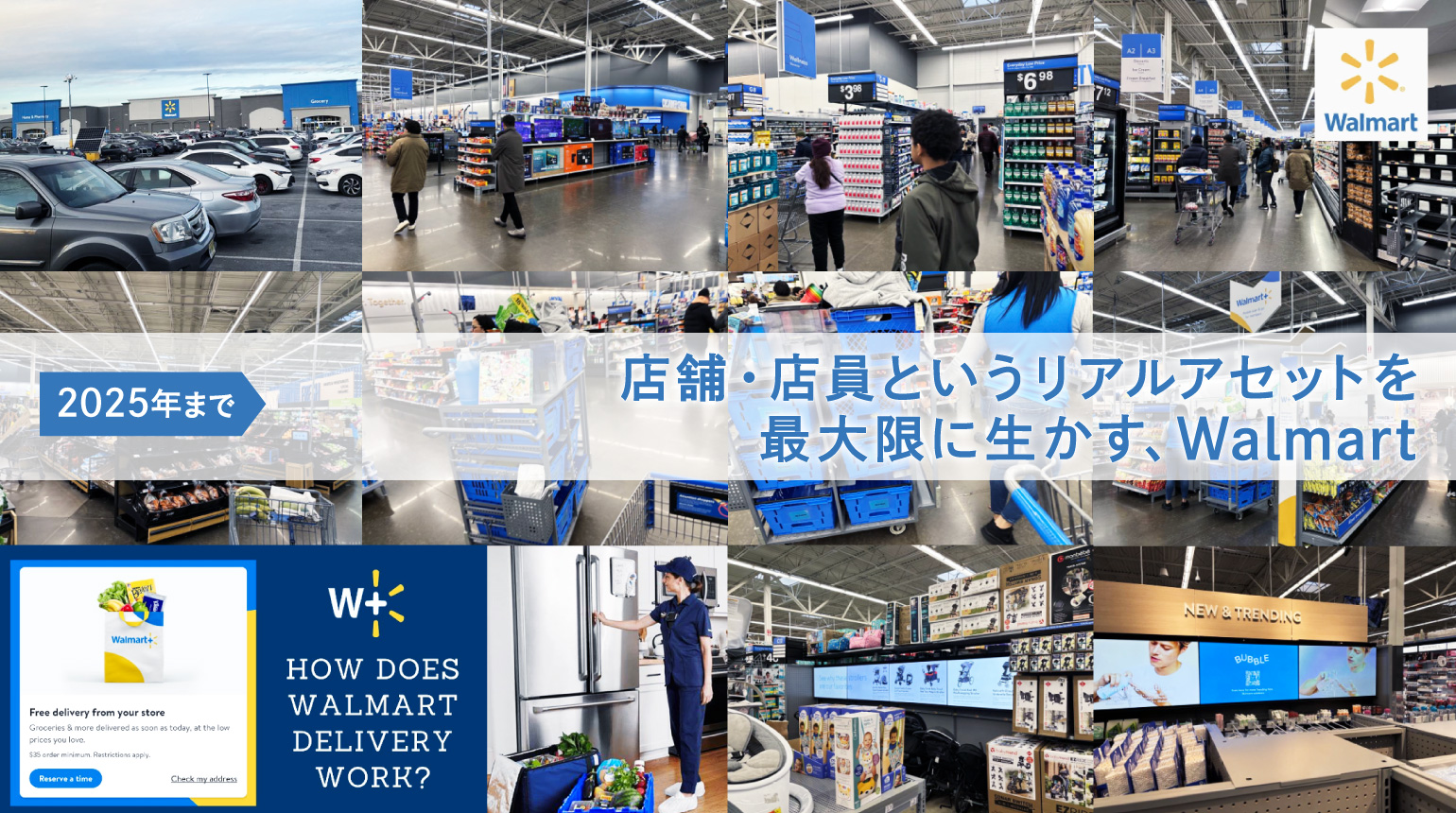
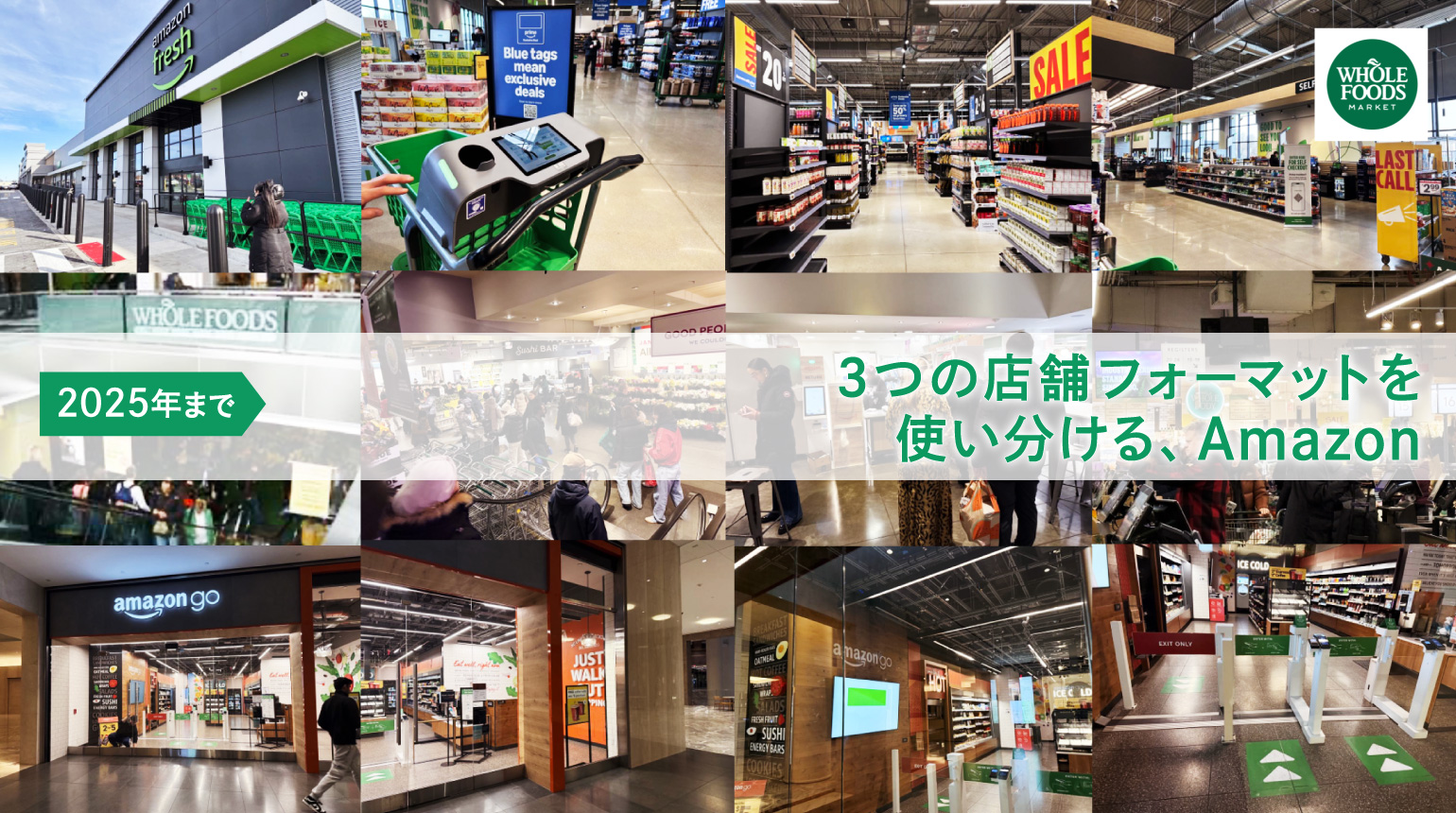
In the January NRF 2026 report (previously mentioned), we noted that the landscape of this sector had shifted following the proposal by Google and Walmart of their “Agentic Commerce,” “UCP,” and “Native Checkout” concepts. I would like to refer to this shift as “Retail Landscape 1.0 → 2.0.”On January 27, after I returned to Japan, there were reports that nearly all 70 Amazon Go and Amazon Fresh stores would be closed—a development that can be seen as symbolic of this shift in market dynamics. So, what kind of business strategy will the remaining Whole Foods Market (WFM) adopt against Walmart?
Having spent a slightly longer period in the U.S. than usual, I encountered these two major chains—which symbolize American daily life—and have summarized the distinct “characteristics” I observed in them below.
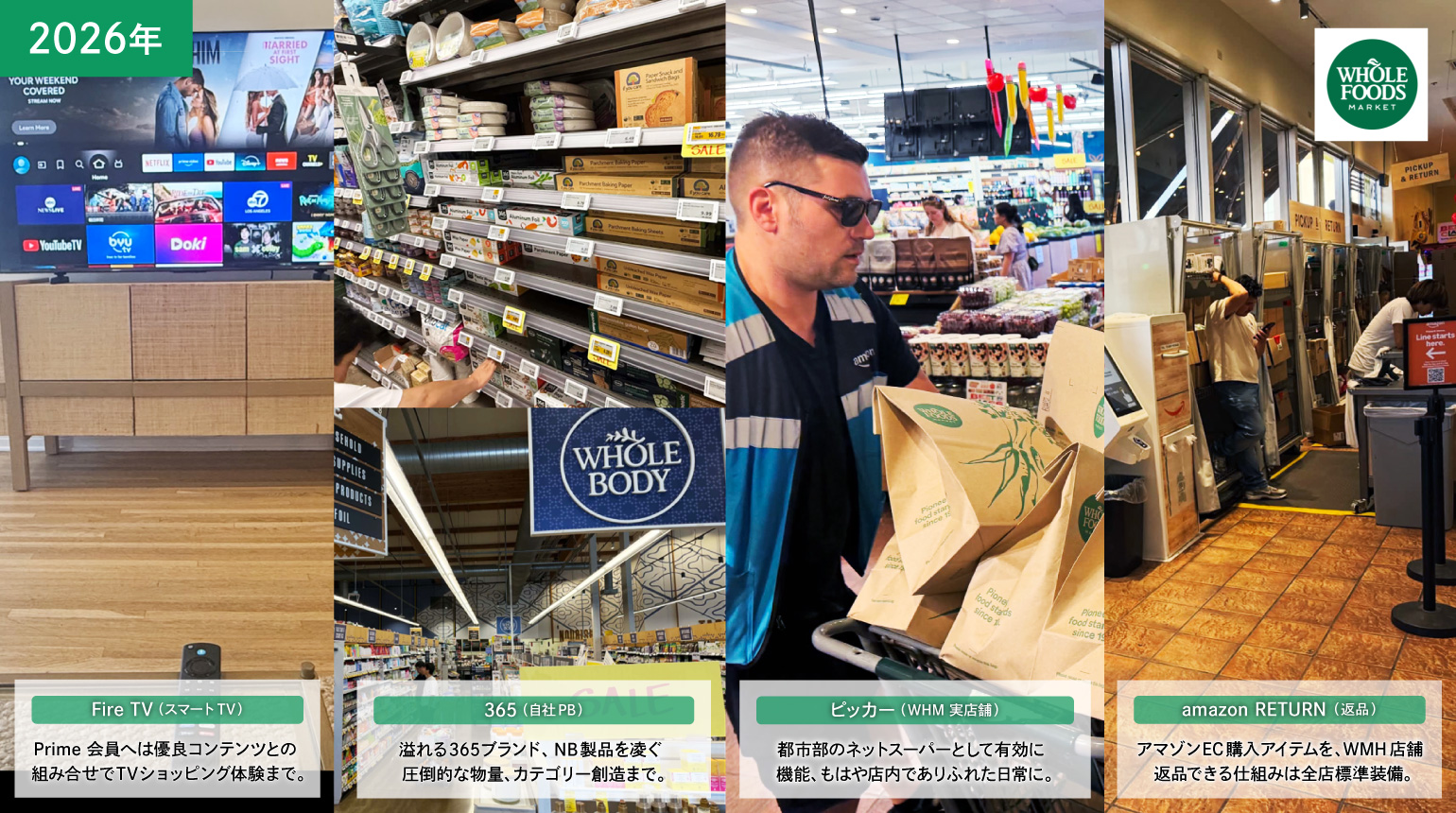
While the “pickers” who take orders in-store—essential for making the urban online grocery business for Prime members viable—and “Amazon RETURN,” which accepts returns of items purchased on Amazon EC at WHM stores, remain unchanged (the two on the right in the figure above), I’d like to highlight two particularly interesting developments from this visit.
① WHOLE BODY
“365,” the company’s private-label brand, has been growing rapidly since around 2020—before the pandemic. The sight of products from various categories piled high as a highlight at new store openings has become a staple. The product lineup is also expanding rapidly. What stood out this time was that they had reorganized the offerings—moving away from the traditional categorization of daily necessities, beauty and grooming, health foods, and supplements—and launched them as a new category called “Whole Body.”
② Fire TV (Amazon’s in-home smart TV)
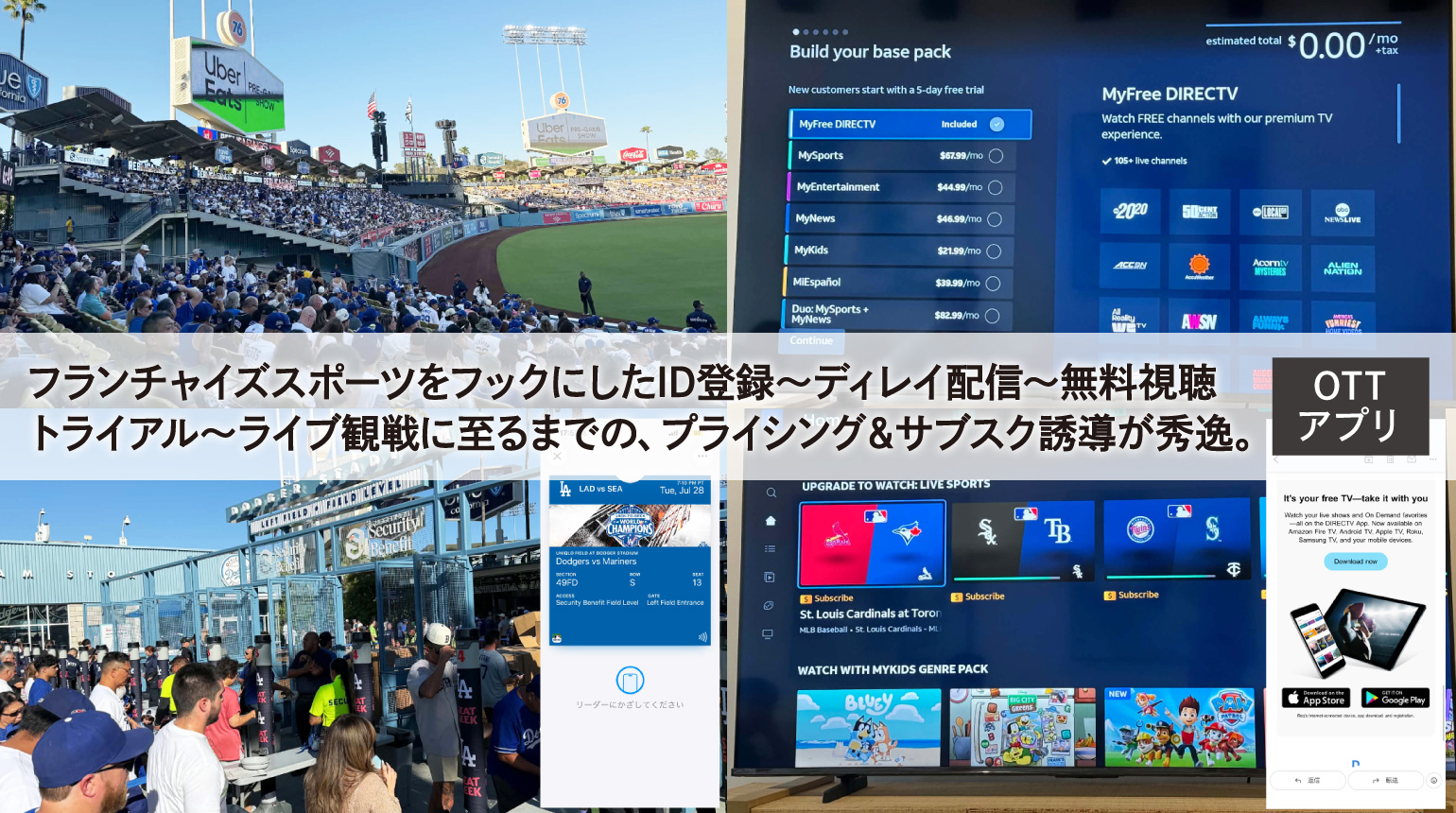
Live broadcasts of local Dodgers home games are a Prime membership benefit, but using this as “killer content,” the store very skillfully guided viewers toward subscription offers via the TV screen—ranging from a one-week free trial to delayed viewing at a reduced monthly rate, bundled annual packages, and even the resale of stadium tickets. Furthermore, on that large TV screen, customers could shop using the remote control buttons—rather than a smartphone—in a way that felt like an evolved version of TV shopping.The UI/UX, which allows users to shop while relaxing in their living rooms, was truly outstanding.
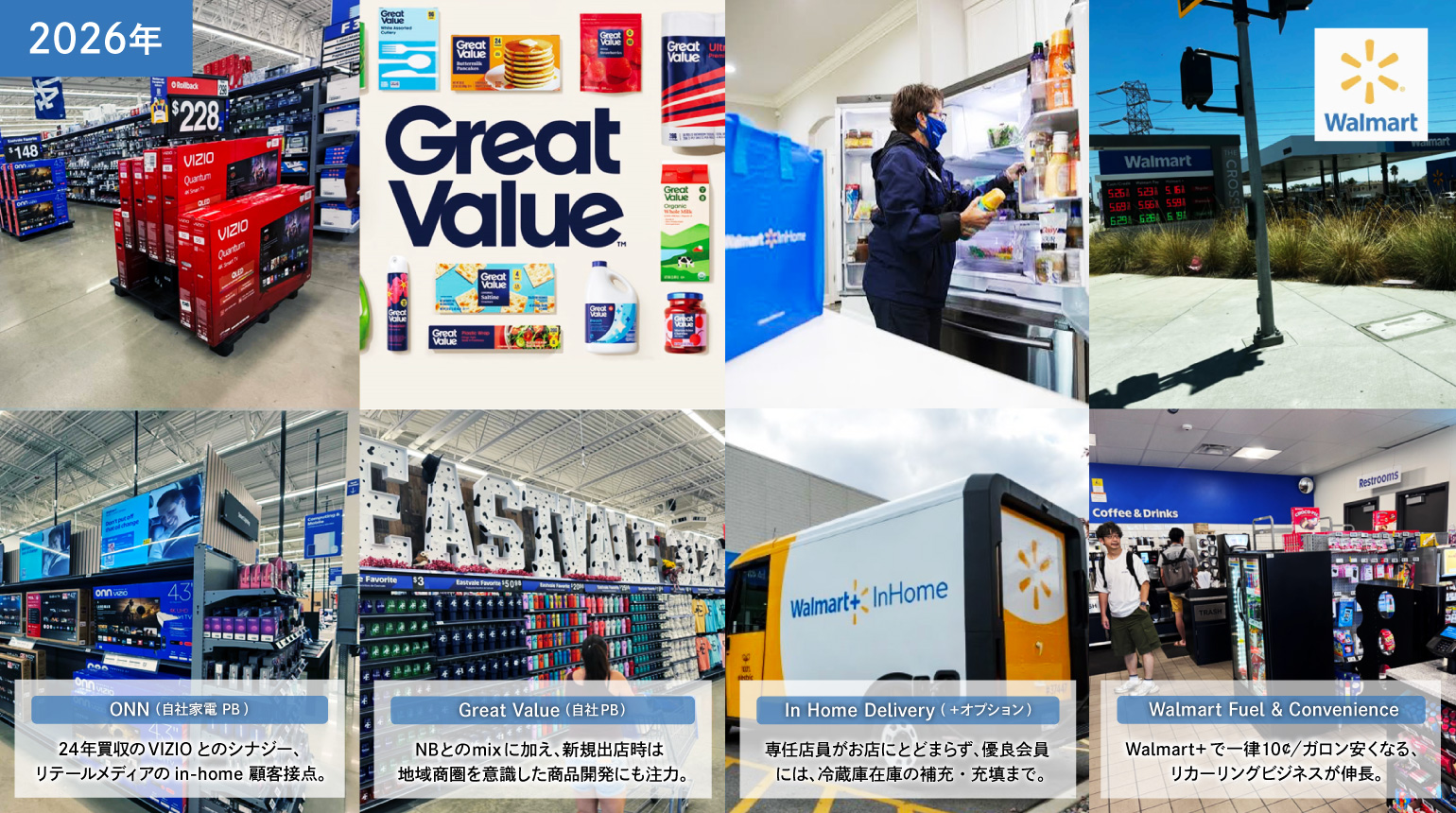
Looking at Walmart from a similar perspective, the company has completely revamped its “Great Value” private-label brand—which has been around since 1993—for the first time in a decade, positioning itself to catch up (though they also prioritize maintaining a balance with national-brand products).Additionally, “In Home Delivery”—a service for Walmart Plus premium members (a program where users check their home refrigerator’s inventory via the app and have nearby store staff restock it)—demonstrates a commitment to environmental sustainability by transitioning its operational fleet to electric vehicles (EVs). Here are two other interesting initiatives from Walmart:
① Walmart Fuel & Convenience
This initiative began in 1997 with the opening of a gas station on the premises of “Sam’s Club,” a Walmart-affiliated membership-based warehouse-style supermarket.Along with the growth of app-based memberships and the expansion of services driven by the COVID-19 pandemic, the company has expanded to hundreds of locations across the U.S. by offering “gas discounts” as a perk for premium and paid members. The new Eastvale store I visited also features a convenience store. According to a news report released in October, the company has also made the decision to introduce external contactless payment options for the first time, specifically targeting Gen Z.
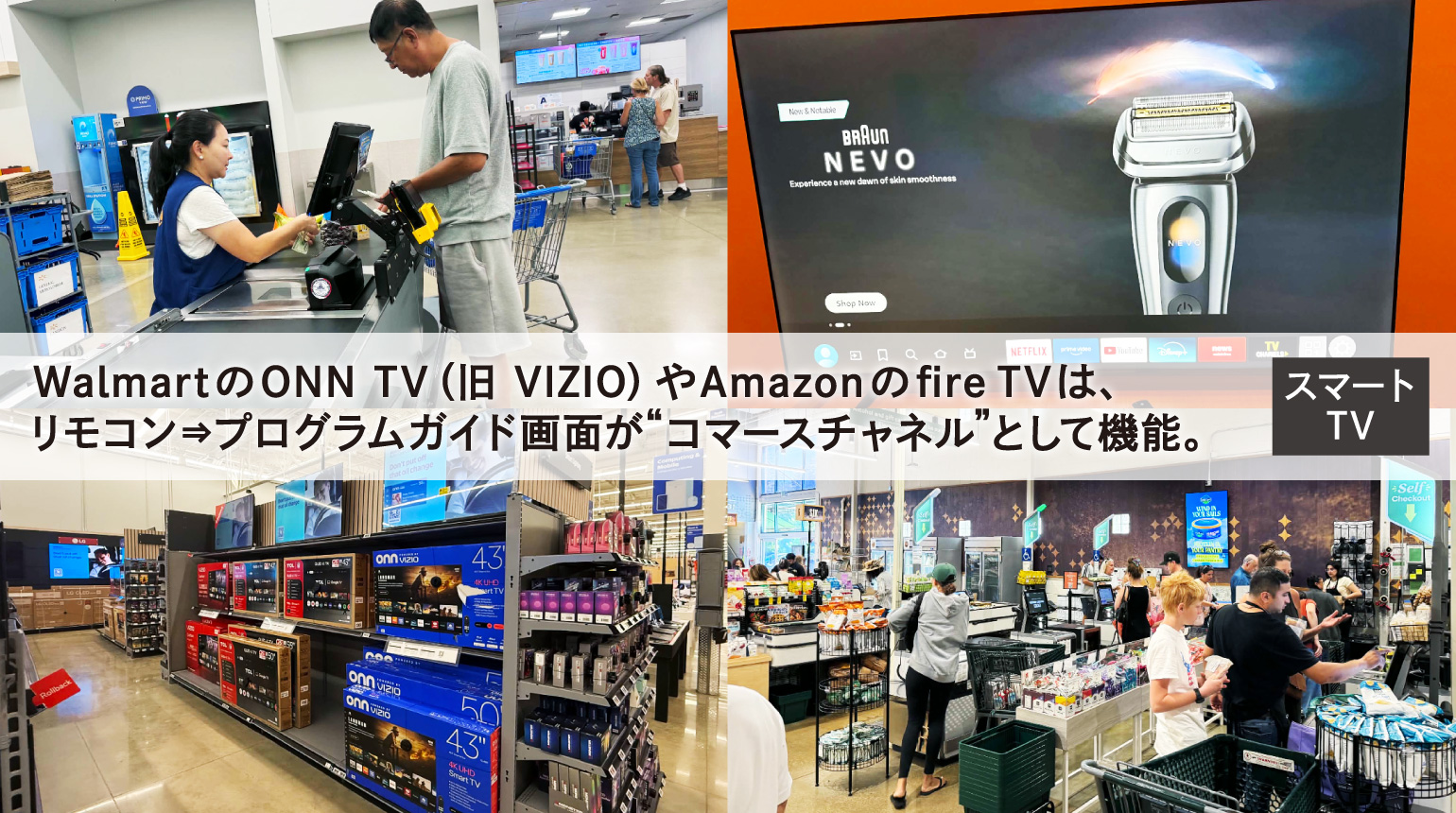
② ONN (formerly VIZIO)
Two TV brands are prominently displayed in-store. VIZIO is a company that grew rapidly by selling low-priced LCD TVs, but in recent years, it had shifted its focus to advertising revenue and data-driven business models through its video streaming platform based on its proprietary TV OS, “Smart Cast.” Walmart, which had long been its largest retailer (customer), acquired the company in December 2024, with the primary goal of strengthening “Walmart Connect.”By acquiring the smart TV OS and viewing data and integrating them into its own private-label home appliance line, ONN, Walmart has gained a customer touchpoint in consumers’ living rooms. This allows the company to deliver targeted ads directly and enable consumers to “purchase Walmart products right from the TV screen” (shoppable ads). In essence, Walmart has established a media space within the home.
Retail Media and Retail Apps — In-Store
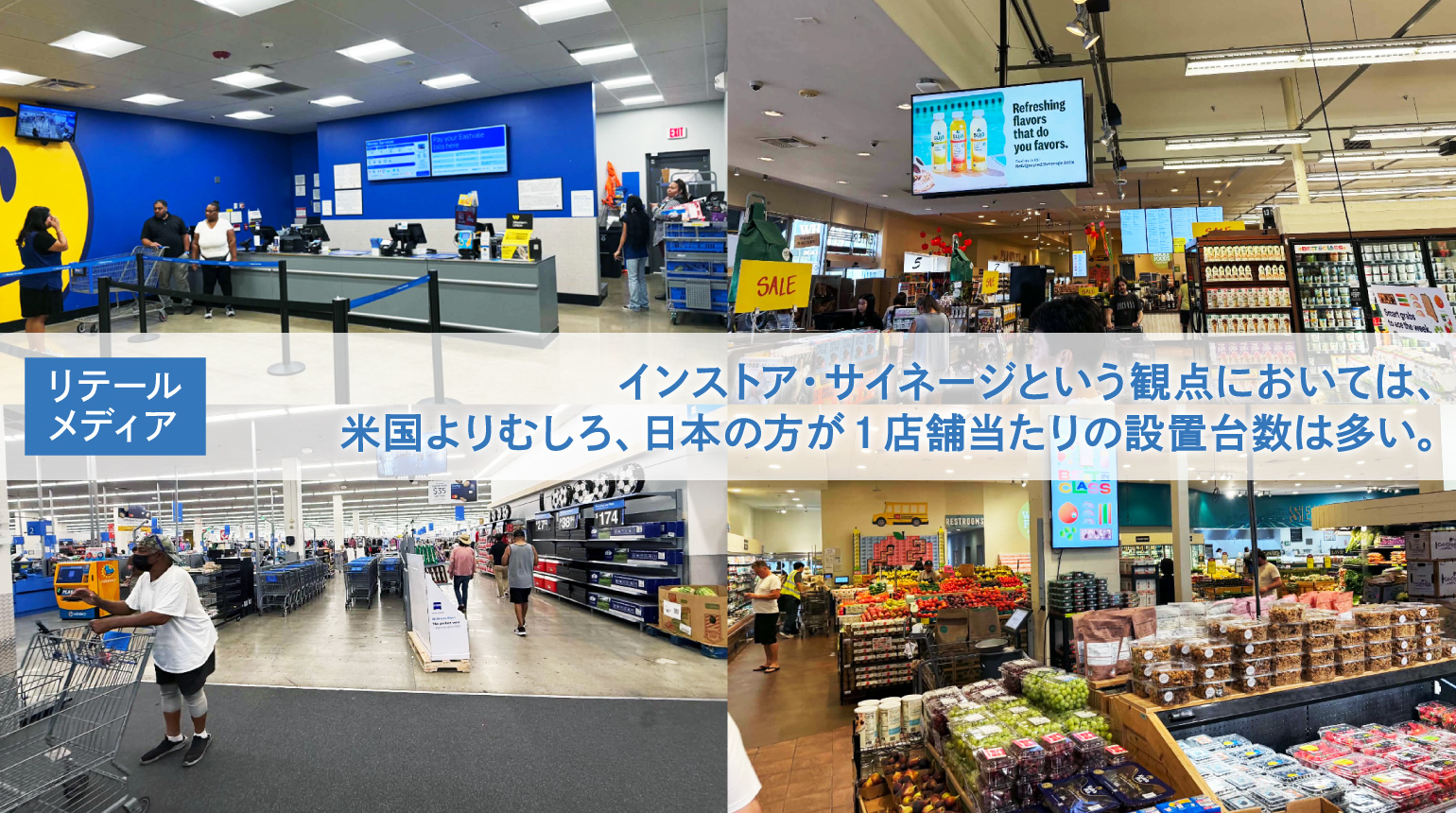
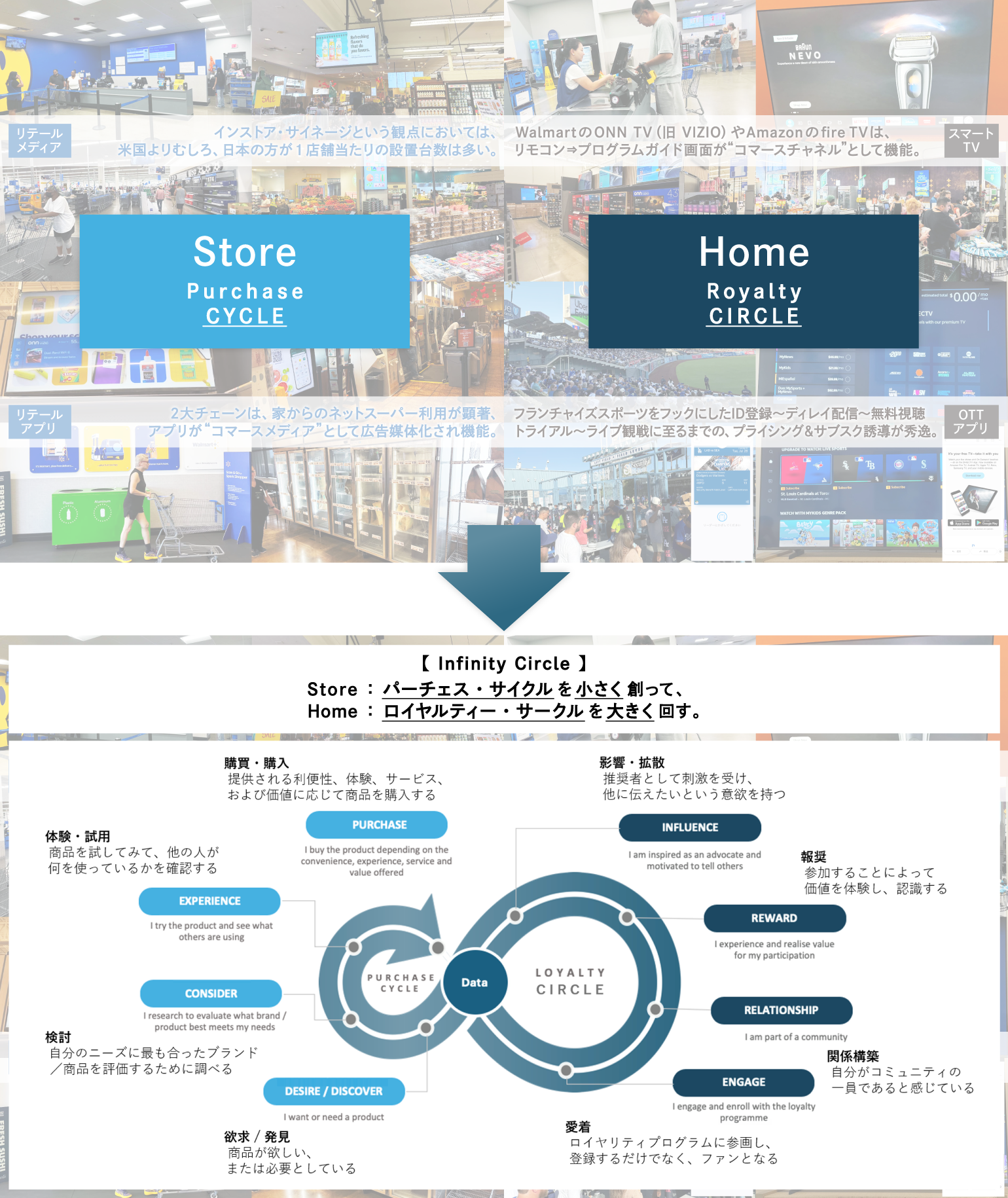
A common thread in the recent business strategies of these two companies is their emphasis on “in-home customer touchpoints” via smart TVs in consumers’ living rooms and their remote controls.So what about the opposite end of the spectrum: “in-store customer touchpoints”? In the context of “retail media”—an area we also place great importance on—the amount of digital signage in physical stores across the U.S. retail sector is surprisingly limited, even when compared to Japan.
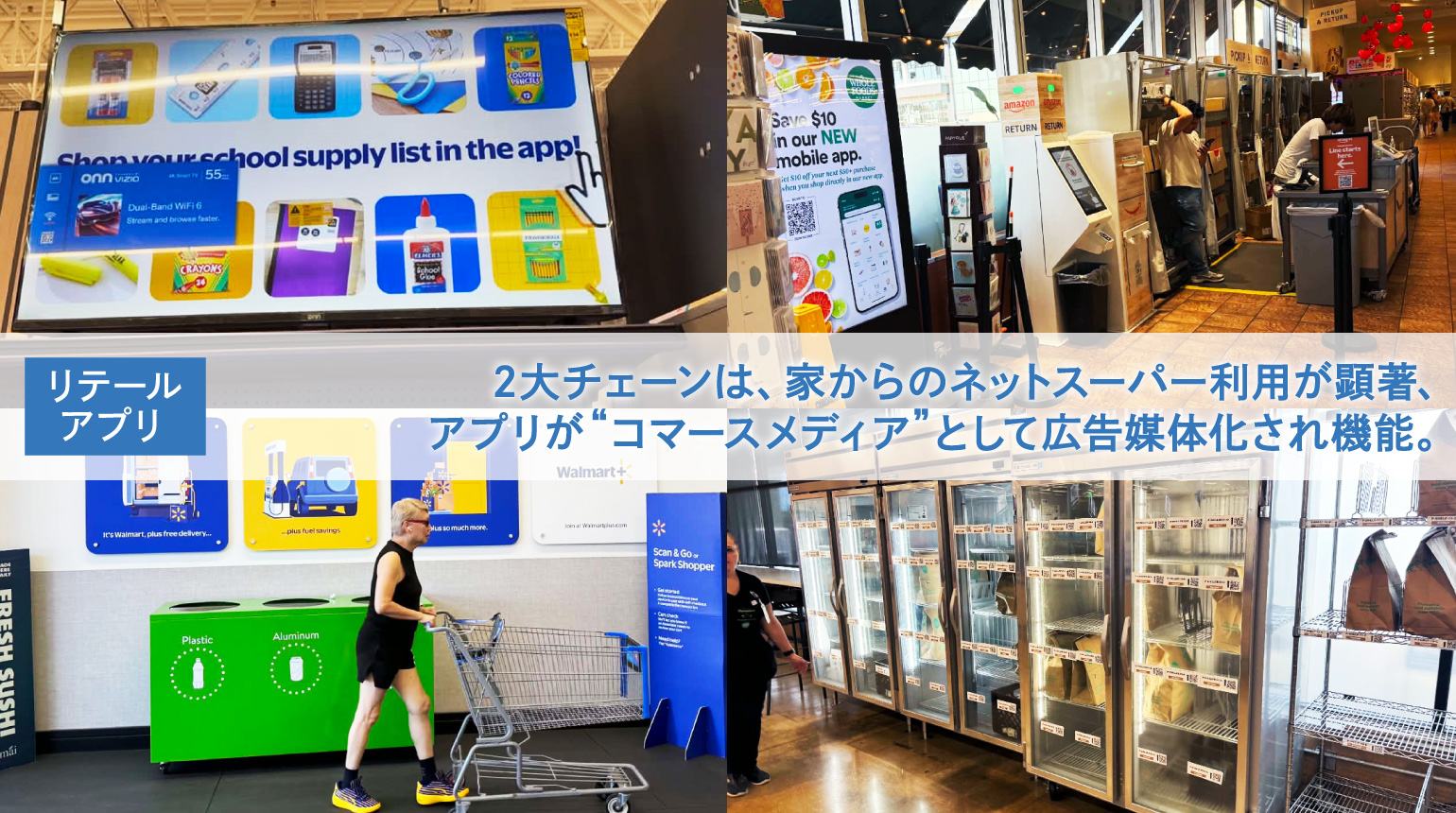
Conversely, apps that serve as online grocery platforms—and the advertising space within them—feature very rich UI/UX and content. This is due not only to their inherent e-commerce potential but also to the retail digital transformation (DX) that accelerated during the COVID-19 pandemic.Given the sheer scale of the U.S.—including the large radius of store catchment areas, vast floor space, and overwhelmingly car-dependent society—it’s impossible to make an “apple-to-apple” comparison with Japan. However, when viewed from the perspective of the advertising business and media, it appears that the U.S. prioritizes the “home,” while Japan prioritizes the “store”; from this viewpoint, the two are completely contrasting.
Smart TVs and OTT Apps — In-Home
Looking deeper, the factors behind Walmart and Amazon (WFM) becoming massive platforms include:
① Treating “in-store × in-home”—these two customer touchpoints—as essential assets, and incorporating them into their business models without hesitation, even through mergers and acquisitions.
② Connecting with customers within their own economic ecosystem through “out-store” channels—such as living room Smart TVs—and “out-home” channels—such as smartphone apps—to create a “phygital” (physical store × digital e-commerce) experience.
③ As a hook to keep customers “always connected,” they independently own content—such as local news, franchise sports, and region-specific content—separate from daily shopping-related information.
I believe these three elements are all in place.
In Los Angeles, I was fortunate enough to experience this “best mix” firsthand as a consumer. It was the customer journey of attending a Dodgers baseball game—the team is currently at the height of its popularity.On game day at the stadium, everything—from ticket purchases to resales—was handled entirely via smartphone and apps, based on dynamic pricing. Even when it came to buying team merchandise or food and drinks inside the stadium, not a single customer paid “with cash from their wallet” (though, to be fair, the only items allowed through the gates were small, transparent mini-tote bags…).
On the other hand, with the excitement of the stadium experience still fresh in my mind, I watched the game on TV from my living room on a different day—and was struck by the ingenuity of the viewing experience designed for smart TVs. First, to watch the live broadcast, you must subscribe to DirecTV via Fire TV and register an ID.Even outside of sports, there are pre-set package options organized by favorite programs and genres, offering a pay-per-view system where you can select and watch only the shows you want. For target audiences who might find a full subscription too much of a commitment right away, there’s a system that allows them to try a one-week delayed viewing period or a free package.
Am I the only one who feels that the cascading UI/UX for pricing and subscription acquisition—centered around franchise sports—is truly a hallmark of the U.S.?
Retail Media and Commerce Media
During my stay, I had the opportunity to hold a session on-site with a retail media representative from Dentsu Americas. According to him, retail media is the fastest-growing segment in the U.S. advertising market, and it is estimated to reach a massive global market size of $165 billion by 2026.It is projected to account for approximately 20% of U.S. advertising spending by 2030. In other words, 20% (one-fifth) of total advertising spending will be allocated to retail media, indicating that the U.S. marketing and media planning landscape is undergoing significant change.
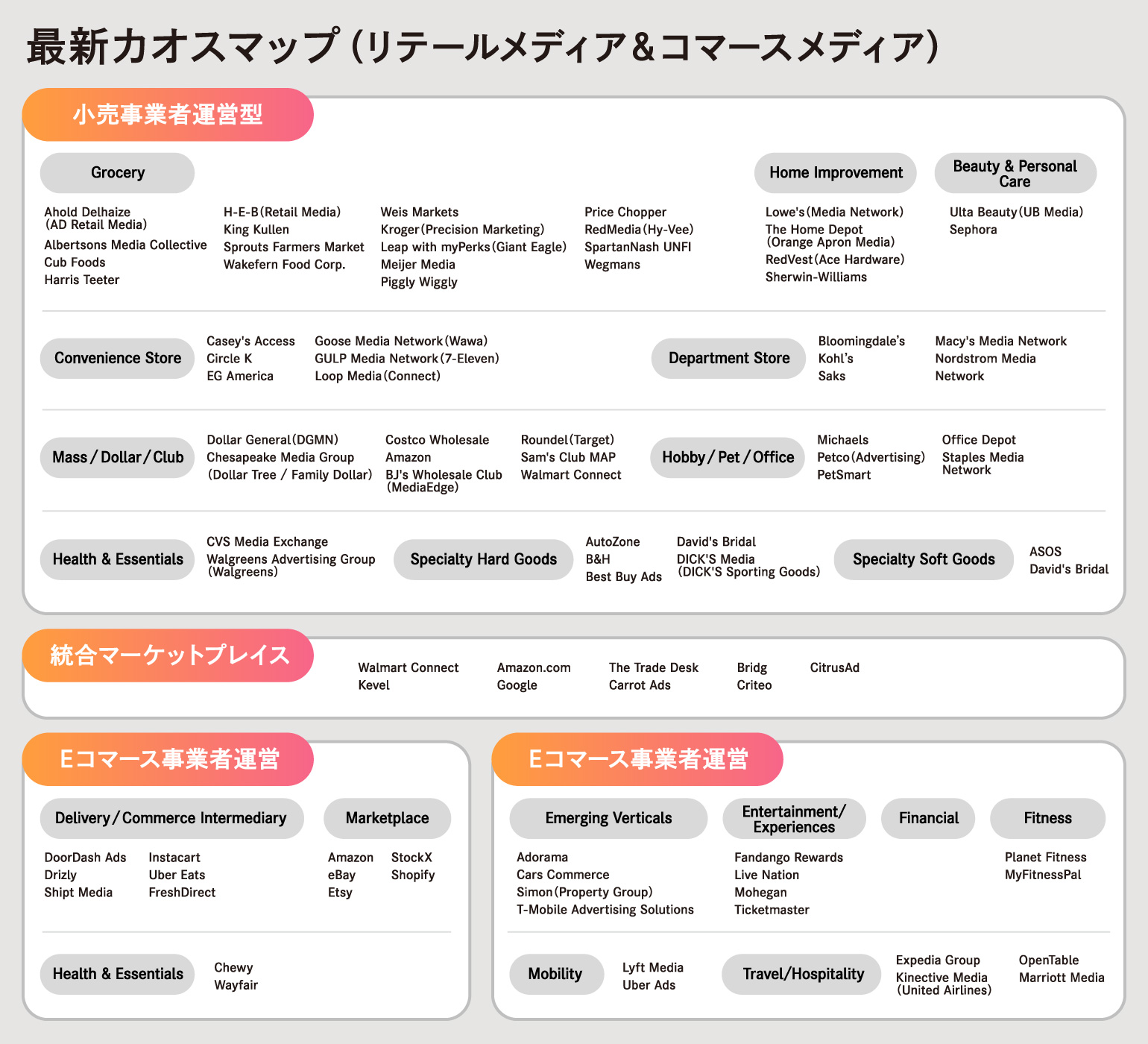
This chaos map, compiled by the retail media team at Merkle (part of the Dentsu Group), illustrates the landscape of retail media players in the U.S. as of 2026. There are currently over 200 retail media networks (RMNs) in the U.S., spanning a wide range of sectors including grocery stores, convenience stores, mass retailers, and health and wellness.In addition, several integrated marketplaces, e-commerce operators, and “commerce media networks”—a term that is increasingly in use—have also entered the market.
(1) While retailer-led retail media varies by business format, it is more consolidated than in Japan, and it could be said that there are fewer players than in Japan.
(2) Walmart (Connect) and Amazon, introduced in the previous chapter, are treated separately—alongside Google and others—as integrated marketplaces rather than mere media outlets, and are evolving into platform operators.
(3) I would like to highlight the bottom section of the map. This represents a media domain unique to the U.S.: the “commerce media” category, where e-commerce operators take the lead in monetizing online and digital transactions across specific categories—such as entertainment tickets, travel, and restaurant reservations—in a cross-category manner.
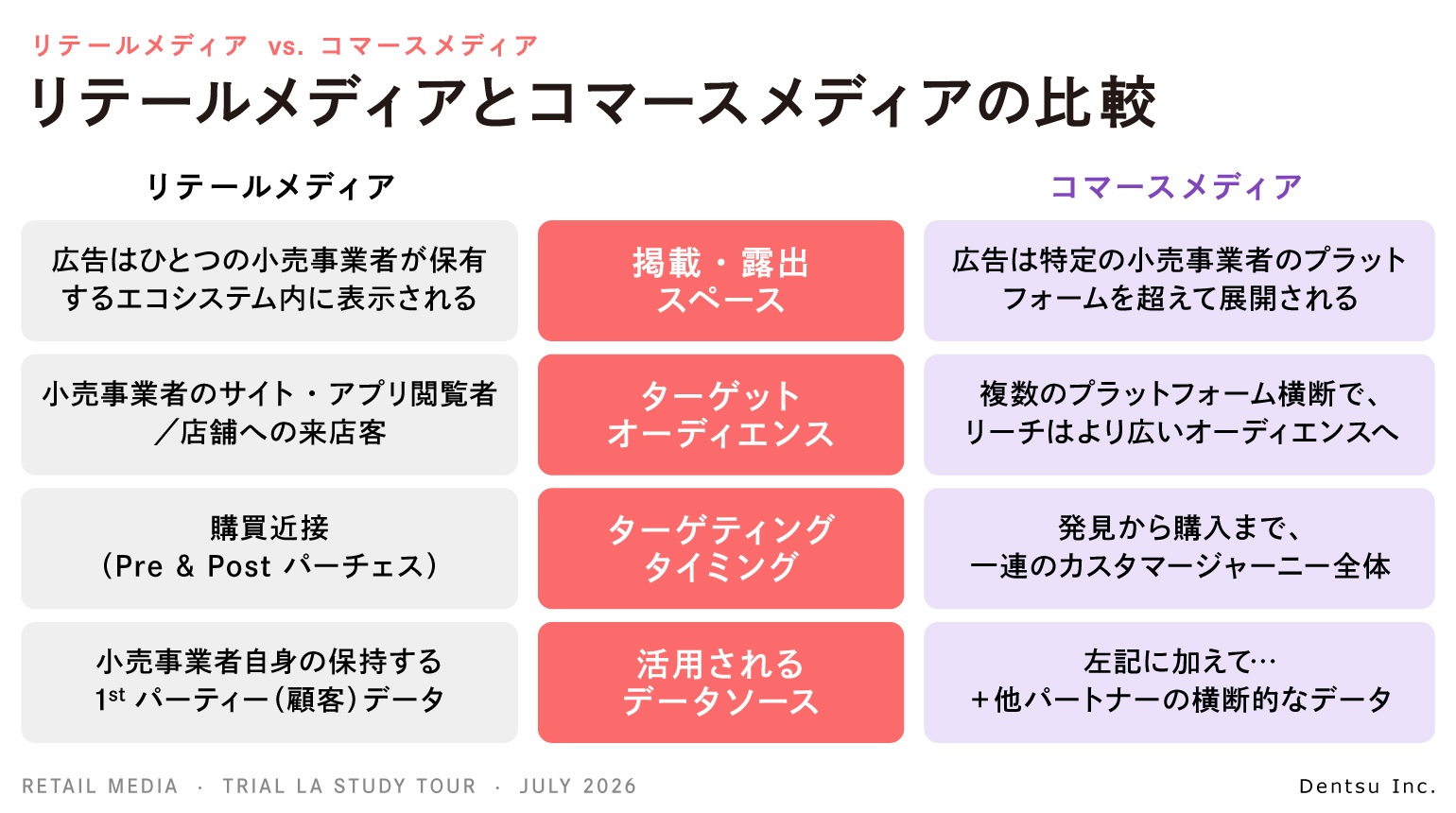
Retail media is, at its core, “retailers leveraging their own first-party data to perform ad targeting within a closed-loop system using actual transaction data.” In contrast, commerce media refers to “ad delivery to a broad audience facilitated by platforms based on specific commercial transactions, extending beyond the purchasing experience at individual stores or brands; naturally, closed-loop measurement cannot be performed by a single company on its own.”
As I mentioned in a previous article ( Part 2 of the January NRF 2026 report ), Rokt aggregates the post-purchase moment after a transaction is completed and can safely be described as a solution provider that creates retail media—or rather, “commerce media”—across leading owned e-commerce sites. The differences between the two are summarized in the comparison table below.
In Conclusion
I believe Walmart and Amazon (+WFM) are the two major platform operators that combine both retail media and commerce media into a unified marketplace. Their true strength lies in their expertise in mechanisms that convert in-store purchasing habits—whether online or offline—into loyalty toward their own economic ecosystems, even in the home.
In contrast, in Japan, these two areas have developed independently, and I feel that there are still no business models or operators that dynamically connect the online and offline worlds. Our goal is to create a retail media and commerce media market that connects the in-store purchase cycle to a loyalty cycle at home—and further, to establish a space where this cycle can be sustained. At Dentsu Retail Marketing Inc., our efforts are also aimed at this future, and our challenge to usher in the era of “Retail Landscape 2.0” has only just begun.
Was this article helpful?
Share this article


Newsletter registration and delivery are temporarily suspended
For inquiries about this article
Back Numbers
Author

Hitoshi Kimura
Dentsu Inc.
Retail Marketing Division
Senior Producer