Note: This website was automatically translated, so some terms or nuances may not be completely accurate.
An Engineer Explains the Birth of the "TV Advertising Placement Platform"

Maeda Masao
VOYAGE GROUP, Inc.
PORTO tv is a television advertising platform jointly developed by CARTA HOLDINGS, INC. and Dentsu Inc. It simplifies the complex and time-consuming processes of placing and reporting on TV ads. This service makes TV advertising accessible even to startups unfamiliar with the medium.
We spoke with Masao Maeda, an engineer at VOYAGE GROUP (hereinafter VOYAGE), a CARTA group company, who was involved in developing the system for this service, to hear the behind-the-scenes story of its development.

Fusing human expertise with digital power. Building an unprecedented system for purchasing TV advertising slots
──A platform specifically for placing TV ads is an unfamiliar concept. Could you first explain the basics of "PORTO tv"?
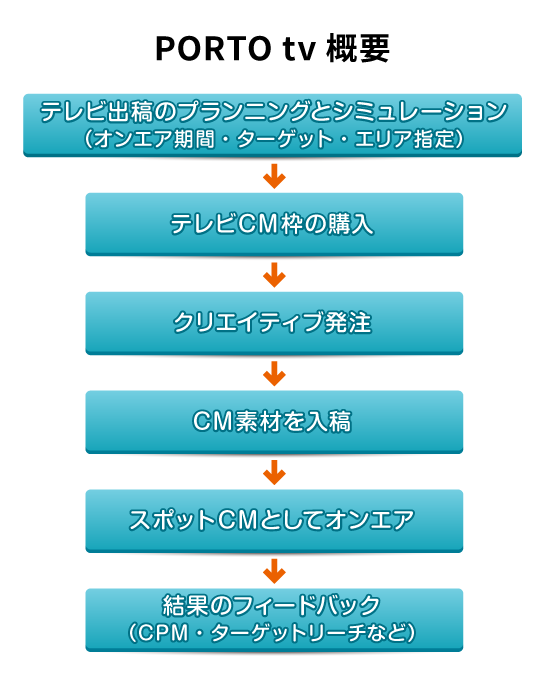
Maeda: "PORTO tv" is a platform that allows advertisers to easily place TV ad orders directly from a dashboard, similar to internet advertising, and also enables performance verification. Contracted advertisers are provided with a dedicated dashboard. On this screen, they input their budget, area, and target audience (age/gender). Based on data like viewership ratings, the system automatically simulates metrics such as how much airtime the ad will get and the expected level of viewership.
Advertisers review the simulation results generated by PORTO tv, make their decisions, and place orders directly through the platform. Orders are received by Dentsu Inc.'s Media Services / Radio,TV Division, which negotiates with TV stations based on the advertiser's specifications to secure placements. A key selling point is the ability to measure effectiveness post-airing. The platform integrates with web/app conversion measurement tools, allowing advertisers to view metrics like CPA and CPI directly on the dashboard.

──It's groundbreaking that advertisers can now easily handle TV ad slot purchasing and effectiveness verification themselves. What led to the development of this service in the first place?
Maeda: CARTA was formed in 2019 through the management integration of VOYAGE and Cyber Communications Inc. (CCI), part of the Dentsu Group. VOYAGE has always been strong in the digital domain, having previously developed products like "fluct,Inc," an SSP (a platform for media providers offering ad slots) as part of its ad platform business, and the smartphone ad network "Zucks AD Network."
We frequently interact with advertisers placing ads online, and many expressed wanting to advertise on TV but not knowing how. This is because TV advertising differs significantly from online, and until now, there was no system allowing management via a dashboard. Furthermore, even after running ads, verifying their effectiveness was complex and time-consuming. Our starting point was wanting to leverage the technology we cultivated in the digital space to provide a system enabling TV ad placement as easily as online advertising.
──What differences did you notice between developing this and an internet advertising platform?
Maeda: Internet advertising platforms have existing precedents, so engineers can clearly visualize what they want to build. However, a "platform for placing TV ads" had no such precedent. Moreover, many engineers at VOYAGE, myself included, have been deeply involved in internet advertising for a long time. Consequently, our understanding of the fundamental mechanisms of "placing TV ads" itself was somewhat limited.
It was truly a task of creating something from nothing. So, together with other engineers, we sought lectures from people on the front lines, including those handling TV ads at local stations, about the types of ad slots unique to TV, how they are purchased, and what factors they consider when buying slots. We held repeated discussions. Through this process, we mutually refined and clarified "what kind of platform we wanted to build" and "what points we needed to be mindful of," then proceeded to design the concrete system.
Returning to your question, a major difference from internet advertising is that TV advertising, for better or worse, relies heavily on personal connections. Unlike the internet, which has almost limitless ad slots, TV slots are finite. Negotiations with TV stations thus depend significantly on experience and personal networks.
That said, we never considered eliminating all human involvement and automating everything with AI. We felt this high level of personalization could actually be a strength for "PORTO tv".
Dentsu Inc. possesses long-accumulated buying power for television advertising slots. By having LATTE members mediate the buying and selling of these slots, we can secure television placements that better align with advertisers' wishes, thereby enhancing advertising effectiveness.
Our focus is on realizing TV placements that benefit advertisers by integrating the strengths of both human expertise and systems.
──How do you plan to evolve "PORTO tv" technically going forward?
Maeda: Our goal is to integrate "PORTO tv" with our digital media platform. CARTA launched "PORTO," an integrated marketing platform for brand advertisers, in 2019. "PORTO" includes services like "Premium Audio," which delivers ads to audio media such as radiko and Spotify, and "Premium DOOH" (Digital Out Of Home), which delivers to outdoor digital advertising.
By integrating "PORTO" and "PORTO tv," we can predict how budget allocation across TV ads, internet ads, DOOH, etc., within a campaign will yield advertising effectiveness. After launch, we can then measure the combined effectiveness across all these media channels.
Bringing together specialists across multiple fields to drive DX
──CARTA is expected to significantly accelerate DX (Digital Transformation) across the media domains of the Dentsu Group in Japan, not just TV advertising. What makes working as a VOYAGE engineer supporting CARTA's technology appealing?
Maeda: At VOYAGE, we have a culture where engineers aren't just told what to build; we actively propose ideas for each project, asking "Why is this needed?" and "Could we improve this further?" The distance between people is quite close, and we value the step of actively exchanging opinions and thinking together with various players involved in the project, including sales.
VOYAGE engineers are characterized by specialists in diverse fields—some deeply skilled in programming languages, others well-versed in security. Even in areas outside your expertise, you can receive appropriate advice from other engineers, allowing you to deepen your knowledge beyond your core specialization.
── Currently, the push for DX is accelerating globally, making engineers increasingly indispensable. Could you share your personal aspirations for the future, Mr. Maeda?
Maeda: With "PORTO tv," I've created something unprecedented in the world, collaborating with advertising specialists from different perspectives. As media continues its digital transformation, I'm committed to accelerating DX to build an environment that benefits advertisers, media, and consumers alike.
Was this article helpful?
Newsletter registration is here
We select and publish important news every day
For inquiries about this article
Author

Maeda Masao
VOYAGE GROUP, Inc.
Joined the company in 2011. Worked on the development of "Zucks Ad Network," primarily responsible for designing the management interface. Leveraging that experience, participated in the new development of "PORTO tv." Also knowledgeable about audio, serving as president of the in-house light music club "VOYAROCK Circle" and handling internal audio support duties.