
Note: This website was automatically translated, so some terms or nuances may not be completely accurate.
 Scalability of Communication Strategy [3/3]
The True Test of Hospitality at the Paralympics
Akihiko Tani
The Tokyo Olympic and Paralympic Games will be held in 2020. The hosting of the Paralympics, in particular, is drawing unprecedented attention both domestically and internationally, holding immense significance for Japanese society. We Japanese must view these Paralympics from a broader perspective and transform them into a force for realizing a truly barrier-free society.
Leveraging the power of communication, we will challenge ourselves not only to ensure the success of the Tokyo Olympics and Paralympics, but also to shape a future for Japan that we can proudly present to the world beyond 2020.
Will the Tokyo Olympics and Paralympics expose Japan's weaknesses?
With Tokyo selected to host the 2020 Olympics and Paralympics, the entire nation has begun moving toward that goal. However, a significant gap exists between Japan's current situation and the future vision it must achieve by 2020. I strongly feel that the Paralympics, held concurrently with the Olympics, carry particularly important meaning.
Japan has tended to focus its attention on how to develop the physical infrastructure.
However, as preparations for the Paralympics progress, weaknesses in the soft aspects are likely to become apparent. Personally, I've noticed many things for the first time through conversations with numerous Paralympians and related individuals.
For example, when we talk about barrier-free accessibility, it encompasses both the physical infrastructure—like installing tactile paving and ramps—and the softer aspects, such as offering a helping hand or providing small acts of support.
In Japan, there has been a tendency to stop at just advancing the physical barrier-free infrastructure. Yet, what Paralympians consistently emphasize is how to advance "barrier-free attitudes" and how to truly realize a barrier-free society. From my own real-life experience, when I told a visually impaired person, "I'm on your right," they would place their hand on my shoulder, and we could walk together normally. Yet, most people simply don't know that this is the right way to interact.
During major para-sports events like the Paralympics, many people with various disabilities and from different cultures visit Japan.
I feel a sense of crisis that, as things stand now, we may not be able to properly welcome these visitors and convey Japan's strengths. However, the deadline of just six years has, conversely, made the necessary actions clearer. We need to work backwards from the desired state and build the social foundation to accept diverse differences by the time of the Games.
To achieve this, we must leverage the power of communication in numerous ways.
In the case of the 2012 London Games, London before the Games was not a city that was easy for people with disabilities to live in or move around.
After the Games were awarded, barrier-free programs were implemented. These initiatives went beyond merely installing physical elements like wheelchair ramps; they shifted the collective mindset toward building a society where everyone recognizes diversity, extends a helping hand, and supports one another.
Furthermore, through the activities of various companies, the Paralympic sports began to be viewed as legitimate sports, watched with respect for the top athletes. As a result, the venues were packed every day. If London could do it, there's no reason Japan can't.
The Meaning of "Superhumans"
For the London Paralympics, the British broadcaster Channel 4 acquired the broadcast rights. At that time, they conducted their communications using the phrase "Meet the Superhumans," completely avoiding the word "disable."
This conveyed that these individuals possess the strength to overcome their disabilities and push forward from there, challenging the limits of the human body—making them superhumans.
Furthermore, various communication initiatives were launched to raise awareness of Paralympic sports. One example is the video featuring world-renowned soccer player David Beckham experiencing blind football.
Personally, through watching Paralympians compete and speaking with them, I have deeply felt their mental and physical strength. Their approach to their sports, their training to push their physical limits – it's all truly worthy of respect.
Just the other day, I watched a wheelchair basketball tournament and also participated in an experience clinic.
The opportunity to actually sit in a wheelchair and experience wheelchair basketball myself made me realize many things.
The Paratriathlon held in Yokohama was also deeply moving.
I believe it's crucial to make these opportunities to watch events more accessible and abundant, and even better, to experience them together.
Expanding the power of communication to change societal awareness
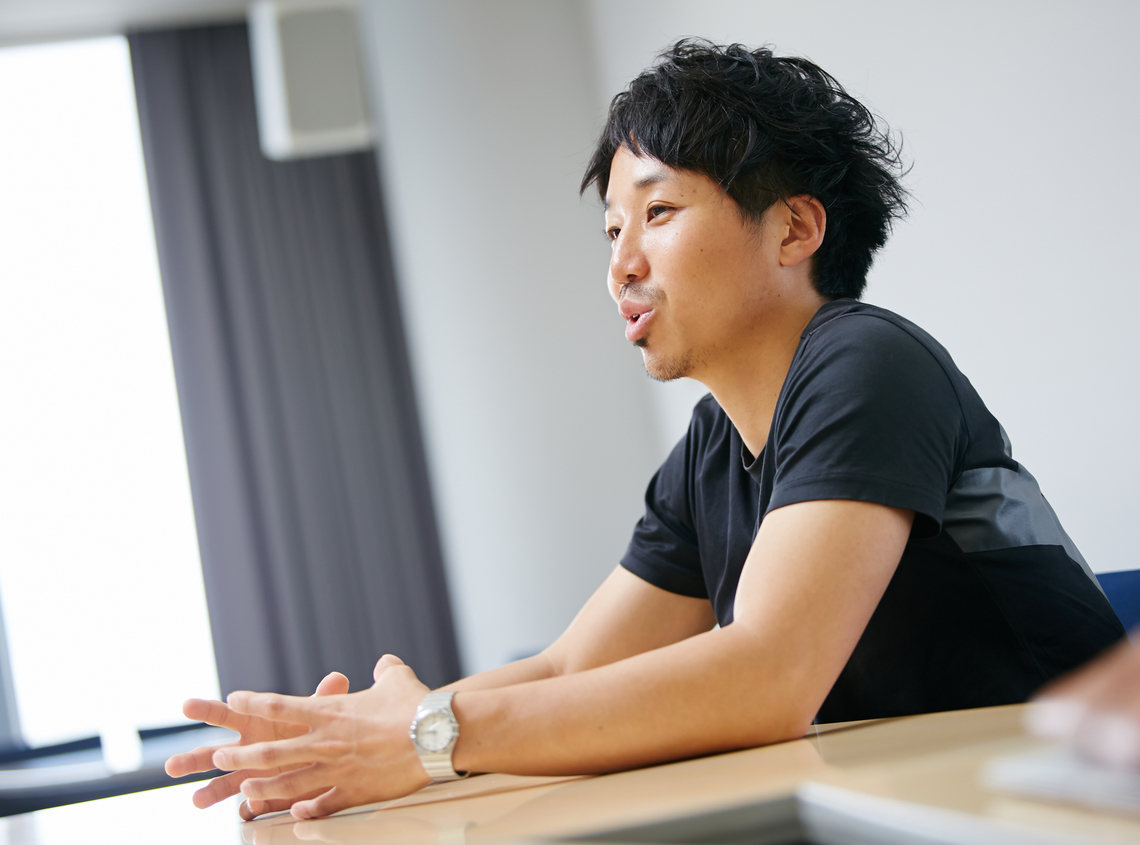
Through the Great East Japan Earthquake, we rediscovered the kindness we had nearly lost and the importance of reaching out to one another. Yet, over time, this awareness begins to fade.
The Tokyo Paralympics can serve as a catalyst to rediscover what truly matters. Isn't this very kindness—where helping one another becomes second nature—the essence of "true hospitality"?
I, too, intend to challenge myself by harnessing the power of communication to change society's impression and image of Japan, and to shift people's consciousness. By utilizing both the power of strategy and the power of creativity, and sharing this vision with our client companies, I want to help build a better society for Japan in 2020 and beyond.
It is certainly our responsibility that, until now, the power of communication cultivated by Dentsu Inc. over 100 years was conveyed only within the narrow confines of advertising.
Dentsu Inc. is now undertaking numerous challenges across diverse fields. We have reached the stage of challenging ourselves to 'expand' these domains.
Using the Paralympics as a catalyst, we want to harness our cultivated communication power to achieve greater excitement than the London Games. This is to enable us to say "Meet the Superhumans" here in Japan and, furthermore, to bring about a change in society's image and perception within Japan.
Looking toward 2020 and beyond, those working in communications can change societal consciousness by challenging new fields and opening up possibilities.
I believe it's crucial to leverage what we've cultivated in communication work and expand those possibilities.
Was this article helpful?
Share this article


Newsletter registration is here
We select and publish important news every day
For inquiries about this article
Back Numbers
Author