
Note: This website was automatically translated, so some terms or nuances may not be completely accurate.
In the end, maybe that gritty, down-to-earth quality is what really matters.
Hirota: "Right now, there's absolutely no connection between the older generation spouting broad statements like 'Japan should export its culture of hospitality to earn foreign investment!' and the younger generation meticulously building systems that get everyone hooked on social games, accumulating experience." I feel that "omotenashi" (hospitality), the core of Japan's service spirit, hasn't actually been properly researched. If we could better understand the structure and mechanisms behind those "moments that delight people," we might be able to apply that knowledge to create more compelling services and products.

Hamano: They're completely disconnected. But there are plenty of common elements.
Hirota: If we properly research this, the vague concept of "Japanese hospitality culture" could be defined as a clear specification, potentially revealing new value.
Hamano: I think it will. Europeans and Americans excel at constructing grand ideas – like "this political ideology is cool" or "all humans are equal." But systematizing non-verbal, sensory, or aesthetic domains? That hasn't been done much.
Now, with the rise of social media and sensor technologies, things that could only be vaguely expressed verbally or passed down as tacit knowledge are suddenly becoming expressible as explicit knowledge at the data level – not exactly big data, but still. It's a huge leap, I know.
But even while discussing these grand concepts, we mustn't stray from the earlier conclusion: developing from the user's perspective. It's precisely by creating alongside users that extraordinary refinement emerges.
Hirota: So, we need to approach that with passion, getting our hands dirty and truly engaging with users.
Hamano: Exactly. Moreover, by being open and not hiding information, we can expect a positive cycle: people will say, "That research is great," fans will grow, and so on. If it's like some secret Shocker-like organization secretly developing this tech, that just breeds conspiracy theories about how suspicious it all is, gets slammed, and ends there. We simply must avoid that. And I believe Japan still has the social foundation for engaging with people face-to-face. It's just become harder to do that in big corporations these days.
Hirota: Or rather, to show sincerity, we might actually have to keep developing it indefinitely (laughs).
Hamano: That's exactly what we shouldn't do, right?
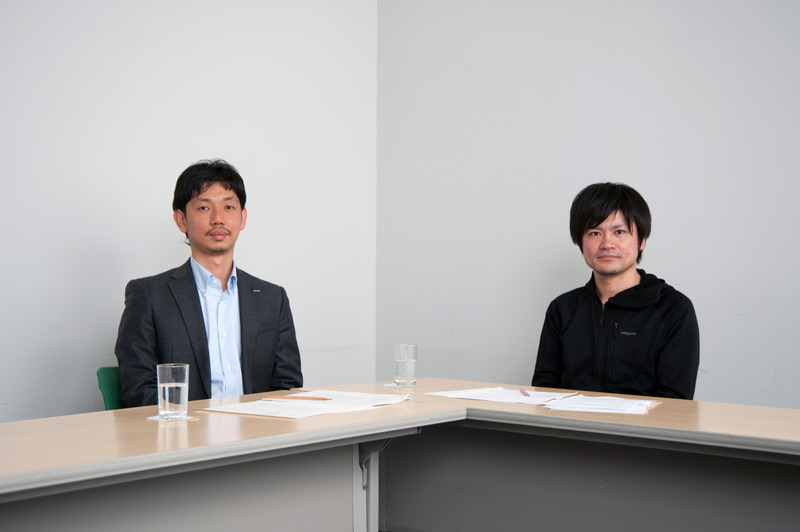
Hirota: So that's why platforms like Facebook or Niconico Video constantly keep changing their specs.
Hamano: So, from the perspective of a typical corporate structure, it just seems like a hassle. But I think we're entering an era where we have to completely overhaul everything, including existing corporate customs. That's the tricky part.
Hirota: I feel like we've touched on some keywords hinting at future prospects.
Hamano: We didn't really come up with any straightforward keywords, though.
Hirota: But we've definitely established that gritty, down-to-earth approach is crucial (laughs).
Hamano: Exactly. It's not cool at all (laughs). But that gritty, down-to-earth approach is crucial. AKB isn't cool at all; it's precisely because they did those gritty, grueling tours that they are where they are today. That accumulation of effort is what builds trust with their fans.
Hirota: That's where people who built mass media come in. They've always been good at that kind of "consideration" – putting their all into making interesting programs or compelling print editions. That's why I feel there's still so much value to be mined if we can effectively connect that with new technology.
Hamano: When you think about it, no industry relies more on human relationships than mass media. Connections are incredibly important, right? I feel like if they could just shift that sense of consideration for relationships a little more—not just within the industry, but toward new emerging fields and general users—that would be enough.
Hirota: Actually, people at broadcasters or publishers who effectively use social media like Facebook are finding great ideas for projects there. There are stories of how facing user voices head-on actually improved their numbers. Instead of unnecessarily viewing technology as the enemy or ignoring it, seeing it as just another tool for getting down to the nitty-gritty of engaging with users helps convey the sincerity behind what we create. It also lets us gather all sorts of ideas from users.
Hamano: With so much changing, you can't move forward unless you truly understand the heart-to-heart conversations. In this social media era, I constantly realize that down-to-earthness, sincerity, and genuine passion—that kind of sports-club-like spirit—actually resonates the most and gets shared easily.
Hirota: That's right. Thank you very much.
This concludes our series "Building an Even Better Relationship Between TV and Social Media." Thank you for reading.
Was this article helpful?
Share this article


