
Note: This website was automatically translated, so some terms or nuances may not be completely accurate.
The Importance of the User Perspective: Considering the Mechanisms Behind Game Addiction

Hirota: While discussing hints for content creation, I understood that building trust through "steady, ongoing engagement" with users is crucial. On the other hand, technology continues to evolve rapidly, and trends in technology itself emerge. Focusing solely on technology, I'd like to ask what developers should prioritize.
Hamano: This is a topic we could discuss endlessly from countless angles, but one point, following the flow of our earlier conversation, is that even with technology, unfinished, user-participatory elements are valuable. Technologies with room to grow are the ones that get loved and thrive.
Take Twitter's reply feature, for example. It didn't exist as a formal specification at first. It started as an unofficial "rule" – users would create this "custom" where if you wrote @someone within the 140 characters, it meant you were addressing them. Then Twitter saw it, thought "That's interesting," and made it an official feature, leading to the reply function we have today. Then there's hashtags—they weren't an official feature at first either. People just started using them, and Twitter thought, "Hey, let's make it so clicking one does a search."
Hirota: Recently, the mute feature might be heading that way (laughs). There are quite a few users who don't want to see certain tweets but don't want to unfollow the account either.
Hamano: That's right. I think features that have this "gap" – where user suggestions gradually shape the specifications – are definitely more likely to be accepted in this kind of system. Technology development that stays close to users. Of course, this doesn't mean accepting every single user request, but it's about learning good ideas from users.
Another point: earlier we talked about how "connection matters, unity matters, presence matters." I think there's still so much untapped potential for experiences that make everyone feel like they're getting hyped together. Especially since the internet has primarily focused on text, photos, and videos as content. Going forward, I think we'll see more exploration in non-verbal communication areas that evoke a sense of presence and togetherness.
If I think of AKB as an example off the top of my head, the experience of making eye contact with your favorite member in the theater, or being pointed at, is incredibly thrilling. Because, in a crowd of many fans, when they give you that look at just the right moment, it's incredibly powerful. It's a crazy experience, like your heart might stop (laughs). In idol otaku terms, it's called a "response." So, what kind of architecture is needed to make this kind of nonverbal communication feel possible in an online space?
Hirota: Badges used in app interactions might have more potential applications. Like getting a mayor badge when you check in on Foursquare, or getting a "Congrats on clearing your tasks!" comment in the middle of the night from the task management app Clear. It might seem like a small thing, but perhaps we should think about mechanisms that highlight and make certain experiences feel special. In other words, observing human behavior and emotions to refine technology for superior user experience.
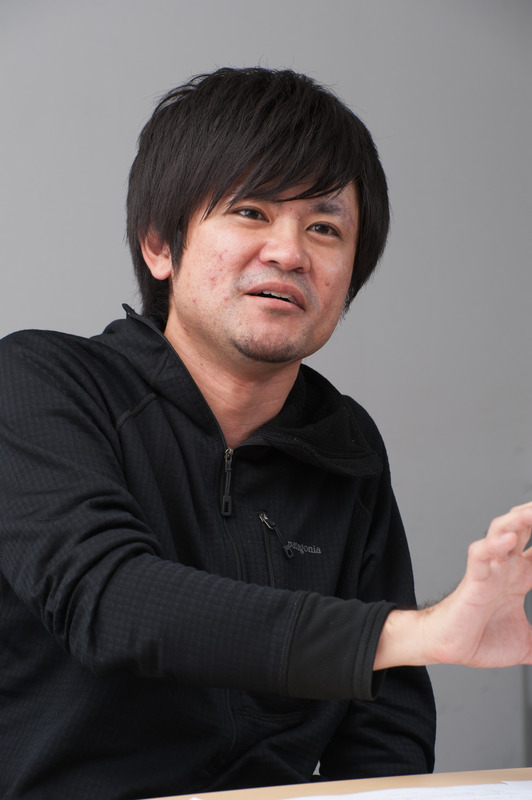
Hamano: Exactly. To do that, we need more research into what trivial things people react to and find joy in. Fields like neuroeconomics and neuromarketing are precisely about that, but they're not widely discussed in Japan. Plus, some people perceive it as akin to so-called "subliminal effects," which is precisely why we need proper etiquette in how we engage with it. I think we need to clearly communicate, "No, we're not doing anything shady like that," and be transparent about our development process.
Personally, I don't think Japan is at a disadvantage here. Japanese people are exceptionally skilled at refining pleasure and joy from the smallest things. Take the Famicom, born in the 80s – Japan is incredibly adept at making games. Social games are a perfect example. At first glance, you might wonder what's so fun about them, but once you play, you realize they're incredibly well-crafted. They're designed around "social interaction," making you get hooked without even noticing.
Idols are also a kind of social game. Remembering the names of fans who come to see you, responding to them at the theater – it's a game of human relationships. That's what hooks people. That kind of know-how should be shared more widely. In Japan, that knowledge is scattered across different industries – the game industry, the social game industry, the idol industry – so systematizing it is incredibly important.
Traditional science and academia tend to dismiss small joys as unimportant, rarely making them subjects of study. Humanities disciplines focus on things like how to foster ethics to prevent war, or how to achieve justice. That's admirable as the pursuit of human ideals. But going forward, I think we need to properly formalize and codify those somewhat dubious methods and know-how – like how people get hooked on games or how they feel good from social interactions. Or rather, I believe the people succeeding in this recession are precisely those who've accumulated that kind of know-how.
[To be continued in the next (final) installment ]
Was this article helpful?
Share this article


