
Note: This website was automatically translated, so some terms or nuances may not be completely accurate.
 A Better Relationship Between Television and Social Media [1/10]
The Complementarity of the Internet and Television: From Versus to With, to Connected

Shusaku Hirota
Henge Inc.
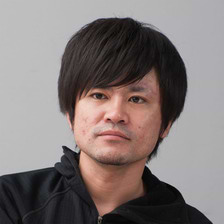
Tomofumi Hamano
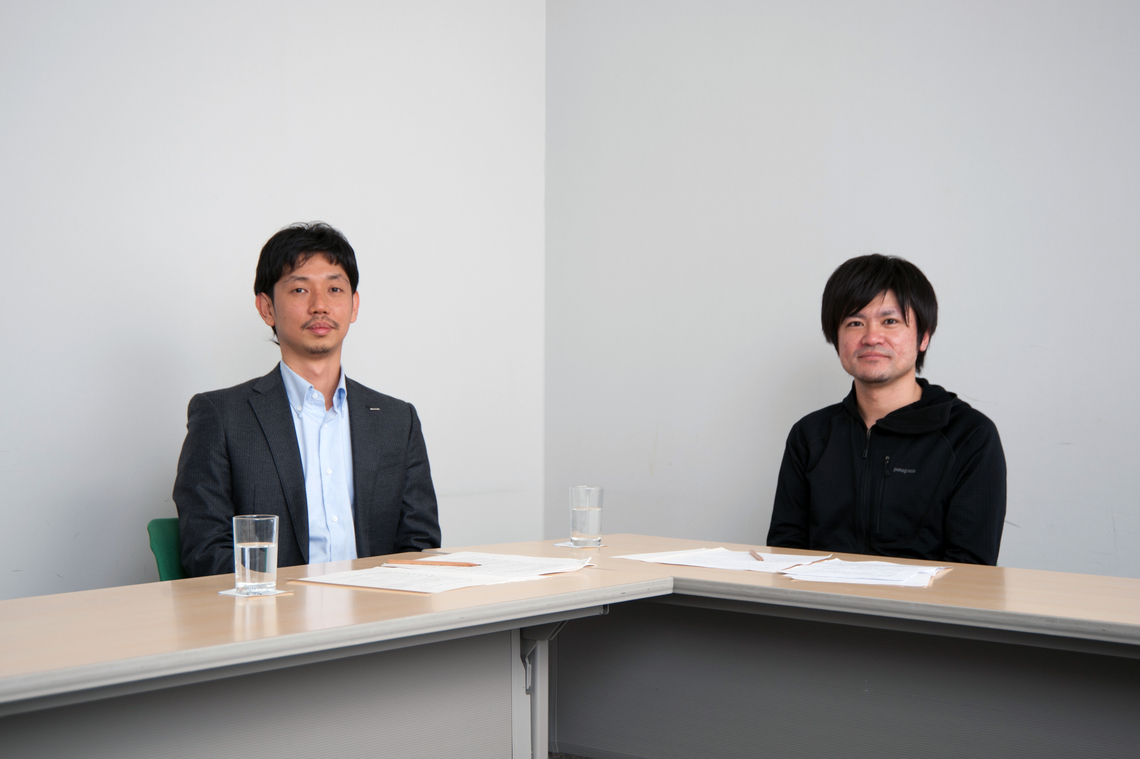
The January 7, 2013 issue of Dentsu Tsūhō featured a dialogue between information sociologist and critic Satoshi Hamano and Shūsaku Hirota of Dentsu Inc.'s Platform Business Division titled "Television and Social Media Moving Toward Symbiosis." Here, as a special supplement to Dentsu Tsūhō, we present a serialized series covering the wide-ranging topics discussed by the two on television and social media.
Hirota: I'm honored to have Professor Hamano here today. He's not only a friend but also a respected sociologist. Our theme is "Building a Better Relationship Between Television and Social Media." I'd like to explore how existing television relates to new social media.
Professor Hamano approaches his research by analyzing media "architecture" (structure, design philosophy) from an information sociology perspective. I'd like to hear your thoughts on how we should consider television and social media, and how we can create a more valuable media environment.
Hamano: Thank you for having me.
Hirota: Until a few years ago , I believe the internet and television were often discussed in a rather adversarial context, seen as competing for viewers' time. However, recently, as we've analyzed data on social media, it's become clear that far from being in opposition, the internet and television are actually in a cooperative, complementary relationship. The discussion seems to be shifting from adversarial ("versus") to complementary ("with"). Furthermore, with the advent of smart TVs and similar devices, discussions are now also emerging from a "connected" perspective, where TV and social media are seamlessly integrated within the device itself. While the discourse has evolved from versus → with → connected, as an individual viewer, I feel that the seamless integration of social media and TV is indeed enriching the viewing experience.
Could you tell us when and how this trend of TV and social media integration started gaining momentum?
Hamano: Back in 2007 when Niconico Douga emerged, I anticipated this would happen sooner or later. In my first book, The Ecosystem of Architecture (2008, NTT Publishing), I analyzed online services like Niconico Douga sociologically. There, I described Niconico Douga using the term "pseudo-synchronization." At first glance, Niconico looks like just a video site where people add comments and chat to liven things up. But in reality, even though everyone watches videos and comments at different times, the comments scroll across the screen synchronized to the video's playback timeline. This creates the illusion of watching videos while constantly chatting in real-time. As a result, even videos that aren't particularly interesting become incredibly entertaining as a source of commentary. The moment Niconico Video launched, I thought, "This is going to take off." And I figured that if Niconico Video could be this entertaining, the trend of live-commenting and sharing on social media while watching TV would soon become mainstream too. And indeed, I believe that's exactly what happened.
The essence of Niconico Video is that the video content itself doesn't even need to be interesting. The very act of viewers connecting while watching the same footage is what everyone enjoys. Sociologist Akihiro Kitada described this phenomenon with the term "sociality of connection." When an environment like the internet makes connection easy, what becomes important isn't the content, but the connection itself – communication. Rather than carefully savoring the content itself, people consume video content primarily to confirm their shared connection with others. They even buy things for that reason. The era of content supremacy is over; the era where communication reigns supreme is upon us.
Even before Niconico Douga emerged, and even on 2channel, what ultimately generated the most excitement was live commentary. In that sense, I always had an intuition that television and social elements would be a great match. I don't think it suddenly became popular just because Twitter appeared.
Hirota: Television provides content, so its value lies in "how much attention it garners." Social media, however, doesn't provide content itself. Its value lies in facilitating communication—in other words, providing the value of "connectivity." Television's business model revolves around capturing attention, while social media's business model revolves around fostering connections. The term "engagement" is often used, but from my perspective, to generate engagement, you need both the value of capturing attention and the value of fostering connections. It feels like these two values have finally started to overlap.
Hamano: I think that's exactly it .
Earlier, I mentioned the "social nature of connection." To connect, you need a common "topic" or a shared point of focus. So people who want to connect on social media or online actually crave shared topics. That's where TV fits in perfectly. It's true that people who use social media tend to have high IT literacy and actively gather information themselves. They don't watch TV, which only passively delivers information, so TV viewership declines... That might apply to a certain segment, but it's not universally true.
Conversely, as Mr. Hirota just mentioned, mass media like TV wants to create that buzz: "Look, what we're doing on this channel right now is trending!" In the internet age, that buzz becomes visible. You can actually see that what's reported on TV is generating real engagement on social media. So, from the mass media perspective, social media's existence is actually quite valuable.
Hirota: I think they're emerging in a mutually complementary way .
[ To be continued ]
Was this article helpful?
Share this article


Newsletter registration is here
We select and publish important news every day
For inquiries about this article
Author
Shusaku Hirota
Henge Inc.
CEO / Director
Tomofumi Hamano
Information Sociologist, Critic, and Japanese Arts and Crafts Researcher