Category
Theme

Note: This website was automatically translated, so some terms or nuances may not be completely accurate.

Hamano: You could say television and social media have become mutually complementary. Or perhaps it's more accurate to say that audience reactions have become harsher, or more clearly visible, making it harder to gloss over things. But that's not necessarily a bad thing. I think it's fair to say it makes it easier for audiences to share their emotions. When Niconico Douga first appeared, I said it was reviving the concept of the "living room" through a "pseudo-synchronization" mechanism.

Hirota: "The Neo Living Room," right?

Hamano: I've conducted qualitative research on "distracted viewing" of TV across various user groups, and I sense that the "living room" is making a slight comeback in households. Back in the 80s and 90s, TVs gradually shifted from one per household to one per room, right? That led to more private rooms, with sons and daughters watching TV in their own rooms instead of with their parents. The so-called "living room" space—opportunities for families to watch content together—diminished.

Also, new devices like the remote control emerged around this time. I'm not sure exactly when the remote control first appeared... I was born in 1980, and Mr. Hirota is the same age, but the very first TV we had at home was still the kind with a dial, no remote control.

Hirota: We turned the dial.

Hamano: At places like my grandmother's house, it was like this (dial type). Then, around elementary school age, we'd get a new one that came with a remote control. So, roughly speaking, TV remote controls became widespread from the 80s to the 90s. And that's when the term "channel surfing" started being used. Everyone watched in their own rooms, instantly switching to whatever program they liked, so programming became increasingly skewed toward individual tastes and preferences. And the "living room" space got torn apart and disappeared.

But what's happening now is the exact opposite. With the advent of cell phones, and especially smartphones, the living room is making a comeback. What does that mean? Well, imagine the living room: someone in the family, say Dad, is watching baseball—a bit of an old example (laughs). Let's say Mom and daughter are watching a drama. In the past, the son would probably have said, "I'm not interested in dramas, I'll watch variety shows in my room." But nowadays, even if the son isn't really watching TV, he's often fiddling with his smartphone nearby. The space of the "living room" itself is still being shared. Cases like this are becoming extremely common.

Hirota: They're starting to connect in real life too.

Hamano: Exactly. It's not just the "living room" on social media; the real-life "living room" is showing signs of revival too. Now, I don't have clear quantitative data to back this up, but when we look at user diary surveys, we're seeing quite a few cases like this.

Also, channel surfing itself might actually be decreasing. Again, this is just my own hypothesis without quantitative proof, but as smartphones become widespread and multitasking while watching TV becomes the norm, more people might be looking at their phones instead of switching channels when commercials come on. Also, with the digitalization of TV, switching channels now has a slight lag in display compared to the old analog days, making it less smooth. That might be another reason why rapid channel-hopping isn't happening as much anymore.

Hirota: That's true. Lately, instead of channel-hopping, I feel like more people are keeping the channel on and first checking social media or posting about the program. Also, when information about the show appears on your social media timeline, you think, "Oh! That person is watching the same show too," and it makes you happy, increasing your engagement with the program. In fact, based on Twitter data, nearly 20% of people in 2011 became aware of a program through social media and then actually watched it. Social media isn't just a way to discover TV; information spreads from there to acquaintances and friends, so social media is becoming a promotional tool for programs.

Hamano: I think that's exactly what's happening.

Hirota: I also find that when I see announcements on my Twitter timeline while working, like "We're covering this on the news today!", it really makes me want to get home early to watch.

Hamano: That happens, definitely. It's not TV leading to social media anymore; it's social media leading to TV. The flow has completely shifted. Also, as is often said, Twitter is actually more like the primary TV-like, passive device. Even if you just leave it alone, strangely enough, if you follow about 150 people, you get a constant stream of scattered information, just like TV. You can kill time just idly scrolling through it.

[ To be continued ]

Was this article helpful?

Share this article

Author

Shusaku Hirota

Shusaku Hirota

Henge Inc.

CEO / Director

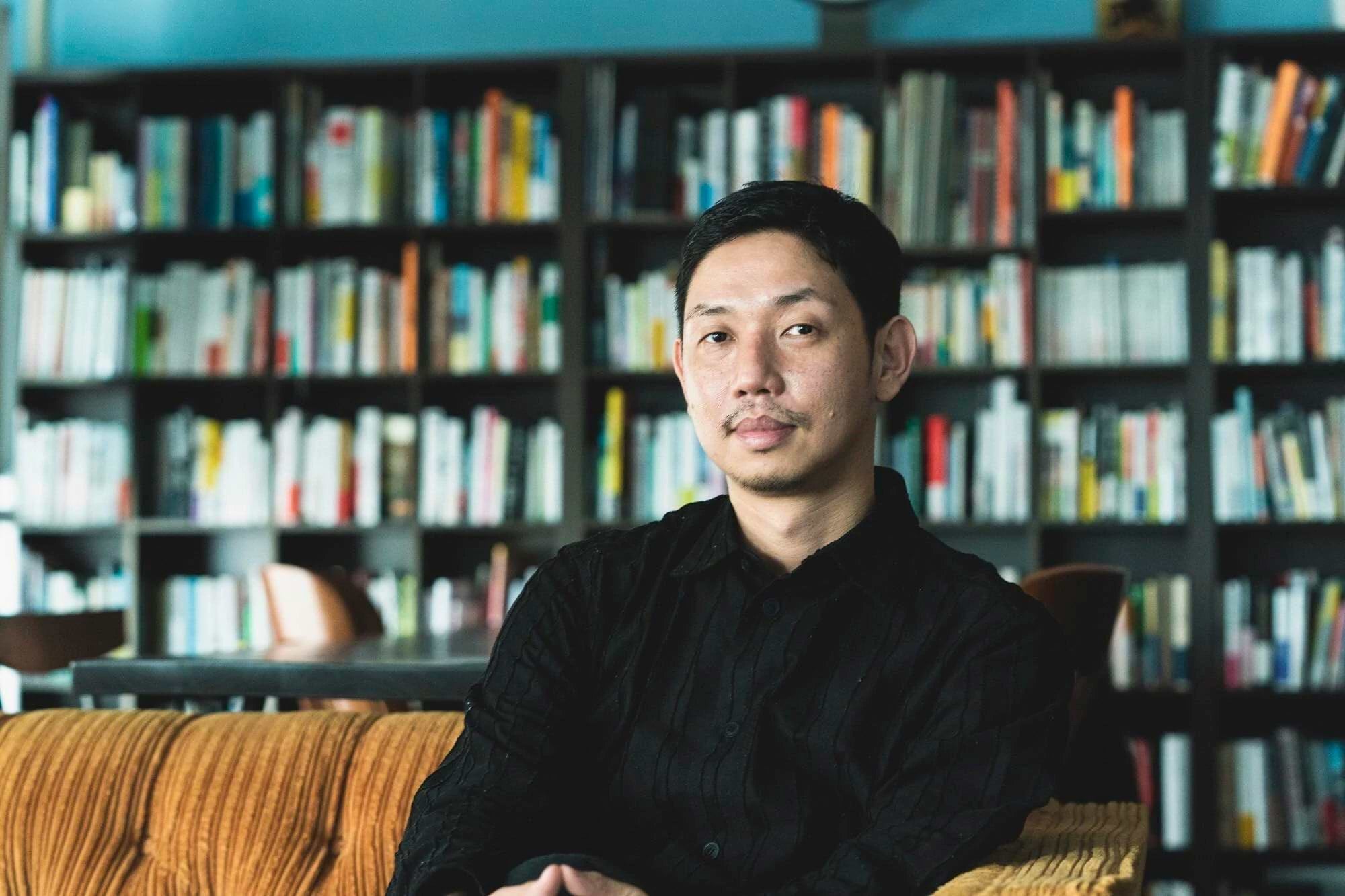
Born in 1980. After working as a director at a broadcasting station, then in marketing, new business development, and brand consulting at Dentsu Inc., he became independent in August 2018. He founded Henge Inc., specializing in corporate brand development. He serves as the Japan Chief for Stylus Media Group, an innovation research firm based in London, UK, and TheCurrent, an acceleration firm based in New York, USA, which accelerates collaboration between large corporations and startups. Possessing a unique brand development methodology, he has supported numerous companies in formulating brand strategies and participated in many innovation projects. He also co-produces Another Real World, a tour project visiting innovative cities and companies, with Megumi Wakabayashi, former editor-in-chief of WIRED Japan. His publications include SHARED VISION (Sendenkaigi) and What Are the World's Marketers Thinking About Now? (Cross Media Publishing).

Tomofumi Hamano

Tomofumi Hamano

Information Sociologist, Critic, and Japanese Arts and Crafts Researcher

Born in 1980. After completing a master's degree at Keio University's Graduate School of Media and Governance and serving as a researcher at the International University of Japan's Global Communication Center, he currently works as a researcher at Nihon Kigei, a web-related service company. Since 2011, he has concurrently served as a commentator for the Asahi Shimbun's Forum section and as a part-time lecturer at Chiba University of Commerce. His specialties are information society theory and media theory. Engages in sociological analysis of web services and online communities, as well as fieldwork-based surveys of general users. Major publications include: * The Ecosystem of Architecture (2008; 25th Telecom Social Science Award, Encouragement Prize) * The Future of Japanese Social Media (co-authored with Hiroshi Sasaki, 2011) * Theory of Hope (co-authored with Tsunehiro Uno, 2012)

Also read

The Revival of the "Living Room" ~ Multitasking Viewing with Social Media