Note: This website was automatically translated, so some terms or nuances may not be completely accurate.
 Insight Memo [37/65]
Latest Trends in Young People's Media Behavior ~ From Cluster Analysis: Understanding Young People Through Media and Communication ~ ①
In recent years, communication has become increasingly complex with the spread of the internet and smartphones. This phenomenon is particularly pronounced among young people, making them increasingly elusive. To better understand them, we collaborated with Dentsu Inc.'s Youth Research Department (nicknamed Wakamon) to develop a new cluster analysis, which we'd like to introduce.
Since Wakamon has already introduced the profiles of these clusters, this series will focus on their "Media and Communication Behavior" and be presented in three parts.
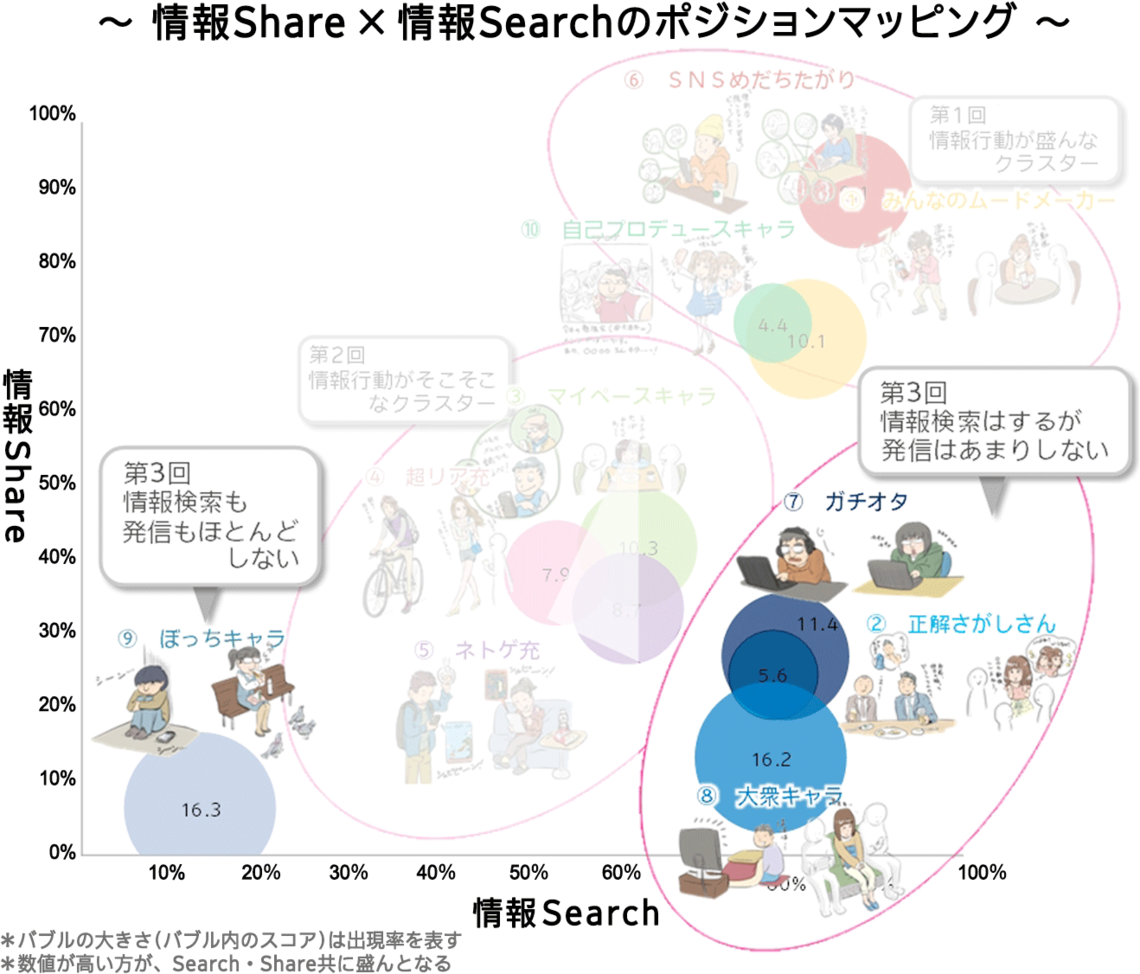
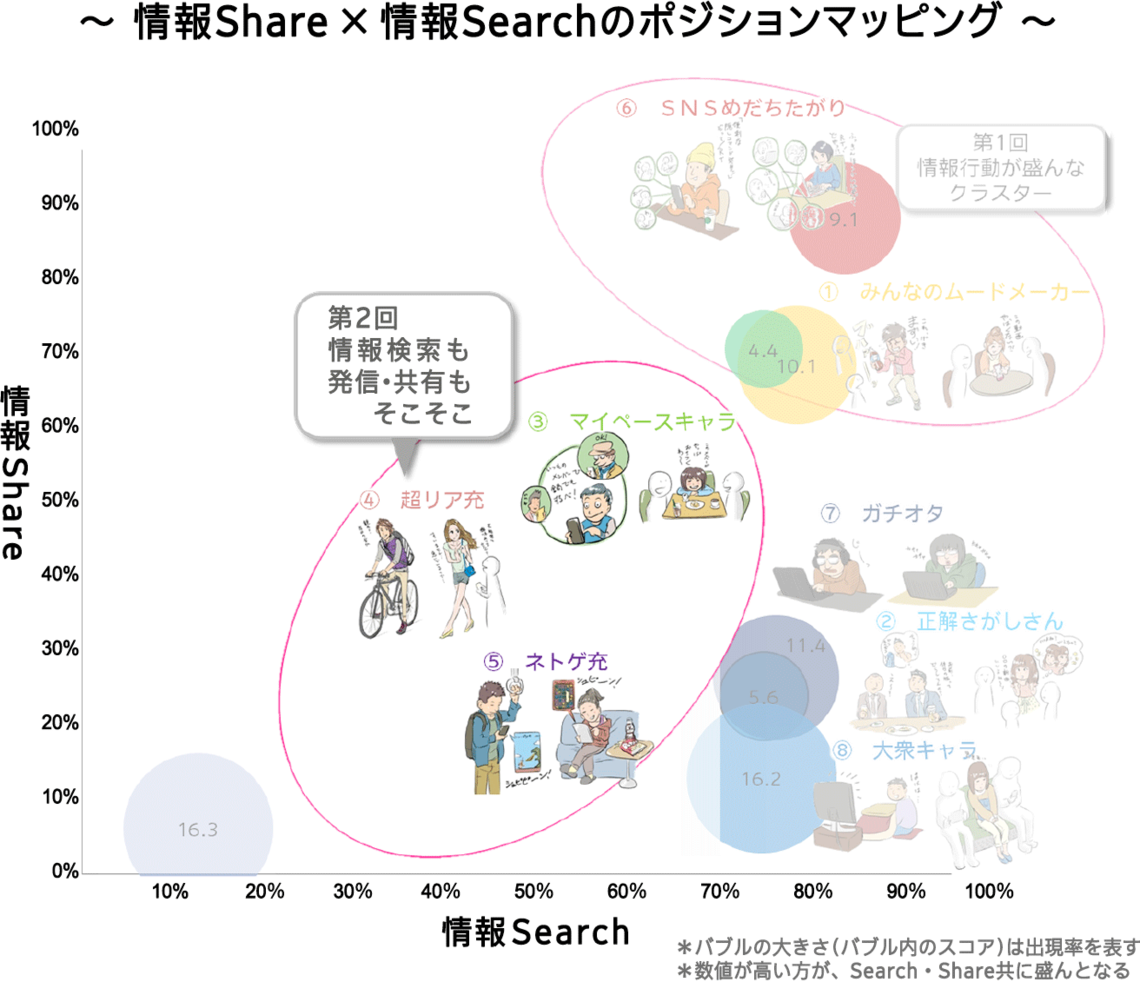
Part 1 introduces the media and communication behaviors of three clusters that actively engage in information actions (searching & sharing).
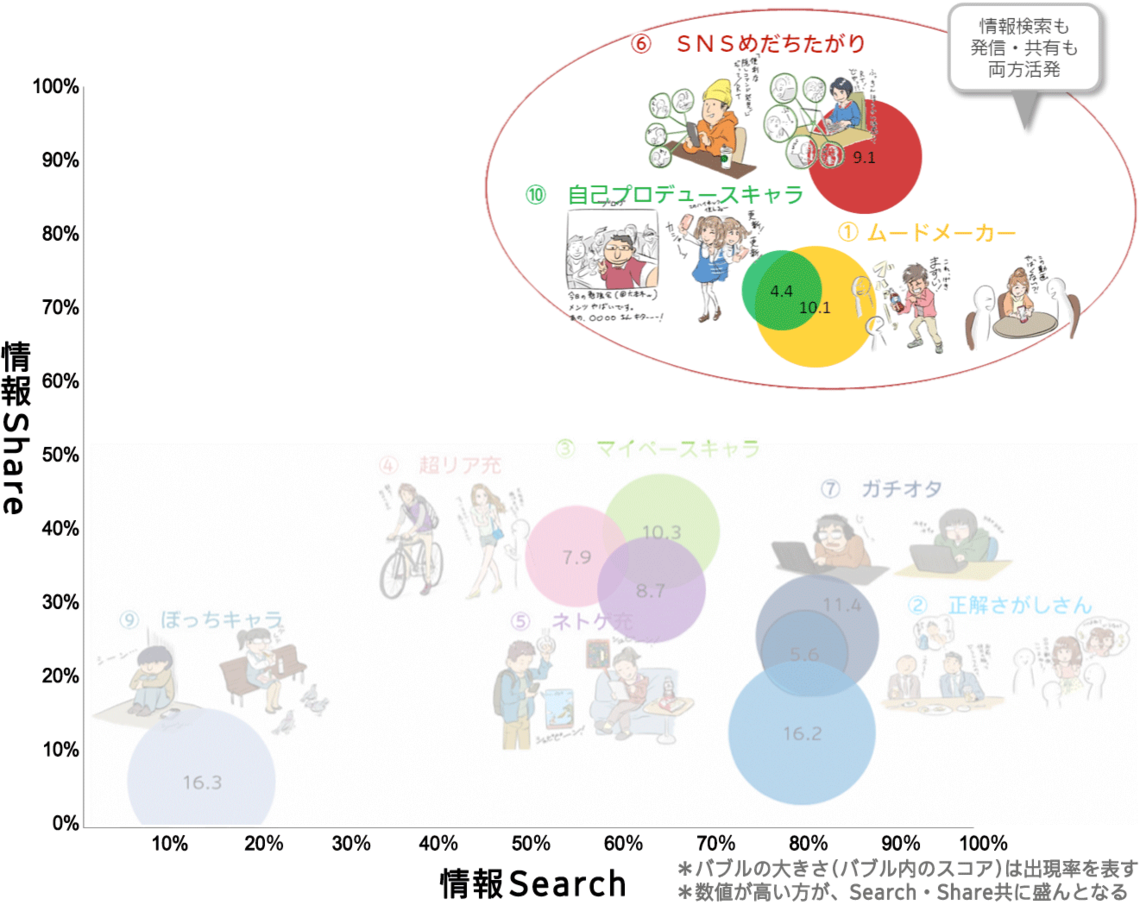
First up is Cluster ①: " Mood Makers." They prioritize real-world communication and prefer meeting in person to talk rather than engaging in online information activities.
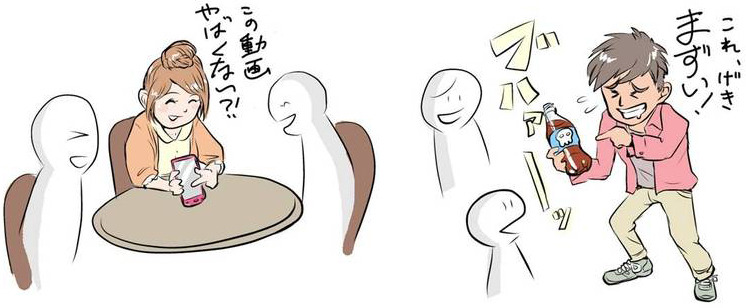
● Media they use: "Things that can be immediately turned into conversation topics"
● TV is primarily a source of anecdotal information
● They like radio and also use radiko
For them, media serves primarily as a source of conversation topics, and they don't engage with it very actively. If anything, compared to other clusters, their radio listening time stands out at 35 minutes per day (same for all subsequent figures), more than double the overall average (16.2 minutes). While they have low contact time with other media, their word-of-mouth influence is among the strongest across all clusters. Group interviews revealed opinions like "I directly tell information to colleagues, friends, or partners." They also love events and actively seek out interesting topics themselves.
Next, Cluster ⑥: " SNS Show-offs." They are "mini-curators" who enjoy disseminating information itself. They possess strong intellectual curiosity and a desire to be perceived as unique by others, yet they tend not to frequently share their own opinions or comments.
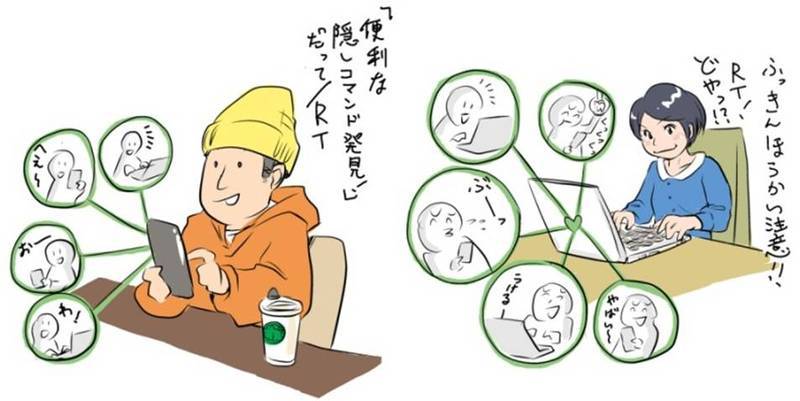
● They spend relatively long periods online and check information-sharing sites
● Retweet information that catches their interest
● As for TV content, they like variety shows
Because they compile and share online information, they spend relatively long periods online across PCs, smartphones, and traditional mobile phones, showing a strong tendency to use summary sites across various fields. Their SNS usage rate and number of connected friends both score high, with Twitter and Facebook usage rates notably above average. They share information quite frequently, but this sharing is strictly online; they strongly avoid offline sharing like word-of-mouth. However, they are very careful about their online posts. In group interviews, comments like "On Facebook, I'm connected with people I'm not that close to or just acquaintances, so I don't want to reveal too much of myself. I absolutely never write anything that could be 'bad' or complain" and "I only post things that won't hurt anyone's feelings" were observed. Their social network is very extensive, and they carefully position themselves within it.
Finally, Cluster ⑩: " Self-Produced Characters." They strongly desire to be known by their real names as "alpha bloggers." They possess strong ambition and upward mobility, posting blogs from PCs or smartphones.
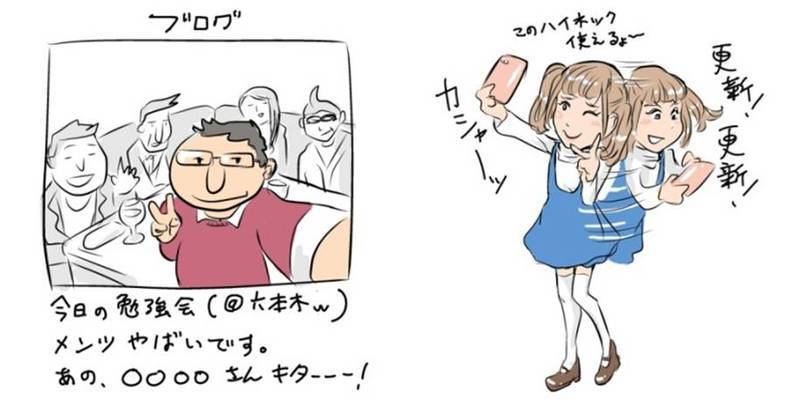
●Online activities center around PCs, with mobile used as needed
● Compared to other clusters, they watch slightly less TV
● They enjoy magazines and spend considerable time reading them
● Regularly check information sites and magazines
As described above, they frequently write blog posts using PCs or smartphones, leading to prolonged internet exposure (across PCs, smartphones, and traditional mobile phones). Beyond heavy social media use, they strongly tend to utilize diverse sites including video platforms (YouTube, Niconico), message boards (like 2channel), and e-commerce sites. Their average Twitter follower count is 210, the highest among all clusters. They also have their own approach to sharing information. Within the group, there's a sentiment expressed in group chats: "If you keep recommending products one after another on Facebook, people who aren't interested will just drift away. We stick to the approach of 'This kind of photo is what everyone likes, right?'" This shows they consider their audience when sharing information. They also use magazines frequently and tend to check information magazines regularly. However, compared to other clusters, their TV viewing time is slightly lower.
What do you think? The three clusters introduced here all have clear goals and limited media exposure. "Mood Makers" prioritize real-world communication, leading to less media exposure overall. "SNS Show-offs" and "Self-Produced Characters" use the internet for self-expression, naturally increasing their online exposure.
Thus, even among young people, media usage varies greatly. It is essential to understand their characteristics and formulate strategies tailored to them.
<Analysis Summary ①>
Conducted factor analysis and cluster analysis based on d-camp data.
Data Used: d-camp2012 (Survey Period: October 2012 - July 2013)
Survey Area: Kanto region (Tokyo and 6 prefectures)
Analysis Subjects: Males and females aged 15 to 29 (excluding junior high school students) (1163 subjects)
Survey Method: Mail-in questionnaire
Survey Implementation Agency: Dentsu Macromill Insight, Inc.
<Analysis Summary ②>
Group interviews were conducted for 6 clusters.
Survey Participants: 6 groups × 6 people each = 36 people total (composed of 3 people from each of 2 clusters combined to form 6 people)
Participant Criteria: Men and women aged 15-29 residing in the Tokyo metropolitan area, unmarried (one group included one married person without children), social media users
Survey Period: March 26–29, 2014
Research Agency: Dentsu Macromill Insight, Inc.
Was this article helpful?
Share this article


Newsletter registration is here
We select and publish important news every day
For inquiries about this article
Back Numbers
Author

Ryo Hyōzawa
Dentsu Inc.
Business Production Bureau