
Note: This website was automatically translated, so some terms or nuances may not be completely accurate.
 Insight Memo [36/65]
New Forms of Newspapers "Shimotsuke Shimbun NEWS CAFE"
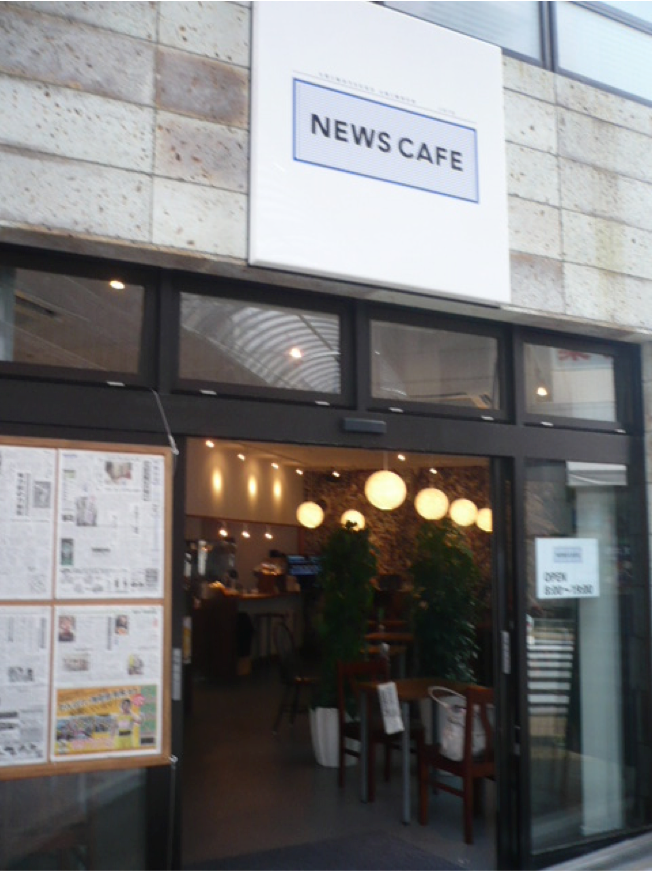
According to annual data published by the Japan Newspaper Publishers & Editors Association ( http://www.pressnet.or.jp/data/ ), the long-term trend shows a continuous decline in total circulation, with the number of newspapers per household falling below one in 2008. While reasons include younger generations turning away from newspapers, publishers cannot simply accept this situation. Initiatives like NIE (Newspaper in Education; using newspapers as teaching materials in schools and other educational settings) are being rolled out nationwide to familiarize younger audiences with newspapers. Beyond such direct efforts, what else can newspapers do? One form of this is the Shimotsuke Shimbun NEWS CAFE.
Throughout Japan, each prefecture has its own distinctive local newspaper. Their corporate philosophies and management goals often include phrases like "contributing to the community" or "supporting regional development." For local papers, expanding beyond their home prefecture is usually impossible. The development of that prefecture is intrinsically linked to the newspaper's own growth.
Local newspapers have long contributed to regional development through various initiatives. Examples include planning and attracting events like fireworks festivals and exhibitions, or hosting sports events such as marathons. They have supported the lives of local residents and contributed to cultural development. However, these efforts often carry significant social contribution elements, sometimes resulting in higher expenditures than revenues. Additionally, issues arise where it's unclear whether the newspaper company is involved, leading to a lack of enhanced loyalty towards the newspaper.
Surveys on newspapers and newspaper companies show their trustworthiness is overwhelmingly higher than other media. However, the prevailing image of newspapers is rigid, like "government offices" or "schools," lacking words suggesting approachability like "enjoyable" or "uplifting." While it may seem obvious to mention the fundamental function of newspapers, moving beyond rational values like trustworthiness to cultivate emotional values—such as making readers like them or even become fans—could become a major goal for newspapers going forward.
A prime example of community integration is a J.League soccer team. Numerous studies show that J.League teams revitalize local areas. This model demonstrates how residents develop affection for their local team, become fans, and actively volunteer to support the team. This mutual influence between the team and the community allows the team to take deep root locally and contribute to regional development.
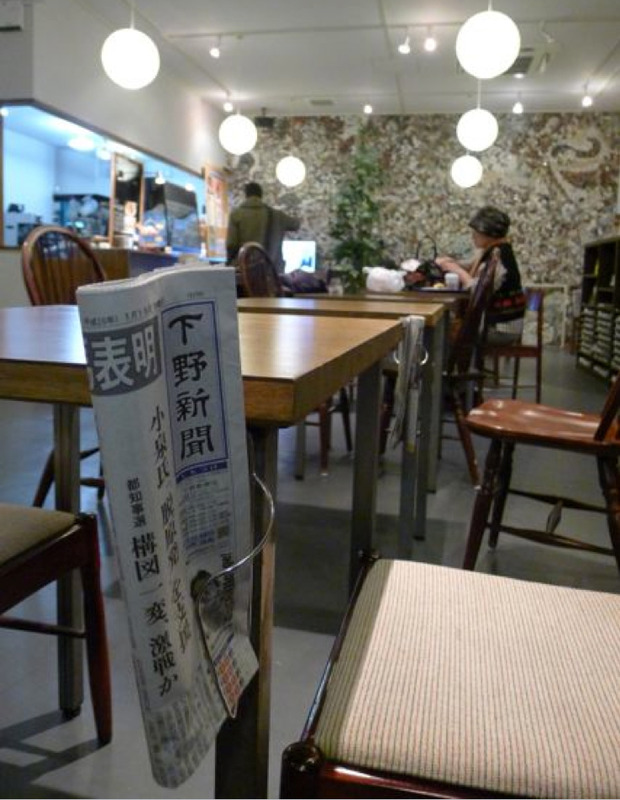
What can newspapers and newspaper companies do to contribute to and develop their communities? This is where the NEWS CAFE concept emerged. While many such initiatives already exist in the US, the idea is to create a space that serves as the face of the newspaper company. It becomes a hub where people who gather there can experience the newspaper and the company, deepen their understanding, and foster a sense of familiarity. For example, at the Winnipeg Free Press's News Café ( http://www.winnipegfreepress.com/cafe/ ) in Canada, journalists are stationed there, engaging in various interactions with the people who gather. Beyond news gathering, they answer readers' questions and host events to deepen understanding of newspapers and journalism, functioning as the newspaper's public face. For readers, this satisfies curiosity about who writes the articles. Through direct interaction with the writers themselves, a deeper sense of connection and empathy is fostered.
On June 1, 2012, the Shimotsuke Shimbun opened the "Shimotsuke Shimbun NEWS CAFE" in central Utsunomiya. Its purpose is community contribution. By incorporating a downtown bureau and disseminating information through the "Miyamotto" section, which covers and publishes local news, it aims to revitalize the local shopping district. Simultaneously, it serves as a hub to gather people for the revitalization of the central city area, a place where people can read newspapers, and a base for the newspaper company's various information dissemination and event venues. A survey conducted one year after opening showed that the local shopping district had become livelier, and emotional scores related to familiarity with the newspaper and the newspaper company had improved. While it is difficult to pursue approachability through newspaper pages alone, creating such a hub and establishing the newspaper company's presence has made it possible to get closer to readers and residents. This initiative was highly praised as a "model for regional contribution by a newspaper company" and won the 2013 Newspaper Association Award in the "Management and Operations" category.
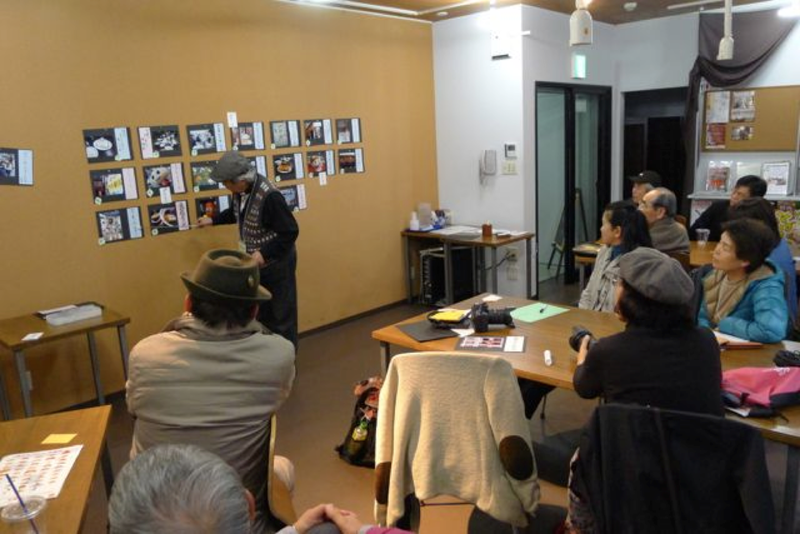
NEWS CAFE is also being implemented by newspapers such as the Hokkaido Shimbun, Nishinippon Shimbun, and Kahoku Shimpo. Using methods like the World Café*1 style to discuss how to solve local issues, or deepening understanding of newspapers through "Mawashi Yomi Shimbun"*2, they are making efforts to bridge the gap between newspapers/newspaper companies and readers/residents.
For newspapers and publishers, creating such direct points of contact will be essential moving forward. There is a growing need for newspapers to proactively reach out and become more accessible entities, and the Shimotsuke Shimbun NEWS CAFE represents one such form of this effort.
※1 World Café: A meeting technique where participants engage in free dialogue in a relaxed, "café-like" atmosphere. Discussions progress by shuffling conversation partners. Its use is expanding across various fields, including civic activities and community development.
※2 Shared Reading Newspaper: A method where participants bring their own newspapers, cut out "interesting" or "noteworthy" articles, and collaboratively create a single newspaper page while discussing. It is gaining attention as an initiative to create new value from newspapers.
Was this article helpful?
Share this article


Newsletter registration is here
We select and publish important news every day
For inquiries about this article
Back Numbers
Author

Toshiyuki Kitahara
Dentsu Inc.
Dentsu Inc. Media Innovation Lab
Principal Researcher
Articles by this person

What's the true intent behind the "Declaration to Quit Mass Media"? The current state of local media. Special Discussion: "Japan's Advertising Expenditures in 2024"
