Note: This website was automatically translated, so some terms or nuances may not be completely accurate.
 Insight Memo [38/65]
Latest Trends in Young People's Media Behavior ~ From Cluster Analysis: Understanding Young People Through Media Communication ~ Part 2
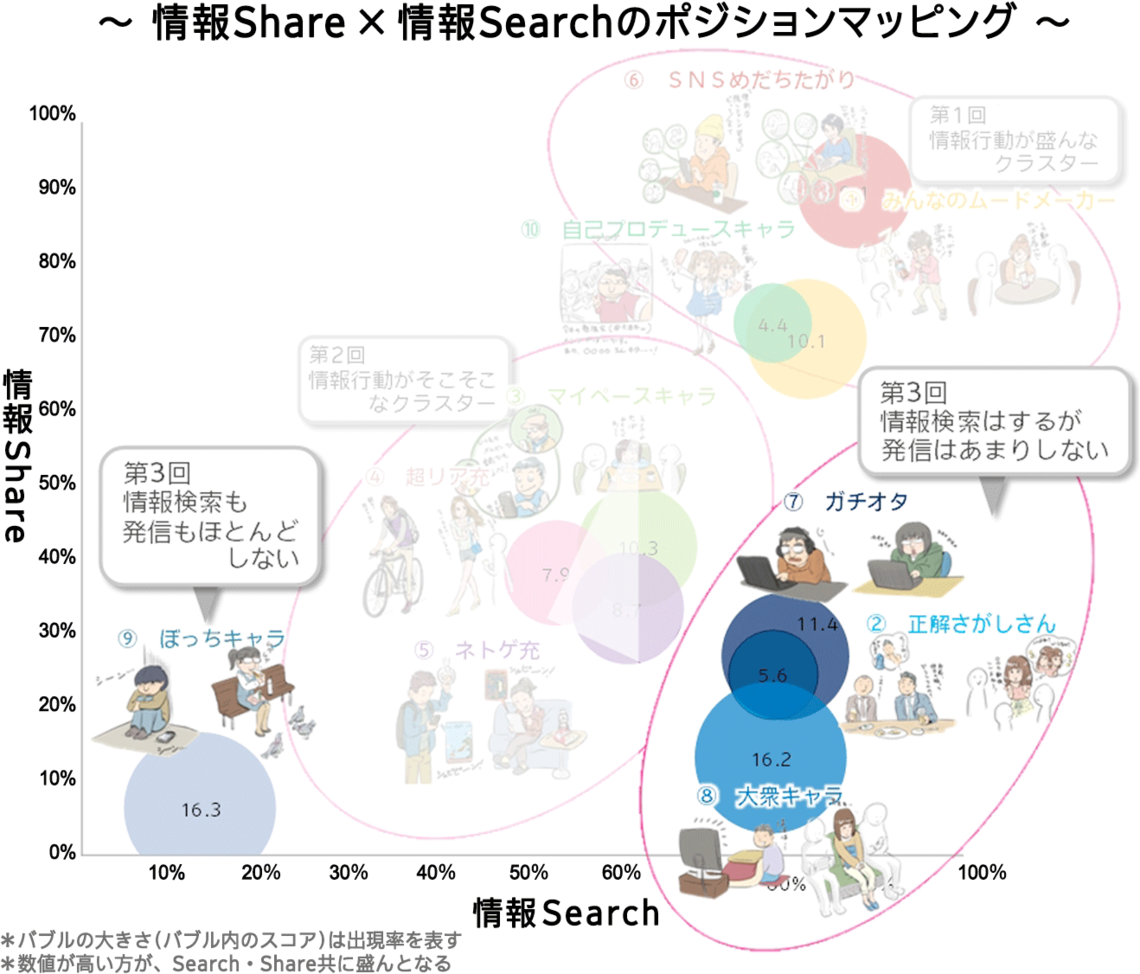
In recent years, communication has become increasingly complex with the spread of the internet and smartphones. To capture young people, where this phenomenon is particularly pronounced, we would like to introduce a cluster developed in collaboration with Dentsu Inc.'s Youth Research Department (commonly known as Wakamon).
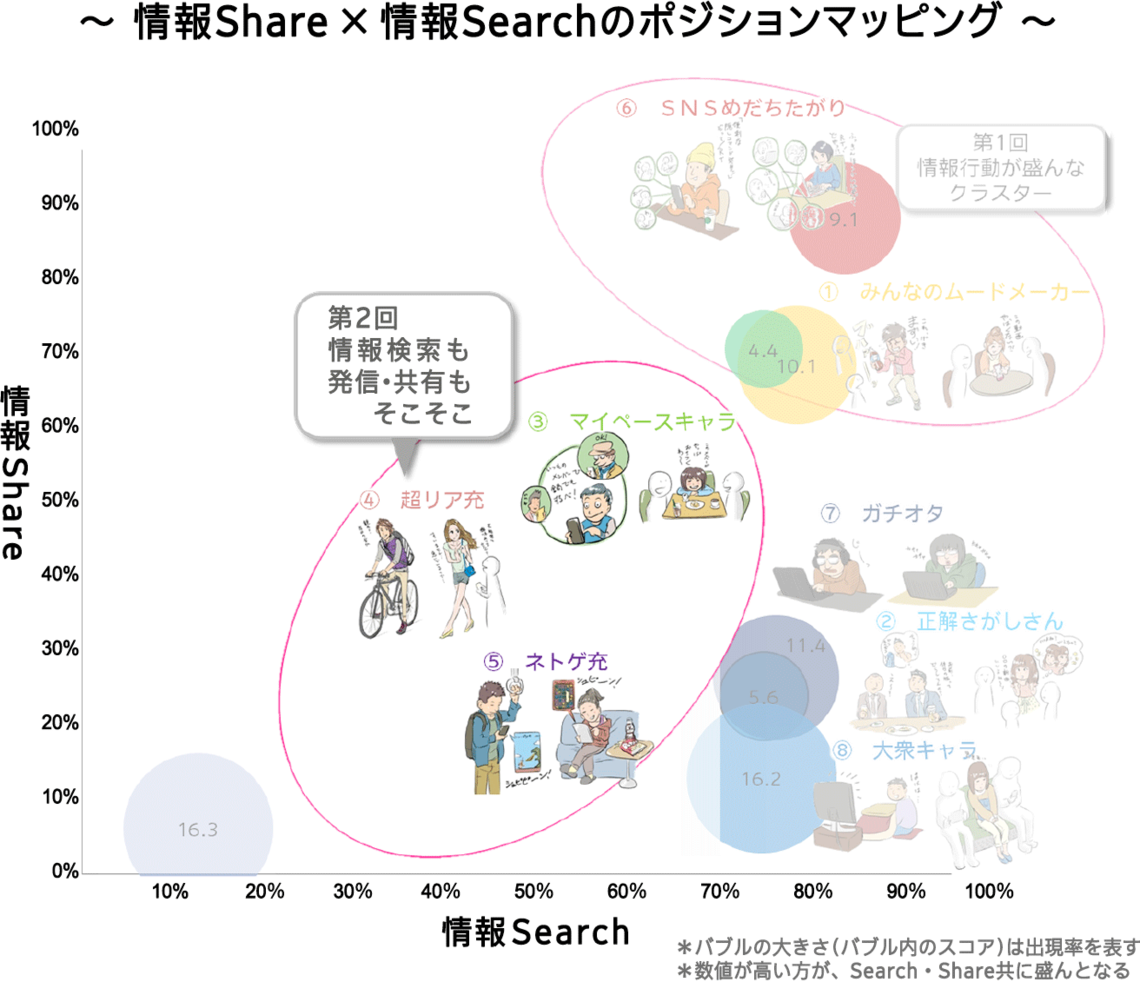
The first installment introduced three clusters highly active in information behavior (searching & sharing). This time, we'll cover the media and communication behaviors of three clusters that engage in information activities to a moderate degree.
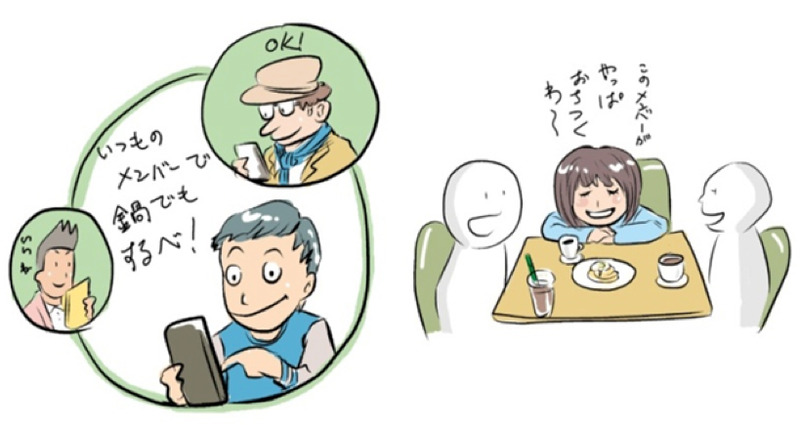
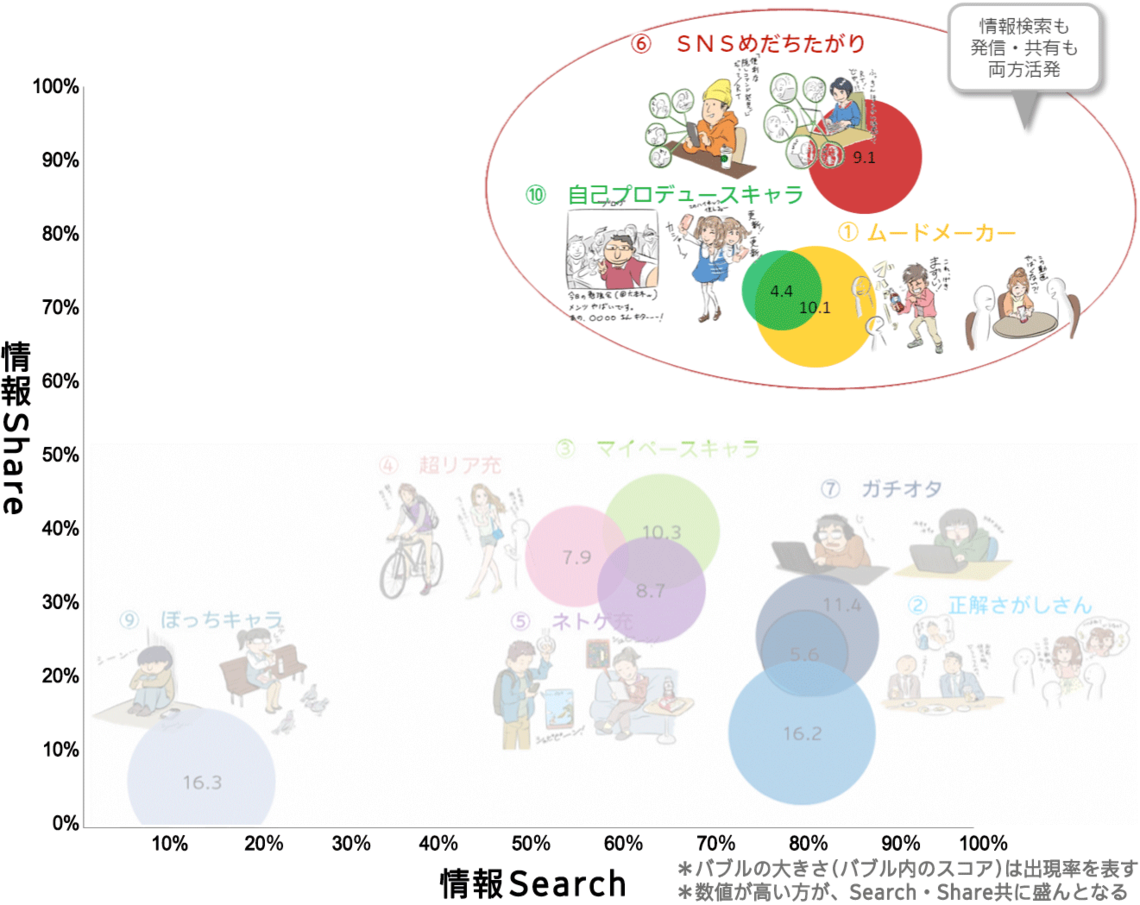
First up is Cluster ③: " My Pace Characters." They frequently use social media like LINE and Twitter, but limit their online friends to real-life acquaintances. Their actual social interactions also show a strong tendency to "narrow their circle of friends and deepen those relationships," rather than constantly expanding it.
● Media used as a source for current events information
● Compared to other clusters, they watch live TV less often, but frequently watch recorded programs
● They read newspapers thoroughly
They differentiate their media usage by type. For example, their newspaper contact time is longer than other clusters, and they tend to watch TV via recorded playback rather than live viewing (TV viewing time: 98.5 minutes, recorded playback: 132 minutes <per day, same below>). Given their strong interest in news programs, they likely watch news live while recording other desired programs.
For social media, LINE usage is highest at 73% among all clusters (overall average 46%), and they tend to have larger friend lists. Twitter usage is similarly high, but accounts are locked, with communication mainly confined to their "usual crew." Group interviews revealed statements like, "My close friends are seven guys and girls who went to the same local elementary and middle schools. We tweet really trivial things like 'I want to go on a trip, wanna come?' or 'Just saw someone funny.'" This indicates many limit their social media communication to their core group. Other comments included: "My social circle expands through school or work, but I don't actively seek to grow it," and "I welcome having fewer, deeper friendships." Most expressed satisfaction with their existing community.
Next is Cluster ④: " Super Popular." The truly popular person you find in every class, usually one or two. They have high self-confidence and a strong sense of happiness. They have established sources of information and taste, rarely relying on social media or word-of-mouth. They don't share much online, yet people naturally follow them – the charismatic type.
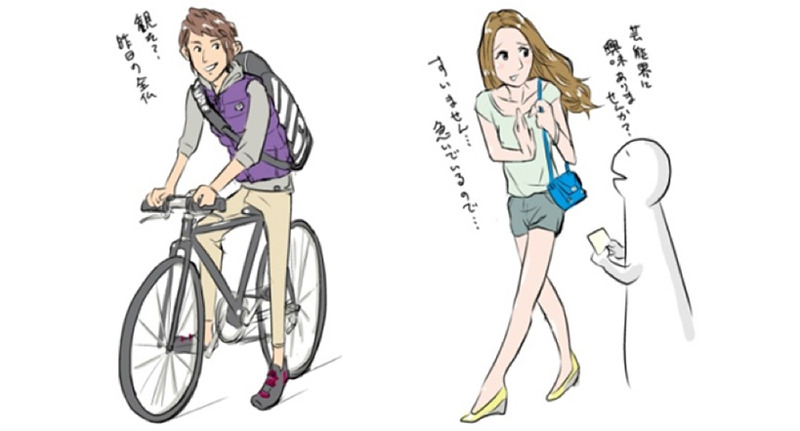
● Multimedia types strong in both mass media and online
● Most active mobile users with highest tablet usage rate
● They actively gather information themselves using trend magazines and information sites
Their media behavior is that of a multimedia type strong in both mass media and online (though they don't watch recorded content much). They actively use mobile internet and have the highest tablet usage rate. They also frequently read magazines, with the longest contact time among all clusters at 55.5 minutes (Overall average: 23.5 minutes). They share offline information like word-of-mouth but do not share online. However, despite not sharing online, they have a significant number of friends on social media. This cluster tends to attract attention from those around them.
Finally, Cluster ⑤: " Online Gaming Enthusiasts." These are indoor types who find fulfillment in the world of online games and love mobile gaming. Their interests are heavily skewed towards games, with little concern for food or clothing. They strongly feel that "online interactions are easier than real-life relationships" and connect with others through online games. Overall, they are passive and have low involvement with trends.
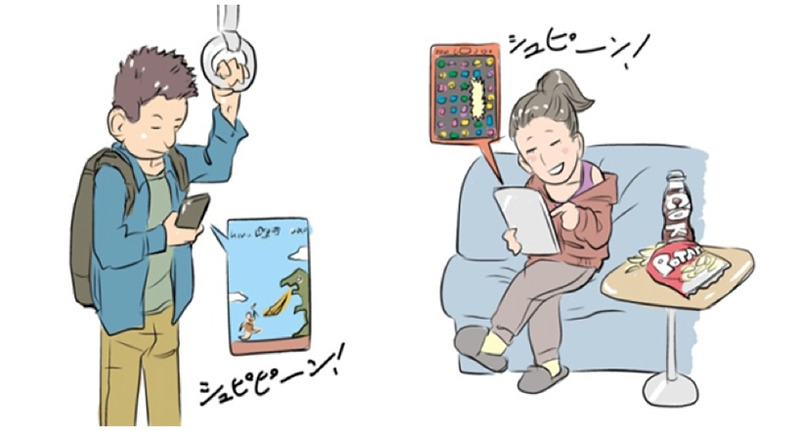
● They spend considerable time watching TV as well as using mobile devices, suggesting they often multitask or watch while chatting.
● They don't read magazines much, but they like gadget magazines.
As their name suggests, they frequently play mobile games, so their internet usage time via smartphones and conventional mobile phones is 161 minutes, the longest among all clusters (overall average: 114.5 minutes). In addition to mobile, their TV viewing time is also long at 147.5 minutes, suggesting they engage in "multi-tasking viewing" and "tweeting while watching." They don't spend much time reading magazines, but they tend to read gadget information magazines frequently.
In terms of online media, they overwhelmingly surpass other clusters in their usage of game-related social media such as Greer, Mobage, and Mixi. They also frequently use video sites such as YouTube and Niconico Douga. Game playthrough videos and strategy videos are popular among some young people, so it is likely that they are watching these.
The three clusters introduced here were divided into types even though their information behavior (searching and posting) was similar. The "My Pace" type collects and disseminates information, both online and offline, for their community of friends. The "Super Real Life" type obtains information from various media sources and only disseminates it offline. Although they do not disseminate information online, they have many friends on social media. Conversely, the "Online Game" type rarely disseminates information offline and basically only disseminates it online.
Thus, even among young people, media usage varies significantly. Understanding their characteristics and formulating tailored strategies will be essential.
<Analysis Summary ①>
Factor analysis and cluster analysis conducted using d-camp data.
Data Used: d-camp2012 (Survey Period: October 2012 - July 2013)
Survey Area: Kanto region (Tokyo and 6 prefectures)
Analysis Subjects: Males and females aged 15 to 29 (excluding junior high school students) (1163 subjects)
Survey Method: Mail-in questionnaire
Survey Implementation Agency: Dentsu Macromill Insight, Inc.
<Analysis Summary ②>
Group interviews were conducted for 6 clusters.
Survey Participants: 6 groups × 6 people each = 36 people total (composed of 3 people from each of 2 clusters combined to form 6 people)
Participant Criteria: Men and women aged 15-29 residing in the Tokyo metropolitan area, unmarried (one group included one married person without children), social media users
Survey Period: March 26–29, 2014
Research Agency: Dentsu Macromill Insight, Inc.
Was this article helpful?
Share this article


Newsletter registration is here
We select and publish important news every day
For inquiries about this article
Back Numbers
Author

Ryo Hyōzawa
Dentsu Inc.
Business Production Bureau