Note: This website was automatically translated, so some terms or nuances may not be completely accurate.
 Insight Memo [39/65]
Latest Trends in Young People's Media Behavior ~ From Cluster Analysis: Understanding Young People Through Media Communication ~③
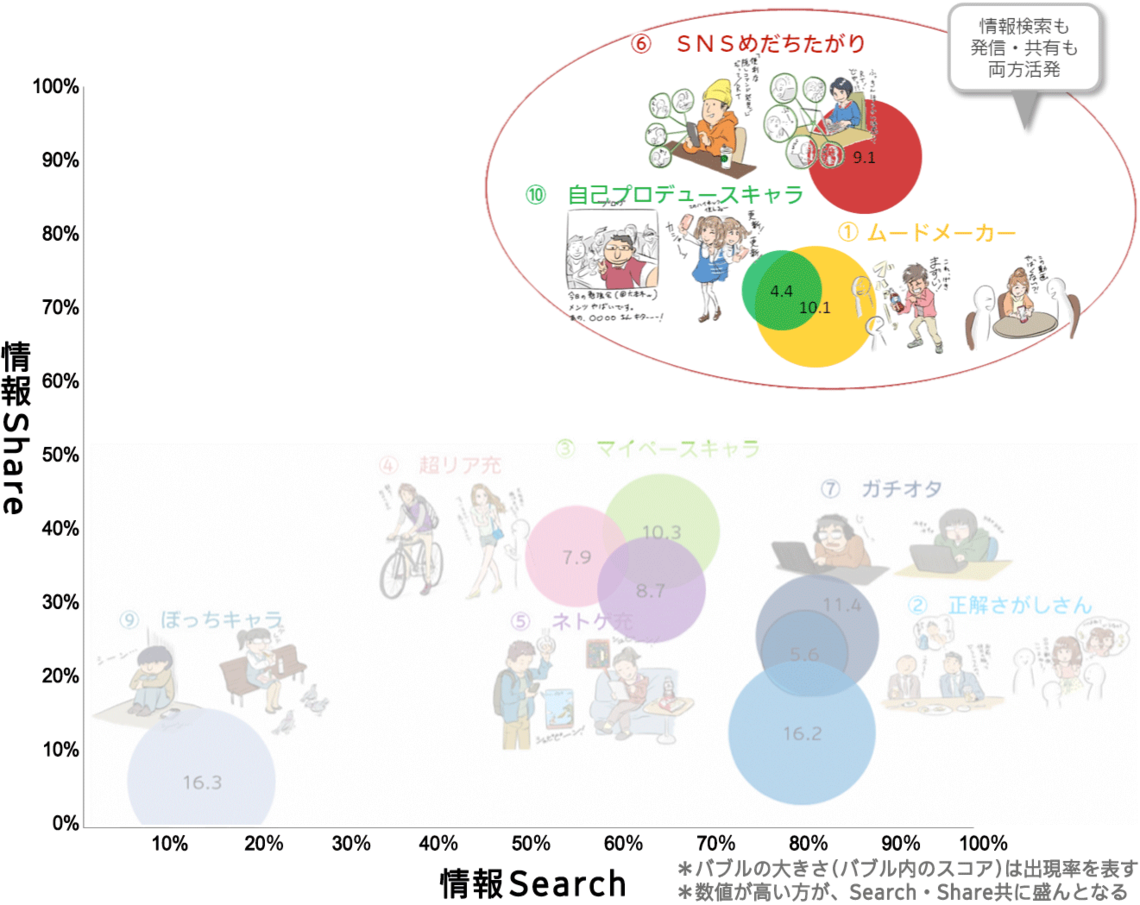
In recent years, communication has become increasingly complex with the spread of the internet and smartphones. To capture young people, where this phenomenon is particularly pronounced, we would like to introduce the clusters developed in collaboration with Dentsu Inc.'s Youth Research Department (commonly known as Wakamon).
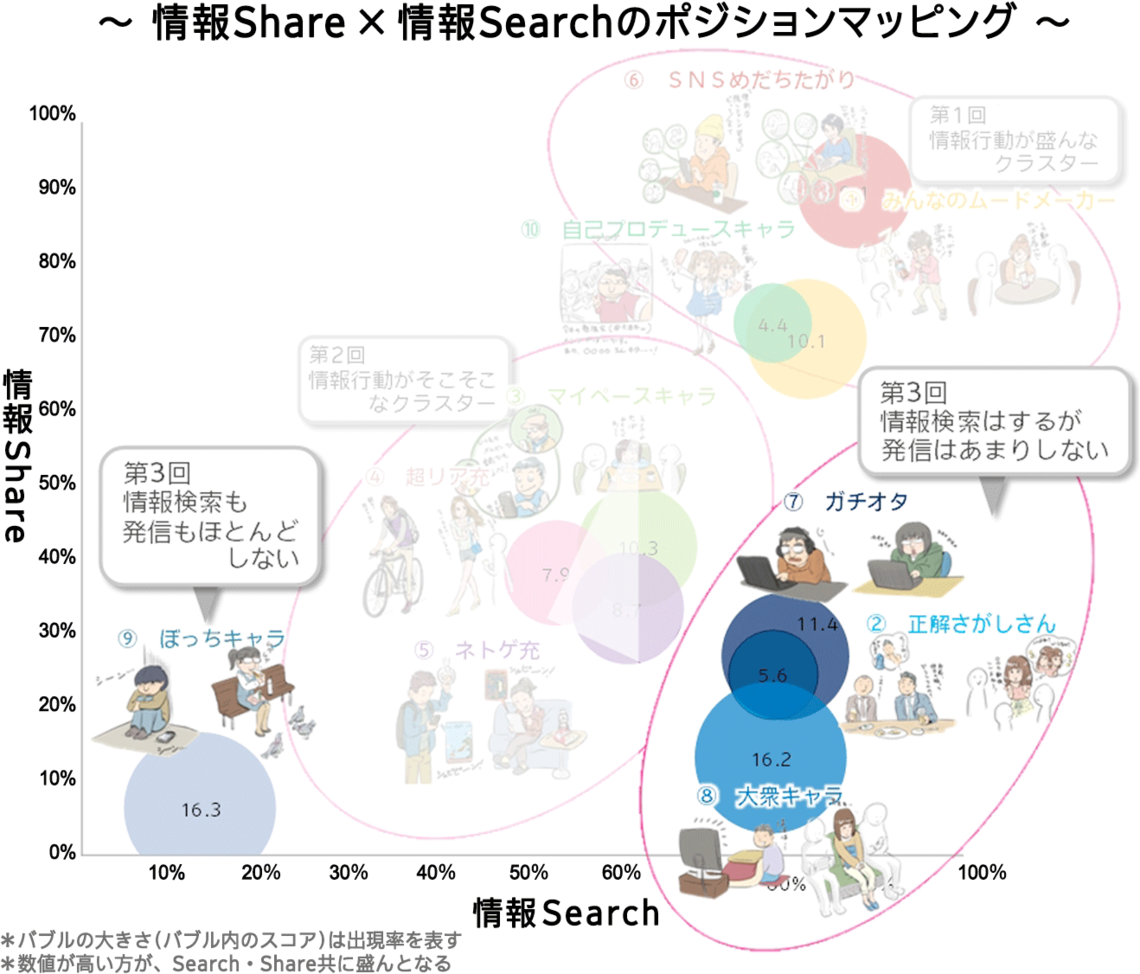
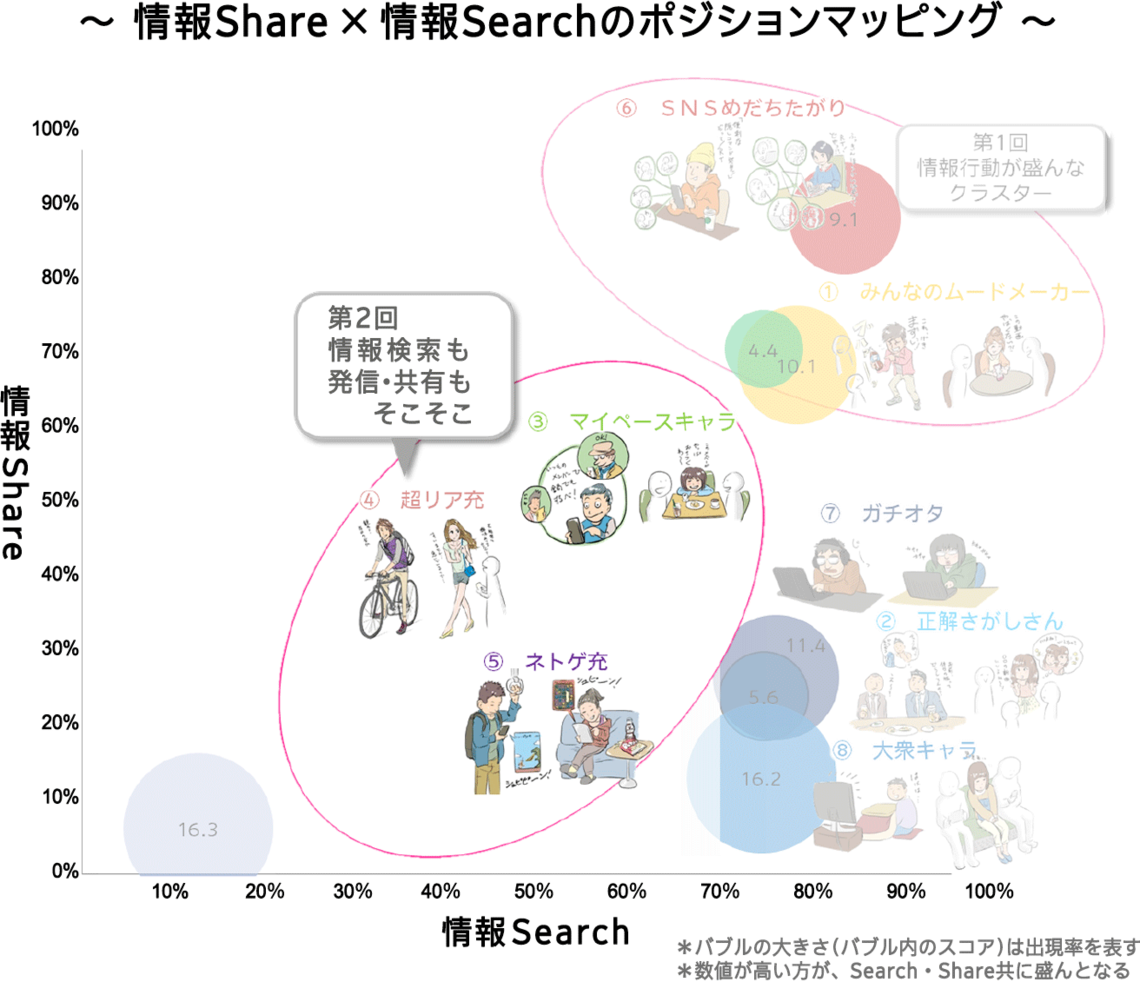
In the previous installments ( Parts 1 and 2 ), we introduced six clusters actively searching for, sharing, and disseminating information. In this final installment, we will explore the media communication behaviors of three clusters that search for information but rarely share it, and one cluster that does almost neither.
The first group that searches for information but rarely shares it is Cluster ②: "The Answer Seekers." They are the type who are very concerned about "what others think of them." They also obtain information from various media sources, so they can appear fatigued by information overload. Incidentally, this is the cluster with the highest proportion of women, particularly teenage girls.
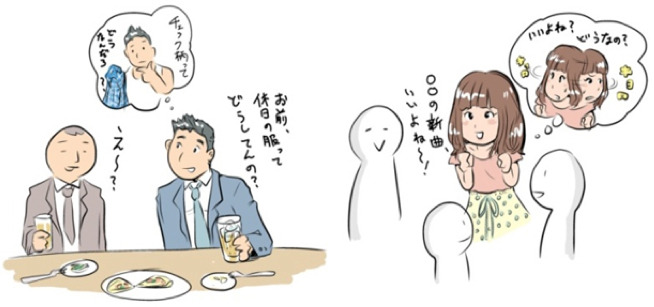
● They absolutely love TV. It's on from morning till late night, serving as background viewing.
● They also use magazines and radio extensively, devoting a large portion of their day to media.
They routinely engage with numerous media outlets. Their TV viewing time is 155 minutes per day (highest among all clusters), and their recorded program viewing time is 137 minutes (also highest among all clusters). (Overall TV average: 128 minutes; overall recorded program average: 112 minutes). This cluster actively uses a wide range of media to input information, ensuring they can always keep up with current topics. However, they tend not to share their opinions with others due to anxiety when their views aren't shared by those around them, even if they personally believe something is good.
Next is Cluster ⑦ "Hardcore Otaku." This type exhibits extremely high dependence on the internet via PC. They are negative about social interaction, dislike group activities, and show little interest outside their specific areas of interest (anime, manga, games). Despite searching video sites and information related to their interests via PC, they rarely share content themselves. This is the cluster with the highest number of males, particularly men in their 20s.
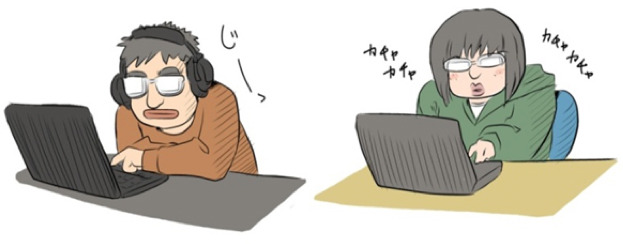
● They spend an exceptionally long time in front of their desktop PC.
● Loves anime, manga, and games
● Utilizes information-sharing sites like Wikipedia and All About
They spend a considerable amount of time at their desktop computers, averaging 232 minutes (Overall average: 105 minutes). They utilize various sites, including information-sharing platforms like Wikipedia and All About, to obtain information. Another characteristic is their very high usage rate of video sites like YouTube and Niconico Douga, as well as bulletin board sites like 2channel. Furthermore, they not only use the internet on their computers but also watch television, with anime being the main category of programs they view.
Finally, Cluster ⑧: "Mainstream Characters." These are the so-called "ordinary people." They primarily watch TV and use LINE for communication with friends, but they are aware that their internet literacy and information literacy are low. They are follower types who find it difficult to make decisions without information from TV or acquaintances, and tend to choose standard or mainstream options.

● Overall media exposure is low, but TV viewing time is long
● They watch mainstream TV programs like dramas and variety shows
● Low internet usage rate; not very active online
Their overall media exposure time is short. However, they do watch TV, primarily dramas and variety shows (Mainstream Character: 142 minutes, Overall Average: 128 minutes). Their internet usage time—whether via PC, smartphone, or feature phone—tends to be shorter compared to other clusters. While the overall average PC internet usage is 105 minutes, the Mass Appeal group averages 59 minutes. Similarly, the overall average smartphone/feature phone internet usage is 114 minutes, while the Mass Appeal group averages 81 minutes.
In Part 1, we introduced groups with high information activity; in Part 2, groups with moderate information activity; and in this third installment, we introduce groups that search but do not post, totaling three groups.
Finally, let's touch on a cluster that belongs to none of these groups—individuals who neither search for information nor share or disseminate it.
They are Cluster ⑨, the "loner type." These are individuals with relatively sparse interpersonal relationships. They show little interest in most information, engage in no information exchange with others, and are self-contained types. Their social media usage rates are generally low overall, making them a cluster termed the "low-interest group" in terms of media, consumption, and human relationships.
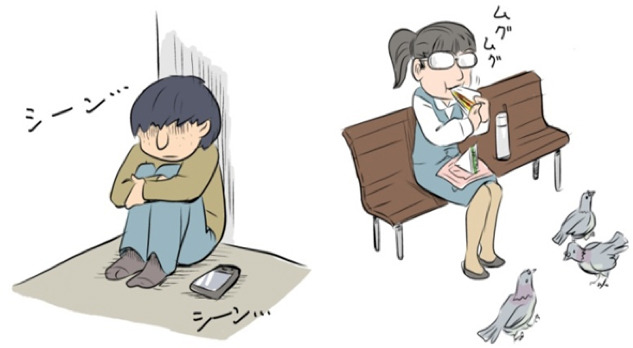
● Relatively TV-centric, low engagement with other media
● High rate of watching mainstream anime
Their TV viewing time is average (Loner Characters: 129 minutes, Overall Average: 128 minutes). However, they are a cluster with little contact with other media. While some use social media, usage rates are low, and they have few connected friends.
The clusters introduced here are those that do not actively share information themselves, but each has its own reasons for not doing so. "Answer Seekers" possess abundant information but are overly concerned with others' opinions, preventing them from sharing. "Hardcore Otaku" are deeply immersed in their own worlds and are negative about social interactions, so they don't share. The "Mainstream Characters" don't actively use the internet and have low information literacy, so they don't share. The "Lone Wolves" have little interest in most information and minimal social interaction, so they don't share.
Over three installments, we've introduced the media communication behaviors of all 10 clusters. Each exhibits distinct information behaviors: some clusters actively share information, while others remain passive recipients. Thus, even among young people, media usage varies greatly. Understanding these characteristics is essential for developing tailored communication strategies.
<Analysis Summary ①>
Factor analysis and cluster analysis were performed using d-camp data.
Data Used: d-camp2012 (Survey Period: October 2012 - July 2013)
Survey Area: Kanto region (Tokyo and 6 prefectures)
Analysis Subjects: Males and females aged 15 to 29 (excluding junior high school students) (1163 subjects)
Survey Method: Mail-in questionnaire
Survey Implementation Agency: Dentsu Macromill Insight, Inc.
<Analysis Summary ②>
Group interviews were conducted for 6 clusters.
Survey Participants: 6 groups × 6 people each = 36 people total (composed of 3 people from each of 2 clusters combined to form 6 people)
Participant Criteria: Men and women aged 15-29 residing in the Tokyo metropolitan area, unmarried (one group included one married person without children), social media users
Survey Period: March 26–29, 2014
Research Agency: Dentsu Macromill Insight, Inc.
Was this article helpful?
Share this article


Newsletter registration is here
We select and publish important news every day
For inquiries about this article
Back Numbers
2014/08/11
Latest Trends in Young People's Media Behavior ~ From Cluster Analysis: Understanding Young People Through Media Communication ~ Part 2
2014/07/14
Latest Trends in Young People's Media Behavior ~ From Cluster Analysis: Understanding Young People Through Media and Communication ~ ①
Author

Ryo Hyōzawa
Dentsu Inc.
Business Production Bureau