
Note: This website was automatically translated, so some terms or nuances may not be completely accurate.
 Ad Tech Tokyo 2014 Official Session Report [3/3]
Creating and Delivering Content Right Now: Coca-Cola and Suntory's New Engagement Strategy

Ad Tech Tokyo 2014 Report
On September 18, 2014, a session titled "Consumer Engagement: Thinking One to One" was held at AdTech Tokyo 2014. With corporate social media communication now commonplace, the discussion focused on the latest case studies.
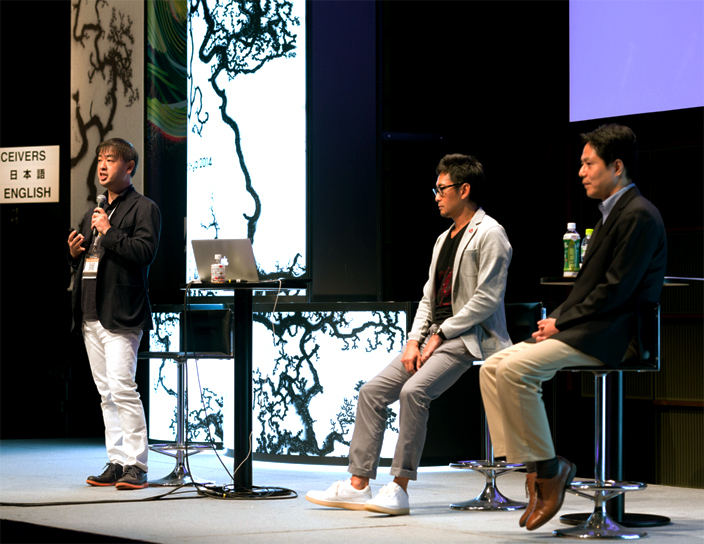 |
(From left) Mr. Konishi (Dentsu Inc.), Mr. Toyoura (Japan Coca-Cola), Mr. Sakai (Suntory) |
Coca-Cola: Seizing the Moment to Initiate Conversations on Twitter
Konishi: The concept of using social media to build long-term engagement with consumers and increase each individual's LTV (Lifetime Value, the total profit a customer generates over time) has gained traction over the past two to three years. However, I believe we are now entering a new phase.
This time, we want to rethink engagement as building an essential relationship between the brand and consumers. We've invited panelists Yosuke Toyoura from Coca-Cola Japan and Yasufumi Sakai from Suntory Holdings to share their insights and case studies. First, Mr. Toyoura will discuss Coca-Cola Japan's initiatives.
 |
Mr. Toyoura, Coca-Cola Japan |
Toyoura: We established our Social Engagement Center a year ago, so I'll introduce its activities. First thing every morning, we create a Social Daily Listening Report for our major brands. This report is designed to drive next steps, going beyond just counting tweets and analyzing positive/negative sentiment. We highlight passionate fan voices and share social trends.
Every morning, we hold an editorial meeting while reviewing this report to strategize how we will engage with fans. Based on this, our in-house copywriters and graphic designers create and post creative content starting in the afternoon.
As a team, we focus on seizing the moment. This includes two approaches: posts aligned with timely events like April Fools' Day, and one-on-one dialogue. For example, when someone tweeted "Drinking Coca-Cola to power through my test," we created a graphic (image) featuring their Twitter handle and replied within 24 hours. They were delighted and set that image as their Twitter profile picture. It was the moment the brand became a part of them.
Maximizing retweets to gain tens of millions of second-tier followers
Toyoura: We recently conducted a survey to evaluate the business value of our Twitter activities. The survey categorized Twitter users into three groups: Coca-Cola followers, second followers (users who see Coca-Cola tweets via retweets from followers), and non-followers (users who don't see the company's tweets). We measured brand favorability and purchase intent. As expected, Coca-Cola followers scored highest across all metrics. What was encouraging, however, was that second followers also outperformed non-followers in both metrics.
While followers can only increase by thousands at most, maximizing retweets from followers can grow second followers by millions or tens of millions.
The most effective way to maximize retweets is through real-time engagement. There are two types: "Real-time Publishing," where you post at the exact moment a known event occurs, and "Real-time Content Creation," where you prepare for an uncertain event and create and post content the instant it happens. The latter offers the greatest opportunity for retweet maximization.
Take the recent soccer World Cup as an example. Our team created a 5×4-meter model pitch, placing Coca-Cola bottles with the brand name to represent spectators and players, recreating match scenes. The result? A total of 35,000 retweets overall, with a single tweet achieving a peak of 8,000 retweets—numbers far surpassing our previous activities.
We believe such activities are effective precisely because we build daily relationships with consumers. By preparing a stage—like a match—within their routine activities, like daily workouts, we can foster genuine consumer engagement and build bonds. It also boosted the motivation of the entire operations team. Seeing retweets increase by hundreds every second, and knowing there are people who will pass the baton forward from our activities, was highly visible and rewarding.
Konishi: Following Mr. Toyoura's comments, what are your thoughts, Mr. Sakai?
Sakai: The approach of verifying effectiveness including second-tier followers is insightful. Amidst stagnant follower growth, this seems to offer a path to scale.
Toyoura: Scale is crucial for beverage manufacturers. Demonstrating through research that digital engagement translates into actual business impact was significant and gave us confidence in our daily activities.
Konishi: Do you have any other advice for those looking to implement real-time marketing?
Toyoura: While real-time publishing is achievable, real-time content creation requires a serious commitment. Take the recent World Cup soccer tournament as an example: you don't know if Honda will score, but you plan, prepare, and proceed based on belief. The challenge lies in creating content that also fits the social media context.
Corporate account management encompassing awareness of business activities
 |
Moderator: Konishi from Dentsu Inc. |
Konishi: Next, I'd like to hear about Suntory's activities.
Sakai: I manage the corporate account for Suntory itself, not individual brands. We communicate across all major social media platforms: owned media, blogs, Facebook, Twitter, Mixi, LINE, YouTube, and more. We operate while considering how to channel the many fans of our various brands into engagement with the corporate account.
On Facebook and Twitter, we first focus on building scale by increasing fans and followers. Within that audience, we post about various topics like commercials, products, seasonal events, and corporate activities. Recently, we've been particularly active in encouraging user-generated content and fostering interactive communication.
On YouTube, the "Ninja High School Girl" video for C.C. Lemon surpassed 6 million views. This was a challenge undertaken by the brand and advertising department, and it spread organically (naturally, without ads), with overseas access accounting for two-thirds of the views. More recently, we've also featured Tommy Lee Jones, known for his BOSS commercials, in Suntory's corporate advertisements.
On Facebook and Twitter, we surveyed sentiment and purchase frequency among fans, followers, and others. Significant differences emerged. Notably, those seeing Suntory posts four or more days a week showed the highest purchase frequency and sentiment, confirming that higher exposure yields greater impact.
Group interviews conducted as part of the survey also revealed positive reception for posts about corporate activities like Tohoku reconstruction support and forest conservation. While posts about corporate activities tend to have lower reach and engagement, viewers who saw them—even if they didn't click "Like!"—still contributed to improving the company's image.
The next strategy is how to integrate social media with real-world activities.
Konishi: Do you differentiate usage by platform?
Sakai: We are mindful of user differences. Our Facebook page has an older fan base, so whisky posts are popular there. Our Twitter account, however, has more younger followers, so we focus on beverage-related posts.
Toyoura: Coca-Cola's LINE account has 10 million friends. When we send messages, they reach about 400,000 people, making it a key traffic generator. Facebook and Twitter aim to boost engagement. For Facebook, we focus on account management—crafting visuals, communication, etc. Twitter is managed with conversation management in mind.
Konishi: Due to Facebook's regulation changes, organic reach to fans has significantly decreased (*). Are you implementing any countermeasures regarding this?
※ This refers to the decrease in the percentage of posts from Facebook Pages (operated by companies or organizations) that naturally appear in individual users' feeds. Facebook announced this regulation change was due to an increase in the total number of posts, including those from Facebook Pages and individual users, and the subsequent algorithm improvements to determine which posts appear in feeds.
Toyoura: We grew our page's fan base to around one million, but the actual reach fell below our projected estimates. Frankly, it's disappointing given the effort we've invested. That said, we understand the platform's circumstances. Moving forward, we plan to leverage our million-member community by reducing post frequency while improving quality, and expand reach through advertising.
Sakai: I'm honestly saddened too... We had hoped Twitter might be more cost-effective than email newsletters. I now feel Twitter might offer greater potential for broader reach.
Konishi: Finally, could you share your future strategy incorporating social media?
Toyoura: I believe real-world touchpoints represent the ultimate form of engagement. We need to consider how to integrate digital elements and build a larger ecosystem that incorporates these real-world interactions.
Sakai: We'll deepen the integration between owned media and social media, and we'll definitely focus on actively connecting with real-world touchpoints.
Konishi: Thank you very much.
Was this article helpful?
Share this article


Newsletter registration is here
We select and publish important news every day
For inquiries about this article
Back Numbers


Author