
Note: This website was automatically translated, so some terms or nuances may not be completely accurate.
 Introduction to Robotics Business [4/10]
Applying Game Development Know-How to Robotics: Interview with Bandai Namco's Yuka Ichiki and Yasushi Omori - Part 2
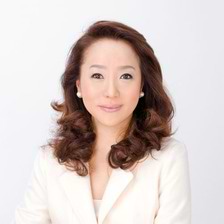
Yuka Ichiki
Bandai Namco Games Inc.
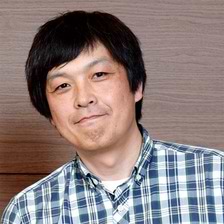
Yasushi Omori
Bandai Namco Studios Inc.
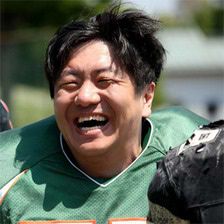
Nishijima Yorichika
Dentsu Inc.
This interview series features Nishijima Yorichika of Dentsu Inc.'s cross-functional "Robotics Promotion Center" visiting renowned robot creators, researchers, and pioneering companies involved in robot development. Continuing from the previous installment, we spoke with Yuka Ichiki of Bandai Namco Games and Yasushi Omori of Bandai Namco Studios about how they leverage expertise cultivated in game development for their robot development consulting business.
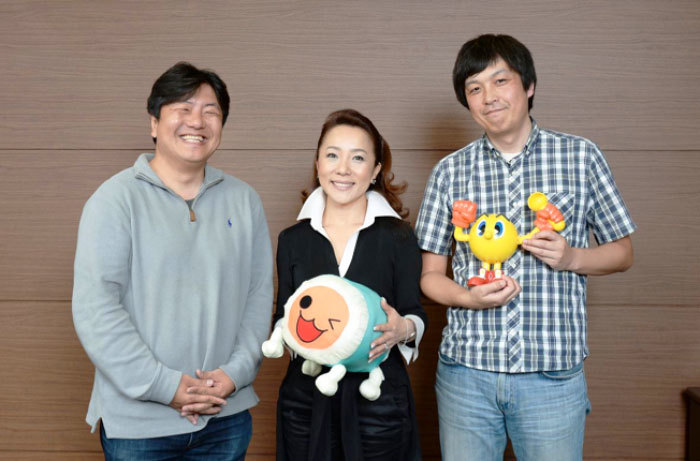 |
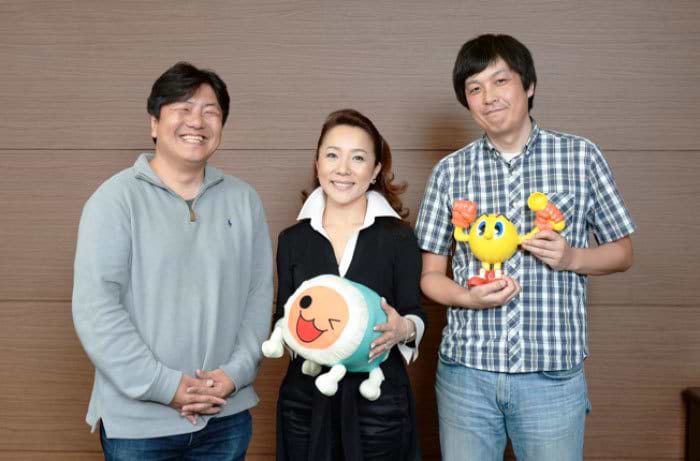
(From left) Dentsu Inc. Mr. Nishijima, Bandai Namco Games: Ms. Ichiki, Bandai Namco Studios: Mr. Omori |
Finally, a little "One Salt" to break things down, to let go
Nishijima: Your points about "feeling affection because there are imperfections" and the perspective that "two-way communication only works when there's genuine feeling" were very insightful. If we want robots to thrive in communication, it seems we actually need to deeply understand the complexity of the human heart.
Omori: That's true. Though, while discussing how appliances shouldn't talk, I recalled that I once conceived a "talking appliance" series myself. That was back in the 1990s.
Nishijima: You were way ahead of your time.
Omori: But it was too early (laughs). What I envisioned, though, was "flawed appliances" capable of communication.
The rice cooker would have a trackball, like the ones on the bottom of a mouse. When it cooked rice to your liking, you'd stroke it (roll the ball), and it would remember. But sometimes it wouldn't cook the rice properly. If you tapped the trackball lightly then, it would say a short "Sorry."
 |
Nishijima: That sounds kind of cute (laughs). How did you come up with that mechanism?
Omori: It connects to what I mentioned earlier. I thought that when it fails, it might spark affection and stir your heart. If it can't do something basic like cook rice, most people would feel angry. But since it's a machine, you feel frustrated with nowhere to direct that anger. I thought that hearing "Sorry" at that moment of emotional turmoil could create feelings and affection that wouldn't arise with ordinary appliances.
Also, if we're going to make appliances talk, I thought it would be more effective if it touched your heart, not just a simple announcement. Many engineers try to fix what seems like a negative aspect, but we're good at shifting perspective and turning that negative into a positive by embracing it as a unique trait.
Ichiki: This ties into our company culture too. We have a concept called "One Salt" – adding a bit of saltiness, deliberately breaking things down or taking them apart. We place great importance on randomness and random numbers, which are usually filtered out as noise.
Omori: Some engineers even insist, "My randomness gives the game its soul." If you just aim for perfect linearity, this kind of thinking wouldn't emerge. We want to incorporate this playful spirit into Bandai Namco's "Game Method Consulting" business (team name: "Special Flag" http://specialflag.net/ ) for robot development consulting.
Entertainment products—if they stumble, they won't be used again
Nishijima: Of course, this applies to communication-focused development. Japanese people have such deep feelings for robots that they even name industrial ones. So the ideas you just shared seem applicable in many scenarios. And what kinds of robot-related requests are Special Flag currently receiving?
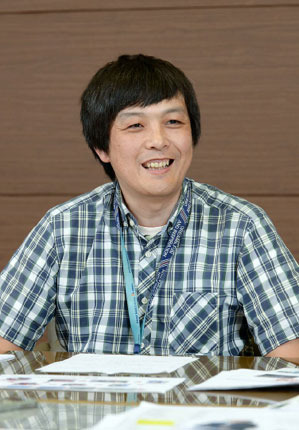
Kazuki: Due to confidentiality, I can't go into specifics, but there are several areas. For example, designing controllers for remotely operated industrial robots and solving user interface challenges. Right now, remotely operated robots are starting to be used in disaster sites and for checking under residential floors. When handling these, the demand is for controllers that anyone can use intuitively, rather than designs requiring specialized, person-dependent know-how.
Game controllers, depending on the title, can achieve thousands of actions using just A/B buttons and a directional pad. They're designed so children naturally learn these actions while playing and become eager to discover new movements. They spark a desire to use them more, and the sense of achievement fuels the next challenge. That kind of know-how can be applied immediately.
Nishijima: Indeed, the gaming world seems to hold considerable expertise in the realm of intuitive operability. You're pursuing user interface design, correct?
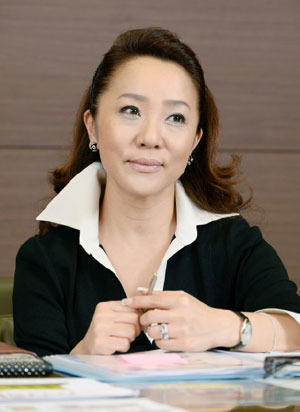 |
Ichiki: We take pride in that. With essential household items like appliances, if there's a problem, people will read the manual. But entertainment products like ours face the sad fate that if users stumble even a little, they'll lose interest completely (laughs). Especially now, any dissatisfaction gets posted online instantly, potentially losing future users too. It's brutal.
In growing industries like HEMS (Home Energy Management Systems), I believe our expertise can be valuable. Even if the system itself is brilliant, it's meaningless if it can't be used by everyone from children to grandparents. For instance, even when using smartphones for operation, we sometimes get consulted on how to design it so it naturally integrates into daily life without strain, or how to increase user engagement frequency.
Nishijima: I see, that makes perfect sense. Also, regarding game knowledge, I imagine scenario design expertise is a significant strength as well. Would you agree?
Ichiki: Exactly, that's another major strength of our company. Beyond our expertise in game scenario design, our group includes Sunrise, the animation studio behind "Mobile Suit Gundam," so we also possess expertise in narrative scenario design. Therefore, we can apply techniques to create compelling, immersive, and suspenseful verbal scenarios for other industries – making people eager to know what happens next.
Nishijima: I believe Special Flag already has several examples of this. What are your impressions from being involved?
Omori: Looking at past projects, it's fascinating how we often arrive at outcomes we never anticipated.
Earlier, we discussed using smartphones as controllers. For this particular project, we sometimes settle on solutions like using a controller with physical buttons instead of a touch panel.
Touch panels are intuitive and offer excellent operability, but adopting the latest technology isn't always the best approach. It's crucial to clearly envision the specific scenario and how it will be used, then select the optimal solution based on that.
Toward an era where robots are as common as water
Nishijima: I see. We often tend to adopt new technology without hesitation, but that's something we should reevaluate.
Omori: Among us creators, we possess vast tacit knowledge accumulated through experience, even if we can't logically explain it. Because it's second nature to us, we often don't realize it's unique insight, and sometimes we're mistaken. But when we try it out, it's actually quite common for everyone, including the client, to agree, "This is definitely better."
Ultimately, it's real people using these things, so what feels comfortable isn't something you can explain logically. Various factors intertwine complexly, making it hard to grasp the right answer directly. I suspect details that seem insignificant are actually quite important. The analog "click" sensation of a button is one such example. Consulting projects in other industries also give me a real sense of fulfillment because I gain various insights while working on them.
Ichiki: Since I'm not a creator myself, watching Omori and the others' "creator spirit" up close, I always find it interesting how often they use the word "uncomfortable." Even when something is designed perfectly, bug-free, and seemingly complete, someone will say, "It just feels off." Then, no matter how satisfied the client is with the current state, it's back to the drawing board (wry smile).
Nishijima: Exactly. Sometimes it's an unspoken, tacit "NO" that can't be put into words.
Kazuki: I think so. You can't really ask them what the criteria are, but unless that "uncomfortable feeling" is resolved within them, it probably won't be something that satisfies people once it's released to the world. So, for someone like me who isn't a creator, that becomes a crucial hurdle in determining whether a project passes or fails.
Nishijima: So that intuitive, non-quantifiable aspect can also be leveraged in consulting. Could you share your expectations and aspirations for the future of the robotics business?
Omori: I feel it's crucial to integrate ideas and know-how from all perspectives when developing robots. When it comes to utilizing every available resource to create the most entertaining experience possible, I believe we can make a significant contribution.
The reason I suddenly thought robots could become entertainment in recent years is that the technology has matured and become affordable, making "robots you can afford to waste" a realistic possibility.
Nishijima: "Wasteful spending," you say?
Omori: Yes. It's very similar to when personal computers first started appearing in homes. They weren't super high-performance, but they became accessible devices you could freely touch and play with, which is why they developed so much.
Robots you can use freely will likely appear soon. Robots will surely become the core of the next phase of entertainment beyond what we've pursued through monitors.
Ichiki: This might sound self-serving, but talking with our creators, I feel there's still so much potential to create products and services that integrate more deeply into daily life and make it more enjoyable. Focusing on how to make people truly engrossed – that's the essence of their professional expertise. We'll leverage that as our greatest strength in the robotics business too.
Nishijima: Hearing both the creators' perspective and the business perspective that supports and brings it to life has been incredibly educational. Thank you very much.
Was this article helpful?
Share this article


Newsletter registration is here
We select and publish important news every day
For inquiries about this article
Back Numbers
Author
Yuka Ichiki
Bandai Namco Games Inc.
President's Office
New Business Division General Manager / Representative of Game Method Consulting "Special Flag"
Yasushi Omori
Bandai Namco Studios Inc.
Executive Officer, Head of HE Development Headquarters
Nishijima Yorichika
Dentsu Inc.
Business D&A Bureau