
Note: This website was automatically translated, so some terms or nuances may not be completely accurate.
 Introduction to Robotics Business [5/10]
V-Sido Developer Asratec's Wataru Yoshizaki Speaks: The Path to Market Formation Starting with Prototype Mass Production
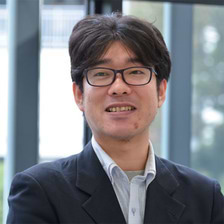
Yoshizaki Wataru
Asratec Corporation

Nishijima Yorichika
Dentsu Inc.
In a series where Mr. Yoriaki Nishijima of Dentsu Inc. Robot Promotion Center visits renowned robot creators, researchers, and pioneers in robot development, this time we spoke with Mr. Wataru Yoshizaki of Asratec. Mr. Yoshizaki is involved in the groundbreaking software "V-Sido OS" for controlling humanoid robots and the development project "Project J-deite," which creates humanoid robots that transform into automobiles.
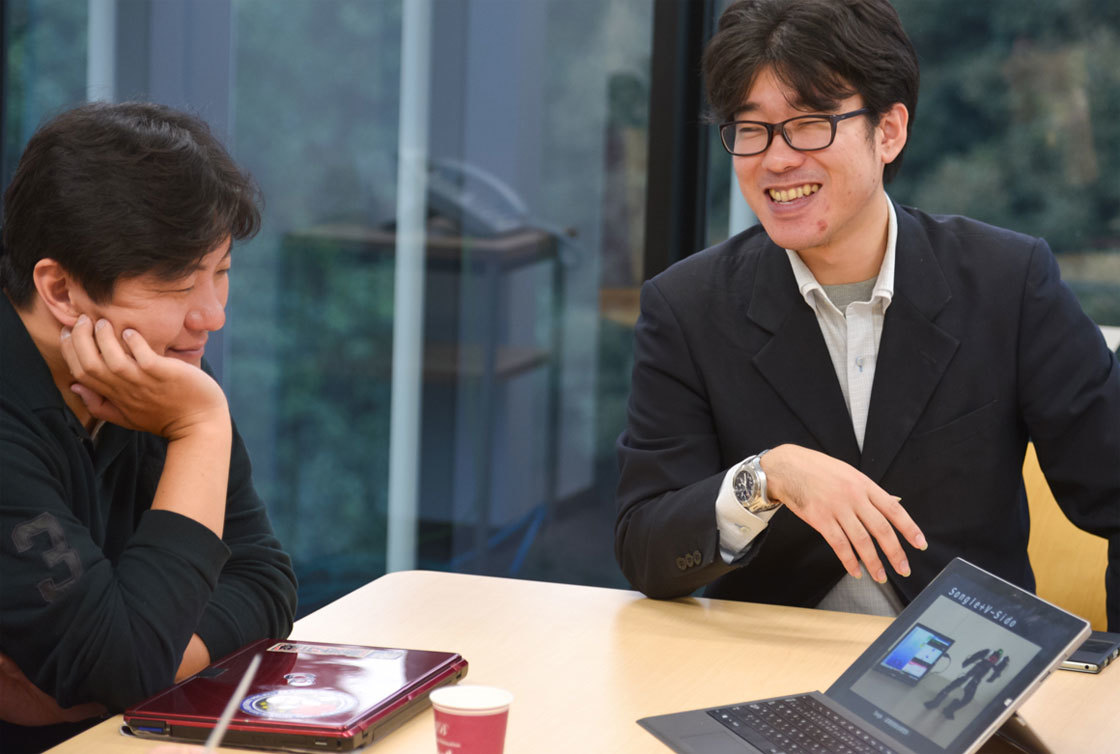 |
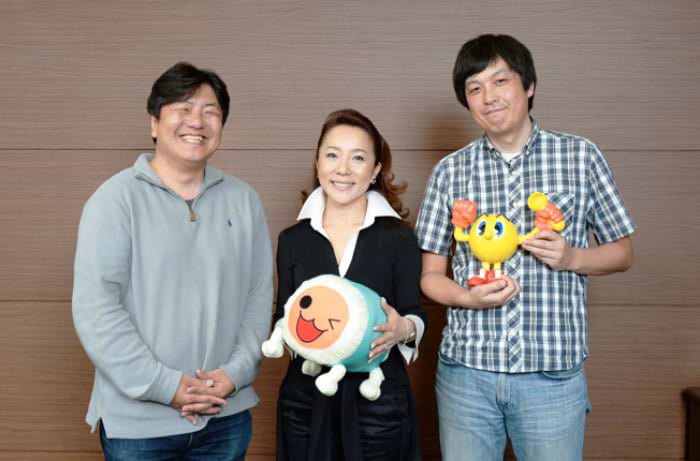
Mr. Nishijima (left) of Dentsu Inc. and Mr. Yoshizaki of Asratec |
V-Sido: Software for Controlling Robots
Nishijima: This time, we're joined by Wataru Yoshizaki from Asratec, who is likely the youngest among Japan's renowned robotics creators. Currently 29 years old, Mr. Yoshizaki is known as the developer of the groundbreaking "V-Sido OS" software. This software enables intuitive control of bipedal robots using a mouse or joystick while simultaneously managing their balance. He is also the only member in his 20s selected to participate in the "Robot Revolution Realization Council" (*), led by Prime Minister Abe.
※The Robot Revolution Realization Council was convened to formulate strategies for developing robotics into a growth industry that will both solve Japan's challenges—such as labor shortages amid a declining birthrate and aging population, and improving productivity in the service sector—and open up the global market. (Source: Prime Minister's Office website)
Yoshizaki: Being invited to the Robot Revolution Implementation Council was an unexpected nomination that surprised me. I'm truly grateful.
Nishijima: Since Dentsu Inc. established its Robot Promotion Center in November 2014, we've received many inquiries from companies. However, we also frequently hear concerns like, "We don't know where to start." Today, in addition to hearing about the cutting-edge robot development work you're engaged in, Mr. Yoshizaki, we'd like to hear your unique perspective as an active creator on the path to market formation and how robots will be integrated into future lifestyles.
Getting right to it, the V-Sido OS you developed, Mr. Yoshizaki, is already installed in multiple robots, correct? Theoretically, could it power robots of any size?
Yoshizaki: That's correct. V-Sido is a highly versatile OS, so it doesn't discriminate based on hardware, from hobby-type robots to super-large ones. The largest one currently is the 4-meter-tall giant robot "KURATAS," which took two years to develop and was unveiled in 2012.
KURATAS was originally conceived by Kogoro Kurata, a blacksmith and sculptor. Mr. Kurata approached me to handle the control system, leading to my involvement and the founding of "Suidobashi Heavy Industries." It's designed for human operation, uses tires for mobility, and can move under its own power.
Nishijima: When KURATAS was unveiled at that year's Wonder Festival (the world's largest model and sculpture event held twice yearly near Tokyo), it caused a huge sensation. Seeing something that massive, and manned, actually move made a tremendous impact. What was the response like afterward?
Yoshizaki: The response was enormous. Especially after we announced we'd sell the Kratas as a mass-produced robot, we were flooded with purchase inquiries from all over the world.
Nishijima: That's amazing.
Yoshizaki: Though it's strictly an art piece, not meant for actual human operation. However, with a price tag of 1.35 million USD... over 150 million yen, we haven't managed to sell any yet (laughs).
Significantly lowering the barrier for humanoid robot prototyping
Nishijima: Even so, I was amazed by the idea of selling such a large robot. Was that the plan from the development stage?
Yoshizaki: Yes. Originally, Mr. Kurata had the vision of "creating a mass-producible robot to use in survival games," and we were already discussing this with ironworks and such.
I've also long held the vision of "aiming for a world where humanoid robots are everywhere," so we both decided from the start to make it mass-producible. We also talked about how we hoped the development of Kratas would act as a catalyst, inspiring more developers, especially younger people in their teens and twenties, to follow suit, leading to the creation of second and third Kratas.
Nishijima: So that philosophy is the foundation for V-Sido being software that can be applied to any robot, regardless of hardware?
Yoshizaki: Yes. V-Sido originally started as my personal project, developed after being selected for the IPA (Information-technology Promotion Agency, Japan)'s "Uncharted IT Talent Discovery and Development Project" in 2009. While adapting it from small robots to human-sized ones, I realized it should also be able to control giant robots. That's when I met Mr. Kurata.
Later, I joined the SoftBank Group, Asratec was established, and now Asratec handles the planning and development of V-Sido-related products.
Nishijima: As companies from various industries enter the robotics sector, the technical aspects present a significant hurdle. However, by installing this OS, anyone can easily build bipedal humanoid robots without having to develop control systems from scratch. V-Sido's concept seems poised to drastically lower the entry barrier for companies.
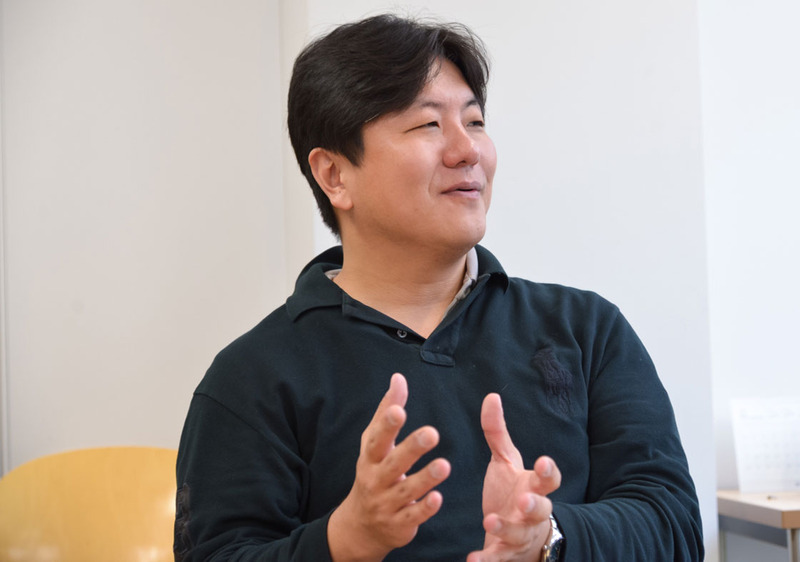
Yoshizaki: That's precisely the goal. We envision V-Sido as software that shoulders the difficulties of robot development from the very start.
As Nishijima mentioned at the beginning, while expectations for the robotics business are rising, the market itself remains shrouded in fog. What's needed now, I believe, is simply more opportunities to try. Reducing the cost of experimentation will undoubtedly be a key challenge for the entire industry for some time.
When an idea emerges within our industry about how a particular robot could be useful, we want to enable the creation of a prototype right away. I believe that accelerating this cycle of testing and selecting promising ideas is what Japan needs to do now to make a global impact in the robotics business.
I estimate this phase will likely take about five years, but the first step is simply to try many prototypes.
To expand the robotics business from Japan to the world
Nishijima: That's precisely why V-Sido's interface is designed to be so intuitive. During our discussion with Bandai Namco, we heard the point that "if a game isn't understandable after 2-3 minutes of operation, people won't play it again."
Yoshizaki: It's operable not just on PCs but also on smartphones. We can even let children try operating it at events. The controls are not difficult at all.
When considering robot design, there's a major fork in the road: humanoid or non-humanoid. Without software like this, even if a humanoid design is actually the best fit, companies might feel forced to choose another type because "we can't do it." But such passive choices limit ideas and hinder market formation.
If ordinary manufacturers and service companies could start thinking about and testing what would happen if they introduced small robots into their operations, this industry would become much more vibrant. That's why we developed V-Sido, which handles the basic control of humanoid robots.
Nishijima: Indeed, if we just sit on our hands here, we might end up only accepting and using robots developed overseas. Having an OS is incredibly significant.
Yoshizaki: We strongly desire to expand the robotics business originating from Japan. Japan's manufacturing industry boasts numerous companies and engineers with outstanding technology, so we are constantly seeking companies to collaborate with.
However, we absolutely do not intend to compete globally by treating V-Sido as something uniquely Japanese. Rather, we want to provide it to anyone worldwide who wants to build robots. Our mission is twofold: to make V-Sido a major driving force for Japan's robotics industry, while also ensuring that robots from overseas can easily utilize V-Sido.
Leveraging Voice Technology for Communication
Nishijima: 2014 saw a succession of robot announcements featuring V-Sido. For example, at the "OngaCREST Symposium 2014" held that summer, a robot was demonstrated that dances in real-time to music being played. I understand this incorporates research from AIST (National Institute of Advanced Industrial Science and Technology).
Yoshizaki: OngaCREST is a music information processing research group led by Dr. Masataka Goto of AIST. One of their flagship achievements is "Songle," a service that automatically analyzes the content of songs found on the web to identify sections like the chorus. We integrated this Songle with V-Sido to create a system enabling robots to move in real-time to music.
Incidentally, Mr. Goto and other AIST members conduct numerous unique research projects in Japan concerning speech recognition and audio technologies, so their affinity with robotics is noteworthy.
Nishijima: It's fascinating how it flexibly adapts to changes in tempo and mood of the music playing in the space. The way it smoothly expresses various choreography or turns while walking through simple V-Sido controls is truly impressive. How do you envision this functionality being utilized?
Yoshizaki: For entertainment purposes, since the robot can add movements or change choreography in response to audience cheers even while dancing via V-Sido controls, it enables flexible live performances like fan service.
Looking ahead, combining V-Sido with voice recognition technology could enable communication applications like simultaneous sign language interpretation, where speech is analyzed and reflected in real-time expressions.
Nishijima: Speaking of humanoid robots, you're also involved in "Project J-deite," which aims to develop a 5-meter-tall giant transforming robot. The 1.3-meter transforming robot "J-deite Quarter" unveiled in this project was quite impactful. It transforms from humanoid to vehicle mode with a single command, can walk in humanoid form, and drive in vehicle mode – truly a "real-life Transformer."
Yoshizaki: BRAVE ROBOTICS, who specialize in transforming robots, is leading this project, and our company is collaborating as a project partner. Additionally, Takara Tomy is participating as an official partner of the original "Transformers" toy franchise. It uses the V-Sido OS, and when it reaches 5 meters tall, it's planned to be piloted by a human operator.
Nishijima: It's deeply moving and dreamlike that "Transformers," which crossed from Japan to America and achieved explosive popularity, is now entering this new phase back in Japan. I hope they continue to convey the appeal of robots in a fun and accessible way.
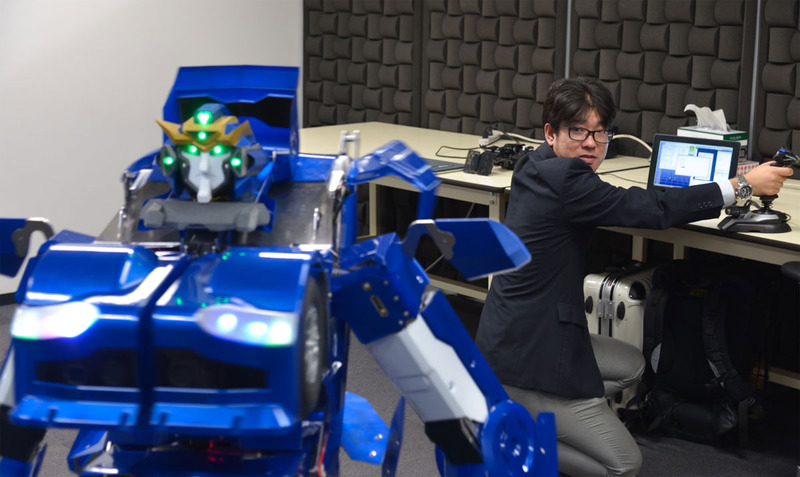 |
Mr. Yoshizaki operating J-deite Quarter. It can be freely controlled using a PC and joystick. |
This time, we focused on the potential of humanoid robots from an entertainment perspective. In the upcoming second part, we will continue by asking for insights on hints for developing Japan's robot industry and the psychological aspects of robot market penetration.
Was this article helpful?
Share this article


Newsletter registration is here
We select and publish important news every day
For inquiries about this article
Back Numbers
Author
Yoshizaki Wataru
Asratec Corporation
Chief Robot Creator
In 2009, Yoshizaki's project "Acting Instruction Software for Humanoid Robots" was selected for the "Uncharted IT Talent Discovery and Development Project" conducted by the IPA (Information-technology Promotion Agency, Japan), an independent administrative agency under the Ministry of Economy, Trade and Industry (METI). He announced "V-Sido". Based on these achievements, he was recognized as a "Super Creator" by METI as an exceptionally outstanding talent.
In 2010, he joined the Suidobashi Heavy Industries project led by Kogoro Kurata, contributing to the creation of the giant robot "Kratas" (responsible for its control via V-Sido).
In July 2013, he assumed the position of Chief Robot Creator at Asratec Corporation, where he develops V-Sido-related business.
Nishijima Yorichika
Dentsu Inc.
Business D&A Bureau