
Note: This website was automatically translated, so some terms or nuances may not be completely accurate.
 Introduction to Robotics Business [3/10]
What Makes a Robot You Can "Grow Fond Of"? Interview with Bandai Namco's Yuka Ichiki and Yasushi Omori

Yuka Ichiki
Bandai Namco Games Inc.
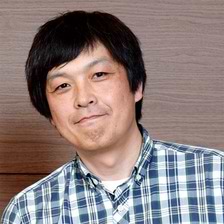
Yasushi Omori
Bandai Namco Studios Inc.
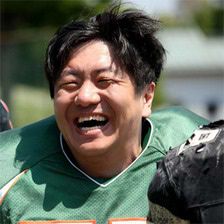
Nishijima Yorichika
Dentsu Inc.
Yorichika Nishijima of Dentsu Inc. Robot Promotion Center visits renowned robot creators, researchers, and pioneers in robot development. This time, we visited Bandai Namco Games Inc., a company that has long led the entertainment industry. As part of their "Game Method Consulting" business, which applies expertise cultivated in game production to product and service development in other industries, we spoke with Yuka Ichiki, who advances robot development consulting, and with Mr. Seiji Omori from Bandai Namco Studios, the group's creator collective.
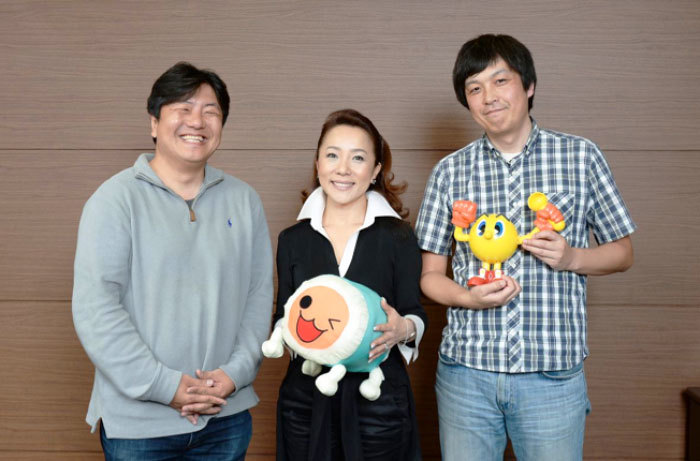 |
(From left) Dentsu Inc. Nishijima, Bandai Namco Games' Hitaki, Bandai Namco Studio's Omori |
45 Years of Robot Development: From Reception Robots to Attractions
Nishijima: Bandai Namco Games is a long-established name in home video games and amusement machines, but you've actually been involved in robot development for a long time. In recent years, you've been expanding into a business that leverages the know-how cultivated in your own game development to benefit products and services in other industries. You also participated in the "Gundam GLOBAL CHALLENGE" project in 2019, which involved moving a life-size Gundam.
I imagine many people have been captivated by your company's products. I'm certainly one of them. However, I suspect it's not widely known that you've been developing robots for so long or that you've expanded into fields beyond gaming?
Ichiki: That's right. Actually, we've been developing various robots since the 1970s, and we've created close to 100 in total.
For example, unmanned reception kiosks are commonplace now, but we installed our self-developed "Reception Komachi" back in 1985. At the 1990 Osaka International Flower and Greenery Exposition, we exhibited an attraction-style game called "Galaxian 3" that could be played by 28 people simultaneously. We've also worked on drive simulators for driving schools.
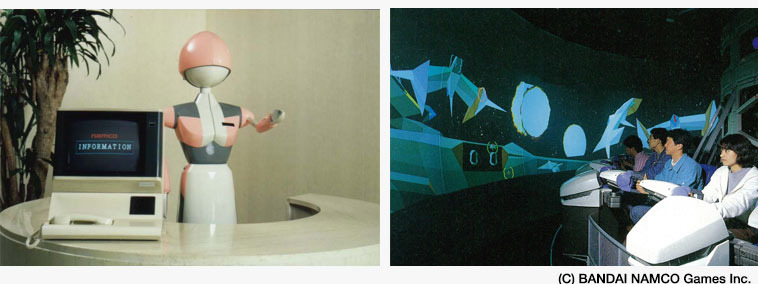 |
Reception Komachi (left) and Galaxian 3 |
Omori: I joined the former Namco (now Bandai Namco Games) mid-career in 1990. When I visited their office for the job interview, I encountered "Reception Komachi." At first, I didn't quite understand it. I should have searched for the department I was visiting, but instead, I tried to search for the manned reception desk (laughs).
Nowadays, game companies have a strong image, so you might picture people furiously typing code at their computers. But we actually have a very large, workshop-like "Prototype Studio" inside the company. There, day and night, we do everything from soldering to building the cabinets (the outer casings for arcade games and such).
Nishijima: So because you actually do hands-on manufacturing, you can really leverage that strength when creating works in the virtual space of games. By the way, Mr. Omori is with Bandai Namco Studios and Mr. Ichiki is with Bandai Namco Games—what are the respective positions of these two companies?
Ichiki: Bandai and Namco merged in 2005, and the following year, Bandai Namco Games was established by integrating both companies' game content businesses. Then, in 2012, the development division was spun off to form Bandai Namco Studios. Currently, Bandai Namco Studios, which creates content, and Bandai Namco Games, which handles business expansion, collaborate to deliver products and services that delight customers across various platforms.
Omori: Therefore, Bandai Namco Studios is a "creator collective" specialized in development functions. President Hajime Nakatani himself is a creator, and currently, about 90% of our nearly 1,100 staff are creators.
Broadly, we have three categories: planning staff like producers and designers; engineers, primarily programmers; and artists such as illustrators and animators. Because we specialize in development, we can move from concept to completion with great speed. We also smoothly adapt titles that were popular on arcade machines for home consoles.
Nishijima: I understood Dentsu Inc. to be a company with a large number of creators, but Bandai Namco Studios might surpass us. By the way, when expanding a title from arcade machines to home consoles, is it handed over to the home console division?
Omori: This might be uncommon elsewhere, but at our company, the responsible personnel move across domains. We call this our IP-centric strategy within the group. For example, if "Taiko no Tatsujin" becomes popular in arcades and we decide to develop a home version, the entire development team moves to the home division. The focus isn't on the output platform; it's on the "Taiko no Tatsujin" IP itself.
While they need to learn the mechanics of home consoles, having the same creators involved allows the game's core elements to be preserved. This approach is highly flexible, creating a system where the entire company maximizes entertainment value.
Nishijima: I think that's a very important perspective. Rather than dividing creators by medium, people who understand the core of the concept develop across media and hardware.
Japanese people who feel affection for the little things
Nishijima: Could you tell us about the robot consulting business you're currently advancing?
 |
Kazuki: As a cross-company initiative between Bandai Namco Games and Bandai Namco Studios, we've been advancing a project called "Game Method Consulting" (team name: "Special Flag " http://specialflag.net/) for about three years now, with me serving as its representative. This consulting business leverages the know-how we've accumulated through game development and beyond to tackle challenges for companies outside the gaming field. We handle everything from product development and service design to improving user interfaces and even undertaking development projects.
Many might wonder, "Why can game development know-how be useful in other fields?" Games aren't essential goods. If players feel even a hint of stress while playing, they'll quit immediately and never return. That's why we've consistently cultivated a "fan-first" spirit—focusing not just on functionality, but on continuously providing users with comfort and enjoyment. This gives us the ability to design products and services for any industry, shaping exciting experiences while prioritizing the user's perspective.
Recently, we've been receiving an increasing number of inquiries specifically about robotics. This led us to decide to focus particularly on robot planning and development. With the Dentsu Inc. Robotics Promotion Center now being established, we're very much hoping to collaborate on something together.
Nishijima: That's truly reassuring. I believe the knowledge gained from developing games that captivate people can be greatly leveraged in robotics-related ventures, especially in the communication domain. I'm personally very excited to see how the expertise accumulated by Bandai Namco through game development will evolve when fused with existing robotics fields.
Mr. Omori, as a creator, what are your current thoughts on robot development?
Omori: I believe we're entering a phase where the platform is just beginning to take shape. While society seems to be paying attention due to technological advancements, for those of us who've been exploring this since the 70s and 80s, it feels like "the time has come to re-evaluate robots that have evolved."
Back then, before they could fully expand and permeate society, video games and other fields became mainstream, and our company also shifted in that direction while listening to user requests. But personally, my antennae started picking up on robotics again a few years ago (laughs). Since robotics seemed poised to move forward with Special Flag, I've been involved on my own initiative since about the year before last.
Kazuki: Really? We actually asked you to join! (laughs)
Nishijima: Is that so? (laughs) Even though we use the term "robot," there are various definitions. From your perspective of pursuing entertainment, what aspects interest you?
Omori: Well, I think industrial robots with limited functions are a bit different. For example, the "Robot Restaurant" (*) in Shinjuku is popular right now. Even considering the highly entertaining robots we've developed, there's definitely an inherent appeal to robots themselves, separate from being useful or convenient. I started thinking again about what that appeal might be.
※Robot Restaurant: An entertainment restaurant in Shinjuku's Kabukicho district featuring robot performances. It hosts daily shows blending dancers and robots. It draws huge crowds of international tourists and has been featured in numerous media outlets. (See image below)
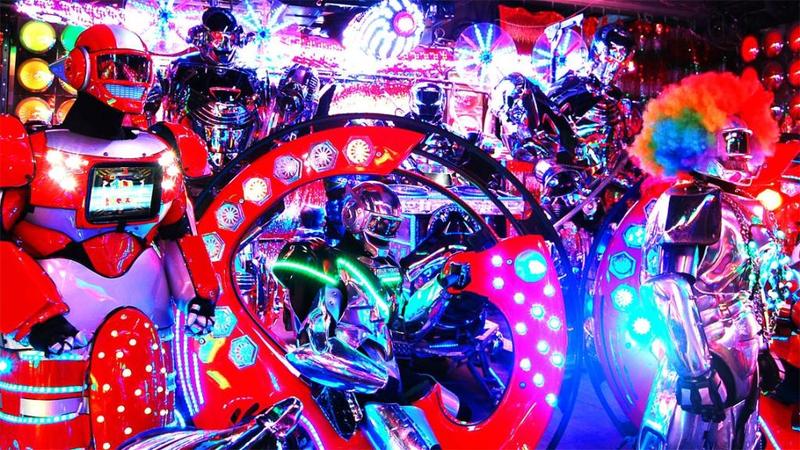
If I had to pinpoint a keyword, it would be "attachment." For instance, when creating a robot modeled after a human, it possesses its own robotic personality while not perfectly replicating a human. I believe there's a cultural tendency, particularly in Japan, to develop affection or cherish that imperfect, endearing quality that emerges. As robots become more integrated into society and platforms are established, I feel this aspect will become a major point.
Can you empathize with a talking robot?
Nishijima: Indeed, robots in manga and anime, which Japanese people have long been familiar with, often feel relatable precisely because they are imperfect and make human-like mistakes.
Recently, we've seen shogi computers capable of defeating professional players. I felt a sense of familiarity when that shogi piece-handling robotic arm (*) made gestures as if thinking while placing pieces, or when it performed gestures like greeting before and after matches. I felt this kind of playful touch is uniquely Japanese.
※Den'o-te-kun: A shogi robot arm manufactured by DENSO
Also, recently, home appliances with talking functions have appeared. It's often said that Japanese people have traditionally developed strong attachments to objects. Do you think such functions could foster even greater affection or enhance communication?
Omori: Personally, I think there are situations where it's better for appliances not to talk at this point.
Nishijima: Really? Why is that?
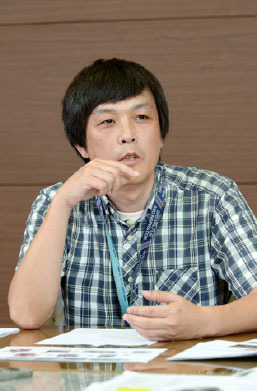 |
Omori: Speaking implies there's information or emotion you want to convey, and voice is the means to do that. Appliances might have information to share, like "Cleaning finished," but they don't have emotions to express.
Communication falls into two categories: simple information transfer and emotional sharing. For the former, a sound or light signal to indicate completion is sufficient. For example, robot vacuums often use lights to convey such information. For the latter, if something speaks to me without any underlying emotion, I find it a bit hard to accept. Sometimes, for simple notifications, silence is actually preferable.
Ichiki: I agree. But my sister sticks googly-eye stickers on her robot vacuum, gives it a name, and dotes on it (laughs). Still, that's just us humans projecting our own feelings onto it, seeing it as "trying hard and adorable." Perhaps the more inorganic the machine, the more room it leaves for imagination.
The kind of "emotional" communication Omori talks about only works when it's two-way. If the other side has no feelings, you just get bored. I had a little talking gadget myself. It was novel at first, but eventually I turned the sound off. That's where we really need to understand the subtleties of human emotion and incorporate them.
Omori: Even if they did have feelings, you could argue that it's precisely because we can't understand them that we grow attached. Dogs and cats are classic examples.

Nishijima: Indeed, with a shogi robot arm, I feel we empathize more with its hesitant gesture of pausing before placing a piece than if it actually said, "Hmm, what should I do?" While we often equate communication with conversation, nonverbal elements are actually crucial.
Omori: Yes. I believe psychology and other fields have already extensively researched this, but nonverbal elements actually constitute a larger portion of communication. Even in everyday conversation, the information often lies more in factors like speaking quickly or pausing, rather than the words themselves.
Nishijima: I see. But take, for example, when a robot vacuum detects a step and says, "Whoops!"
makes anyone laugh. I find this gesture incredibly endearing because it shows the robot vacuum recognizes "I'm in danger right now!" and mutters it, even though it's not trying to tell anyone.
I understand this discussion suggests that nonverbal communication can sometimes convey meaning more effectively depending on the context. The optimal approach—whether using voice, text, or nonverbal expression—changes with the situation. I believe there's still significant potential for development in the communication expressions of service robots.
Next time, we'll continue our conversation with Mr. Ichiki and Mr. Omori, exploring the "interface" of robots from a game design perspective. Stay tuned.
Was this article helpful?
Share this article


Newsletter registration is here
We select and publish important news every day
For inquiries about this article
Back Numbers
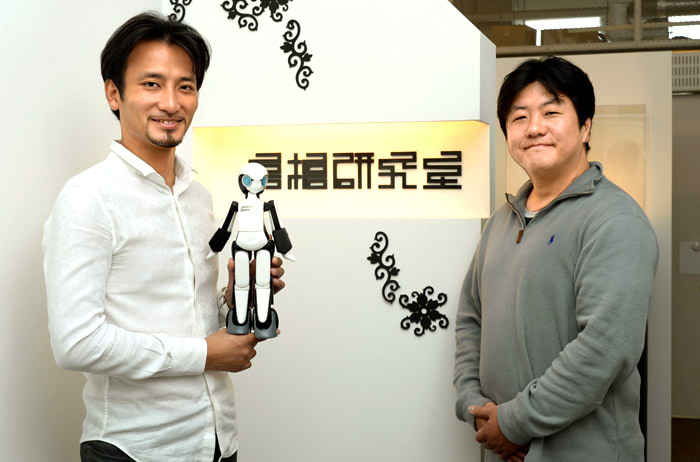
Author
Yuka Ichiki
Bandai Namco Games Inc.
President's Office
New Business Division General Manager / Representative of Game Method Consulting "Special Flag"
Yasushi Omori
Bandai Namco Studios Inc.
Executive Officer, Head of HE Development Headquarters
Nishijima Yorichika
Dentsu Inc.
Business D&A Bureau