
Note: This website was automatically translated, so some terms or nuances may not be completely accurate.
 How to Build New Japanese Strength [1/4]
The "landing function" essential to social innovation
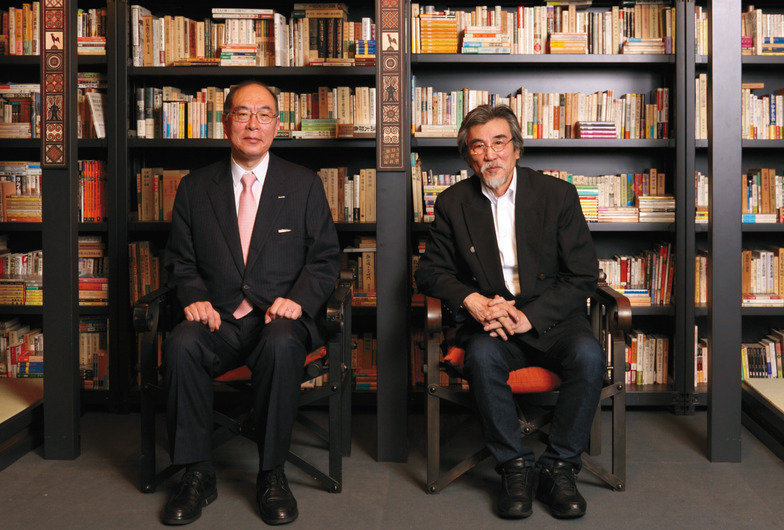
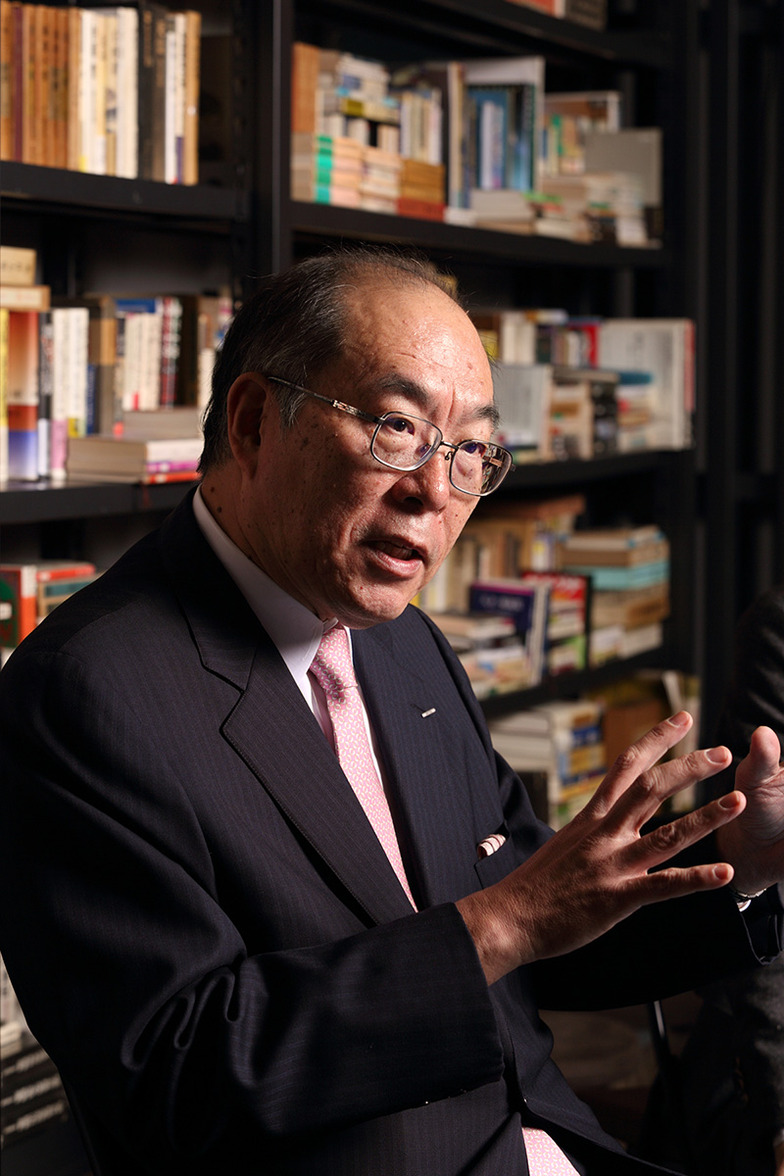
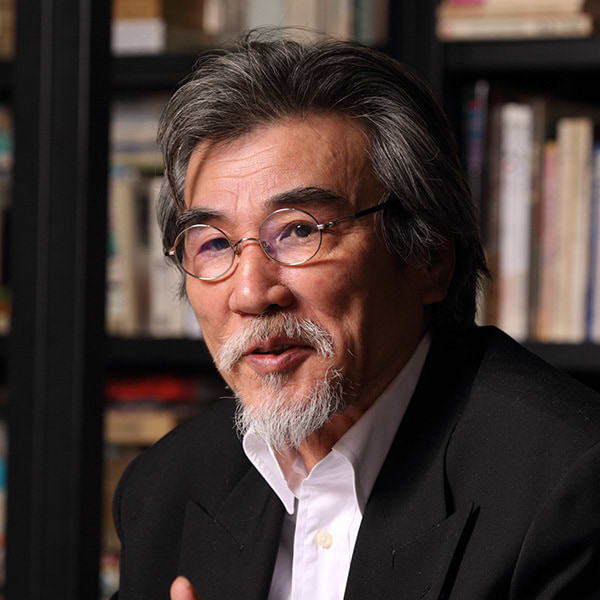
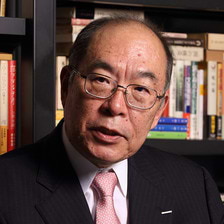
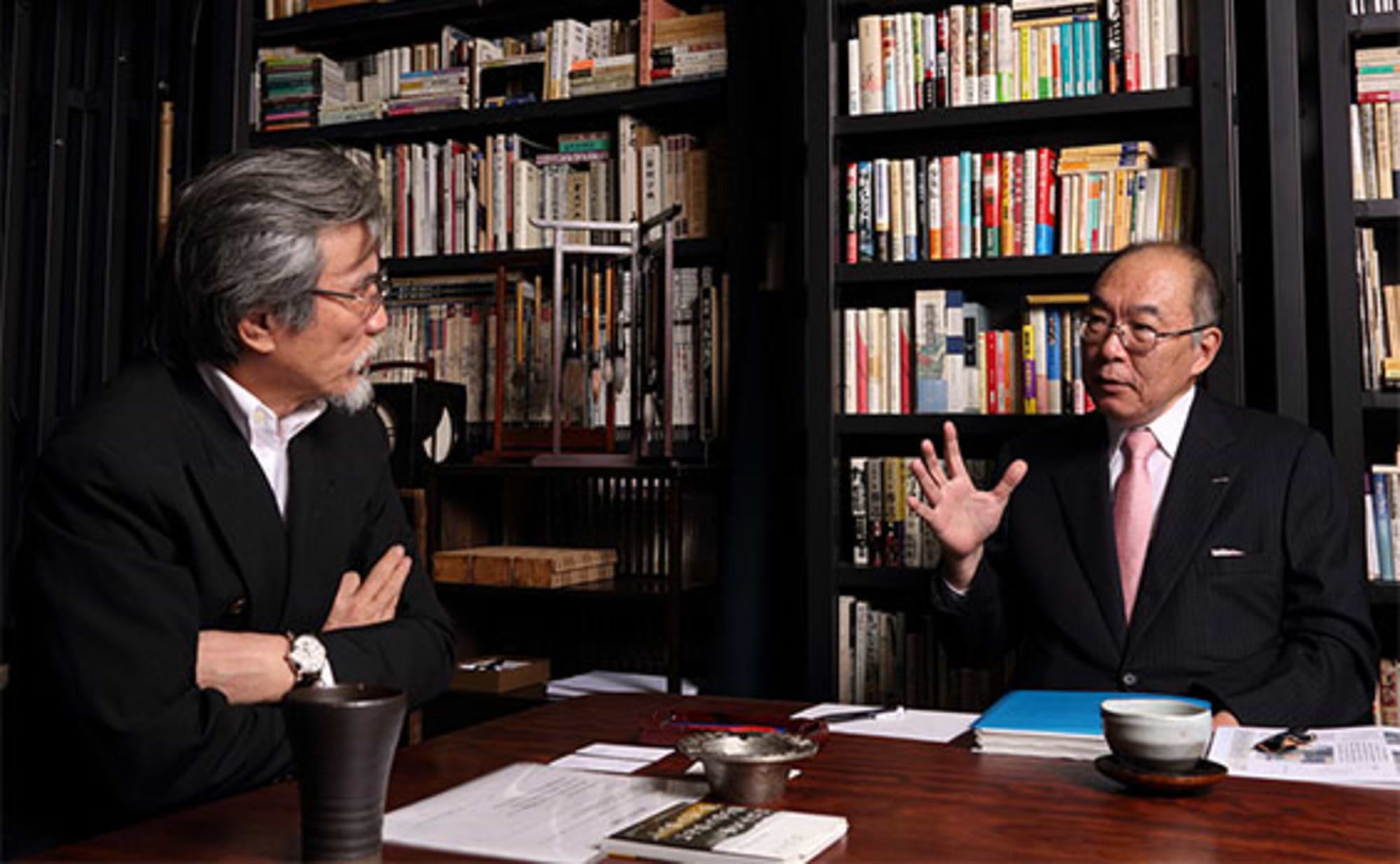
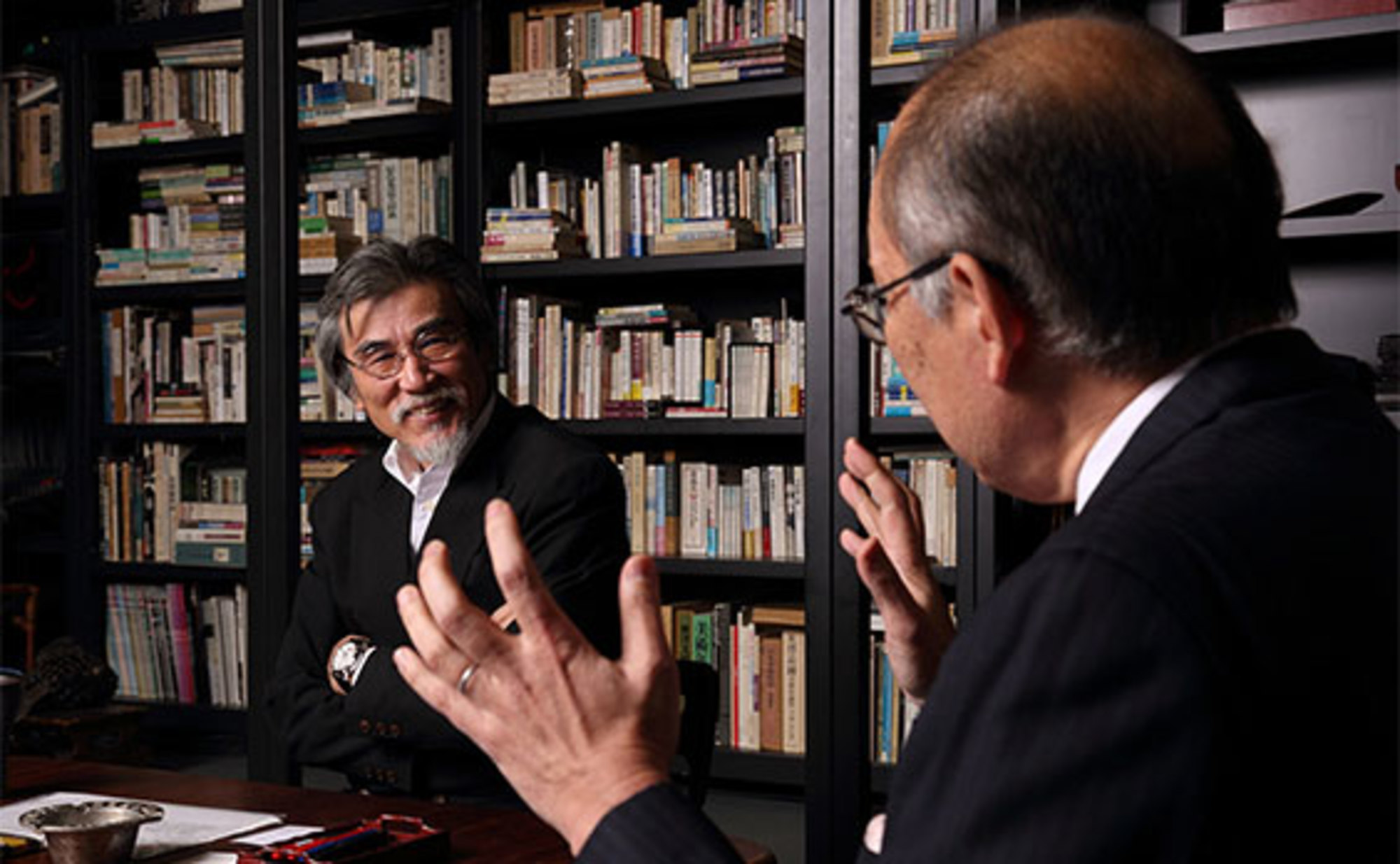
Riding the tailwind of the 2020 Tokyo Olympic and Paralympic Games, Japan's underlying strength is now being put to the test. How can we leverage Japan's unique strengths and restore its vitality? Mr. Seigo Matsuoka, Director of the Institute of Editing Engineering and a leading authority on Japanese cultural studies with extensive knowledge of history and culture across time and place, and Mr. Jun Hamano, former Vice-Minister of the Cabinet Office and current Senior Fellow at DENTSU SOKEN INC., discussed the nature of the "New Japanese Strength" that should be reaffirmed in this era. The discussion was moderated by Mr. Jun Nakao, Director of DENTSU SOKEN INC. This is the fourth installment.
Simply "revitalizing" regions won't spark innovation
Nakao: Professor Matsuoka has pointed out that movements to reexamine Japanese styles existed even during the Muromachi and Edo periods. Here at DENTSU SOKEN INC., we have established the keyword "New Japanese Strength" and aim to communicate how Japan's unique strengths should be leveraged from a contemporary perspective. We'd like to hear insights based on Professor Matsuoka's deep understanding. First, Mr. Hamano, drawing from your experience at the Cabinet Office, could you kick off the discussion by sharing how you perceive the Japan Power needed in this era?
Hamano: Simply put, it boils down to one thing: how to generate innovation within a socio-economic environment where the working population is shrinking and capital growth is not particularly promising. Despite being called the "Lost 20 Years," Japan's social capital is substantial. Major transportation infrastructure is already in place, and financial assets exist. Above all, Japan possesses ample human capital backed by experience and knowledge. Furthermore, Japanese corporate culture has long embraced the spirit of "benefit for the seller, benefit for the buyer, benefit for society" – a mindset that considers multiple stakeholders from a medium-to-long-term perspective. I believe it's crucial to leverage these uniquely Japanese strengths, actively mobilizing people, goods, capital, and information to create an environment where many people gain inspiration. To achieve this, we must challenge previously untouchable taboos and establish public support mechanisms that harness private-sector ingenuity. I also believe that promoting science and technology requires changing organizations and systems to address various societal challenges.
Matsuoka: Innovation requires both technological innovation and social innovation. In Japan's case, it's undeniable that social innovation seems insufficient. However, this doesn't mean Japanese people are inherently poor at social innovation. Looking back at history, for example, even during the Edo period's isolation, fascinating social capital accumulated and flourished across the country through initiatives like the issuance of domain-specific banknotes and the promotion of various local products. Such social innovation is severely lacking in modern Japan. While major transportation infrastructure has been developed, it's difficult to say that social capital has accumulated nationwide.
Hamano: The government has used various terms like "regional revitalization" or "regional creation," but the reason it hasn't worked well is likely because, rather than fostering unique local strengths, it has largely been about promoting policies from the central government to the regions. We've been repeating the same thing since the postwar period.
How to Build "Suspicious Mechanisms"
Nakao: With the advancement of ICT technology, I believe the groundwork is being laid to think globally or nationally starting from the local level. Why do you think it's still not working well?
Matsuoka: This movement of connecting the local to the global and national actually existed during the Bakumatsu period. The so-called "Satsuma-Choshu-Tosa-Hizen" factions—Satsuma, Choshu, Tosa, and Hizen—which drove the Meiji Restoration, brought British and French military capital to their local areas, sparked technological innovation, and paved the way for the Meiji Restoration. Historically, it succeeded once. However, when Japan subsequently charged ahead on the path of annexing Korea and establishing Manchukuo to compete with the Western powers, it ultimately succumbed to the rules of those powers. This legacy continued to haunt Japan post-war, extending all the way to the Plaza Accord and the Japan-US Structural Agreement. Despite having opportunities during this process to reconstruct the relationship between local and global, or between local and national, attention instead shifted toward doubling income and transforming the Japanese archipelago. Looking back at history from a broader perspective, hasn't this merely instilled inertia in the Japanese people? When external standards and values flood in all at once, and we unconsciously accept them, various problems arise. Asian agriculture relies on rain-fed farming with direct seeding, but Japan's climate is different. We adopted the method of creating seedling beds, growing the rice to a certain stage, and then transplanting it into the main paddies. The seedling beds served as a sort of landing stage to strengthen the young, vulnerable plants. This kind of intermediate function has gradually been lost from Japanese culture. In terms of human resource development too, villages used to have youth lodgings where young people lived communally, learning various customs and traditions. This also served as a landing stage function before entering society. Now, however, corporate recruitment of new graduates tends to snatch up the most promising students right away.
Nakao: So the transitional space for nurturing people has disappeared.
Matsuoka: From an innovation perspective, I believe we currently face two problems. First, the evolution of ICT is happening at an extremely rapid pace. Even if a company invests time in innovation, by the time it's ready, the functions, technologies, and markets have completely changed from what they were just a short time ago. Furthermore, despite Japanese companies possessing high technical capabilities and diverse skills within their small internal groups, they have pursued scale expansion through M&A and similar means. This has made it difficult for these small groups to effectively leverage their strengths. Overcoming this innovation dilemma is a major challenge.
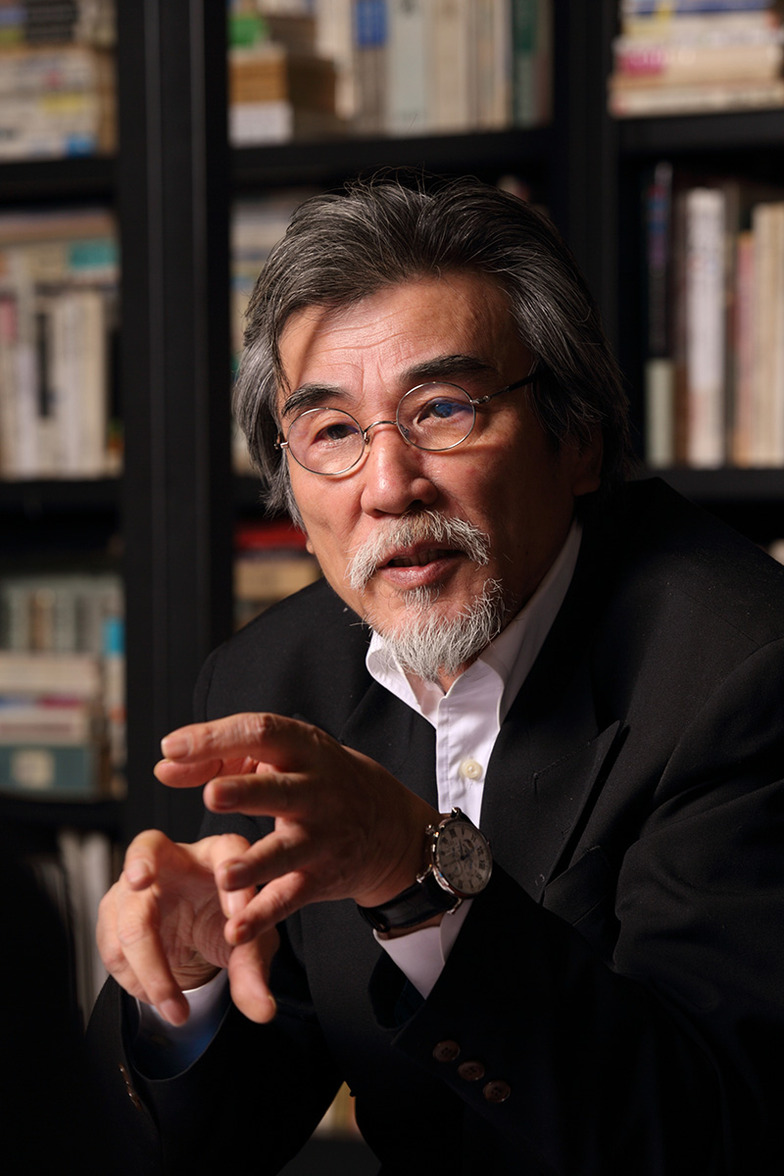
The other factor is undeniable: much current innovation revolves around reverse engineering—analyzing and dissecting competitors' technologies to enhance one's own manufacturing capabilities. While rules protecting intellectual property are crucial, modern innovation is largely built upon this reverse innovation. How Japanese society and corporate systems integrate this reverse innovation is a key factor. During the Edo period, while defection from one's domain was viewed as problematic by both the shogunate and the domains themselves, figures like Sakamoto Ryoma embraced a mindset akin to reverse innovation. They advocated for "cross-domain discussions" (yokigi yokko), encouraging debate and collaboration across domain boundaries. When considering "New Japan Power," I believe we must create a kind of "suspicious" mechanism. Calling it "suspicious" might be misunderstood, but in other words, it's a testing ground for experimentation. Here, industry, government, and academia must join forces to start discussions from scratch about what should be passed on to the next generation and what should be discarded, and then put these ideas into practice.
[Continued in Part 2]
Was this article helpful?
Share this article


Newsletter registration is here
We select and publish important news every day
For inquiries about this article
Author
Masatake Matsuoka
Editing Engineering Research Institute
Director
Jun Hamano
Dentsu Inc.
DENTSU SOKEN INC.
Senior Fellow
Jun Nakao
Dentsu Inc.
2020 Production Center