
Note: This website was automatically translated, so some terms or nuances may not be completely accurate.
 How to Build New Japanese Strength [3/4]
In the Age of Globalization: "Dual Standards" and "Editing Power"
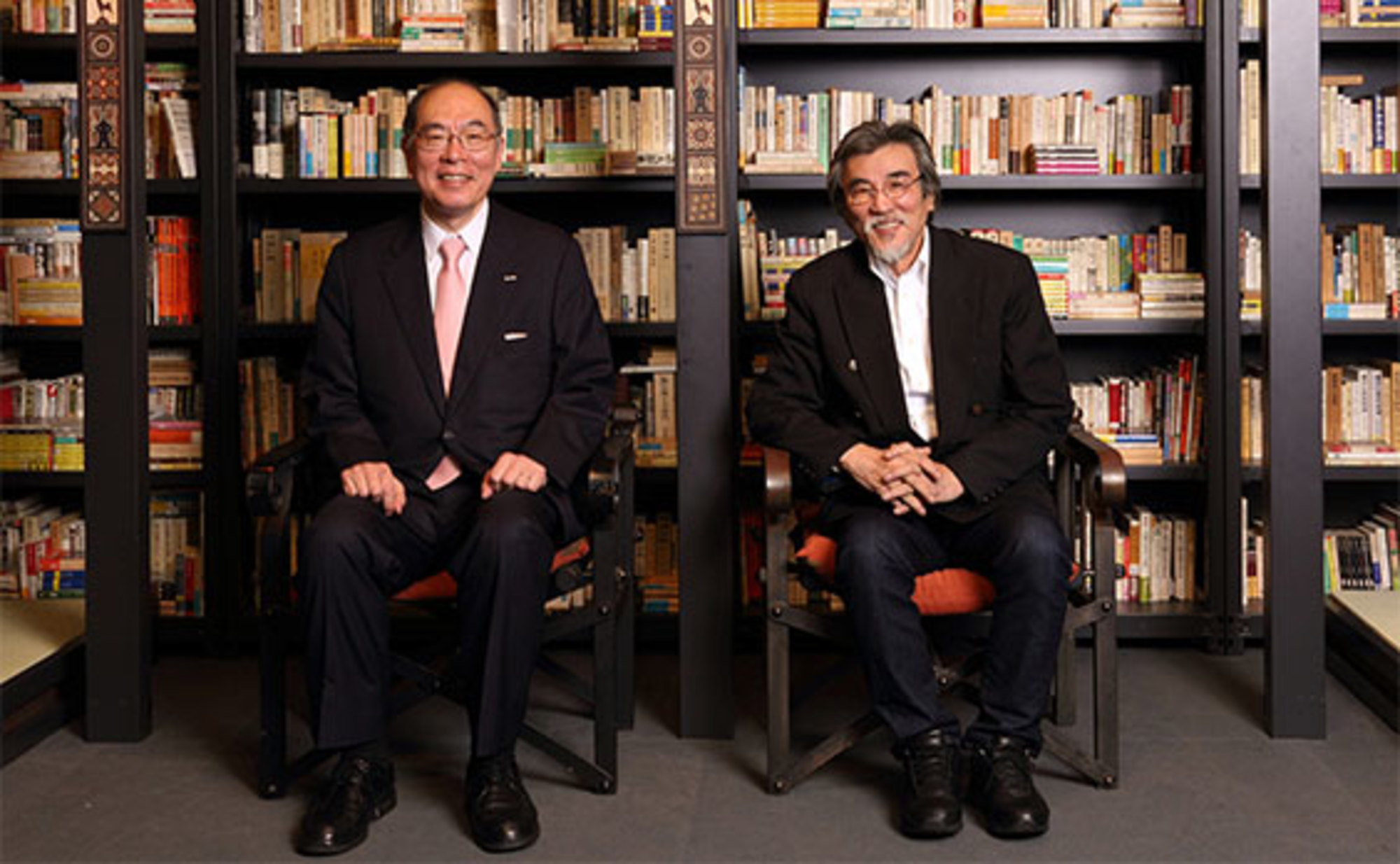
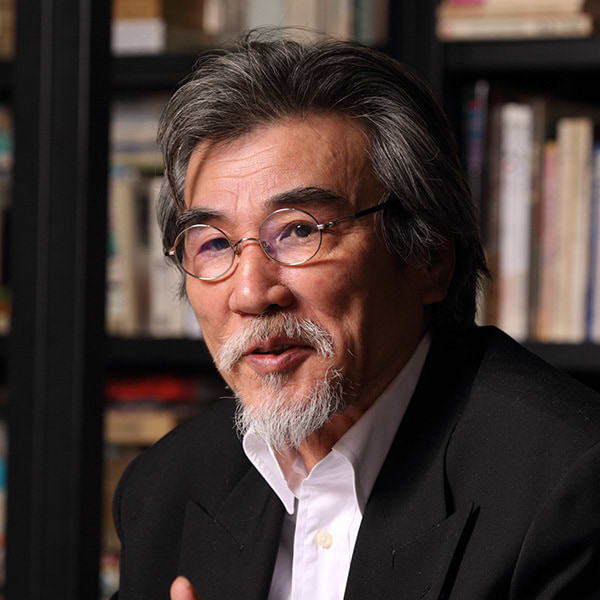
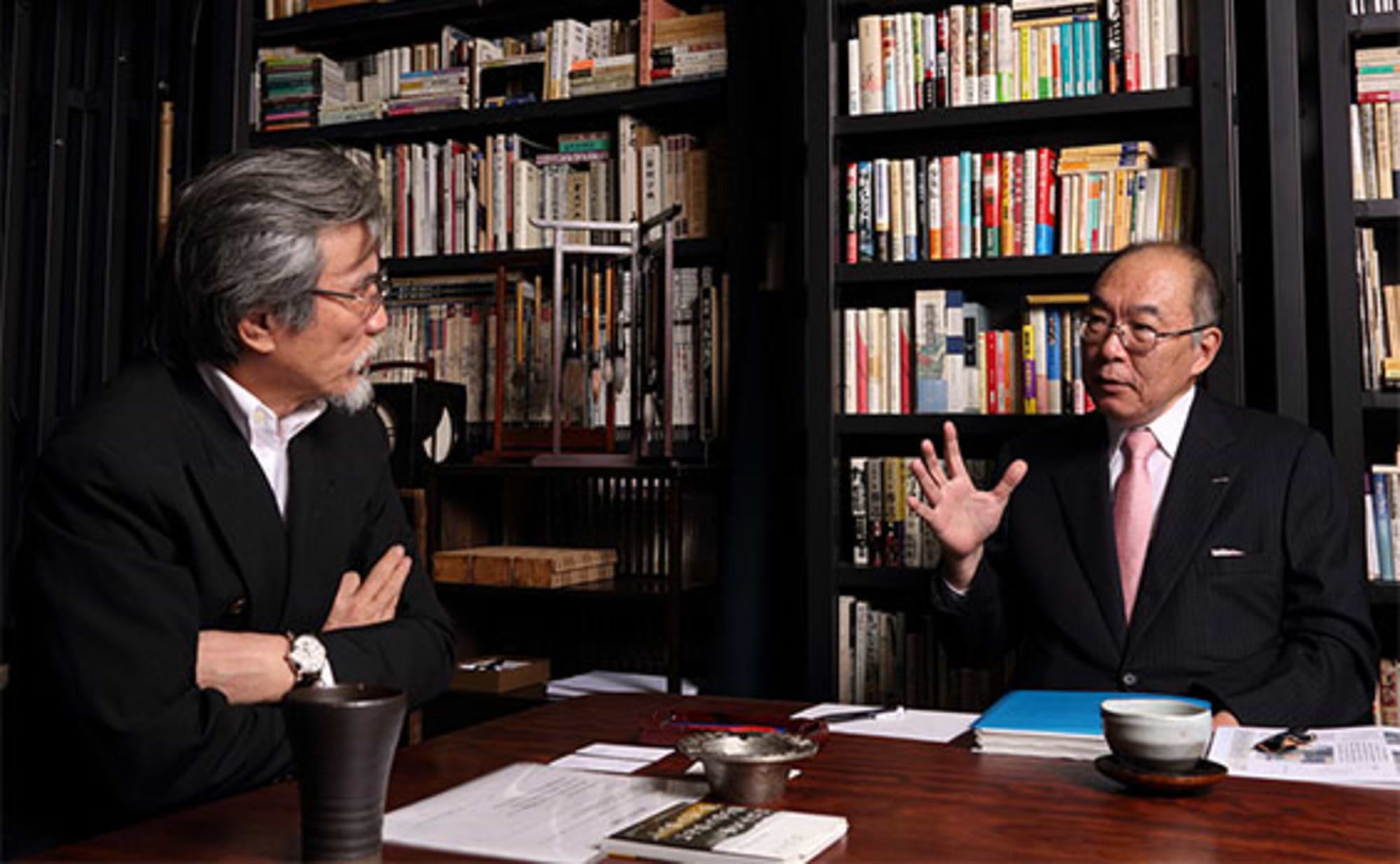
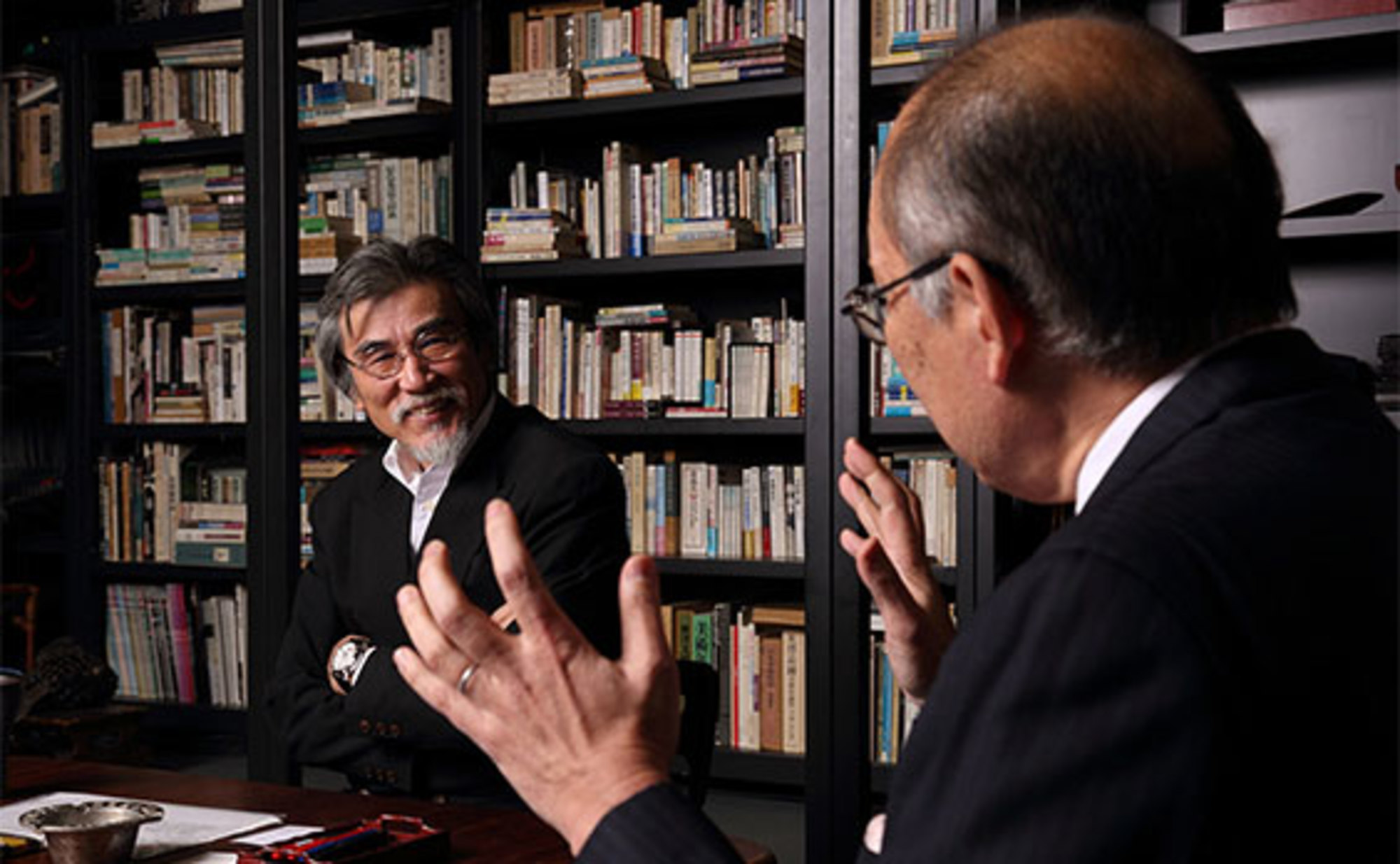
With the tailwind of hosting the 2020 Tokyo Olympic and Paralympic Games, Japan's underlying strength is now being put to the test. How can we leverage Japan's unique strengths and restore its vitality? Mr. Seigo Matsuoka, Director of the Institute of Editing Engineering and a leading authority on Japanese cultural studies with deep knowledge of history and culture across time and place, and Mr. Jun Hamano, former Vice-Minister of the Cabinet Office and current Senior Fellow at DENTSU SOKEN INC., discussed the nature of this 'New Japanese Strength' that should be reaffirmed in our era. Moderated by Mr. Jun Nakao, Director of DENTSU SOKEN INC. This discussion will be presented in four parts.
A Japanese-style capitalism is acceptable
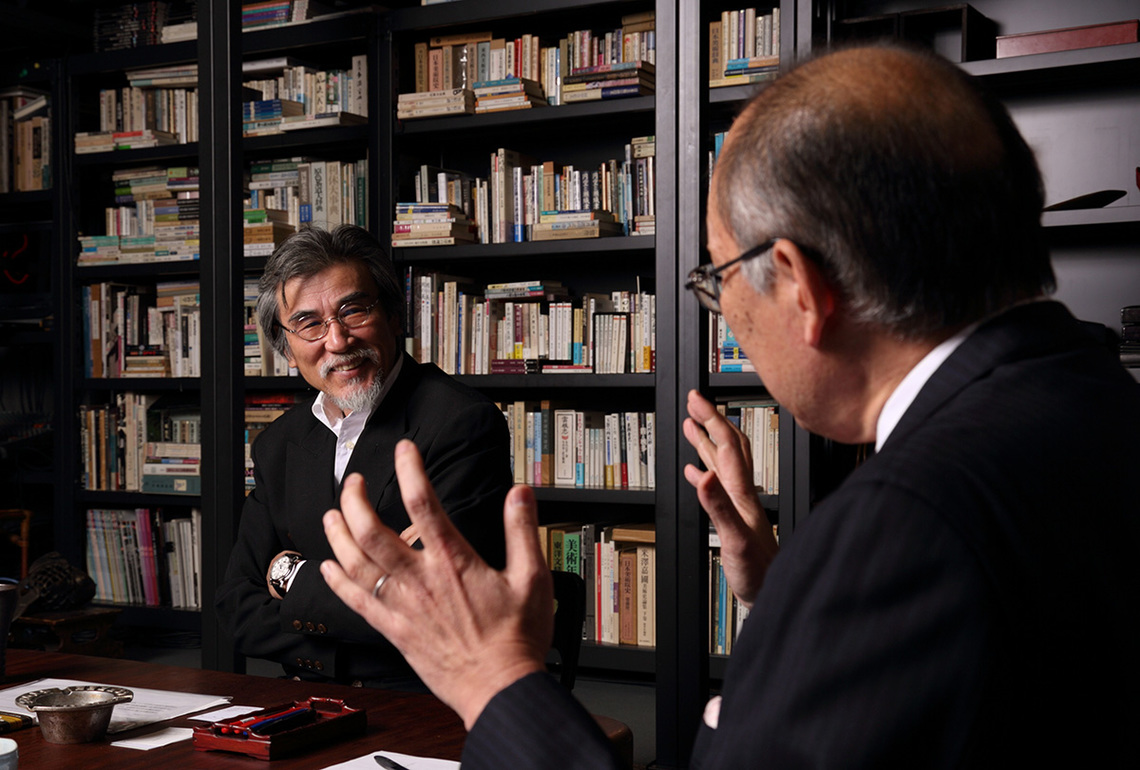
Hamano: What struck me most from Professor Matsuoka's remarks is the idea that while international standards are important, Japan can also have its own unique rules. In other words, it's acceptable to have a dual standard. I believe this could be a breakthrough point when considering how to create this "New Japanese Strength."
Matsuoka: I call this a "dual standard." I deliberately use "dual" rather than "double." While global standards are often emphasized today, I don't believe Japan can easily adopt the values and rules of the West, which have entirely different histories and cultures. A Japanese dual standard, with a system that offers flexibility and multiplicity, should be possible. Looking back at history, the shogun and the imperial court coexisted as a dual system. In religion, we see it with exoteric and esoteric Buddhism. Not everything needs to be dual standards, but when considering a new Japanese strength today, we should start by implementing dual standards where possible. In agriculture, for example, we need measures to properly preserve the remarkable qualities of Japanese rice. I believe there has never been a time when institutionalizing dual standards is more urgently needed.
Nakao: So establishing places to nurture seeds, like nurseries, is part of that, right?
Matsuoka: Exactly. At that time, rather than imposing a uniform standard clock, there should be room for each country's unique natural clock or folk clock. In Japan's agricultural culture, there's a cycle of planting in spring and harvesting in autumn. Festivals are summer and autumn festivals. Or, there are the twice-yearly gift-giving seasons of O-chugen and O-seibo. These cultural and lifestyle habits are completely disconnected from today's global economic rules that divide time into quarters. I'm not saying corporate involvement in agriculture is bad, but I think unless we create some kind of pause or breathing space somewhere, things could get seriously problematic.
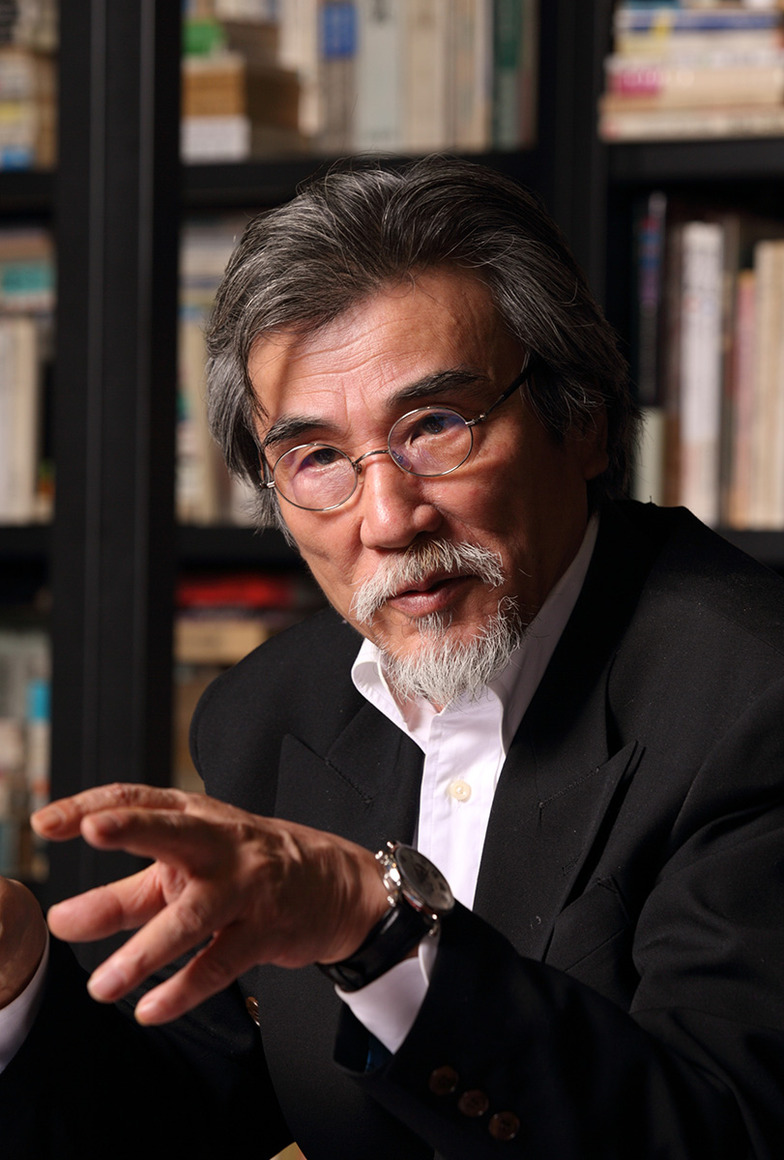
Hamano: So rather than chasing an Anglo-Saxon or American model, you're suggesting there could be a Japanese market model—or more specifically, a Japanese form of capitalism.
Matsuoka: Exactly. Christianity wasn't officially permitted in Japan until the Meiji era, but it didn't spread rapidly across the country. Why? Because of the unique religious outlook and cultural landscape inherent to the Japanese people. Niijima Jo and his wife, Yaeko, worked tirelessly to build a splendid Christian society, yet at the same time, figures like Uchimura Kanzo emerged, advocating the concept of the "Two J's." The two J's: one is the J of Jesus, and the other is the J of Japan. In other words, Uchimura advocated for a "Japanese-style Christianity," meaning teachings of Jesus adapted to Japan. Isn't it possible for such a dual standard, like the two J's Uchimura Kanzo spoke of, to exist as an economic principle in modern Japan? Japan has historically integrated Confucianism and Buddhism, built upon Shinto, and forged a broad, syncretic faith system blending deities and Buddhas. Moreover, it created uniquely Japanese elements like the Pure Land concept—unseen in China—as exemplified by Kamakura-period new Buddhism, and developed Japanese Zen. The world of kare-sansui (dry landscape gardens) didn't exist in China; it emerged precisely because of the Japanese people's special aesthetic sensibility. As Steve Jobs marveled, they created vast worldviews and universes within such small spaces.
Nakao: Steve Jobs created products by eliminating the superfluous and reducing them to their absolute smallest form—essentially through subtraction. This is precisely the same subtraction-based aesthetic as kare-sansui.
The Need for a Super Editor Collective to Japanize Global Rules
Hamano: Also, Japan doesn't seem to produce that entrepreneurial culture or movement where startups originating from garages go on to conquer the world. While there are public systems meant to support ventures, they rarely succeed. Yet, in the realm of components, there are many small and medium-sized enterprises holding significant global market shares.
Matsuoka: Everyone knows the hidden strength of factories in places like Kamata in Tokyo or Higashi-Osaka.
Nakao: So even with the technical capability, is the problem something fundamental—like the social mood, or education—that prevents a movement from forming?
Matsuoka: Saigo Takamori tried to establish private schools to teach young people agriculture and military skills. But because it was perceived as a threat, his allies like Okubo Toshimichi and Yamagata Aritomo felt compelled to assassinate him. We really need to reconsider the significance of that experimental endeavor Saigo attempted. Separated by time in a completely different world, there was the manga artist Osamu Tezuka. Tezuka Productions conducted tremendous experiments that today's anime industry could scarcely replicate. Yet, the pioneering value of such grand experiments is invariably exposed to economic rationalism.
Hamano: While being tossed about by the rough waves of the global economy is unavoidable, as Professor Matsuoka mentioned, pursuing a Japanese form of capitalism suggests dual standards as one direction. Even when accepting Western economic principles and rules, the crucial point is how to add something extra and transform them into something distinctly Japanese.
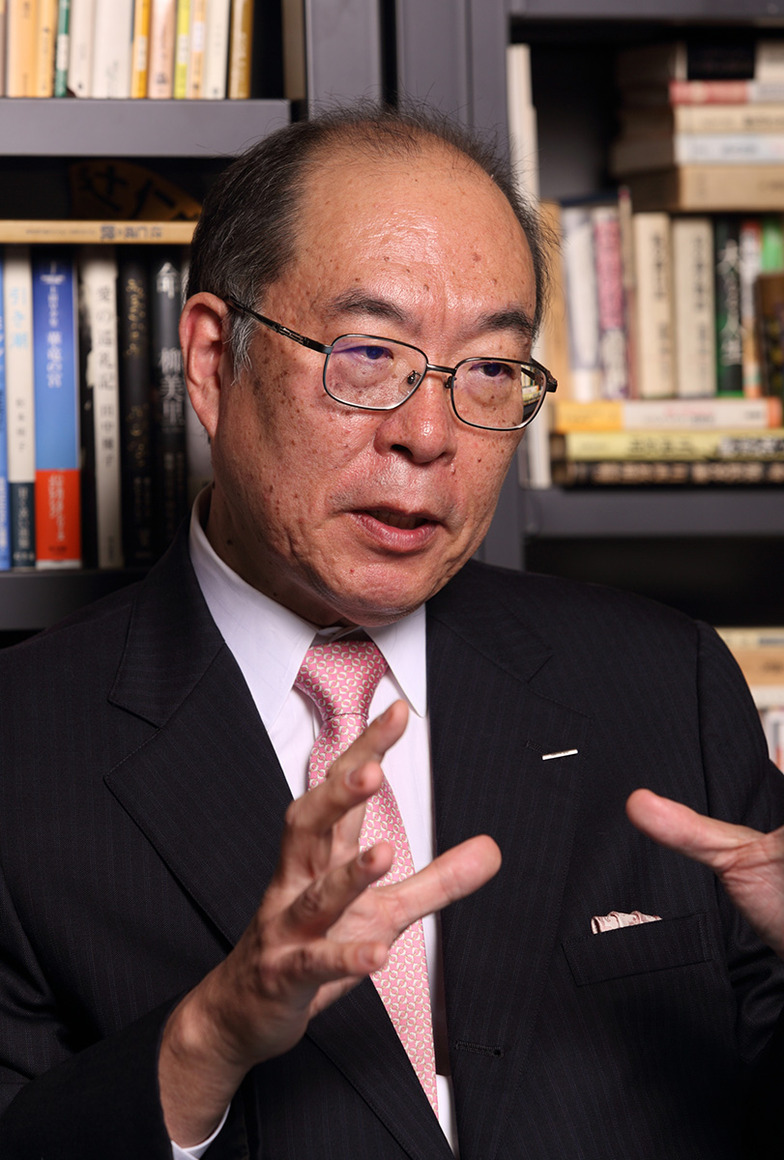
Matsuoka: This is where "editing power" comes into question. Accepting global rules is fine. However, if we cannot demonstrate the editing power to transform them fundamentally during that process, we will only end up intimidated in diplomatic and negotiation settings. To prevent this, we shouldn't leave it solely to politicians. We should create a "fundamental transformation group," a special editor team like Jiro Shirasu, who upholds Japanese principles and standards. A task force of about 100 people, gathering experts in law, economics, and various other fields. Like the patriots of Satsuma, Choshu, Tosa, and Hizen in the Bakumatsu period – a super team of rugged individuals harboring fiery convictions.
Hamano: I wholeheartedly agree. A professional collective with editorial capabilities. A group of high-minded intellectuals, including corporate executives and bureaucrats – an intellectual society, if you will. We must not shy away from global standards; rather, we must embrace them as an opportunity and attack them head-on.
Matsuoka: Exactly. That's why, even when bringing in executives and bureaucrats, they must be people capable of bold thinking and fearlessly confronting things that carry a hint of danger. To build a new Japanese strength, we must decisively cut away the old Japanese strength.
[Continued in Part 4 (Final)]
Was this article helpful?
Share this article


Newsletter registration is here
We select and publish important news every day
For inquiries about this article
Back Numbers
Author
Masatake Matsuoka
Editing Engineering Research Institute
Director
Jun Hamano
Dentsu Inc.
DENTSU SOKEN INC.
Senior Fellow
Jun Nakao
Dentsu Inc.
2020 Production Center