
Note: This website was automatically translated, so some terms or nuances may not be completely accurate.
 Introduction to Robotics Business [7/10]
Interview with Matsukoroid Developer Professor Hiroshi Ishiguro Part 1: Brand Strategy for Robots Beyond "Intelligent"
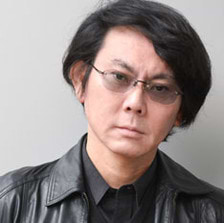
Hiroshi Ishiguro
Osaka University
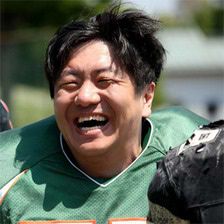
Nishijima Yorichika
Dentsu Inc.

This is a series where Mr. Yoriaki Nishijima, head of Dentsu Inc.'s cross-departmental Robot Promotion Center, explores robots from a business perspective through dialogues with renowned Japanese robot creators and pioneers of robotics companies.
This time, we visited Professor Hiroshi Ishiguro of Osaka University, known for his remotely operated android series "Geminoid." While he is a world-renowned robot scientist, many people may have seen him on TV programs alongside a robot so lifelike it could be mistaken for him.
Two Directions for Robot Business Development
Nishijima: As the first project under the Dentsu Group's "Digitale" initiative (*), we unveiled the Matsukoroid android, developed under your supervision and modeled after Matsuko Deluxe. Its movements were broadcast on a TV program in December 2014, which must have made quite an impact on viewers, right?
※: A project by Dentsu Inc. and Dentsu Tech to develop non-human talent using digital technology.
Ishiguro: Yes, I agree. I find it incredibly interesting that a talent like Matsuko Deluxe, who is popular for her personality, agreed to collaborate. It would be great if this became an opportunity for the general public to develop an interest in robots.
Nishijima: Currently, more and more companies are showing interest in robot development and robotics business, not just in the humanoid field. While some success stories have emerged, what is your perspective on robot-related business, Professor?
Ishiguro: While the momentum is certainly building, I still don't think a true robot business has emerged yet. What's currently being called that falls entirely within existing business models. If anything has truly taken off, it's probably iRobot's Roomba. But while Roomba is a robot, it's really an extension of home appliances.
Looking ahead, I see two potential directions for development. One is automating existing roles with robots.
Nishijima: Like the Roomba.
Ishiguro: Yes. Unfortunately, however, there still isn't a solid business model for communication robots or robots as extensions of media. The turning point will likely come when pattern recognition technologies for voice, images, and so on advance further, and these technologies are mass-produced as software with a reasonably established development platform.
Nishijima: So what is the other direction?
Ishiguro: The field of industrial robots. For example, the general-purpose industrial robot "Baxter" developed by Professor Rodney Brooks, a robotics expert. He's the founder of iRobot and the developer of the Roomba. However, while they've managed to keep costs down, I feel its performance still has room for improvement.
I think Japan's Kawada Industries' "NEXTAGE" is quite well-made. It's a dual-arm type, just like Baxter—meaning it's an industrial robot with two arms—and it seems well-suited for use in high-mix, low-volume production. The potential for expansion for these too will depend on whether the platform becomes established.
Nishijima: So, the platform is the key factor in any case.
Ishiguro: I agree. Moving away from industrial robots, SoftBank's "Pepper" is aiming for a platform business, right? To really get it going, they'll need to make a significant investment and take a risk.
What are the hurdles for robot adoption?
Nishijima: What about the potential for humanoid robots, especially bipedal ones?
Ishiguro: I still can't see how much future walking robots have. The possibility of them appearing in the world... For example, can you imagine walking robots moving around in the city? My biggest concern is safety. "What if they fall over, flail their legs, and knock over a child?" It might be even stricter than when automobiles became widespread in society.
Nishijima: Indeed, when considering normal use in public spaces, safety is paramount.
Ishiguro: Exactly. However, we also need to approach this point with a degree of rationality. Even cars, long after their introduction, still aren't accident-free. But if we stopped using them just because they're dangerous, it would severely disrupt work and daily life.
For robots to become widespread, they need to align with people's perceptions. That hurdle is quite high because they're new. New things can't immediately claim convenience, so at this stage, robots simply cannot be allowed to cause accidents. Thinking that way, wheeled legs are safer.
Nishijima: You mentioned public perception earlier. I feel psychology and sociology are also crucial for commercializing and spreading this technology. Japan is said to have less budget for robotics and fewer academic departments compared to other countries. Is this field too interdisciplinary for university students to dive into suddenly?
Ishiguro: I don't think so. In fact, going forward, every student learning technology should study robotics. Essentially, robotics is the symbol of technology.
Considering the "Brand Strategy" for Robots Themselves
Ishiguro: Humans are creatures that evolve through technology. We've expanded our capabilities through technology—moving faster, communicating with distant people. From the very beginning, when we first started using tools, technology and humanity became inseparable. That's what sets us apart from other animals. If we were to separate them, we couldn't fly in airplanes tomorrow, we couldn't make phone calls. We'd be sleeping outdoors.
Without technology, we cannot define what it means to be human. Therefore, research into robots—a form of technology—naturally connects not only to science but also to psychology, sociology, and even religious studies, as Mr. Nishijima mentioned. That's precisely why everyone should study it. At the graduate level, it could even be a required liberal arts course for humanities students. Doing so might eliminate the common, simplistic view seen in movies, like "robots are the enemy."
Nishijima: I think the perspective of making it a required subject even for humanities students is excellent. I still feel that robots are often perceived as having this all-powerful aura. You also frequently hear things like, "When the Singularity arrives and robots surpass human intelligence, they'll take all our jobs!"
Ishiguro: It boils down to "Who exactly is the enemy?" The enemy isn't even defined to begin with. And to take it further, isn't humanity itself poorly defined?
Nishijima: So, to integrate robots, we face a high hurdle to begin with, and then we have to dispel these misunderstandings... It seems like we'll need some time to figure out how to proceed.
Ishiguro: Well, I don't know how to develop it either (laughs). But if there's a way to break through, I think we should consider a "brand strategy for the robots themselves."
People don't just act based on needs, right? Take the iPhone. Among my friends in Japan, it started catching on after my friends around the world started using it and raving about it. But I couldn't understand why it became popular at all. Did everyone really think the iPhone was that convenient?
Nishijima: As you say, it did take a little time for it to catch on in Japan.
Ishiguro: Ultimately, if you're just using email, the internet, and a few apps, it's completely overkill, right? While smartphones have functional advantages over traditional cell phones, it's not like the iPhone was uniquely superior to other smartphones. Japanese manufacturers had already made nearly identical devices. The reason it didn't become a global phenomenon was likely due to differences in brand strategy, including design.
In short, the reason people choose it isn't the specs. What made the iPhone great was that it made you feel new possibilities were possible. It's the same with robots. Whether it makes you foresee something new changes the recipient's perception. I think we need to communicate "new" things well, so they don't come across as "new and unknowable."
"People are only interested in other people."
Ishiguro: Related to the iPhone topic, I'm currently interested in "how media evolves." For example, the "i" in iPhone or iPad is said to stand for things like "internet" or "individual," but I believe "intelligent" is one key word that helped Apple products expand. Even if the inner workings are no different from other manufacturers' products, it somehow makes you feel smarter, doesn't it?
So why are people drawn to "intelligent"? I think it's because it reflects humanity. It creates the expectation that "this iPhone might be smarter than previous phones, so it might understand me a little better."
If that's the reason for its popularity, then I think robots need to go beyond just "intelligent." They need concepts that better reflect humanity, like "emotion." The reason people are interested in the androids I create is because you can see glimpses of humanity in them. Ultimately, humans aren't interested in anything other than other humans.
Nishijima: "People are only interested in other people." It's remarkable to hear that from Professor Ishiguro, a world-renowned robotics scientist.
Ishiguro: The source of all interest is oneself or other humans. So, I believe things that effectively stimulate that—including the social psychology of "what everyone has"—will become popular. In that sense, it's the same as when PCs and smartphones became widespread: price is also incredibly important.
Nishijima: I agree. However, with robots, their potential far exceeds previous technologies, so I suspect their adoption won't follow the same path.
Ishiguro: They're becoming more profound. In other words, diversity is increasing. With the iPhone, people feel a sense of status in using this intelligent device. But "intelligent" is essentially a common foundation shared by humans, like part of the brain.
Robots, on the other hand, aim to reflect humans more directly, which inherently brings diversity. If we establish a concept like "emotion," possibilities expand, but individuality emerges too, making uniform descriptions impossible. Robots will likely evolve in that direction. Yet, if done well, we might create a shared foundation. In that case, they'd possess both common elements and aspects that express individuality.
"Ultimately, people are only interested in other people." I realized that psychological factors unexpectedly play a significant role in the development of the robotics business. So, what specific steps should companies take? We'll continue to hear Professor Ishiguro's opinions and initiatives. (Nishijima)
Was this article helpful?
Share this article


Newsletter registration is here
We select and publish important news every day
For inquiries about this article
Back Numbers
Author
Hiroshi Ishiguro
Osaka University
Graduate School of Engineering
Professor / Visiting Director, ATR Ishiguro Hiroshi Special Research Institute
Nishijima Yorichika
Dentsu Inc.
Business D&A Bureau