
Note: This website was automatically translated, so some terms or nuances may not be completely accurate.
 Introduction to Robotics Business [9/10]
"Toward 2020: Making Robots a Strength for Japan" Interview with Kazuyuki Imazato, Ministry of Economy, Trade and Industry (Part 1)
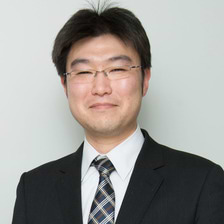
Kazuyuki Imazato
Ministry of Economy, Trade and Industry
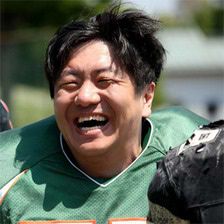
Nishijima Yorichika
Dentsu Inc.
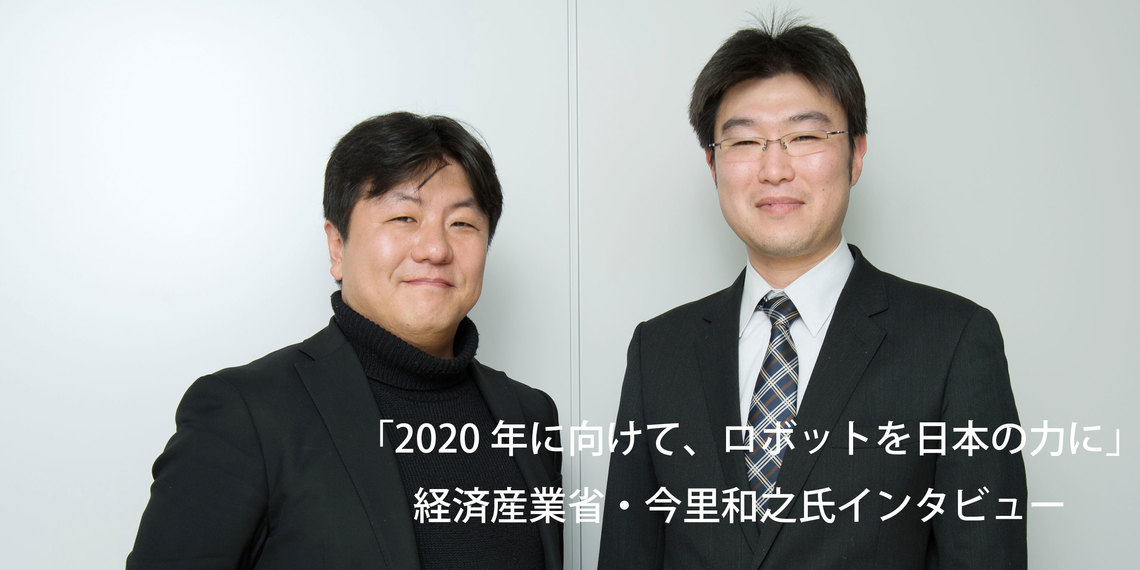
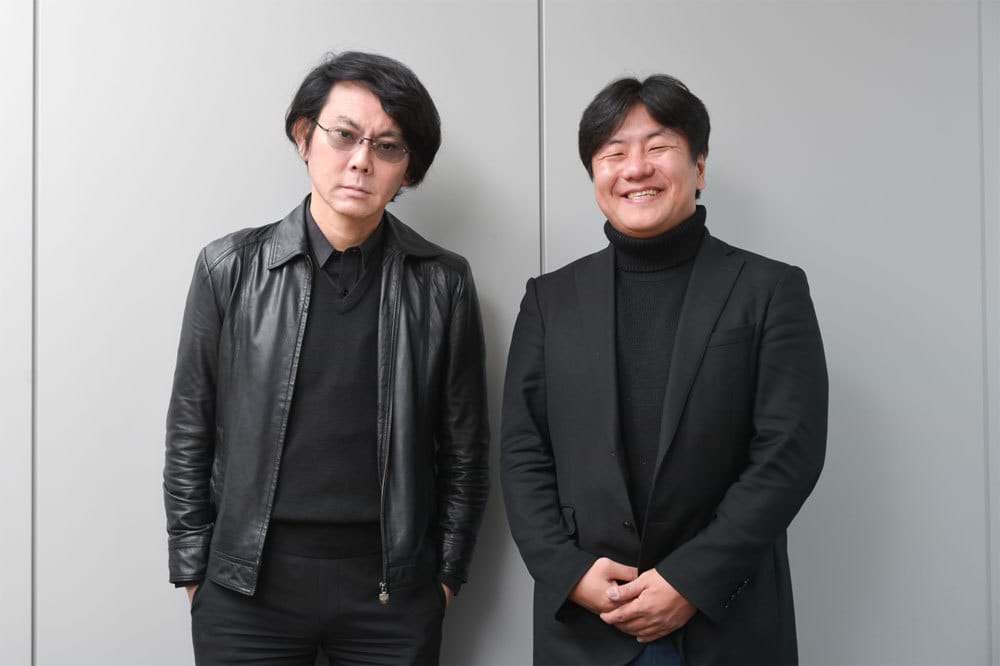
This series, led by Yoriaki Nishijima, head of Dentsu Inc.'s cross-organizational Robot Promotion Center, explores robotics from a business perspective through dialogues with renowned Japanese robot creators and pioneers in robotics-related companies. This installment features Kazuyuki Imazato of the Ministry of Economy, Trade and Industry (METI), who helped compile the government's recently announced "New Robotics Strategy."
A ¥100,000 single-function robot over a ¥10 million high-performance robot
Nishijima: Today, I'd like to ask you about the Ministry of Economy, Trade and Industry's policies for the robotics industry in a way that's easy for the general public to understand. Thank you for your time.
Imazato: Thank you.
Nishijima: When thinking about robots closely integrated into daily life, areas like nursing care, medical support, household assistance, and communication come to mind. Are there specific criteria the Ministry of Economy, Trade and Industry (METI) promotes for such robots?
Imazato: Regardless of the field, our ministry aims for robots that are "widely used in the field and genuinely contribute to improving work and daily life."
Japan, being technologically advanced, tends to create overly sophisticated products. For example, how many people can actually afford a 10 million yen nursing care robot packed with cutting-edge sensors and motors? Instead, a 100,000 yen power suit that just supports your back during the lifting motion is far more aligned with real-world needs. It's crucial to consider functionality and price that truly work for the field.
Only by creating products that combine practical functionality with an affordable price—reducing not just physical strain but also financial burden—can robots truly integrate into our daily lives. This philosophy is also reflected in the judging criteria for the biennial "Robot Grand Prix" (*1) hosted by the Ministry of Economy, Trade and Industry.
※1 Hosted by the Ministry of Economy, Trade and Industry and the Japan Machinery Federation. Since its establishment in 2006, it has selected and honored robots with high potential and contribution to future market creation.
Nishijima: So this concept has even become part of the judging criteria.
Imazato: Yes. The Robot Awards have five categories, including industrial robots, service robots, and software. In every category, they emphasize not just technical prowess, but also social necessity and evaluation from the user's perspective. Convenience, design, and maintenance costs are also explicitly stated. Looking at past award-winning works, I think you can sense that this philosophy is fundamental. However, I feel there's a challenge in that we need to communicate more clearly what kind of future METI is aiming for through promoting the robotics industry.
Market Forecast for the Robot Industry
Nishijima: Next, I'd like to ask about the future market for the robotics industry. The FY2010 Future Market Survey for the Robotics Industry projected that the current domestic market size of approximately ¥900 billion would grow to about ¥9.7 trillion by 2035, roughly a tenfold increase. Furthermore, while robots in the business context have primarily been "industrial robots" in the manufacturing sector, it is projected that by 2025, "robots active in living spaces" – referred to as the service sector – will overtake them in market share. Could you share your thoughts on this point?
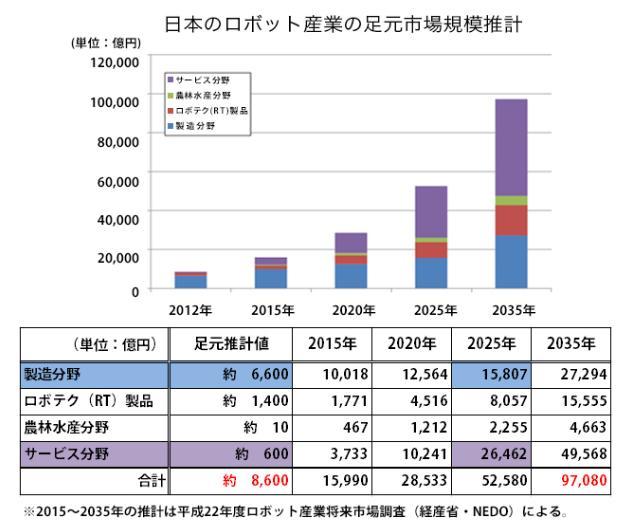
Imazato: By 2020, growth is projected to be double in the manufacturing sector and approximately twentyfold in the service sector. First, regarding manufacturing: Japan currently has the world's largest number of robots deployed. However, this doesn't mean every line in, say, an automobile factory is fully automated; many tasks are still handled manually. Furthermore, in the so-called "three industries" of food, cosmetics, and pharmaceuticals, tasks like packing lunch boxes have traditionally relied heavily on manual labor. Introducing multifunctional robots capable of handling multiple processes in these high-potential areas promises significant growth.
Nishijima: I see. So there's potential for expansion both in industries where robots have been used traditionally and in those where they haven't.
Imazato: Yes, that's correct. Regarding the service sector, while household appliances like cleaning robots that assist with chores are generally more familiar, I believe there is also great potential for robotization in the back-office operations of service industries. At the long-established ryokan "Kagaya," they've implemented a system where transport robots automatically carry dishes from the kitchen to the serving area. This wasn't just for efficiency; it was designed so staff could focus more on the human interaction aspects of service. In the early days of service robots, this novelty aspect was emphasized, but the crucial point is not that robots replace human jobs. Rather, by enabling humans and robots to coexist, we can deepen the quality of service beyond what was previously possible.
Nishijima: That's a very interesting point. So, it's crucial to explore ways for humans and robots to coexist in the service sector, enabling humans to focus more on tasks only humans can do.
Imazato: I believe opportunities exist across all service sectors. To capitalize on these opportunities, I think it's unwise to lump everything together under the generic term "robot." For example, self-driving robotic vehicles, delivery drones, and robotic vacuum cleaners all serve different purposes and carry vastly different risks. Furthermore, the social systems into which these robots will be introduced are also distinct; most were created without anticipating the existence of robots. We need to develop systems for coexisting with robots going forward. Crucially, this shouldn't involve blind regulation, but rather establishing necessary rules to ensure safe usage. If a major accident occurs in the current state of complete freedom, public opinion could swing toward rejecting robots. However, adopting a negative mindset of "this is forbidden, that is forbidden" is also problematic. Building a foundation based on the fundamental question of "how can we foster the development of a society coexisting with robots?" is crucial.
International Safety Standard for Robots Achieved Through Japan's Proposal
Nishijima: Last February, the international standard "ISO 13482" for the safety of assistive robots was published based on Japan's proposal, making headlines. So, were there no unified international rules for assistive robots before that?
Imazato: That's right. It's surprising, isn't it?
Nishijima: I understand NEDO (New Energy and Industrial Technology Development Organization) proposed the issuance, with backing from the Ministry of Economy, Trade and Industry.
Imazato: Yes. Immediately after issuance, Japan saw the first and second cases of certification (※2), and subsequent cases also came from Japan (※3), so we felt we were making headway.
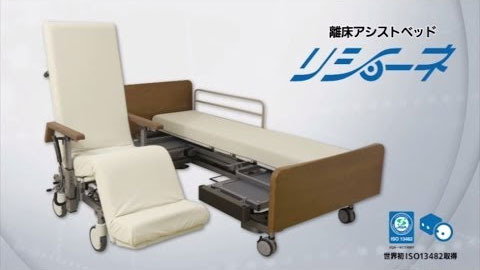
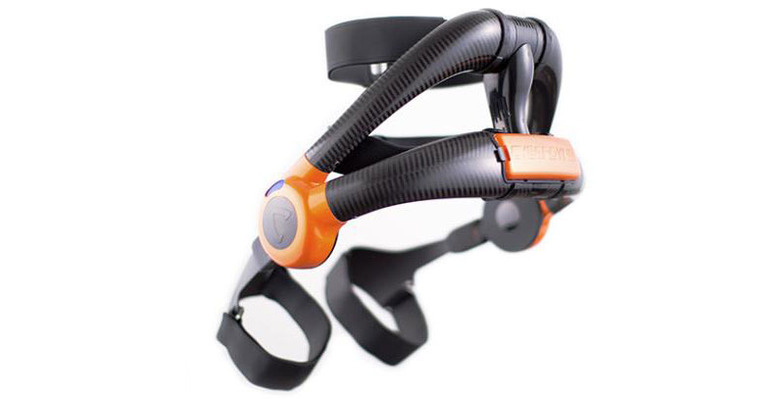
Nishijima: Please tell us why Japan took the lead in proposing the standardization.
Imazato: As robots become part of everyday life for ordinary people, stricter safety management becomes essential. Furthermore, discussions with private companies revealed that without unified rules, they cannot undertake major challenges. While cleaning robots are symbolic, I believe this is precisely why Japan, despite its technological expertise, has not led the way in integrating robots into daily life.
Therefore, in collaboration with NEDO, we worked on proposing standards to support the penetration of robots into daily life and to encourage research and development by Japanese companies.
Nishijima: Given the recent string of ISO certifications from Japan, it seems to be working as intended, bolstering Japanese companies' challenges.
Imazato: I certainly hope so. In the actual ISO proposals, the perspectives of Japanese companies and the vast amount of data accumulated over time proved extremely valuable. I believe Japan made significant contributions to the fundamental concepts and framework development of the standards. It really reinforced my sense that Japan stands head and shoulders above others in terms of practical examples of robots used in real-life settings.
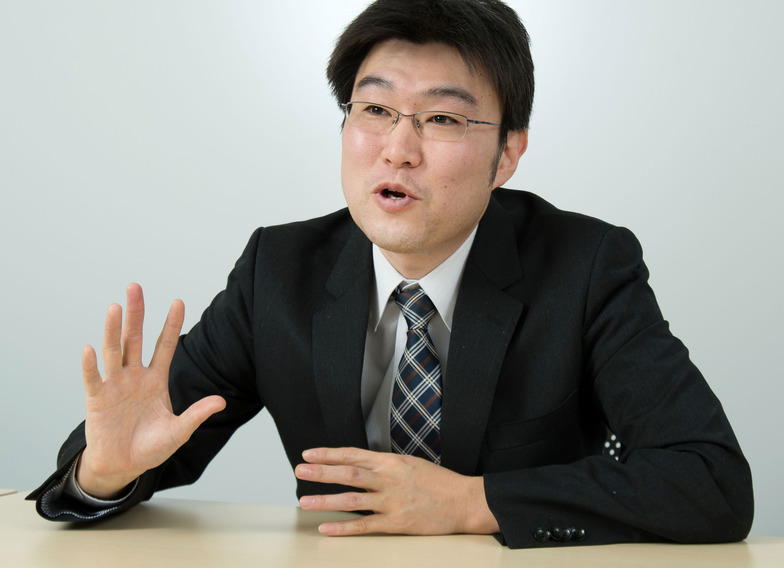
In the second part, we continue our conversation with Mr. Imazato from the Ministry of Economy, Trade and Industry. We will hear about robot development and utilization within Japan, including the "Robot Revolution Realization Conference" chaired by Prime Minister Abe.
Was this article helpful?
Share this article


Newsletter registration is here
We select and publish important news every day
For inquiries about this article
Back Numbers
Author
Kazuyuki Imazato
Ministry of Economy, Trade and Industry
Nishijima Yorichika
Dentsu Inc.
Business D&A Bureau