Note: This website was automatically translated, so some terms or nuances may not be completely accurate.
 Brand Talks [6/6]
The Future of B2B Marketing: LinkedIn's Global Solutions Frontline (Part 2)

Bryan Burdick

Keisuke Konishi
Dentsu Inc.
LinkedIn, a business-focused social networking service, leverages its global user base of 380 million to provide robust support for international B2B marketing. Continuing from Part 1, Brian Burdick, who oversees the B2B division of LinkedIn's advertising business, and Keisuke Konishi of Dentsu Inc. discussed the theme "The Future of B2B Marketing."
Become a powerhouse before getting dragged into a dogfight
Konishi:Last time, we discussed five trends in B2B marketing: prioritizing relevance on mobile, innovating user experiences through data, evolving nurturing with technology, improving prediction accuracy, and the convergence of ad tech and marketing technology.
I also assist various B2B companies with branding and marketing. Often, corporate communication activities targeting a broad range of stakeholders tend to be disconnected from specialized product marketing and sales activities focused on specific targets. What I find highly effective is how leveraging audience data to deliver ads and content to identifiable targets is enabling a consistent flow from branding to actual sales.
Brian: Thank you. One thing I can say is that this kind of integrated approach will likely become mainstream going forward. At the very least, I believe the number of marketers tackling the full funnel approach (see diagram below)—starting with brand and product awareness and ending with conversion—is rapidly increasing due to the evolution of digital marketing.
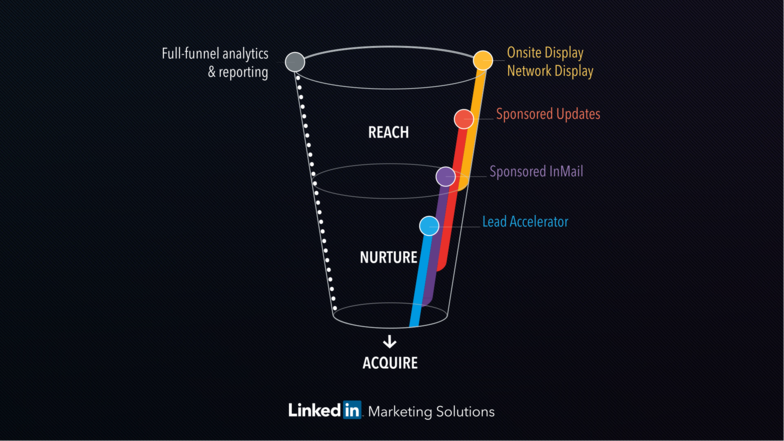
Konishi: It's especially important to move beyond the previous focus solely on lead generation. We need a broader, more precise approach to develop potential customers and nurture them through ongoing communication.
Brian: Exactly. Honestly, focusing solely on maximizing conversions at the bottom of the funnel might yield short-term results, but long-term efficiency and effectiveness decline, making it unsustainable.
That's because the bottom funnel is where the so-called "dog fight" with competitors happens—a messy battle. Perhaps because results are easier to see here, marketers tend to invest heavily in this stage. But fundamentally, we should position ourselves as the most compelling player before users even reach the decision-making stage.
Konishi: In today's B2B purchasing process, where information access and comparison are easy via the internet, we often hear that 80-90% of corporate buyers have already decided on the product they will purchase before the sales meeting. This means that efforts to position your company as a strong contender through content marketing—such as providing valuable information to potential customers—become even more critical before that stage.
Brian: Exactly! Multiple studies show business buyers have largely made up their minds before meeting a salesperson. That's precisely why reaching out to potential customers is crucial.
Investing in the mid-funnel and upper funnel to enhance your company's presence is key. The ideal scenario is to carefully approach prospects from the awareness stage, deepen their understanding of your company and products, and build a relationship that's nearly ready to convert by the final stage. The importance of the information marketers communicate before the sales rep meeting has grown significantly. As Mr. Konishi pointed out, content marketing is now an indispensable practice in B2B as well.

Furthermore, it's said that users who ultimately convert have viewed an average of 10 pieces of content beforehand. It's wise to consider this customer journey as well. Of course, it's not just about producing 10 pieces; there should be optimal learning at each stage of the process. Additionally, approaches aligned with the perspective of "how should purchasing decisions be made?" are also effective.
The "Economic Graph" that maps business connections
Konishi: I see. Considering the use of LinkedIn's audience data, I feel there's significant potential in being able to deliver content built this way to users who voluntarily register, targeting live data that's constantly updated. This is fundamentally different from lists of prospects acquired at a specific point, like during an event, whose value diminishes over time.
I also found it fascinating to hear about LinkedIn's concept of the "Economic Graph," which visualizes users' business connections. Compared to concepts like the "Social Graph" representing social connections or the "Interest Graph" visualizing people's interests, visualizing economic connections makes it easier to identify where further opportunities lie.
Brian: The strength of our live data is indeed a key advantage. Beyond individual user networks, we visualize connections across company domains, educational institutions, and more. The data we hold globally—about companies, job roles, alma maters—is incredibly powerful. Analyzing this in detail will undoubtedly help uncover the next opportunities.
We acquired the online video learning site "Lynda.com." Information like who is learning what on this platform is also a crucial element within the Economic Graph. As various economic dynamics unfold, we can identify industries poised for future growth and potentially integrate courses in those fields into university curricula.
Konishi: That's a very interesting application of the Economic Graph. Through such data, we might expect contributions beyond just existing businesses—perhaps even social and economic ones.
Brian: The more data we have, the more robust this Economic Graph becomes, bringing us closer to realizing our vision introduced earlier: "creating economic opportunity for professionals worldwide." While creating economic opportunity isn't as simple as it sounds, I'm confident LinkedIn can achieve this growth and contribution.
Konishi: I also find it fascinating that business leaders and professionals can make visible, personal communications globally through social media. In today's world of information overload, where corporate communications like press releases often struggle to reach audiences, there's a growing trend of individuals within companies—like CEOs—leveraging blogs and social media for personal branding. Could you share insights on these trends and initiatives?
Brian: Yes. I see two main trends in information sharing. One is communication through blog posts by corporate executives like CEOs. Our company launched an invitation-only "Influencer Program" two years ago, and currently has about 500 global influencers sharing their opinions. For instance, blogs by Angela Ahrendts (who moved from Burberry to Apple), Arianna Huffington (founder of The Huffington Post), and Jack Welch (former leader of General Electric) are highly popular information sources for business leaders.
Another method is communication through employees. Companies such as IBM encourage individuals to share information about their areas of expertise as professionals through blogs and updates. Furthermore, our LinkedIn Elevate app allows companies to encourage their employees to post and share articles on topics such as the green economy and the Internet of Things (IoT) when they want to take a leadership role in new fields. This enables companies to leverage their employees for effective corporate branding.
What are LinkedIn's future strategies and possibilities?
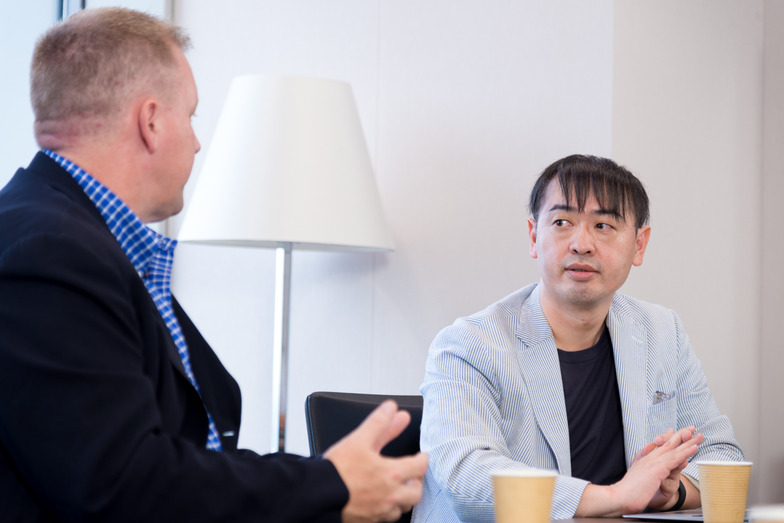
Konishi: Finally, I'd like to ask you a little about your future vision for the LinkedIn platform. Personally, I believe there are tremendous opportunities in LinkedIn's unique network connecting professionals on a global scale. This includes some of my own imagination, but for example, by forming communities of professionals across various industries, we could create a platform that provides specific expertise and supports individual professionals' businesses and collaborations. Or, in the spirit of open innovation (where companies and organizations combine technologies and ideas from external professionals, entrepreneurs, etc., beyond their own resources to drive innovation), companies could form partnerships with external experts to engage in co-creation.
Brian: I see, that's a very interesting idea. In that sense, there's actually a pilot project called "Pro Finder" currently underway in Silicon Valley. It aligns closely with the idea of providing specific capabilities. For instance, it aims to create opportunities to find people with specialized expertise or skills, like in law, and to facilitate the sharing of those skills. We believe the platform from the learning site "Lynda.com," which we discussed earlier, could also be leveraged here.
Konishi: So it's already being tested. Looking at it as a "platform that integrates business communication touchpoints," there also seems to be a significant opportunity to expand systems and services that enable seamless approaches—using LinkedIn IDs as virtual business cards—not just online but also at offline events.
Brian: Indeed, since customer contact points are currently scattered, efforts to connect the dots will emerge going forward, and we must provide this as well. We need initiatives that leverage data to holistically view all touchpoints, deliver desirable information, and ensure a consistent impression.
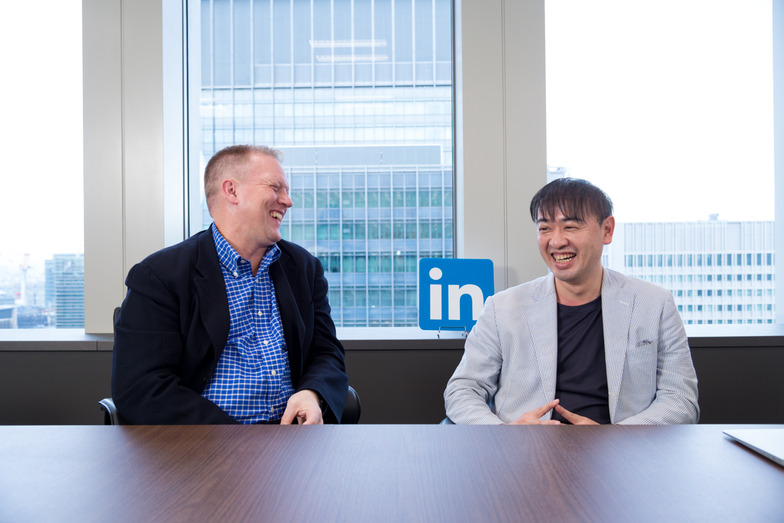
Konishi: Finally, what are your future initiatives for the Japanese market? While lifetime employment practices remain deeply ingrained in Japan, recent globalization and drastic changes in the business environment are gradually shifting perceptions around contractual relationships between companies and employees, as well as career attitudes. I believe platforms like LinkedIn, which support autonomous career development and connections as professionals beyond organizational boundaries, will play an increasingly important role. On the other hand, there are also misconceptions about LinkedIn being primarily a job-hunting site. I feel it would be beneficial for companies to recognize its value in global B2B marketing, as you highlighted in your presentation.
Brian: That's right. Several forward-thinking Japanese companies are already leveraging our platform for marketing and beginning to see results. We want Japanese brand companies to understand the unique potential of LinkedIn's global marketing solutions.
Konishi: Thank you for sharing such valuable insights today.
Was this article helpful?
Share this article


Newsletter registration is here
We select and publish important news every day
For inquiries about this article
Back Numbers

Author
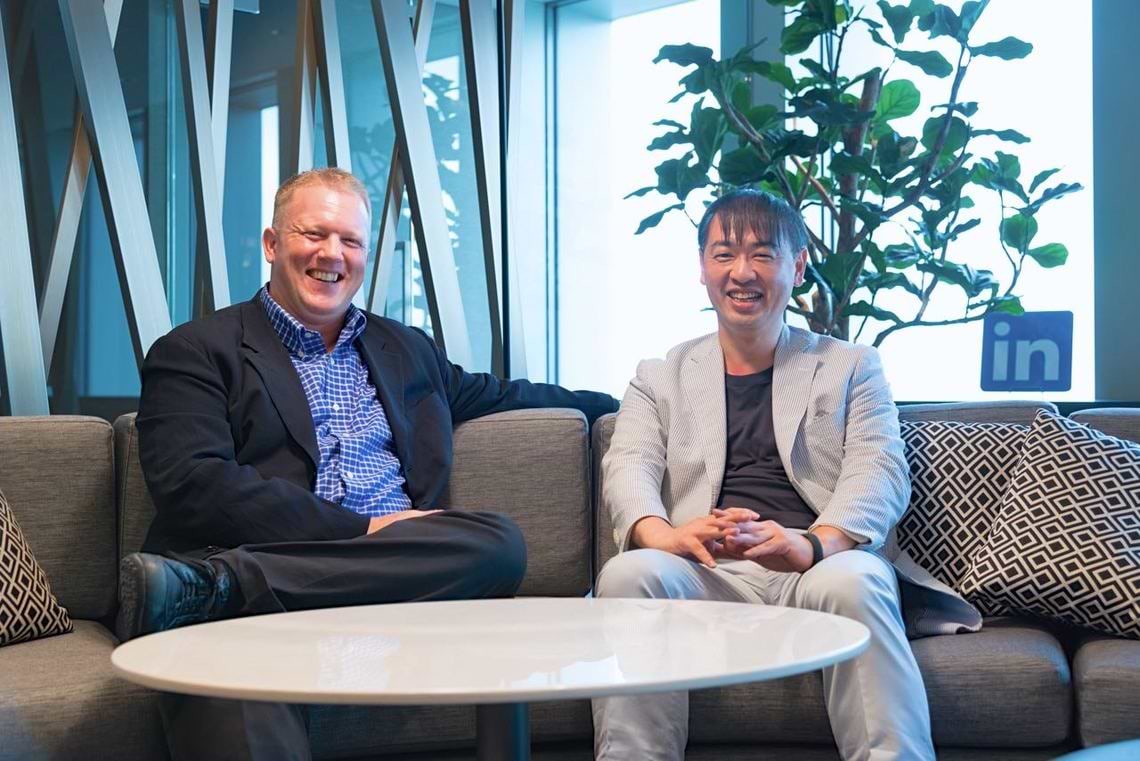
Bryan Burdick
Marketing Solutions
Global B2B Division Head
Keisuke Konishi
Dentsu Inc.
Solution Development Center
Senior Solutions Director