
Note: This website was automatically translated, so some terms or nuances may not be completely accurate.
 The schemer plots three times [13/13]
Let's do good work! Let's move beyond that.

Satoshi Umeda
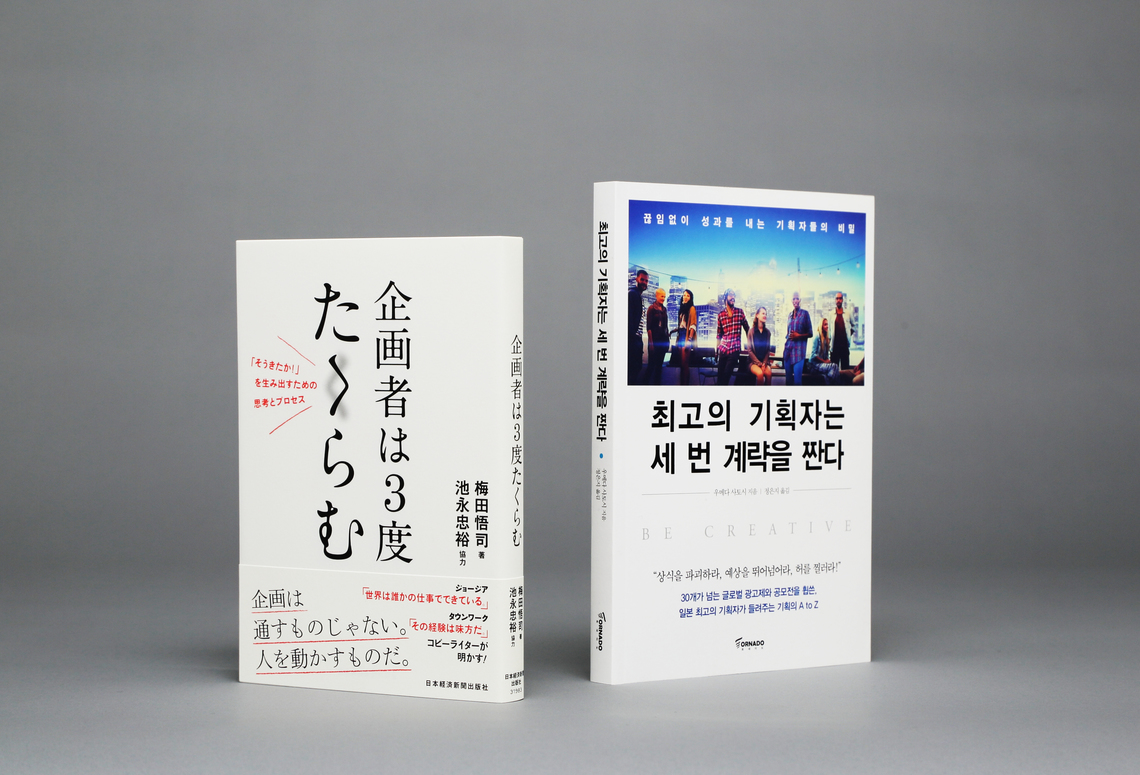
In February 2015, Nikkei Publishing released his book " Planners Plot Three Times." Then, about a year later in January of this year, a Korean translation was published by major publisher Tornade Publishing. Be sure to also read the first part of this column, "Nothing Matters Except the Fundamentals."
To use the present era as a stepping stone
We constantly work to improve society. As planners, our foremost duty is to think deeply about each project or challenge we're given, striving to produce what we believe is the best possible output.
However, what I've been thinking about recently is the need to systematize and share a way of thinking that enables everyone to produce work of a certain standard or higher, rather than just doing good work for my own team or the specific clients I'm currently working with.
In the consulting industry, frameworks developed by firms like Boston Consulting Group and McKinsey have become widely recognized knowledge, accessible not only within those companies but also to many business professionals, including competitors.
What's important to note here is that these frameworks alone don't provide the answers. However, they are extremely useful for correctly classifying the vast, often overwhelming amount of information where you don't even know where to start, and for determining what steps to take first. If we divide things into fundamentals and application, the frameworks are the fundamentals, and the stage of arriving at the answers beyond that is the application.
The number of tasks one person can handle is limited. That's precisely why I believe it's crucial to leave behind the secret planning skills we've acquired as "foundational knowledge anyone can replicate." Doing so ensures the next generation can reliably build upon our work and move forward. I even feel this is the responsibility of those living in this era.
"Let's move beyond 'Let's do good work!'"
This has become my recent mantra. The secret techniques I mentioned earlier exist within everyone. If you have the courage and perseverance to shape that elusive, hard-to-systematize "lump," you can make the future—often described as bleak—a little brighter. Anyone can do this. No special abilities or qualifications are needed, and you can start right now. This is the sole reason I write books and submit papers.
Just as important as a new job
Working with young employees in their twenties, I often hear about their work-related struggles. And I notice that what they're desperately grappling with is similar to what I've experienced myself.
In those moments, how should I, as a senior colleague, respond?
In most cases, I'd probably say something like, "I went through that too," and share my own experiences. I believe this kind of communication provides significant emotional support. However, I feel this approach is merely symptomatic treatment and might be insufficient.
History undoubtedly repeats itself. Just as I was once advised with "I went through that too," I now advise juniors with "I went through that too." When facing similar struggles across three generations—senior, myself, junior—shouldn't we predict that "the same struggles will likely repeat in the future"? This, I believe, is the true challenge to solve.
Working for a company, we are expected to increase sales. As someone who supports the organization they belong to and receives a salary, this is only natural. However, if we adopt the perspective of "how can I contribute to the company and society?", I believe that systematizing the experience I have cultivated and leaving it as wisdom for future generations I may never meet is also a significant contribution.
Of course, giving your all to your current work is paramount. With that as the foundation, I want to systematize the work I've done so far just as much as I want to create new work. This isn't about what's commonly called leadership, management, or personnel training; it's the result of asking, "What truly benefits society and people?"
Pursuing new endeavors is exciting in itself. Achieving implementation brings satisfaction, and beyond financial gain, it may yield recognition and reputation. In contrast, the work of reviewing past cases and systematizing them feels remarkably mundane, unremarkable, and seemingly incapable of generating significant profit.
However, if enabling everyone to generate a certain level of planning becomes a strength for companies, industries, and ultimately the nation, then that process itself must be crucial.
Each person's time is limited. How much of that time should be allocated to what activities? If even one more person considers incorporating the systematization of their own experiences into that allocation, I believe organizations will not only become stronger, but individuals will also feel a deeper sense of purpose in their work.
If you haven't yet read this book or the columns serialized in Dentsu Inc. News, I would be delighted if you took this opportunity to do so. While you shouldn't expect your planning skills to dramatically improve overnight, I believe it will help you acquire planning skills that will last a lifetime.
Was this article helpful?
Share this article


Newsletter registration is here
We select and publish important news every day
For inquiries about this article
Back Numbers
Author