Note: This website was automatically translated, so some terms or nuances may not be completely accurate.
 Working at the British company we acquired [1/5]
London Correspondence: Perspectives on Time ~LIFE~
In March 2013, Dentsu Inc. acquired Aegis in the UK and launched Dentsu Aegis Network (DAN) as its overseas business network. Since that time, I have been involved in various projects aimed at creating business synergies between Aegis and Dentsu Inc. post-acquisition. Then, approximately one year ago, in April 2015, I was stationed in London. Since then, I have worked locally as the "point of contact" between Dentsu Inc. and DAN.
Although I had interactions with DAN both large and small immediately after the acquisition, coming to London and working face-to-face with DAN colleagues provided me with many eye-opening experiences. I anticipate that acquisitions of overseas companies by Japanese firms, particularly European and American companies, will continue to increase. I hope to share my insights, the differences I've observed compared to Japan, and points that could be applied back in Japan, in the hope that they might be helpful to those dispatched to such acquired companies.
Efficient Time Management
The first thing I asked my colleague upon arriving in London was, "So, what are the working hours?" (For reference, Dentsu Inc. headquarters is 9:30 AM to 5:30 PM). His response was, "Hmm, officially it's 9:00 AM to 5:30 PM, but I don't think you need to worry too much about it." As time passed, I gradually came to understand the meaning behind his "officially". The start and end times are quite flexible to begin with. Start times vary significantly between people due to individual family circumstances (like dropping kids off at daycare), and this is fully understood and shared within teams, so it doesn't cause inconvenience or awkward emotional conflicts.
As for finishing work, on weekdays, many staff start leaving right at the 5:30 p.m. chime (though it doesn't actually ring), which feels like a big difference from Dentsu Inc. Back in Japan, I used to think, "Well, Western staff don't do overtime," with a somewhat critical view. But it's true—they absolutely avoid unnecessary overtime. It's not exactly a trade-off, but the way they use the time from 9:00 a.m. to 5:30 p.m. is incredibly efficient and effective. Meeting times are scheduled in 30-minute increments, sometimes even 15-minute slots (whereas in Japan, one-hour blocks were standard). The mindset is that rather than taking a leisurely lunch break, it's better to grab a sandwich quickly and finish work sooner.
Furthermore, there is immense respect among all staff, regardless of seniority, for the time allocated to meetings. Once a meeting is requested, the focus shifts entirely to maximizing the effectiveness of that allocated time, with thorough preparation never neglected. It truly embodies the "Time is money" philosophy. While efforts are made to keep meeting times as short as possible, as mentioned above, the way appointments are confirmed also differs from Dentsu Inc. They are reliably set using the scheduler's meeting invitation function. This might be commonplace in Japan now, but looking back on the days at headquarters when coordinating and confirming meeting schedules was a real hassle, it feels quite efficient. Related to this, I found an article by Haachu-san, an alumna of our company, very interesting to read.
Given we also have conference calls between regions and offices with different time zones, I've come to understand that confirmation via the invitation feature is essential to prevent misunderstandings. I haven't experienced a single instance of wasted time like "calling only to find out the other party had the time wrong by an hour" since coming here.
Life comes first, no matter what!
As I mentioned earlier, people here don't usually work overtime. In fact, on Friday afternoons—or "half-days" instead of "flower days"—especially on nice weather days, the pub on the first floor of the office is packed with people. That said, before important competitive presentations, working late into the night (or early morning) is unavoidable, and we come in on weekends if necessary. But they view this as an "emergency measure only when absolutely unavoidable." Everyone works efficiently with the mindset of "let's finish the work within regular hours without overtime." I think this stems from the fact that "life" comes first above all else, and everyone respects each other's personal lives.
On the other hand, I also think it's true that Dentsu Inc.'s style of working with "breathing room" – where we engage in idle chatter and such – has actually given birth to Dentsu Inc.-style innovation from that very breathing room. Personally, I really like that approach. Rather than deciding which is definitively better, it would be good if we could learn from each other. And so, Friday arrives again this week. I'll use the greeting "Have a good weekend!" – one I never used in Japan (and initially felt embarrassed to use) – to wish everyone a blessed weekend with their families and two days free from work.

The Benefits of Vacation
As you likely know, taking proper vacations is standard practice not just in the UK but across Western Europe and America. Here, I've been struck anew by just how frequent they are. Beyond the two-week summer break from July to August and the Christmas holiday, there are two annual Half Term breaks (in May and November during the school term). People also often take time off around Easter, stringing together three-day weekends. I'd guess they use up about 25 days of paid leave annually.
Naturally, they coordinate with clients and business partners beforehand to secure approval for their time off, and team members handle follow-ups during their absence. Vacation is seen as essential for living a "human life" and for the mental rest needed to do better work. The kind of awkwardness I used to feel in Japan upon returning from vacation is completely absent here—and unnecessary.
That said, while taking a two-week vacation, you might wonder if you're truly "off." The answer is "it depends on the person." Especially at the executive level, it seems common to regularly check mobile emails and issue instructions via messages. My boss is jokingly told that "no matter where in the world he is, he replies to emails within 10 minutes" (and honestly, it really feels like that's the case). The other day, I asked him, "What do you do about emails during vacation?" His answer was, "I check emails when I have free time. Like, on the ski lift, for example." I couldn't help but laugh.
Why take vacations? The reason is simple: to enrich and enjoy life. You recharge on vacation, then work hard, dreaming of the next vacation, and that cycle keeps you motivated at work.
Looking back at Japan, when I joined Dentsu Inc. 22 years ago as a new employee, we barely got weekends plus two days of summer vacation. But at some point, the idea of "taking a long summer vacation" started being promoted. Recently, I feel like more people are taking nine days or even longer, and an atmosphere accepting this has developed. Still, many probably find it hard to take long breaks, or simply can't. As I'll touch on later, Japanese people, who inherently work in teams sharing responsibilities, should theoretically find it easier to take vacations compared to Westerners who define individual accountability more clearly. Of course, this requires client understanding, but institutional support is also crucial—like evaluating managers positively when their subordinates take more vacations. Crucially, it's vital for those on-site managers to actually take vacations themselves and set an example. Personally, I believe refreshing and recharging during vacations is essential to sustain creative proposals without drying them up.
Was this article helpful?
Share this article


Newsletter registration is here
We select and publish important news every day
For inquiries about this article
Author
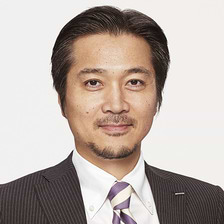
Takashi Koyanagi
Dentsu Inc. Media & Holdings India
Director