
Note: This website was automatically translated, so some terms or nuances may not be completely accurate.
 Urban Neighborhoods and Incubation Development [1/3]
The "Community Spirit" Essential for 21st Century Innovation

Toshiaki Hasamura
Dentsu Inc.
A simple example of neighborhood-based social circles is the student district for students.
When a friend calls you saying, "We're drinking at such-and-such place now, come join us," you head over. There might be close friends who called you, acquaintances you're not that close with, and even students you don't know. People who just happened to be there also join in the fun.
Yet, even those strangers become friends that day, and you make plans to hang out together next time. This is how communities and networks expand. I believe the state where such "hangout spots" – the anchors of these communities – are scattered throughout the city not as isolated points but as a network, functioning effectively, is what we mean by "having a sense of community."
Imagine places like Golden Gai in Shinjuku or around Shimokitazawa.
The unfamiliar term "neighborhood character" is a specialized term used in architecture and real estate. Roughly speaking, a neighborhood with character is one where diverse people—locals and visitors alike—come and go, connect, and form communities.
It's a place with cozy hangouts—often small izakayas or bars run by a "landlord-like owner" rather than chain stores—where people can stroll together, drawn by the pleasant atmosphere, good security, and attractive scenery. It has good transportation access and features benches or open terraces where casual conversation flows easily on the streets...
It's a town that combines diverse elements, fostering an atmosphere where people feel open and comfortable, where it's acceptable to casually strike up a conversation with a stranger. In such a neighborhood, you might find a friendly older gentleman striking up a conversation with you while you're having a drink at a local bar. I often visited places like Golden Gai in Shinjuku or Shimokitazawa during my single days. It's that kind of image, where passing students or young working adults can enjoy chatting with the regulars, the uncles and grandpas.
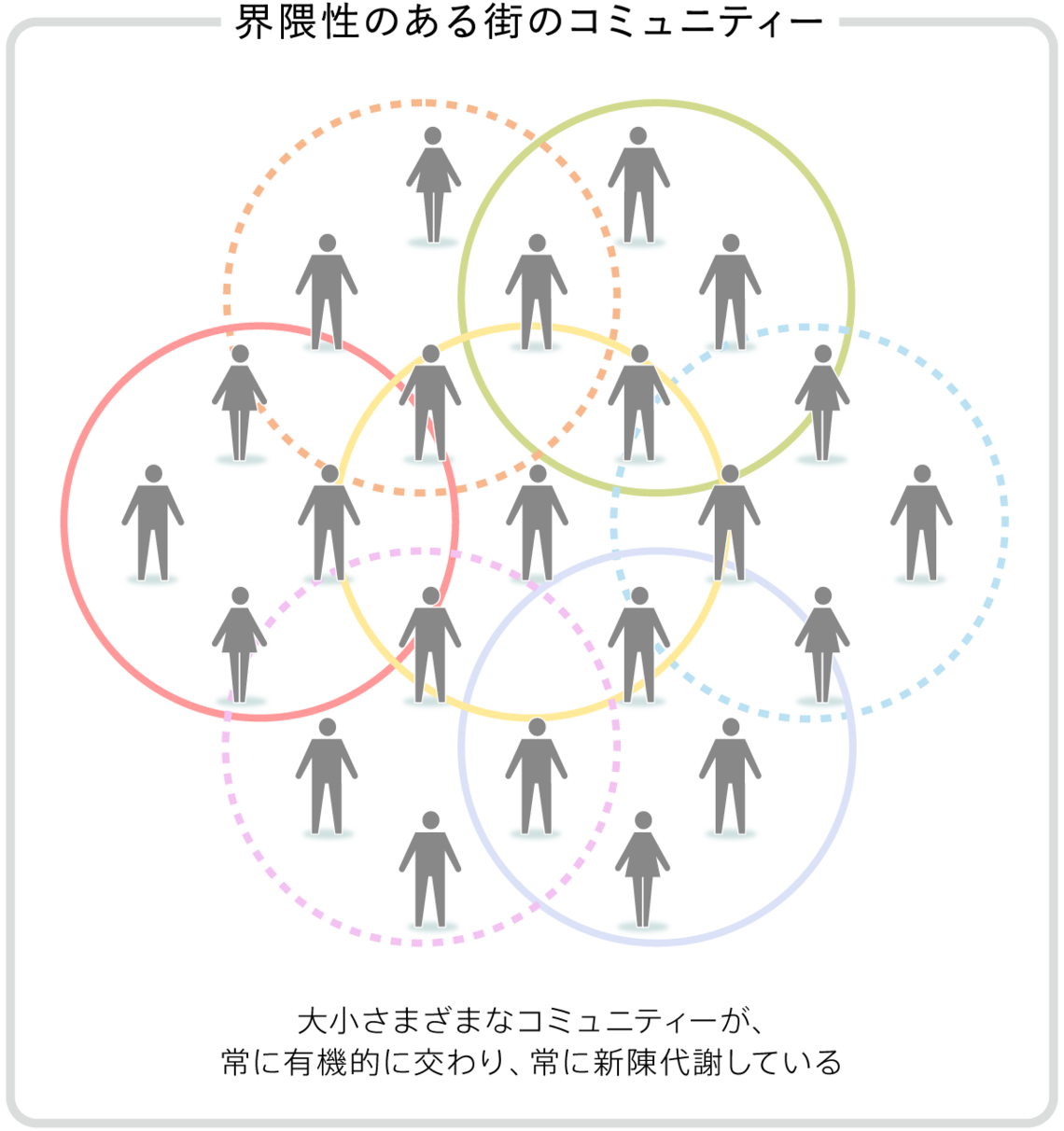
Neighborhood character doesn't emerge from mere chaos and clutter, nor does it easily form in neatly planned, mechanically organized streets that are merely pretty. Neighborhood character is a quality born from two wheels: the physical conditions of the town and the community of people inhabiting it.
Cities that are all the same lose their neighborhood character
An office district where high-rises stand tall and asphalt roads stretch out in neat, grid-like patterns. Men and women in suits hurry past each other, but there is no conversation.
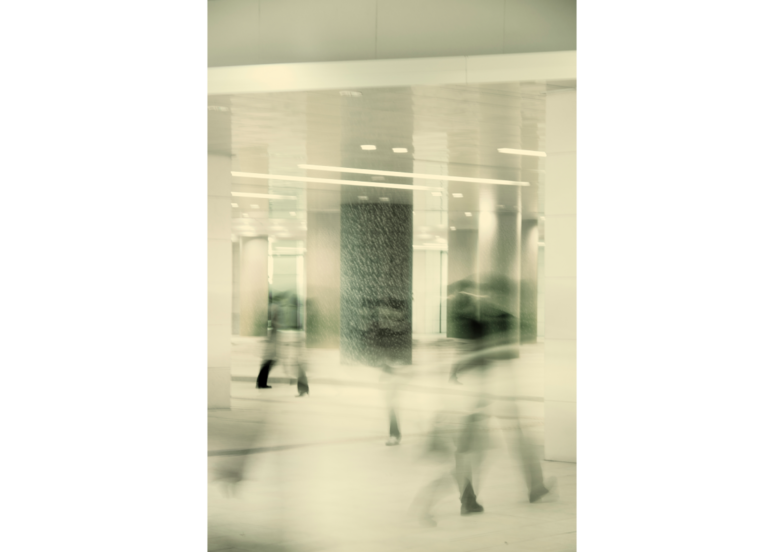
Some commute for about an hour each way, arriving from suburban single-family homes arranged in equally orderly rows. The view from the station entrance shows the familiar signs and neon lights of chain stores found at any station. Weekends and holidays are spent shopping, watching movies, or eating at food courts in station buildings or suburban shopping complexes.
One family might have the father shuttling between his workplace community and home, the mother between her mom friends and part-time workplace community and home, and the children between their school community and home. Each community essentially exists in isolation.
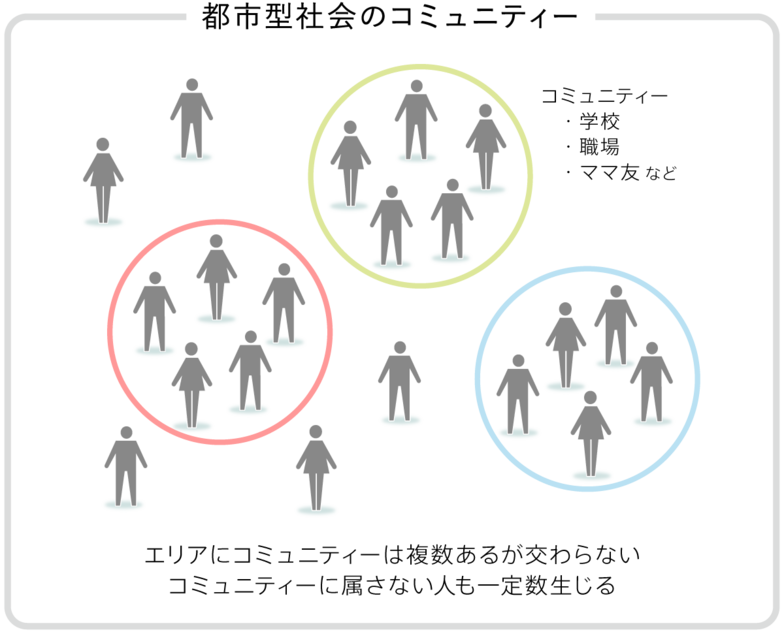
This is a clear example of what I consider a "society that has lost its sense of community." While perhaps a bit extreme, it's the result of nationwide efforts during the period of high economic growth to build a low-cost, functional society.
It's said that even in rural areas, the scenery and streetscapes along national highways become similar nationwide. Pursuing short-term economic rationality and optimizing individual parts inevitably leads to "towns" converging into the style described above, creating what feels like a "Kintaro candy" impression.
The 20th-century values of town planning were "lean" functionalism.
Japan's nationwide push for economically rational, low-cost, functional urban development resulted in the loss of what could be called the "neighborhood character" – the unique identity of towns.
Of course, we should avoid judging the values of the 20th century solely through the lens of today's challenges. During the period of high economic growth, rational, functionalist, and scientific design that eliminated waste was considered cutting-edge and even righteous (the opposite extreme being architecture like the recently renovated JR Tokyo Station building).
Back then, the prevailing value in both manufacturing and urban development was how to rationally produce low-cost, high-quality, high-value-added goods. Prefabricated construction methods and uniform building designs were economically advantageous.
The value of office buildings and rental housing lies in recovering investment and maintenance costs through rent to generate profit. That yield is everything economically. For 20th-century economic rationality, the preservation of a certain chaotic, seemingly irrational neighborhood character – which might appear wasteful at first glance – was considered unnecessary, a high-cost factor that did not contribute to direct rental income.
21st-century urban development hinges on "innovation"
In fact, over the past few years, "neighborhood character" has begun to gain attention.
While 20th-century urban planning values were rationalist and functionalist, eliminating waste, today the most highly valued source of economic value is "innovation." And it is believed that fostering "innovation" requires "neighborhood character."
For example, FINOLAB Inc., the incubation office in Otemachi where I've been involved since its conceptualization and launch, is creating a neighborhood-like ecosystem* for fintech startups. This aims to foster innovation in the finance × technology domain.
*Ecosystem: Multiple companies, people, and resources organically connect beyond boundaries, coexisting and prospering through positive cycles.
The question is how to create entirely new value that lies beyond the extension of existing frameworks. The ability to generate this "innovation" is said to determine success or failure not only for individuals and companies, but also for cities and even nations.
This is because the pace of technological innovation is accelerating daily, while emerging economies are rapidly closing the gap with advanced nations. A global wave of commoditization and hyper-competition engulfs every conceivable product and service. Competing to refine existing value makes differentiation difficult and leads only to exhaustion.
Instead, unless we challenge and claim for ourselves uncharted territories—areas no one has yet noticed or attempted, realms unreachable by extending existing frameworks—we cannot escape this rat race.
Japan once sent various innovations to the world and dominated the market. Countless new products and concepts that didn't exist before, like the Walkman and Cup Noodles... Yet for quite some time now, Japan has been regarded as a country that has become very poor at innovation.
One reason we've lost our status as an innovation-driven nation in just a few decades may be the price we've paid for stripping away a certain irrationality and playfulness—something akin to "local flavor"—from our national, urban, corporate, and perhaps even individual cultures.
So how can we foster innovation? That's for next time.
Was this article helpful?
Share this article


Newsletter registration is here
We select and publish important news every day
For inquiries about this article
Author
Toshiaki Hasamura
Dentsu Inc.
Business Development & Activation Division