Note: This website was automatically translated, so some terms or nuances may not be completely accurate.
 The Serendipity AI Unleashes [2/7]
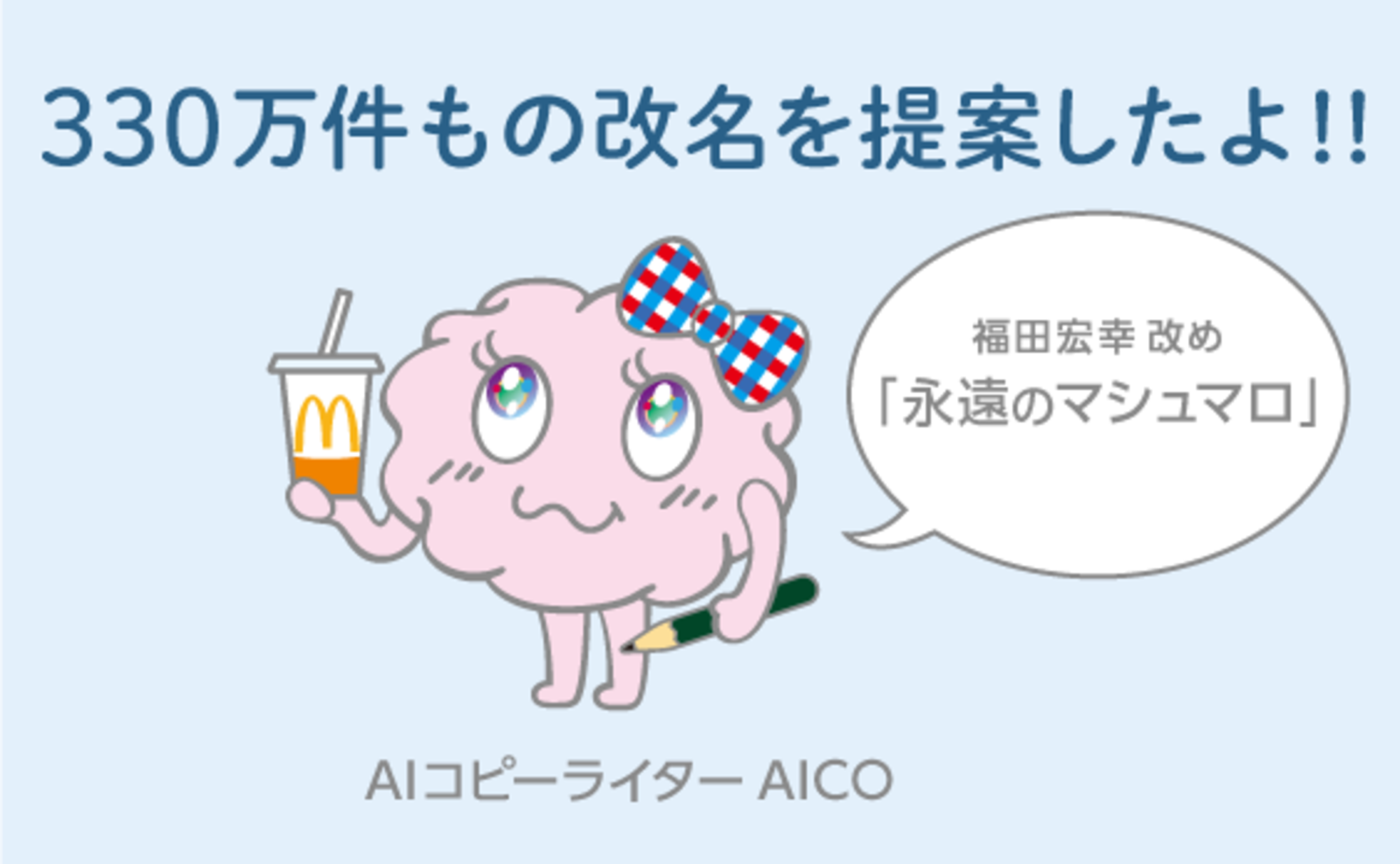
The Work of AI Copywriter AICO
Following last time,we bring you another roundtable discussion with the project members.This time, we talked about the fascinating copy created by AI. Fukuda:Where did we leave off last time?
Tsutsumi:We were talking about how the AI Copywriter Project started in the fall of 2015. Through study sessions and trial and error, it led to things like becoming a finalist in a newspaper ad creative contest, right? ( See Part 1 )
Fukuda:Right. So, while we were considering the next direction, we got a request from the person in charge of Media Services / Newspaper Division within Dentsu Inc.
Tsutsumi:They asked,"For Newspaper Advertising Day,could we create an ad using AI copywriter AICOin the Fuji Sankei Business i?" But...
Fukuda:The October 20th deadline was non-negotiable, and the schedule they gave us was extremely tight, leaving very little time.
Tsutsumi:Still, it was a valuable opportunity, so I consulted with Professor Kano as well.
Kano:We'd been strengthening our algorithms through various trials for the Sendenkaigi Awards, so we decided to shape our current best work.
Tsutsumi:And when we actually looked at the copy that came back, it was full of lines like "Newspaper ads aren't just an expense," and other, shall we say, tone-deaf phrases we can't repeat here.
Buttalking with Daichi Mori, the AD we brought onfor this job, we realized that this "not reading the room" aspect might actually be a strength.
Fukuda:When humans propose something, it might be seen as "rude!" Butwhen it's presented as" 'sAIcame up with this..." people's perception changes.
Tsutsumi:Actually, this time it was approved by the president of Nippon Kogyo Shimbun, which publishes Fuji Sankei Business i.So, the AI-written copy was proposed with human copywriters adding supplementary explanations to clarify the creative intent.

Fukuda:That's an unprecedented collaboration setup.
Tsutsumi:That's right.I got the feeling that in the AI era, the role of copywriters going forward might increasingly involve selecting copy and creating context for it to expand its reach.
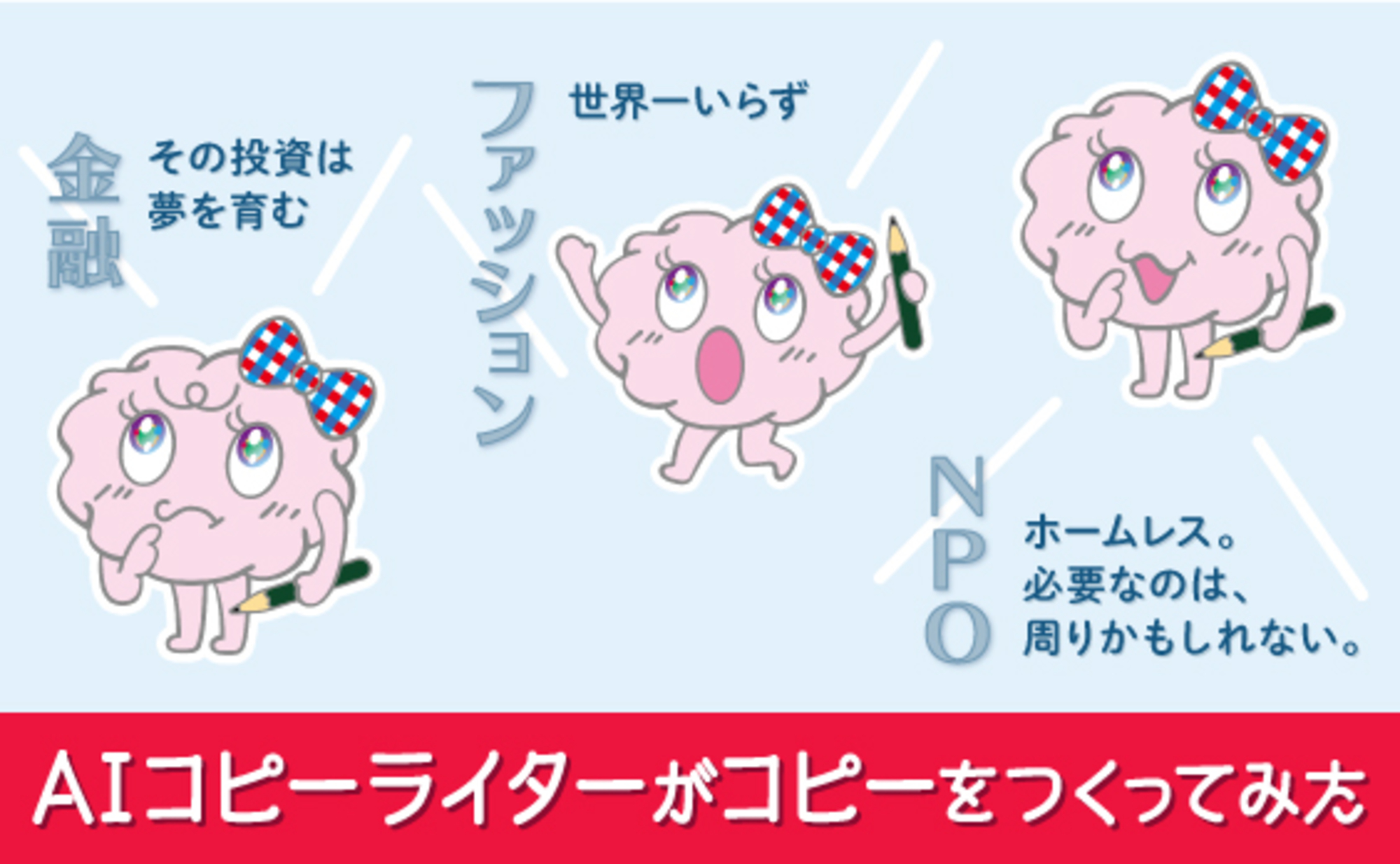
Fukuda:This time,we selected three piecesfrom the large volume of copy written by AICOand presented them.

Tsutsumi:"Newspaper ads aren't an expense." In an environment where many view advertising as a cost, this conveys a valid message: effective advertising should instead be considered a proactive investment.
Fukuda:I think it was just a coincidence, though, because current AI can't grasp meaning to that level (laughs).
Tsutsumi:Speaking of coincidence, coming up with the word "sexy" is also impressive. It's not something you'd easily think of in a normal context. Making this kind of thing more intentional is a challenge for the future.
Fukuda:People often say, "You might get lucky writing copy, but you can't get lucky choosing it." You could even replace "luck" with "new hire."I hope AICO will continue to improve its ability to select copy.
Tsutsumi: As for the copy actually proposed to the president and selected...
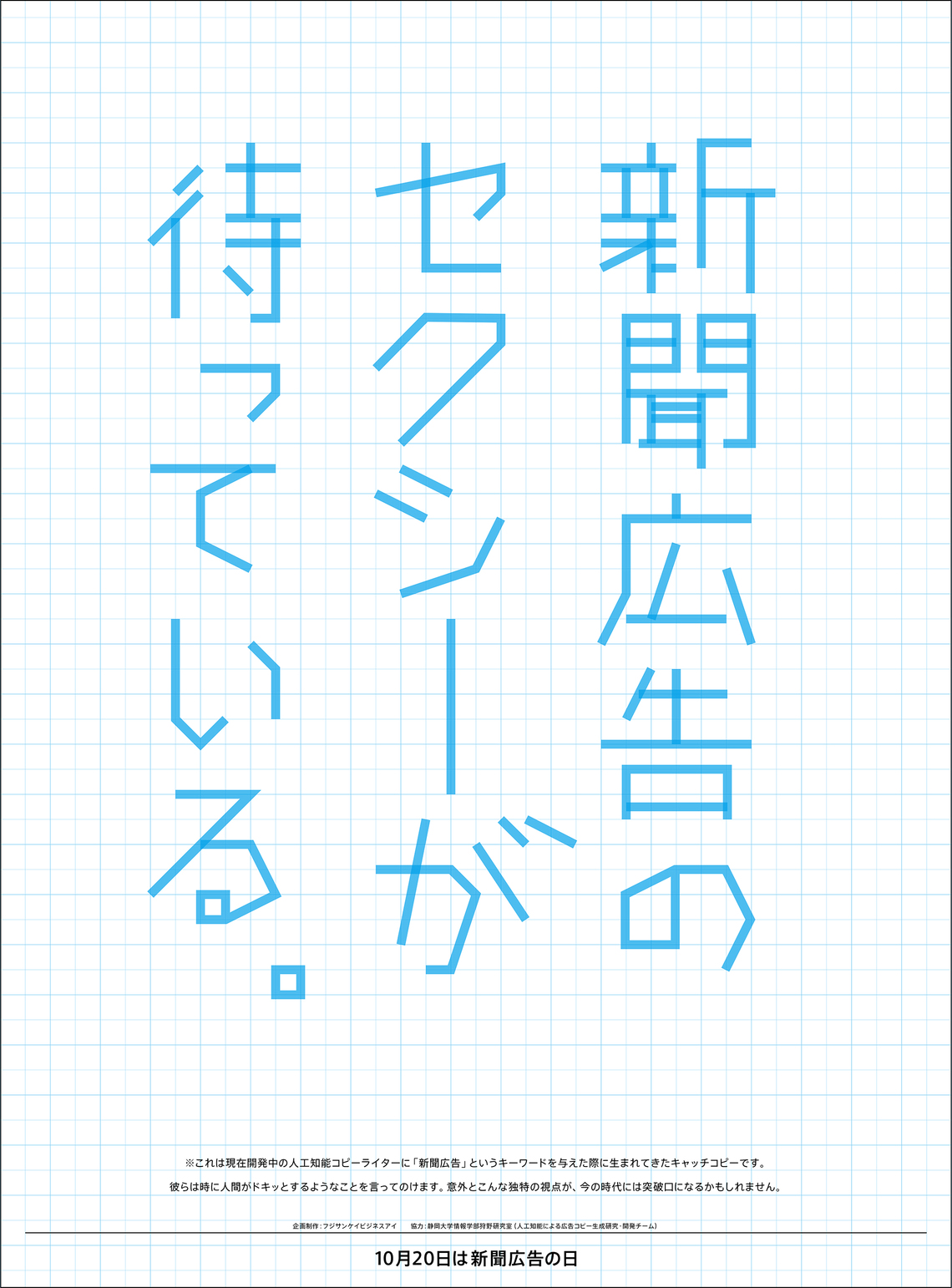
Tsutsumi:...was that one. It conveyed a forward-looking message for the future, and I believe that aspect made it suitable for the Newspaper Advertising Day copy, leading to its selection.
Fukuda:I believethis newspaper copy from last fallwas probably the first instance of an AI-written catchphrase being used in a newspaper ad.
Kano:That's right. I also contributed comments to the article at that time, so I'd like to revisit those here.
We expect AI to automate both "analysis/prediction" and "generation." The latter, generation, is more difficult because there isn't necessarily a single correct answer. It requires "natural language" and "interesting advertising," which can sometimes be conflicting goals. Furthermore, "good advertising" overlays various intentions within a short piece of text. Generating such condensed copy likely requires processing beyond mere mimicry.
Internet ads are inexpensive and easy to personalize, but newspaper ads, meant to be seen by many people, require high quality and a sense of trustworthiness. As research progresses, alongside automated generation, we might uncover elements that make newspaper ads effective – elements previously understood only through professional intuition.
Tsutsumi:Indeed,working with AI opens up new possibilities for those involved in advertising.
Fukuda:Overseas,AI isalreadybeing utilizedin areas like search-linked advertising, andthere are startups that have raised around $30 million in funding. Digital advertising allows for massive amounts of feedback,making it a good fit for AI. We can look forward to future developments.
Tsutsumi:It would be great if it developed beyond advertising too.
Fukuda:Absolutely. Just as human copywriters are expanding their roles into songwriting, screenwriting, service development, consulting, and beyond advertising, it's entirely plausible that AI copywriters will broaden their scope too.
Of course, within advertising and marketing itself, leveraging AIwill enable real-time ad creation tailored to the time, place, and occasion, as well as personalized ads for each individual.
Tsutsumi:Incidentally, from this point onward, we're further developing the project with the cooperation of many people both inside and outside the company to explore various applications.
Fukuda:Indeed, various trials have begun, such as utilizing it in brainstorming sessions with clients and mechanisms combining it with consumer surveys. Furthermore, inspired by this project and study sessions, new projects are also emerging. Andactually,there's talk of progressing the concept ofAICO's colleague,the AI marketer... But more on that in future episodes!
Was this article helpful?
Share this article


Newsletter registration is here
We select and publish important news every day
For inquiries about this article
Back Numbers
Author
Yoshinobu Kano
Shizuoka University
School of Information Science, Department of Behavioral Information Science
Associate Professor, Ph.D. (Information Science and Engineering)
Hiroyuki Fukuda
Dentsu Inc.
Data & Technology Center
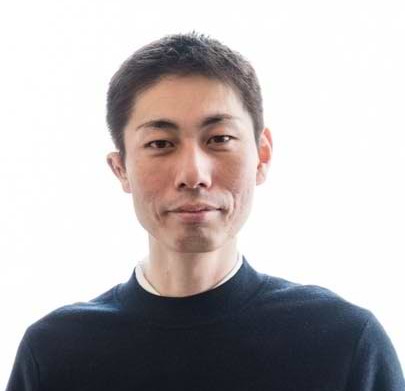
Tsutsumi Fujinari
Dentsu Inc.
First Integrated Solutions Bureau