Note: This website was automatically translated, so some terms or nuances may not be completely accurate.
 【Continued】Local Gurgle [109/208]
The "Meanness" That Moves People's Hearts
Since junior high, I've been a huge fan of actress Yuki Kudo. I've taken the liberty of calling them the "World's Three Great Kudos," and I absolutely adore art directors Maho Kudo and Akiko Kudo. Maho recently left Dentsu Inc. at the end of May.
Looking back, we tackled many challenges together. One rather unique project was the logo mark for the children's program 'Karakuri Samurai Sessha 1' (2011–), broadcast on TV Shizuoka and other networks. Instead of flashy CG battle scenes, it featured a design that was nostalgic and gentle—perfect for this quirky, locally rooted hero story.

This word "gentle." It seems like a keyword everyone loves to use when talking about Maho's work. She herself has such a warm, soft personality, so that impression probably comes through strongly. But is Maho really a "gentle person"?
This time, I've obtained a key to solving that mystery (?). This video was created by her long, long ago. Back then, seeing this made me think, "I want to work with her!"
Watch this, and it becomes crystal clear. What you see is a cool, observant eye. A certain kind of "malice" that seems to toy with people's feelings.
In advertising agencies, we learn a fundamental principle of communication: "Communicating ≠ Getting your message across." For example, if you want an older person standing near a window to open it, what should you say? "Please open the window" might make them think, "Why should I bother moving my hands?" and get them annoyed. Saying "I'm terribly sorry, but..." politely might improve things a bit. A kind person might find "Is the air stuffy in here?" sufficient. "The outside air looks refreshing," was the clever response a senior once taught me.
In any case, simply stating your desire directly—like "I want to buy this," "That looks delicious," or in this case, "Let's open the window"—isn't enough. You must observe the other person (your target), thoroughly consider what genuine reaction might occur, and base your approach on that. To move someone's feelings, you need to factor in the "chemical reaction" that happens there.
It was clear that Maho, who was still a junior employee at the time, had mastered this fundamental principle of communication. Since then, whenever I take on a new challenge, I seek her advice.
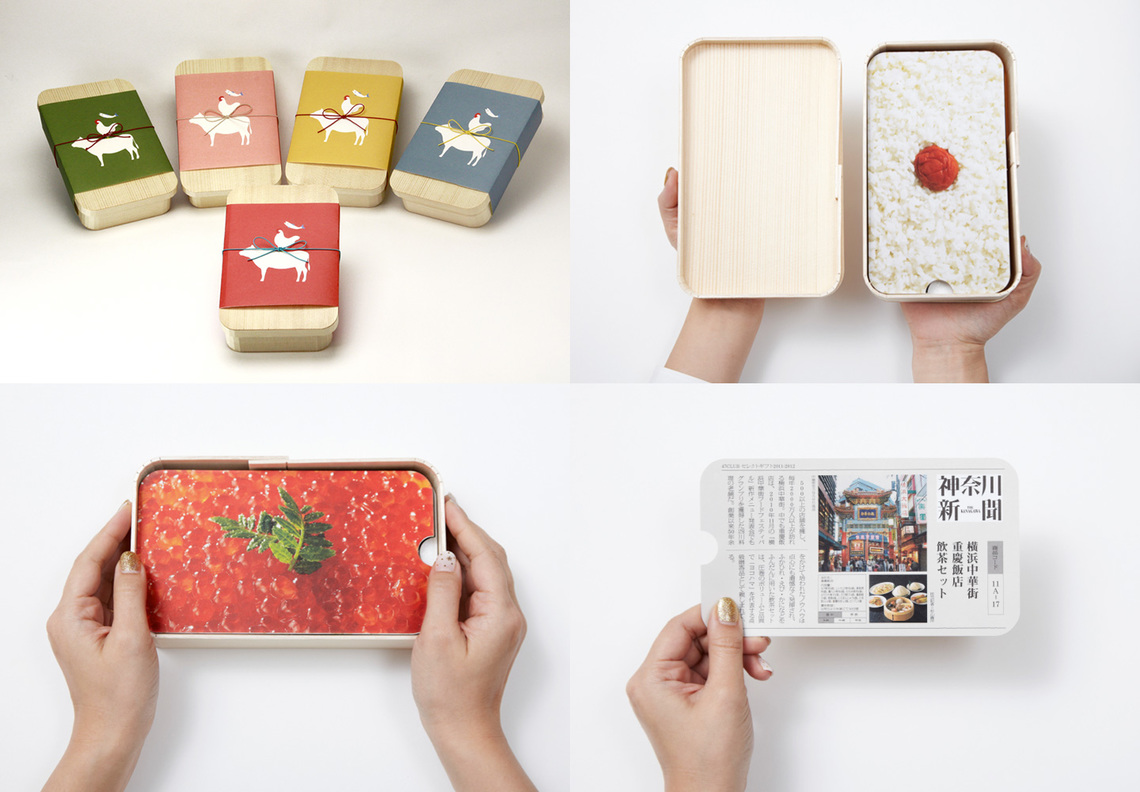
The catalog gift we created together, called "Gift Bento," was a product that truly engaged with "the customer's feelings." I wrote about it in detail before, but the appeal of the product lies in the "surprise" hidden within what appears to be a delicious bento box. This aspect was recognized in several awards, including some overseas.

Oh yes. Not to be forgotten is the cover design for my book, How to Create Concepts. I was a bit troubled by the prank (not mean, right? lol) of secretly hiding my caricature beneath the obi, where it usually wouldn't be seen.

I hear Maho-san will be moving to Germany with her husband and child, a family of three. Graduating from Dentsu Inc. is wonderful news, but honestly, I'll miss her. Still, she plans to continue her design work even in Germany, so we'll definitely work together again someday. Looking forward to that day, I wholeheartedly say, "Have a safe trip!"
Please, help yourself!
Was this article helpful?
Share this article


Newsletter registration is here
We select and publish important news every day
For inquiries about this article
Back Numbers
Author

Sōo Yamada
Dentsu Inc.
First CR Planning Bureau
Creative Director