
Note: This website was automatically translated, so some terms or nuances may not be completely accurate.
 The Past, Present, and Future of Creativity [5/5]
The Future of Creativity? ~Kenji Shiroto Proposes~
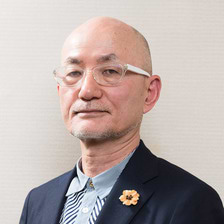
Kenji Shirotsuchi
Thinker, Former Executive Officer at Dentsu Inc.
(Editor's Note: This column is a re-edited version of a lecture given by Mr. Shiroto at Dentsu Inc.'s Creative Planning Division 3 on August 5, 2019.)
We are now losing sight of what creativity truly is.
Over four sessions, we've explored the theme "The Past, Present, and Future of Creativity." In a word, I believe the source of creativity is "imagination
What is "imagination"? You already know, right? It's questioning. It's pondering. It's thinking, conceiving. It's trying, and then realizing.
Meet with people on the production floor. Ask what troubles them. Meet with management. Ask what troubles them. Use your imagination endlessly to understand the other person. Dive into their world. I feel like everyone is running away from doing these things.
That's what I most wanted to convey in this series of columns.
There are countless business success stories, but there's no such thing as a case study guaranteeing 100% success. That's why you meet people from different fields. Read books you've never encountered. And let your imagination run wild.
This might sound a bit extreme, but Dentsu Inc. —or this industry as a whole—is already a lap behind. Perhaps they haven't even noticed. Or maybe they have noticed, but they've lost sight of what to do about it.
Though I've long distanced myself from the so-called advertising production scene (my current title is "Thinker"), I worry about this.
Discerning the essence of things. I believe that's crucial when discussing creativity.
Let me tell you about the office I created when I was a leader at Dentsu Inc. Interactive Solutions Center.
It was a spacious area that included a tatami room. The ping-pong table, which could also serve as a workbench, could be folded up when not in use. The desks could be disassembled and reassembled by the users themselves. It was a free-address system; while notebooks were provided, there were no assigned desks.
In traditional Japanese architecture, it's standard to place the study on the north side. You don't see people working while looking out at the view, do you? If light comes in and reflects off computers, everyone's eyes will suffer. Placing it north means less temperature fluctuation, no light intrusion, and better focus for work.
Such fundamental principles aren't embodied in modern offices. I believe this stems precisely from a lack of imagination.
Combining corporate activities with solving social environmental issues creates opportunities.
Take the SDGs, for example. While they're currently a bit of a fad, we shouldn't view them as just a trend. With so many social and environmental problems piling up, integrating them with corporate activities should inevitably lead to various proposals and allow us to expand our daily operations, even if just a little.
I think it's perfectly fine to start by studying this together with clients. Heck, you could even collaborate with competitors and consider it across the entire industry.
Since we're "experimenting" with something no one has done before, I think it's a waste to build barriers for ourselves.
Thank you for joining me for this five-part column series, "The Past, Present, and Future of Creativity."
Learning universal "patterns" of creativity from past advertisements.
Confronting the "challenges" modern companies face and discerning their essence.
Facing the future with "curiosity" and "imagination," and tackling solutions.
What matters is not to hide behind expression, nor to be satisfied with expression alone. The creativity we've honed within the framework of advertising will be increasingly needed not only to revolutionize business, but also as a force to make society better.
If this series can offer any hint for your future, and for the future of creativity, nothing would make us happier.
Was this article helpful?
Share this article


Newsletter registration is here
We select and publish important news every day
For inquiries about this article
Back Numbers
Author
Kenji Shirotsuchi
Thinker, Former Executive Officer at Dentsu Inc.