Note: This website was automatically translated, so some terms or nuances may not be completely accurate.
 Sustainability and Purpose: Reflections from Consumer Perspectives During the Pandemic [2/4]
The power of purpose will strengthen companies in the post-pandemic era. Purpose Design for Social Transformation
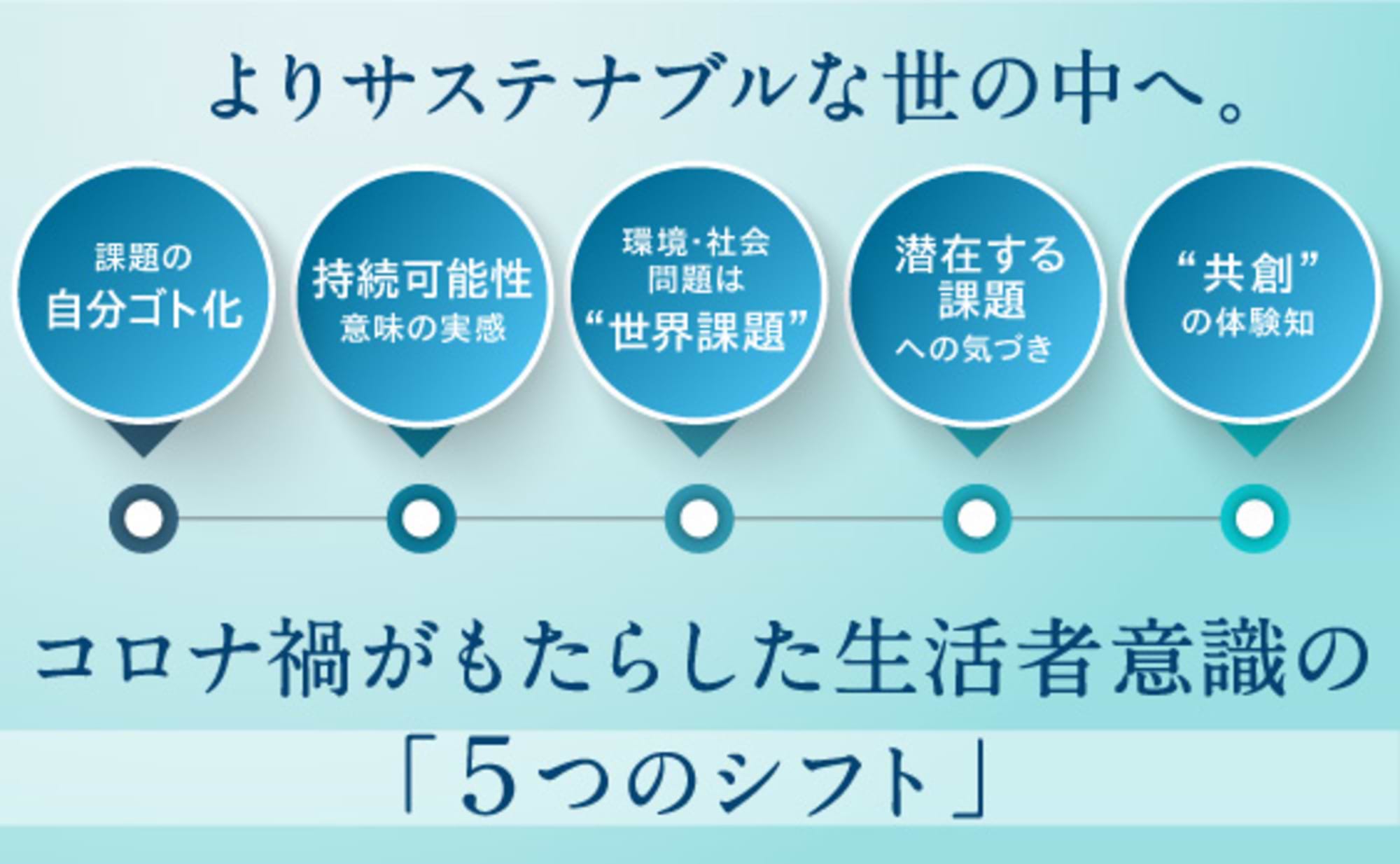
Last time, we wrote about how the pandemic heightened consumers' awareness of "sustainability" (the sustainability of the planet and society), influencing the societal vision expected for the post-pandemic era. In this second installment, we consider the future purpose of companies, taking these consumer attitudes into account.
Reflecting Changes in Consumer Awareness During COVID-19 in Future Purpose
The concept of "purpose" has rapidly spread in Japan over recent years. It is often described as "a strong sense of purpose," "the fundamental reason for existence," or "what value a company creates and contributes to society." The Dentsu Inc. Sustainability/Purpose Project defines it as "aspirations for society" or "social significance."
In the current pandemic era, purpose has become even more crucial. As people's values, behaviors, and societal systems evolve, companies must redefine their purpose, reassess the value and methods they provide based on that purpose, and shift to align with new environments and needs.
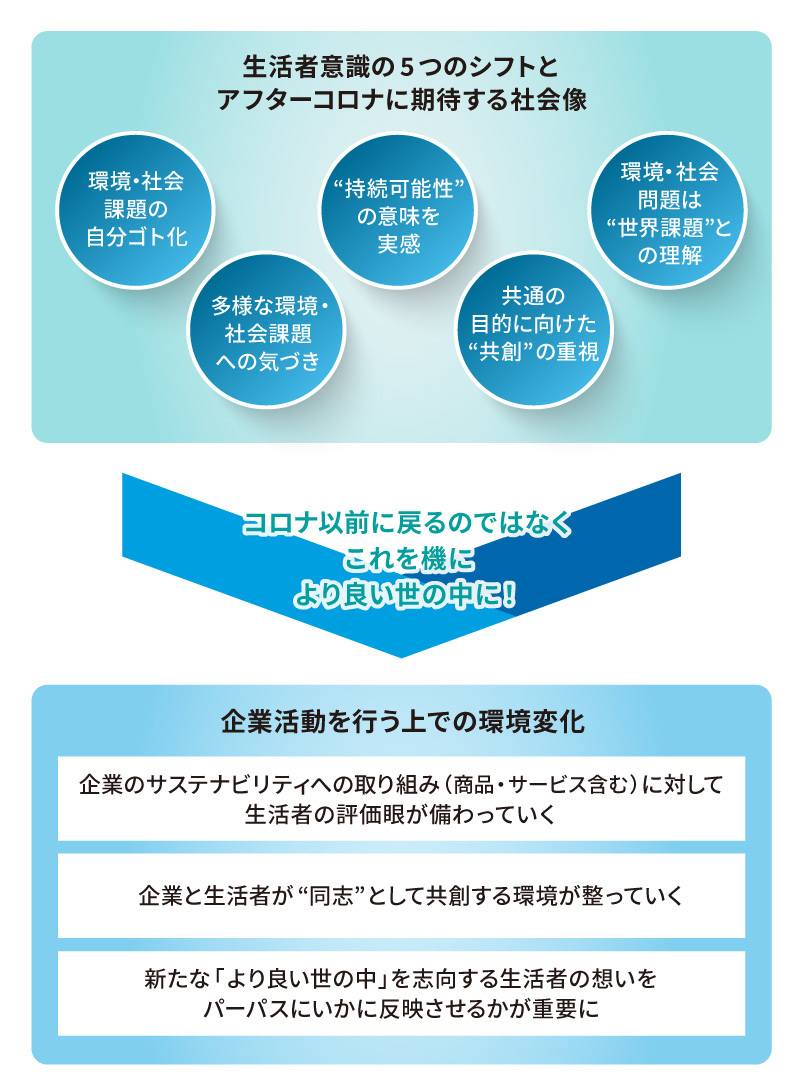
So, how should the shifts in consumer awareness revealed in our previous survey be reflected in future purpose? It is likely crucial to consider this while being mindful of the "environmental changes in conducting business activities" shown in Figure 1.
Dentsu Inc. Sustainability/Purpose Project has long proposed "Purpose Design" to connect purpose to corporate strength. Within this framework, we identified "four strategic perspectives" by analyzing leading cases in Europe and the US.
Specifically, these are: "New Social Orientation," "Will to Transform for the Future," "Seriousness (Consistency Between Words and Actions)," and "Resonance and Co-creation (Sense of Shared Purpose)." The importance of these perspectives is likely to increase significantly in the future due to the "Environmental Changes in Business Operations" shown in the previous figure.
Beyond "Status Quo." The "Power to Transform Society" Influences Corporate Evaluation and Brand Strength
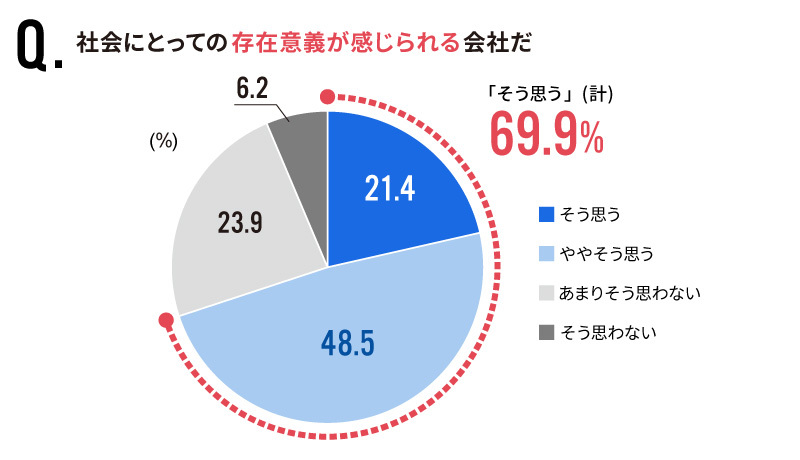
Now, the consumer survey introduced last time also gathered opinions on the evaluation of 29 major Japanese companies (Note 1). When asked about each company's "social significance," as shown in Figure 2, an average of about 70% of respondents evaluated them positively (Agree/Total). Since this is the average for major Japanese companies, in a sense, this result is to be expected.
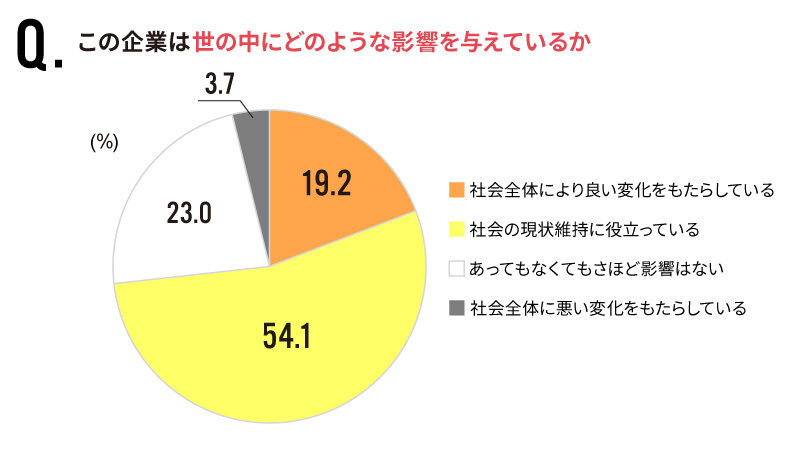
On the other hand, regarding "Social Impact" (the extent to which this company influences society), only about 20% of respondents felt it "brings about positive change," while nearly half felt it "helps maintain the status quo" (Figure 3). A significant number (23%) also gave the harsh assessment that "its presence or absence makes little difference."
What do these results mean?
Even if a certain sense of purpose is perceived, for the majority, it means "it helps maintain the status quo, but it doesn't feel like it's bringing about better change for society as a whole."
Of course, "maintaining the status quo" itself is critically important for society, and the immense technology and effort invested in this are immeasurable. Especially during the COVID-19 pandemic, people must have keenly felt the value of "the current situation being maintained."
Nevertheless, as revealed in the survey results introduced previously, people today strongly desire "a better world." It goes without saying that earning recognition for "bringing about better change" beyond "maintaining the status quo" would further enhance consumers' perception of a company's significance.
Incidentally, the perception of "bringing about positive change" may also influence the top tier ("Agree") of brand preference ("When purchasing products or using services in the future, I would choose this company"), a point that cannot be overlooked (Figure 4).
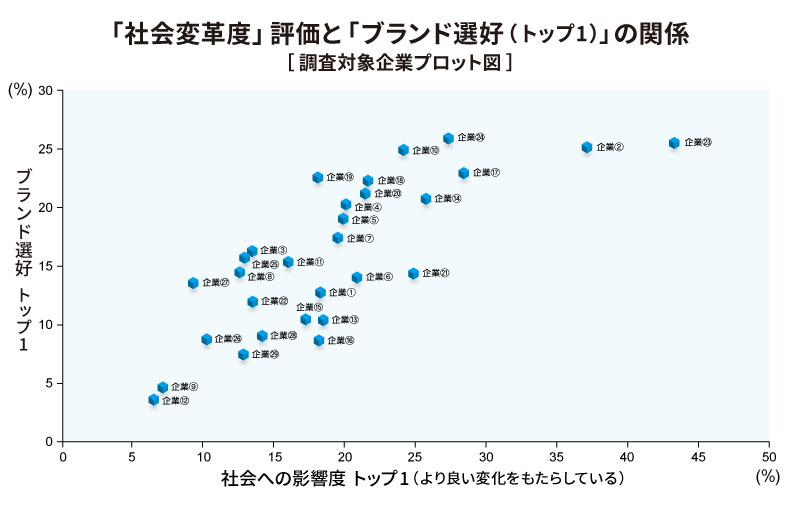
Note 1: Based on 29 major Japanese companies/brands
Nikkei BP Consulting's "Brand Japan Survey 2019" selected 29 companies/brands with recognition rates exceeding 95%, eliminating industry bias. The values in this article represent their average. (The 2019 survey results were used for selection because companies chosen last year are being tracked over time.)
A purpose that isn't visible in tangible actions won't earn consumers' trust
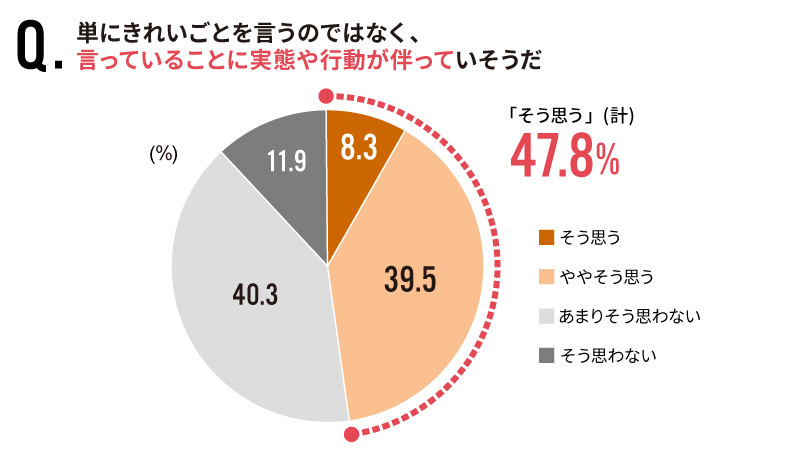
Another noteworthy finding this time is that the evaluation item "Rather than just saying nice things, their words seem backed by actual substance and actions" (corresponding to the "Sincere Commitment (Consistency Between Words and Actions)" indicator from the four strategic perspectives mentioned earlier) received a "Agree" rating of only about 48%, falling below half (Figure 5).
This result reaffirms the limitations of image-driven communication that lacks tangible substance. Companies ranking highly on this metric are those meticulously communicating the content of their purpose-driven initiatives and business activities based on facts.
This underscores the importance, moving forward, of not only communicating the "aspiration" but also conveying the facts that embody and substantiate that aspiration.
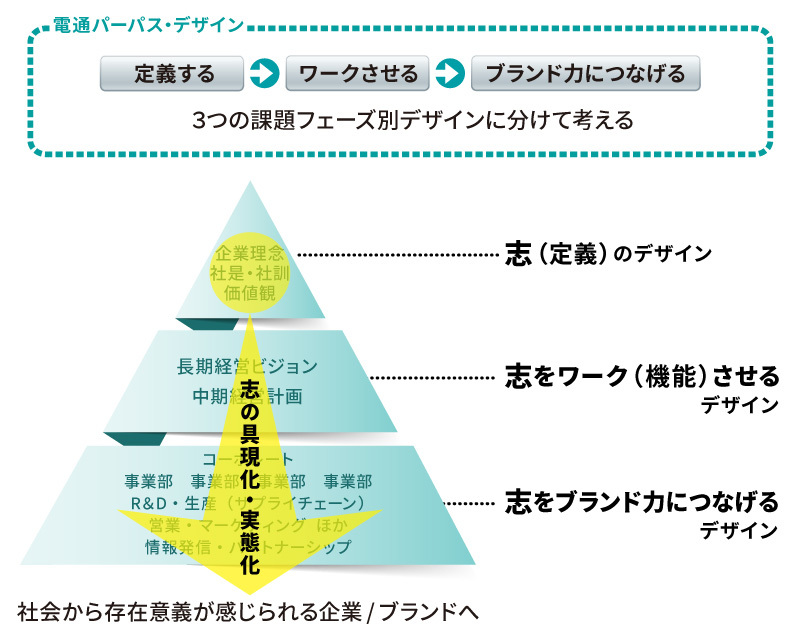
Three designs are necessary: "Define → Make it Work (Function) → Connect to Brand Power"
While we've shared consumer evaluation results thus far, increasing these scores is never the ultimate goal. This is because purpose is not merely a branding concept; it is a guiding principle for corporate management that directs all business activities.
This project envisions three phases for purpose: "Define → Make it Work (Function) → Connect to Brand Power." We believe effective design is crucial in each phase (Figure 6).
Without the "make it work" phase—that is, the actualization and embodiment of purpose, and the resulting realization of social impact—a company cannot become one whose reason for existence is truly felt.
Consumer evaluation is ultimately the final outcome of these three steps. As the first step in designing your company's purpose, why not begin by reflecting on where challenges exist within these three phases?
Survey Overview
Awareness Survey on "Sustainability" and Corporate/Brand "Purpose (Social Aspirations/Social Significance)"
- Survey Method: Online survey
- Survey Period: October 26–28, 2020
- Survey Area/Subjects: 2,000 men and women aged 20–74 nationwide
- Research Agency: Dentsu Macromill Insight, Inc.
Was this article helpful?
Share this article


Newsletter registration is here
We select and publish important news every day
For inquiries about this article
Author
Yumiko Umezu
Dentsu Inc.
Third Marketing Bureau
Marketing Consultant