Note: This website was automatically translated, so some terms or nuances may not be completely accurate.
 Sustainability and Purpose: Reflections from Consumer Perspectives During the Pandemic [3/4]
What are the consumers possessing that "small sense of efficacy" essential to "comrade-type" branding?
In the previous two installments, we discussed how the pandemic has shifted public consciousness toward "sustainability," increasing the desire not to return to pre-pandemic norms but to use this opportunity to build a better society. We also highlighted how a company's ability to reflect these consumer aspirations in its purpose and drive societal change impacts its reputation and brand strength. Additionally, we discussed how the pandemic has created an environment where "companies and consumers can co-create as partners."
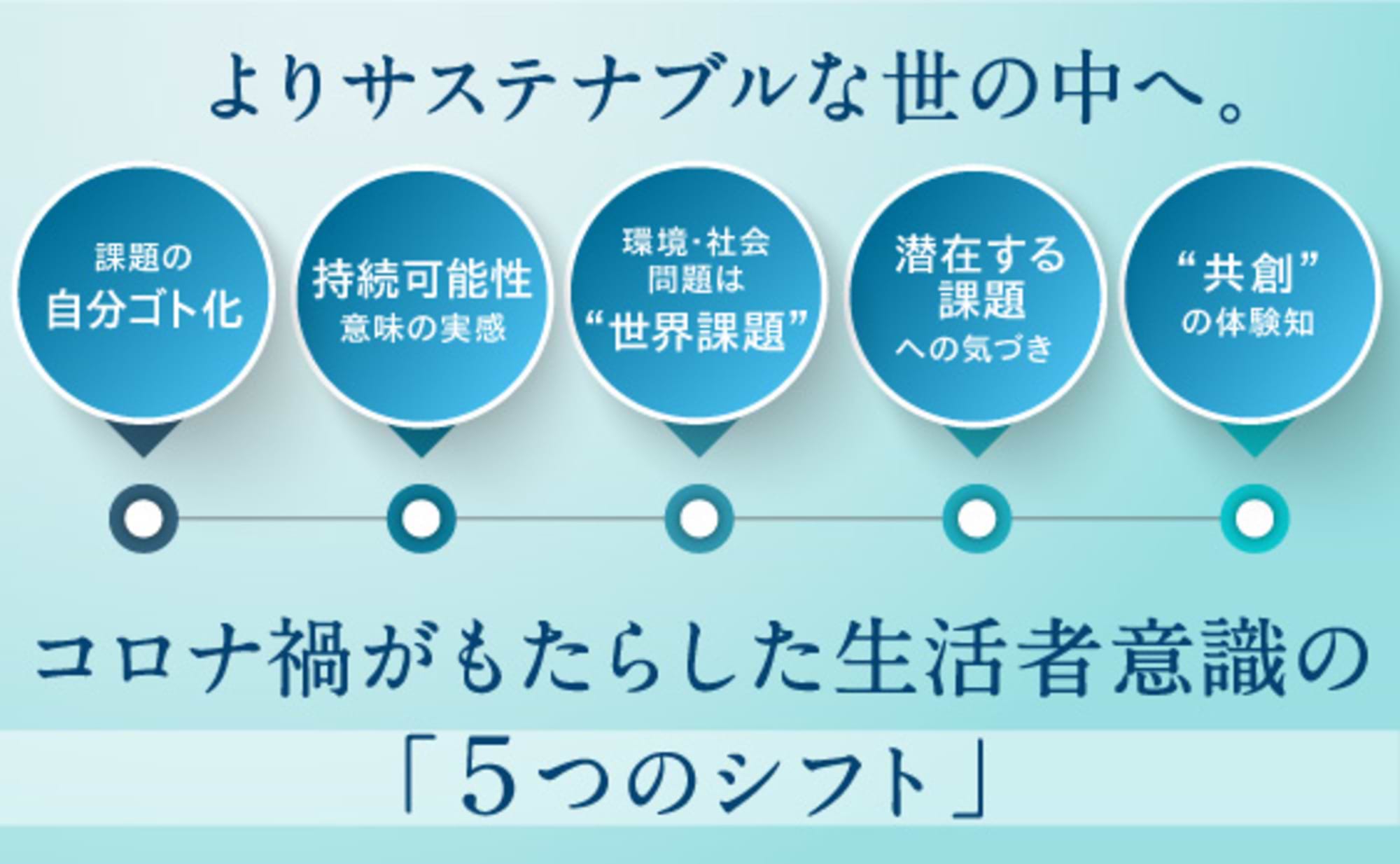
Part 1: Toward a More Sustainable World. Five Shifts in Consumer Awareness Brought by the Pandemic
So, how can companies co-create with consumers based on their purpose to achieve "social transformation"?
Part 3 explores what kind of people are crucial co-creation partners for companies and offers hints on how to engage more consumers while also leveraging this for branding.
The Power of People Is Beginning to Change the World. Consumption Enters the Era of "Social Change Consumption"
Around the world, movements of people raising their voices for a "better society" continue unabated. Movements by young people in Europe and America advocating action on environmental issues, movements for the abolition of racial discrimination under the banner of Black Lives Matter, movements by sexual minorities to eliminate societal prejudice and demand equal rights, and so on.
Each social issue is complex and profound, making superficial discussions insufficient for resolution. Naturally, each movement faces both support and criticism. Yet, regardless, the sight of people rising up of their own volition, ultimately prompting regulatory changes and rethinking of social systems, accelerating societal transformation, is truly remarkable.
This trend extends beyond taking to the streets for direct social action. It increasingly demands conscious choices in our daily consumption and purchasing habits. As a prominent Western company states, "Every time we choose a product, we are casting a vote for the kind of world we want." Moving forward, we may see a rise in what could be called "social change consumption" – where product selection itself becomes an act of social transformation.
The "small sense of efficacy" of consumers is building into a major wave.
This trend is gradually beginning to permeate Japan as well. With this in mind, we included the following question in our recent survey:
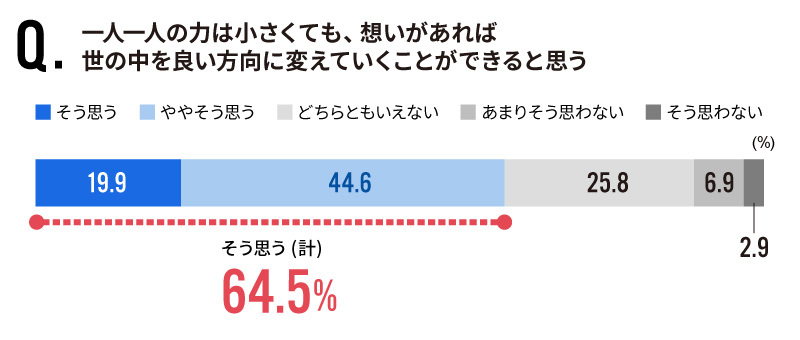
"Even if each person's power is small, I believe that with conviction, we can change the world for the better."
We named this awareness consumers' "small sense of efficacy" toward society. Just as small things add up, we believe this "small sense of efficacy" is the source generating the large wave that moves the world, as mentioned earlier, and could become a factor influencing future purchasing behavior.
Survey results show that 64.5% of Japanese consumers overall responded "Agree" or "Somewhat agree" to this question ("Agree" 19.9%, "Somewhat agree" 44.6%).
What kind of people have this "small sense of efficacy"?
Among consumers with a "low sense of efficacy," the top 1% who strongly agreed (approximately 20% of the total) showed the following tendencies:
Tendency 1: High interest in social and environmental issues, with a particularly large gap compared to the overall population on environmental issues
Regarding "social and environmental issues that require serious, concerted societal action," they generally showed higher responses than the overall population across most items, with particularly high interest in "global environment (natural environment conservation/global warming)."
Tendency 2: They have high expectations for corporate sustainability initiatives and highly value companies that implement them
Regarding "Expectations for Companies," they generally show higher expectations across sustainability-related items.
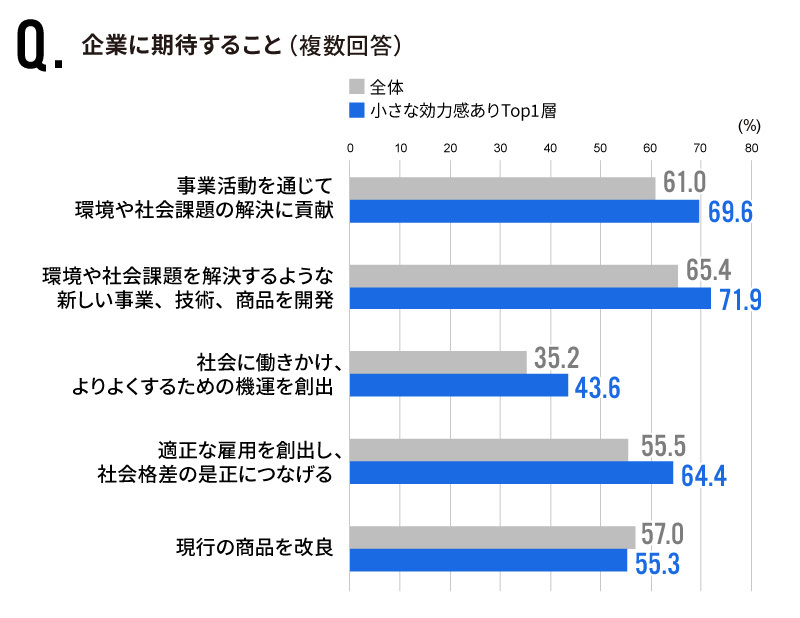
Incidentally, companies that meet sustainability expectations tend to be highly valued. Indeed, evaluations of specific companies show that those with a reputation for actively addressing environmental and social issues receive higher ratings overall.
Trend 3: High Information Sensitivity and Communication Ability
They also scored about 20 points higher than the overall average on items like "I often share information I find good with as many people as possible" and "I recommend things I like to others."
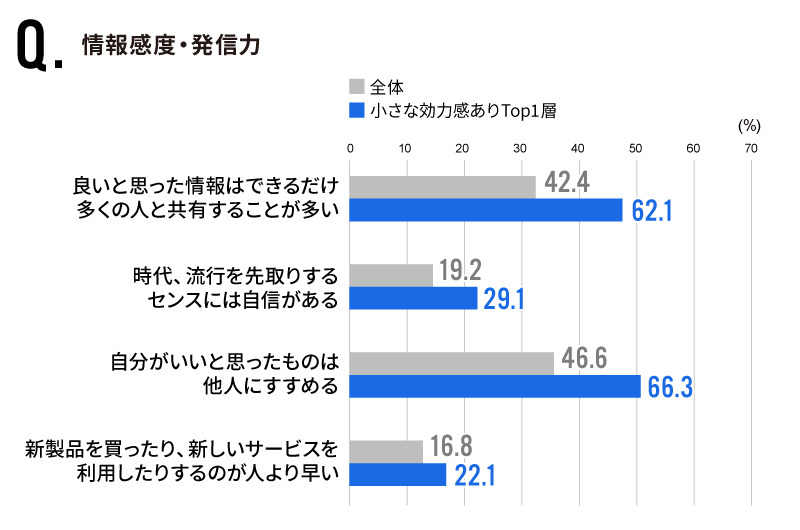
What this reveals is that people with a "sense of small efficacy" can become co-creation partners who advance social change together as "comrades" sharing the same aspirations as the company. Because they are highly effective communicators, they are likely to rally support for causes they want to champion. If they become fans of the company, they could also become powerful brand advocates.
Toward "Comrade-Type Branding": How to Flip the Switch in People's Hearts?
Moving forward, let's explore hints for engaging more consumers and connecting this to branding. While numerous approaches exist for purpose-driven branding, we've named one of them "Comrade-Type Branding."
This concept involves companies and consumers sharing the experience of achieving a common goal together (i.e., co-creation) while pursuing the same vision. This shared journey ultimately deepens the bond between both parties. The co-creation with people who feel a "sense of small efficacy," as introduced earlier, can be seen as the very first step in this branding approach.
However, when aiming to create greater social impact, simply engaging those currently experiencing "small sense of efficacy" is far from sufficient. It is crucial to gain their support while simultaneously expanding the movement together. So, how can we invite more people to co-create for social change?
Analysis combining the survey results with Dentsu Inc.'s proprietary consumer database (PDM Tunes 2020) revealed that moments serving as emotional anchors for those with a "sense of small efficacy" included: "when moved," "when spending time with like-minded friends or peers," "when achieving or realizing something," "when feeling loved by others," and "when feeling excited." These moments scored significantly higher for this group compared to the overall population.
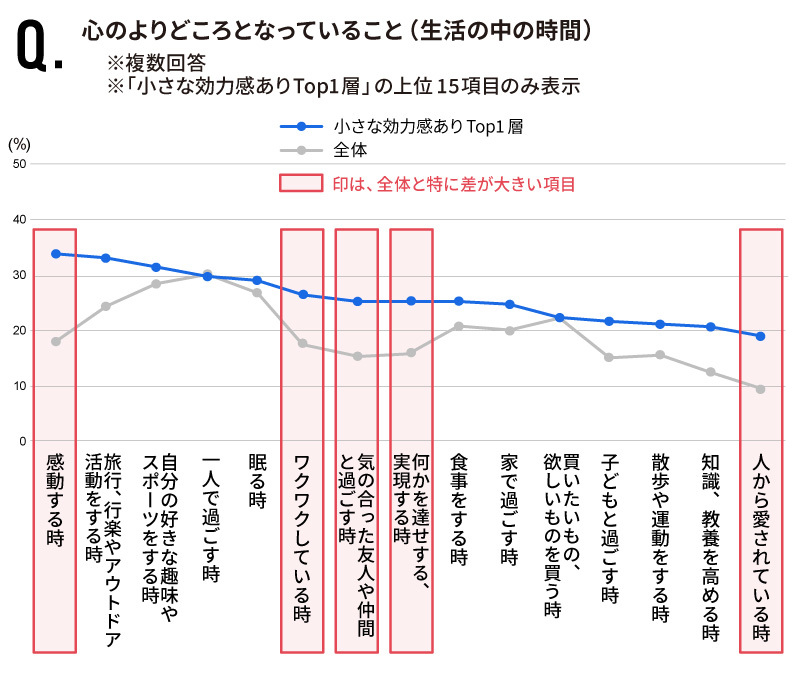
A key point is the fact that many people who find emotional moments as their anchor also possess a "sense of small efficacy." We believe this holds a significant clue for achieving "comrade-type" branding.
For example, it is precisely when we are genuinely moved as individuals—beyond externally imposed knowledge or intellectually derived "shoulds"—that a sense of purpose driving "small efficacy" emerges. Even small accomplishments generate a sense of achievement that sparks new inspiration, leading to the next "small sense of efficacy." Furthermore, elements like the presence of "comrades," the thrill of "excitement," the joy of "enhancing knowledge and culture," and "affection (heartfelt connection)" accelerate this cycle. This is the hypothesis we propose.
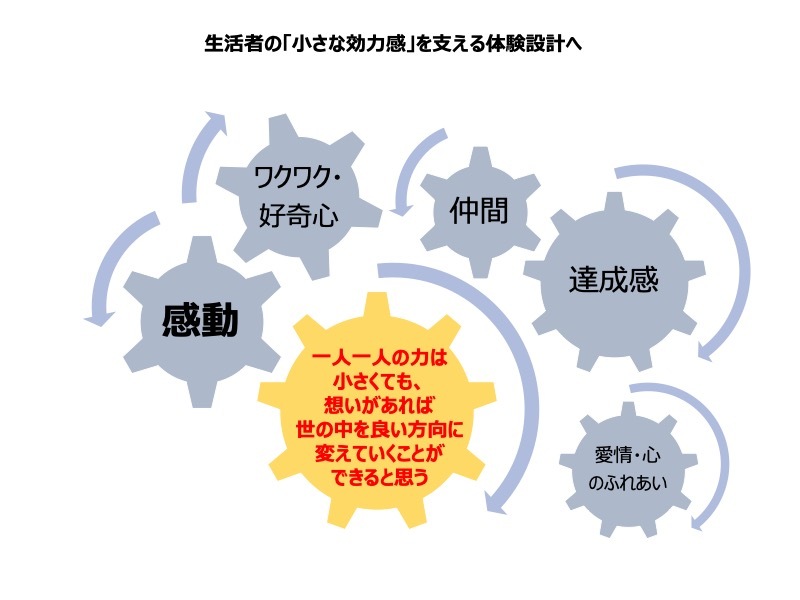
If we can design experiences that foster such positive cycles within consumers' hearts, we can encourage broader participation and evolve these initiatives into more sustainable endeavors.
This represents a "journey of the heart," distinct from the customer journey typically envisioned by marketers. By reframing participants not as customers but as "individuals living within society," initiatives naturally resonate beyond target demographics and generate greater societal momentum.
What is needed for social change and purpose-driven branding is not "CX (Customer Experience)" but "HX" – that is, a sensitivity and perspective toward experiences as a human being, something we might call "Human Experience."
Survey Overview
Awareness Survey on "Sustainability" and Corporate/Brand "Purpose (Social Aspirations/Social Significance)"
- Survey Method: Online survey
- Survey Period: October 26-28, 2020
- Survey Area/Subjects: 2,000 men and women aged 20–74 nationwide
- Research Agency: Dentsu Macromill Insight, Inc.
Was this article helpful?
Share this article


Newsletter registration is here
We select and publish important news every day
For inquiries about this article
Back Numbers
Author

Yumiko Umezu
Dentsu Inc.
Third Marketing Bureau
Marketing Consultant