Note: This website was automatically translated, so some terms or nuances may not be completely accurate.
 One-Click Radius [2/10]
Yosuke Kurita × Yasuhiro Tsuchiya: Part 2 "Don't 'like' my 'like'!"
Yosuke Kurita
Yasuhiro Tsuchiya
Dentsu Inc.
Continuing from last time, planner Yasuhiro Tsuchiya interviews Yosuke Kurita, who runs CBCNET, to paint a cross-section of the culture currently unfolding on the internet.

I've been watching this YouTuber Timothy DeLaGhetto for about 8 years now (laughs).
Tsuchiya: Is there anything you've been checking regularly lately?
Kurita: I've been hooked on YouTubers for quite a while now. Back around 2008, this girl called lonelygirl15 (※1) became a big topic. I often watch individual YouTubers.
Tsuchiya: Lonelygirl15! Yeah, that was a thing. It was a setup, right?
Kurita: Exactly. I watched that unfold in real time. This cute girl appeared, confiding her troubles to everyone and becoming popular, but then it was revealed it was all staged. That's when YouTubers got angry and started this whole "Take back our YouTube!" movement (laughs). Even when Google acquired it, everyone uploaded message videos. That atmosphere where such a movement was born was really interesting.
Tsuchiya: Is there a YouTuber you're particularly interested in?
Kurita: There are many, but I've been following this YouTuber, Timothy DeLaGhetto ( http://www.youtube.com/user/TimothyDeLaGhetto2 ), for about eight years now (laughs). He frequently uploads vlogs and concept videos, built a huge fanbase on YouTube, and has even started appearing on TV recently. He's not particularly handsome or anything, but he has this very American vibe and is just a really interesting character.
Tsuchiya: Do you still keep up with him?
Kurita: I watch him regularly. He has over 2 million subscribers, travels all over the world, and has this YouTube celebrity vibe—he's one of those who truly achieved the YouTube dream (laughs).
Tsuchiya: Two million is a huge number!
Kurita: Exactly. The follower count is on a completely different scale compared to Japan. His vlog content covers life lessons and love advice from viewers, and he actually says some pretty insightful stuff. I've been watching him like this for about 8 years now, so it feels like I've been following his whole life.
Lately, lots of Japanese YouTubers have been popping up too, right? I like Hiroji Seto, for example.
Tsuchiya: Jet☆Daisuke, too.
Kurita: Exactly. I watch less TV now and spend more time on YouTube. That way, I get really up-to-date on trends in America and around the world. For example, Miley Cyrus's dance at the MTV Video Music Awards got such terrible reviews, and then "TWERK" made it into Oxford Dictionary's Word of the Year for 2013. You can grasp situations like that in real time.
Also, when a new Mac model comes out, various media outlets review it, right? But watching a three-minute explanation by a YouTuber with hundreds of thousands of followers is way easier to understand. For gadget stuff, there's SoldierKnowsBest ( http://www.youtube.com/user/SoldierKnowsBest ). That kind of high-quality info exists, but since it's video content, you often can't find the explanations by Googling them. Plus, most are in English, so they rarely show up on the Japanese YouTube version.
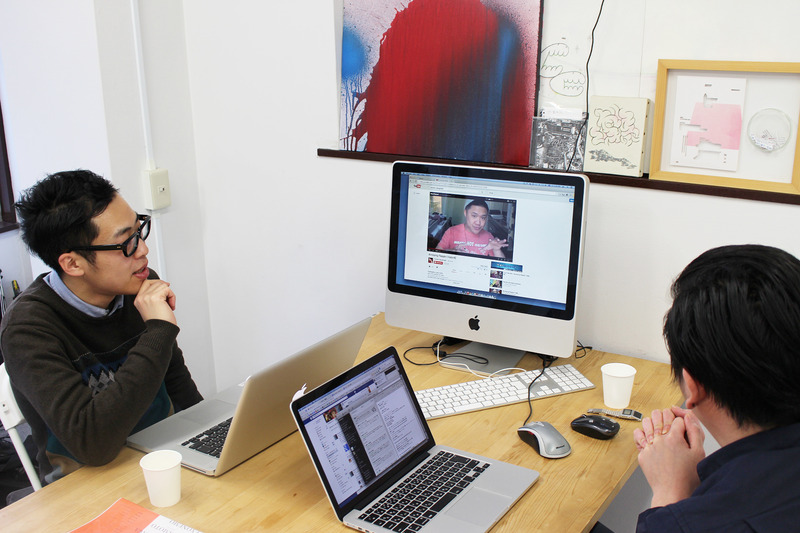
Tsuchiya: That's interesting. They make a living doing this, right?
Kurita: Through ad revenue and sponsorships. Plus, they often appear on regular TV too. Since YouTube lets you start solo, I think many aspiring professional musicians or actors are doing it. What strikes me about their creativity is their speed. They film and upload without hesitation. Japanese people overthink the presentation, but these guys are raw—they don't need clumsy staging. Another difference I notice is that Japan has widespread anonymous internet culture, so people feel scared or embarrassed to leave videos on YouTube. They feel safer with real-time platforms like Ustream or TwitCasting.
Tsuchiya: Yeah, in Japan, people might be too scared to leave stuff up. They'd probably get called out hard on minor contradictions like, "Hey, you said this before, but now you're saying that?" I guess it's a cultural difference.
I think the nature of currency will change.
Tsuchiya: What changes do you foresee in internet technology moving forward?
Kurita: Bitcoin became a huge topic, frequently featured at tech conferences like TechCrunch last year. The Winklevoss twins, famous from the Facebook lawsuit, invested hundreds of millions of yen in Bitcoin early on. Many investors started buying Bitcoin, causing its value to rise like a bubble.
But Bitcoin also has its unstable aspects. There's the Silk Road, a highly anonymous site only accessible via Tor software, where illegal transactions were conducted using Bitcoin.
Bitcoin's total supply is designed to cap at 21 million coins. Unlike government-managed currencies issued based on need, Bitcoin's issuance is determined by an algorithm linked to its circulation and operational rate. It will be interesting to see what changes occur as Bitcoin circulates on a scale of tens or hundreds of billions of yen.
Tsuchiya: I still don't feel like Bitcoin is something close to me. Does anyone here have any?
Kurita: I bought some experimentally.
Tsuchiya: Oh, you bought some!
Kurita: But it's a tiny amount. I haven't used it yet. I moved it between wallets and got a basic grasp of how it works. It's only about 0.1 Bitcoin, and with the market being so volatile, I don't really see it as having much value.
Tsuchiya: Wow!
Kurita: I hear that even in Japan, NHK has done special features, and cafes and shops accepting Bitcoin are increasing. I think it will grow even more from here. Plus, low transaction fees are a key feature. It's amazing that transactions worth hundreds of millions of yen are actually happening. Bitcoin, including its mining mechanism, feels like something out of science fiction. Of course, Bitcoin probably won't replace current currencies, but with crowdfunding also gradually gaining traction, I think the nature of currency and how we consume will change going forward.

Tsuchiya: That's an interesting point.
Kurita: Countries where Bitcoin is actually popular, like Argentina, are said to be those with tough fiscal situations. People use Bitcoin because banks might suddenly collapse. While many Japanese probably get it because it seems profitable, it's actually helping people in real, difficult situations. That kind of shift in value is happening more and more.
Tsuchiya: It's true that the value of money might be changing.
If it feels like a utopia, I think it becomes boring.
Kurita: Lately, I've been thinking about how everyone on the train is staring at their smartphones. Doesn't that feel a bit strange? This kind of phone dependency is growing—people touching their phones during meetings or even while eating. I do it myself sometimes. It makes me wonder how this behavior will affect our communication.
Tsuchiya: My friend's kid is two years old, and he can unlock the phone, swipe through apps, find a photo of his grandma, and show it to you. That kind of thing is pretty astonishing, right?
Kurita: When you're constantly touching it, you start wondering what's going to happen next. Since I switched iPhone models recently, I've barely installed any new apps. Maybe I'm just in some kind of metabolic renewal mode.
Tsuchiya: That's interesting.
Kurita: It's been over five years since I started using Facebook and Twitter, right? My friend Hagiwara (Toshiya) created a Chrome extension called the "I Don't Care Button" ( http://idpw.org/porto/w/000001/ ) that got a bit of attention, but I've always felt uneasy about Facebook's algorithm. You know how your friends' posts start looking like ads? Plus, Facebook's strategy to boost "Likes" by increasing view counts and dwell time is everywhere. For example, if you Like something on Instagram, it notifies Facebook by default. Then someone else Likes that notification, and it's like, "Don't Like my Like!" (laughs).
Tsuchiya: So you get this chain reaction of likes.
Kurita: Yeah. What is that about...? But sometimes, you just want to "like" someone else's "like," right? Like, "Wow, that was such a perfect 'like'!"
Tsuchiya: Yeah, you know? Liking that one means you get it, right?
Kurita: Exactly, exactly (laughs). Like, "I get it." Once this whole "like" system becomes ingrained, you start feeling this discomfort or unease that wasn't there initially.
Tsuchiya: True, having "likes" attached to every single status update might feel a bit off.

Kurita: I think current SNS platforms have this utopian vibe, like that Times Square example. But when things feel too utopian, they start to get boring. "You can sell your app to people worldwide," "Reach all kinds of consumers," "You can do everything here"—and conversely, "Do this and we'll delete your account." There are people who find that manufactured utopia boring, and those are the ones who create the next culture, right? That's what I want to follow.
Tsuchiya: So it's a pattern where the anti-utopia folks create the next alternative culture.
Kurita: I think I'm influenced by things that exist outside that utopia—graffiti, skateboarding, hip-hop, punk. For example, the real thrill of skateboarding, like doing tricks on a handrail, is seeing the streets you walk every day from a new perspective and creating new interpretations there. In the internet and art too, new forms of expression sometimes emerge from misusing technology in ways not intended for its original purpose. I find people active from that perspective really interesting.
Tsuchiya: The internet itself has this cultural soil, like hacking—gradually improving the system. People emerge who subvert the utopia, asserting "This way is more fun for me," and if that's better, people flow towards it. I'm really curious what kind of culture will emerge from that soil going forward.
We heard many fascinating stories this time. Thank you very much.
Interview Location: Grand Base
(※1) lonelygirl15: Internet movie
lonelygirl15 is a YouTube username. It debuted in 2006 as a real-life video blogger and gained immense popularity, but was later exposed as fiction by some users, causing a major backlash. The show continues to this day, with new videos released on various video-sharing sites.
(※2) TWERK: A dance move involving spreading the legs and vigorously shaking the hips
When Disney-born idol Miley Cyrus performed a TWERK at the 2013 MTV Video Music Awards, Twitter mentions surged, sparking controversy with comments like "How vulgar for an idol!" Major outlets including The New York Times, The Guardian, and The Washington Post reported on the incident. "TWERK" became a top search term of 2013 and was added to the Oxford English Dictionary.
(※3) Tor: An anonymous communication system built on open-source software, based on a communication system developed by the U.S. Naval Research Laboratory.
Was this article helpful?
Share this article


Newsletter registration is here
We select and publish important news every day
For inquiries about this article

Author
Yosuke Kurita
http://www.cbc-net.com/
http://www.grandbase.jp/
Yosuke Kurita
Born in 1981. Started a multidisciplinary design studio "GRANDBASE INC." in 2005. Works in a wide range, from web design and graphic design to CI/VI planning. Also produces the Japanese design portal website "CBCNET" and the design conference "APMT". Through these projects, we collaborate with designers and artists from around the world.
http://www.cbc-net.com/
http://www.grandbase.jp/
Yasuhiro Tsuchiya
Dentsu Inc.
zero/Dentsu Lab Tokyo
Creative Technologist / Researcher