Note: This website was automatically translated, so some terms or nuances may not be completely accurate.
 The Essence of Growth Hacking as Seen in "Club J.LEAGUE" [1/2]
1 Million Downloads Surpassed! What Drives the High Support Rate of the J.League Official App?
Have you heard of "Club J.LEAGUE," the J.League's first official smartphone app, jointly developed by the J.League and Dentsu Inc.?
Release: https://www.dentsu.co.jp/news/release/2017/0801-009338.html
After five years since its service launch, it has surpassed 1 million downloads (new downloads).
As a "DX Producer," I work on DX initiatives across various industries—including finance, food/beverage manufacturers, manufacturing companies, and automotive OEMs—as well as alliances with IT firms. Club J.LEAGUE is one such initiative. As the Dentsu Inc. team's operations lead, I've been involved since the service's planning and development stages.
From my perspective of continuously growth hacking this service for five years, I will introduce the growth process and how we achieved it.
The official app by J.LEAGUE and Dentsu Inc. has become a staple for fans!
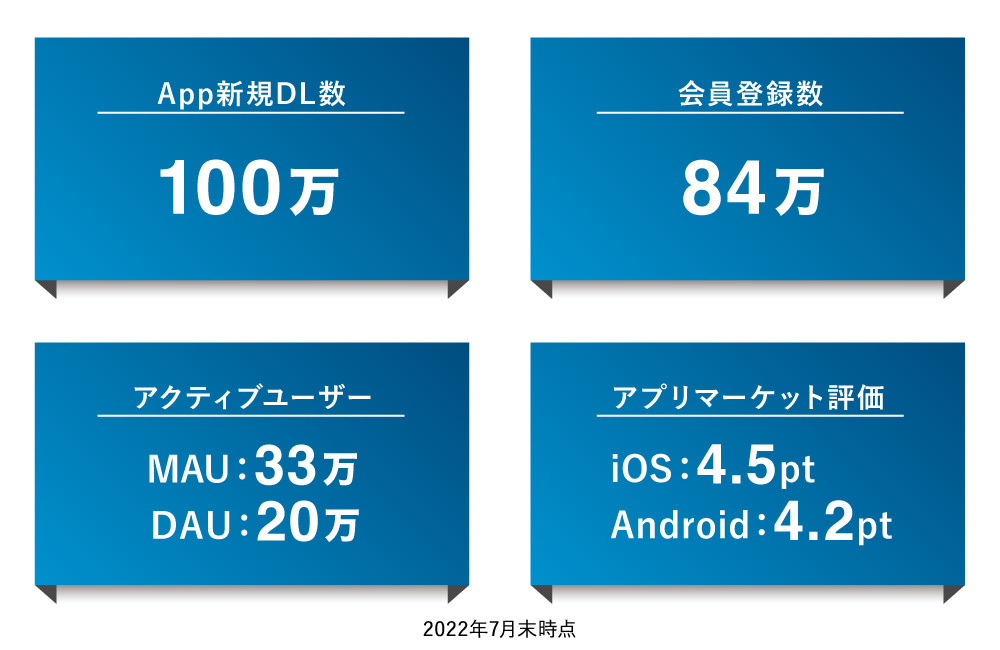
Club J.LEAGUE is the official J.LEAGUE app, jointly developed and operated by the J.LEAGUE and Dentsu Inc. Its development concept is " making the stadium viewing experience more enjoyable." More specifically,
- Core fans inviting casual fans—a "invite and be invited" dynamic
- and a "win-win-win" for fans, the J.League, and partner companies
For details on each, please refer to past articles.
・Creating new fans through existing fans' passion! The strategy behind the J.League official app
・What is the "win-win-win" accelerating the J.League's digital marketing?
Five years after service launch, we've achieved the following growth:
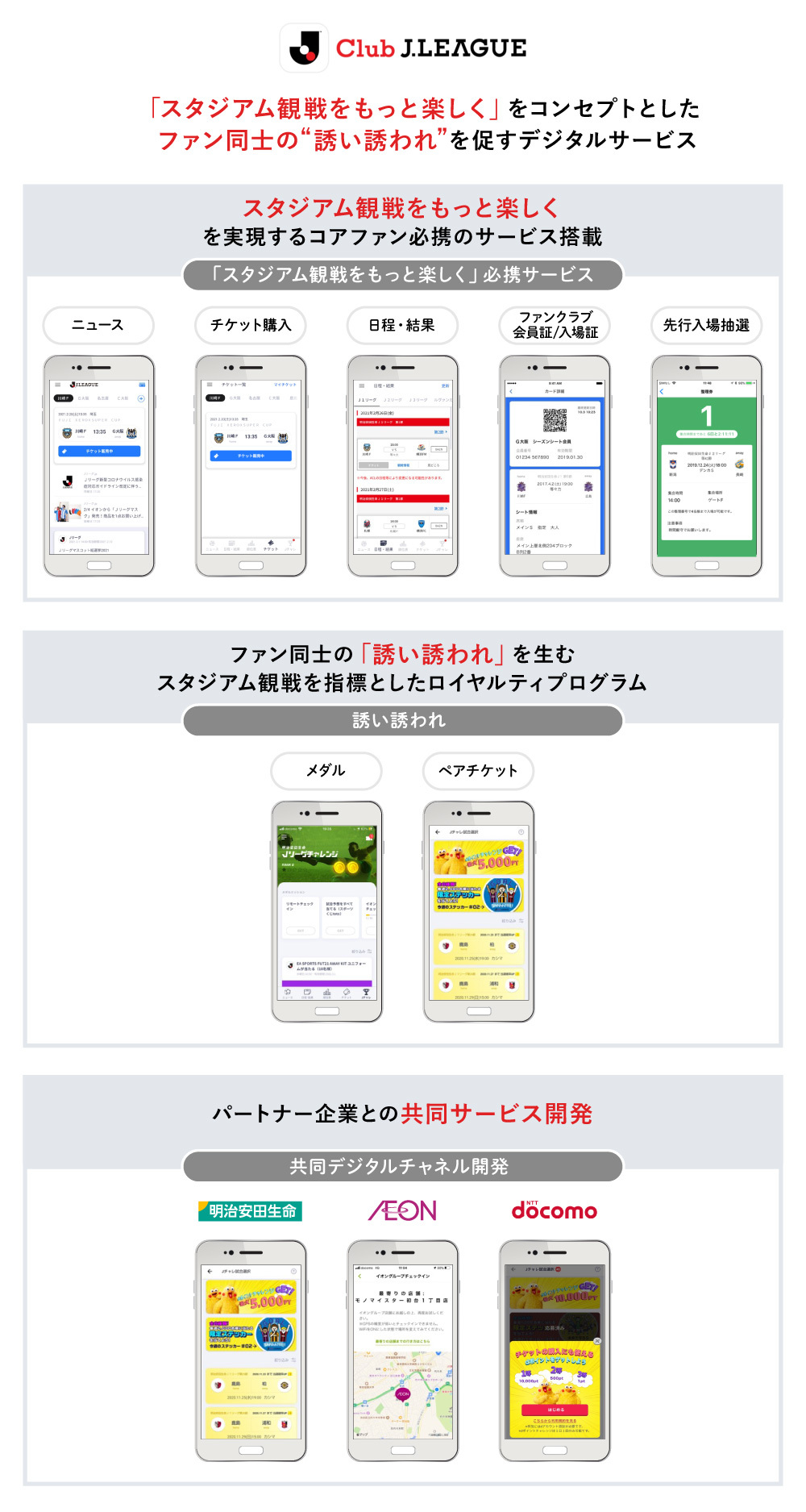
First, the pure user count...
- New app downloads surpassed 1 million
- Approximately 840,000 members (as of July 2022)
From the perspective of "active users"...
- Monthly Active Users (MAU) exceed 330,000
- On weekends when J1 matches overlap, DAU (Daily Active Users) exceeds 200,000
And user ratings...
- App store ratings: 4.5 stars on iOS, 4.2 stars on Android
For those with experience operating consumer-facing digital services/app services, I think you'll understand—all of these metrics can be considered a sign of success.
Post-launch "feature additions" are the key to growth
Why is Club J.LEAGUE still, even five years after launch—no, why is it now being used by the most people?
While the initial service design and UI/UX were excellent, the key factor was the feature additions made during its operation. Two points were particularly crucial:
Point 1: Implementing features based on club requests stimulates active usage
With over 50 clubs in the J.LEAGUE, individual clubs face limitations in both funding and human resources. While some clubs have recently started developing their own smartphone apps, many lack the capacity to do so.
Therefore, we positioned Club J.LEAGUE as a "service platform." From the service launch, we developed features that many clubs could use and find easy to use, incorporating their feedback. As a result, each club began actively utilizing the platform. Specific examples include the following features:
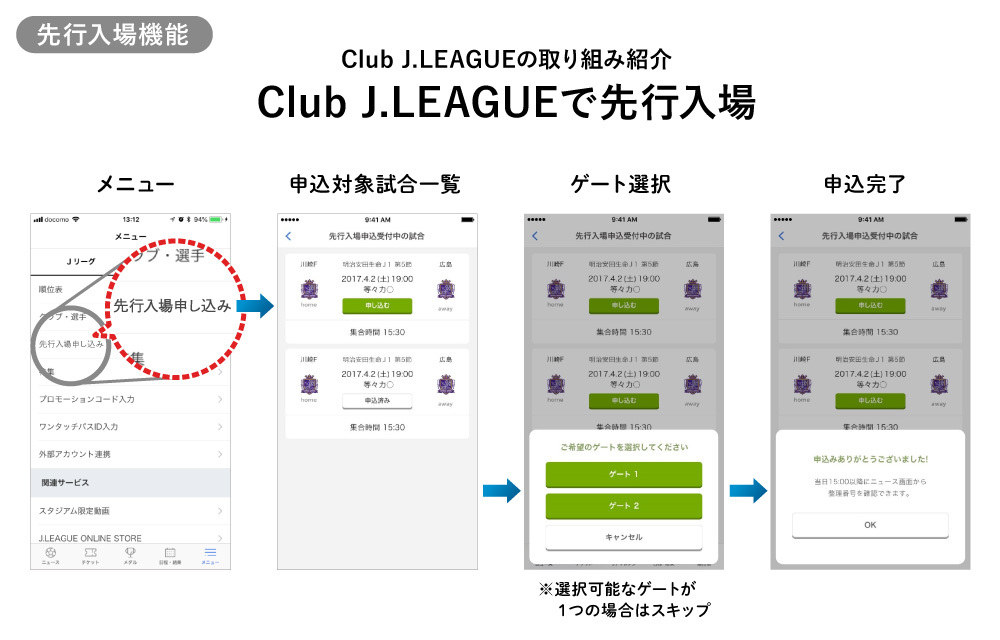
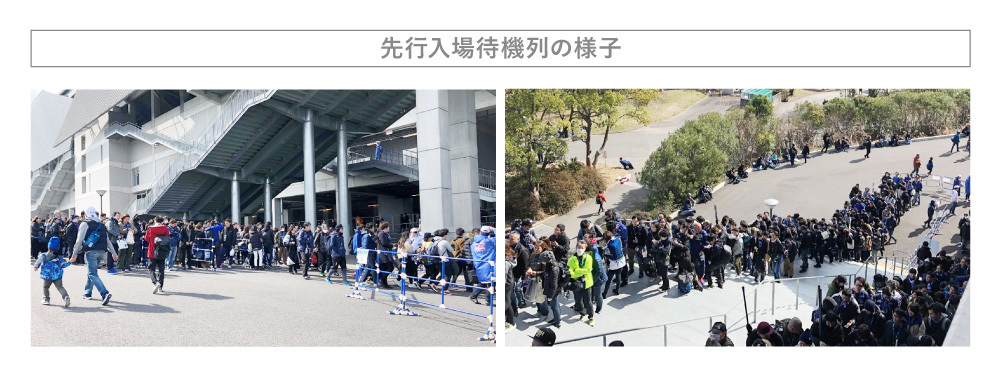
Club Service ①: "Priority Entry Lottery" Feature
We provided a function where the app system randomly selects the order in which season ticket holders and supporters enter the stadium early.
While some clubs previously conducted lotteries at the match venue, we added the ability to apply in advance and participate in the lottery via Club J.LEAGUE. This reduced the clubs' match-day workload while also cutting down on the waiting time for fans and supporters.
This feature is now adopted by clubs across all J1, J2, and J3 divisions.
Club Service ②: Halftime Campaign Feature
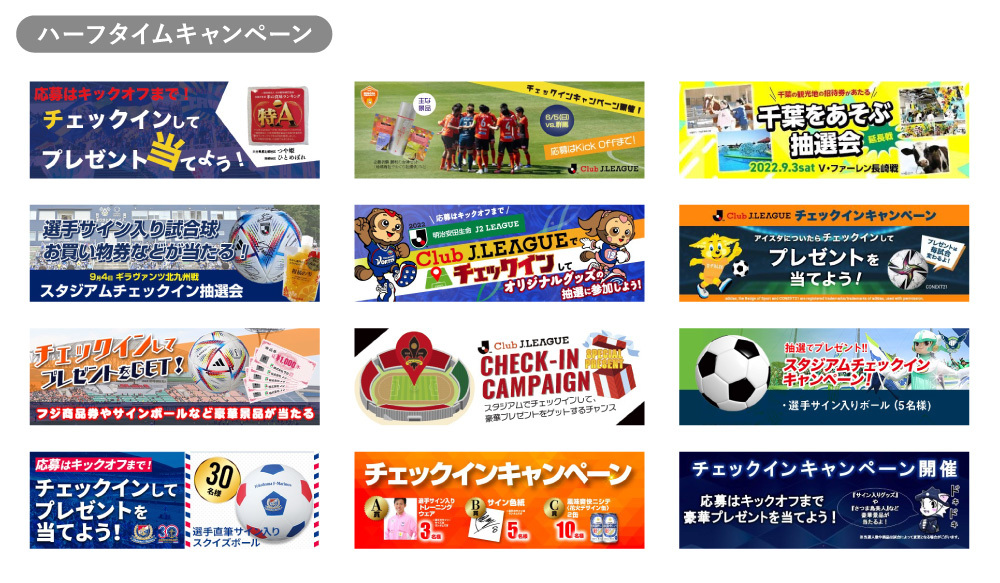
Clubs naturally want to host events and provide various hospitality experiences for supporters on match days. However, halftime inevitably created "downtime."
The "Halftime Campaign" feature addresses clubs' desire to energize this period while supporters review the first half, head to concession stands, or wait in restroom lines.
This system works by having supporters enter after arriving at the stadium and before kickoff. A fair drawing is conducted by halftime, and the winners are announced over the stadium PA system during halftime.
By understanding the operational needs of club staff during matches and developing a universal, low-maintenance solution, this feature is being adopted by many clubs.
Club Service ③: App Push Notification Management Screen
Alongside the Halftime Campaign, the "App Push Notification" feature is being actively utilized by many clubs.
Push notifications are a crucial feature in smartphone apps, delivering information directly to users' devices. While this functionality has been part of Club J.LEAGUE since its launch, the initial management process required clubs to "submit documentation to the J.League." This approach was cumbersome and lacked flexibility.
Therefore, considering the diverse tasks handled by over 50 club representatives—tasks that vary significantly depending on whether a match is held or not, and whether it's a home or away game—and taking into account each club's security policies, we added a feature allowing "club representatives to directly schedule and post push notifications."
All-Club Participation Campaign "Natsu J (Summer J)"
As a result of this increased active use by clubs, we were able to hold "Summer J ( https://www.jleague.jp/special/natsuyasumi/2019/natsu-J/ )" in 2019, with the vast majority of clubs participating.
This campaign offered the chance to win pair tickets through a lottery, serving as a prime example of the core "invite and be invited" campaign concept.
Natsu J became a major campaign that successfully secured invitations for the specific summer season from all clubs, significantly contributing to the revitalization of Club J.LEAGUE.
This large-scale campaign was implemented twice in 2022: "Spring J" and "Summer J".

Point 2: Increased Co-creation with Partner Companies
The second key point, following "Implementing Features Based on Club Requests," is co-creation with new partner companies.
We invited partner companies, including official J.League sponsors, to participate in the app, enabling various initiatives (see previous installment for details ). While co-creation with partners from the initial release was essential, continuously expanding our partner base significantly boosted service engagement.
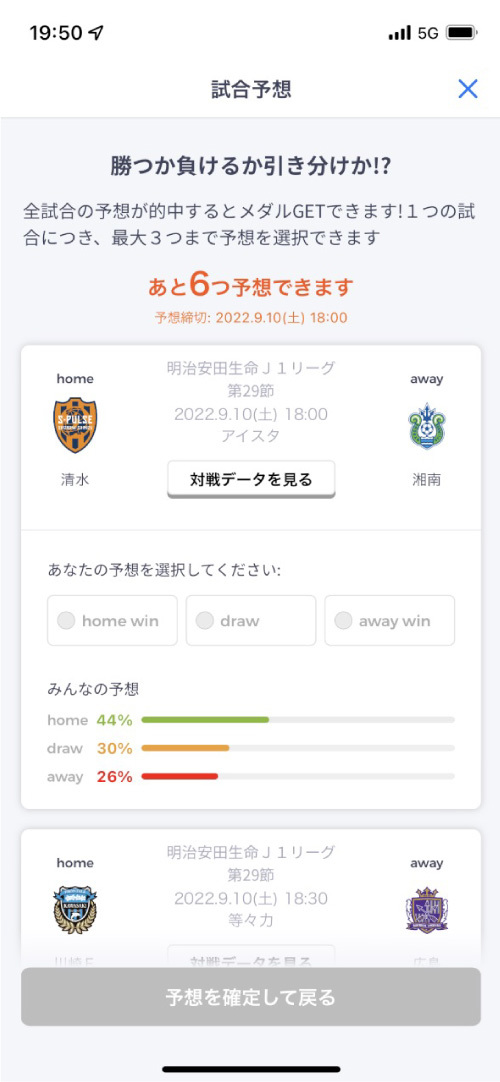
Collaboration with the Japan Sports Promotion Center, which operates toto
With the Japan Sports Promotion Center, which operates toto as a business, we jointly provide a match prediction service linked to toto. This enables users to "enjoy the J.League while predicting match results."
Collaboration with NTT DOCOMO: d Point Challenge
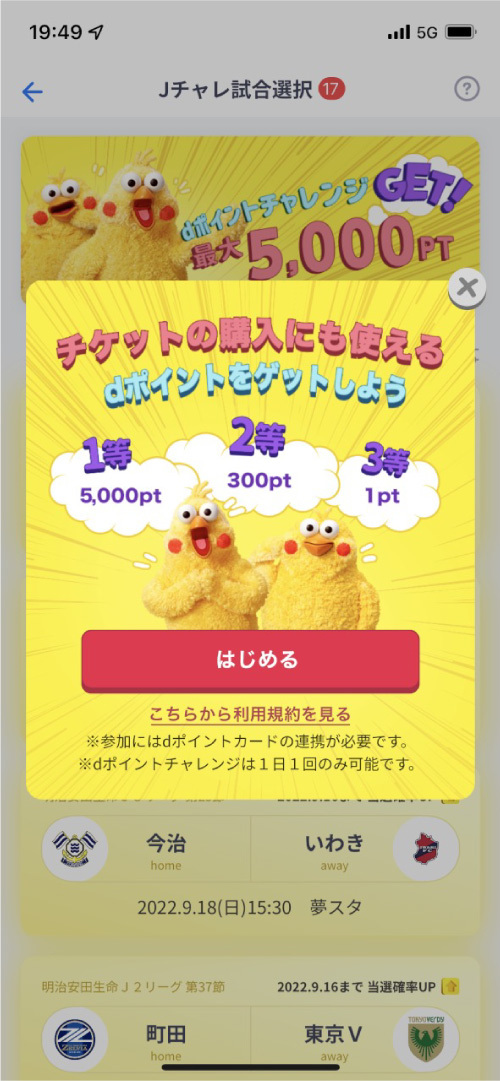
While NTT Docomo's business spans diverse areas, within Club J.LEAGUE, they offer a service where users can win d Points.
To explain this further: as mentioned in the "Summer J" section, Club J.LEAGUE provides pair tickets to create a virtuous cycle of "inviting and being invited," making it easier for core fans to invite others. However,
For core fans holding season tickets, while they fulfill the role of being club supporters, the incentive provided solely by pair tickets was insufficient. To address this gap, the service introduced the feature of "winning d Points," which are more versatile than tickets and can be used for anything.
These d points can be used to purchase away game tickets at a discount, significantly contributing to broadening the range of J.LEAGUE viewing experiences.
These are just examples, but by combining the challenges faced by partner companies at different times and years with the goal of enhancing the viewing experience for J.League fans, we are evolving initiatives to activate fans and supporters.
The COVID-19 Crisis and Expanding the Matchday Experience
While it may seem like we've steadily scaled our services in both quality and quantity, the reality is quite different. The truth is we've faced daily problems and overcome them one by one.
Among these, the most significant challenge was the "suspension of league matches due to the COVID-19 pandemic and subsequent attendance restrictions."
The graph below shows the MAU trend for Club J.LEAGUE since May 2019.
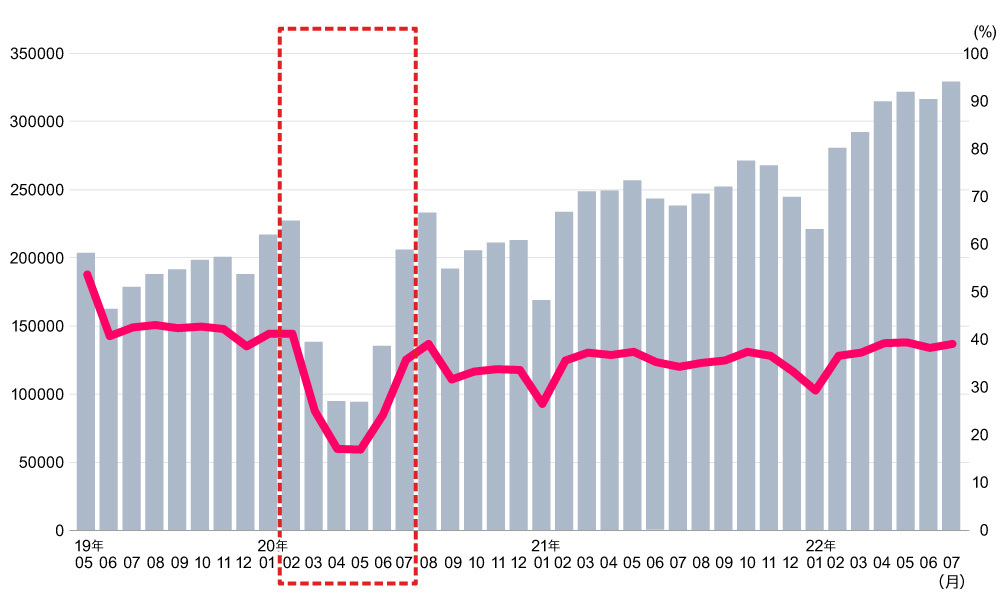
Since its release in 2017, the service had steadily expanded its offerings and grown in scale. In 2019, it had just implemented the aforementioned "Summer J" event with all clubs participating. However, in 2020, the league season was suspended due to the COVID-19 pandemic very early in the season.
Subsequently, league matches resumed without spectators, and stadium capacity restrictions remained in place. There was even an atmosphere where attending sporting events itself was discouraged.
Under these circumstances, Club J.LEAGUE, whose core concept is "making stadium experiences more enjoyable," could not provide services to fans and supporters. It risked becoming something that offered no value to the J.LEAGUE or its partner companies. This sense of urgency spread throughout the entire team.
Amid this sense of crisis, we made the decision to remove the word "Stadium" from our service development concept, which had been "Making Stadium Attendance More Enjoyable."
In an environment where the pandemic made it difficult to visit stadiums and even hard to invite people to come, the J.League aimed to establish: "Enjoying the J.League through DAZN viewing"
"Watching on DAZN offers an experience equal to watching at the stadium."
and added the "Remote Check-in" feature.
Club J.LEAGUE features a "Medal" system where attending stadiums earns pair tickets and benefits from partner companies.
By implementing the process of "displaying a unique QR code for every league match on DAZN," it became possible to earn medals even when watching on DAZN.
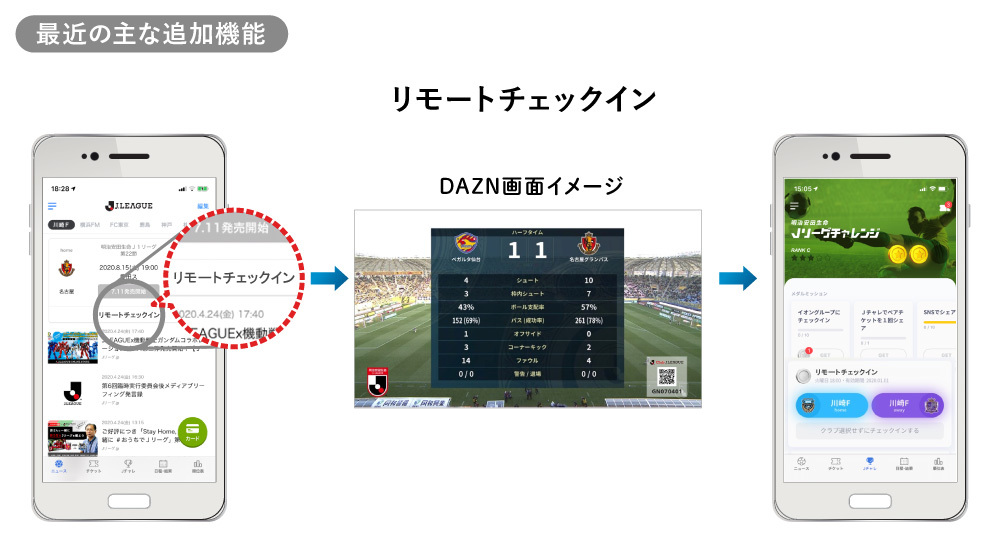
After introducing Remote Check-in and gaining traction among fans and supporters starting in 2021, the service resumed its growth trajectory, scaling to the aforementioned scale.
How we Scale?
So far, we've traced the evolution of Club J.LEAGUE—which scaled to 1 million downloads, 840,000 members, 330,000 MAU, and 200,000 DAU—primarily from the perspective of its "features."
However, those of you in digital marketing or DX departments might be more interested not just in the "features" of a digital service, but in its "operational policies," "methods," and "team building," right?
Next time, we'll share the operational policies, methods, and organization that have continuously scaled Club J.LEAGUE.

Was this article helpful?
Share this article


Newsletter registration is here
We select and publish important news every day
For inquiries about this article
Author

Norifumi Watanabe
Dentsu Inc.
First Business Transformation Bureau
Director of Product Management