Note: This website was automatically translated, so some terms or nuances may not be completely accurate.
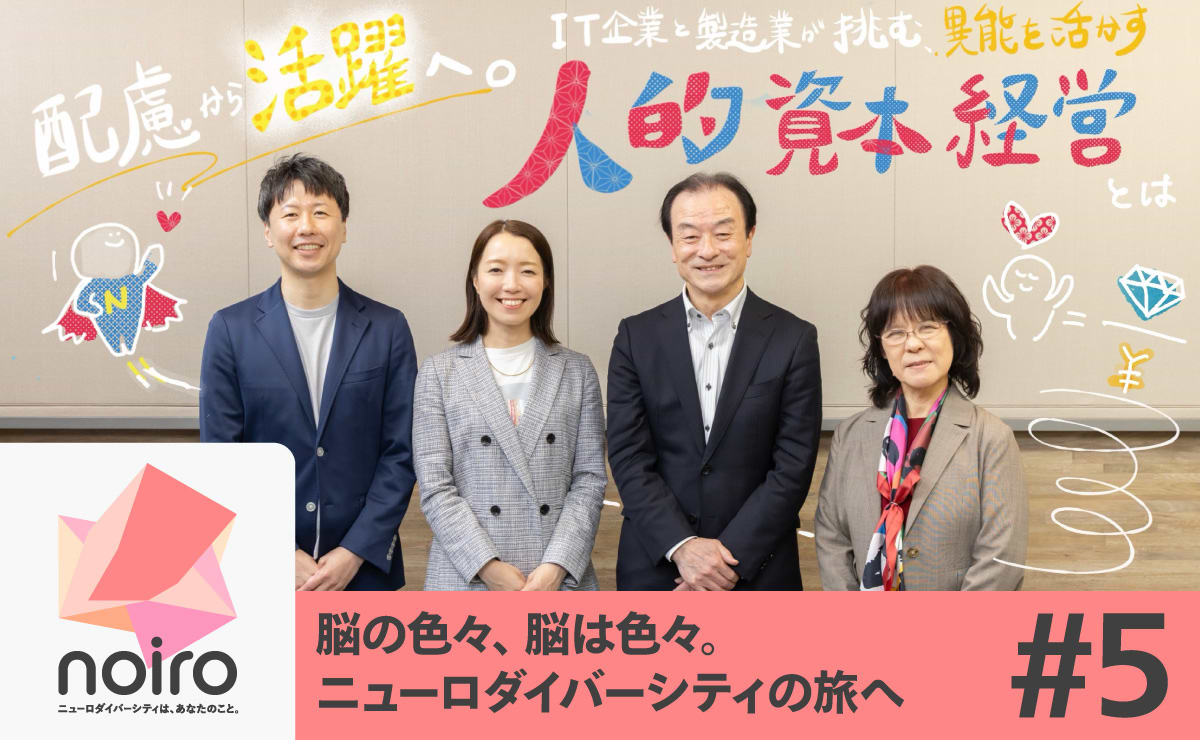
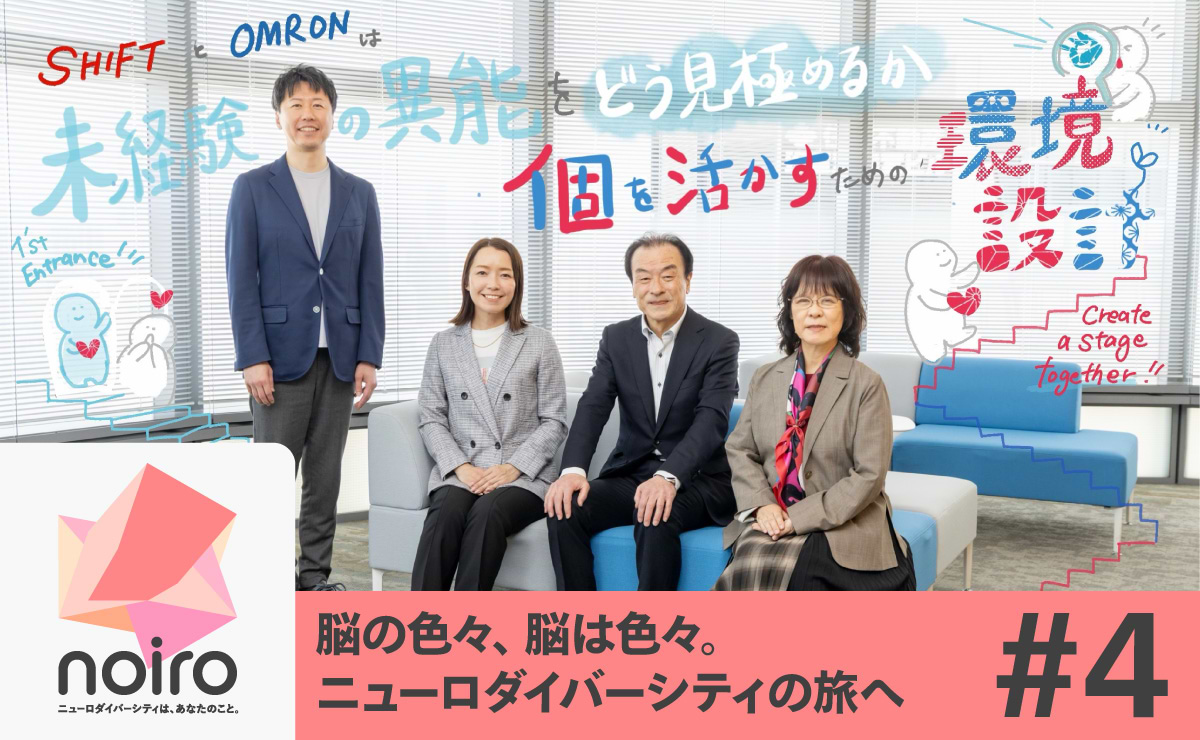
 The brain's many facets, the brain's many forms. Embark on a journey of neurodiversity. [1/5]
The Current State of “Neurodiversity”: Harnessing “Brain Diversity” in Society
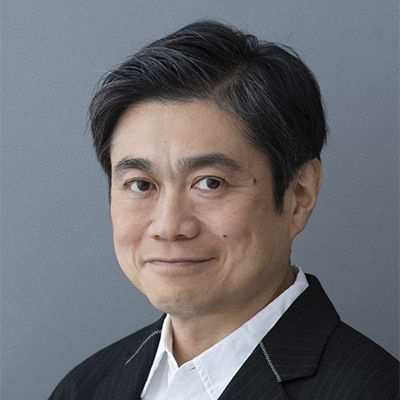
Joichi Ito
Chiba Institute of Technology
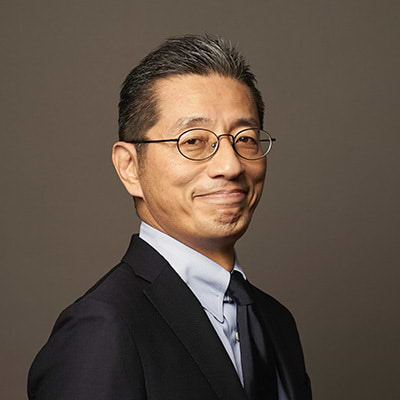
Katsumi Sekijima
DENTSU SOKEN BRIGHT INC.
Hidemitsu Kitamoto
Dentsu Inc.
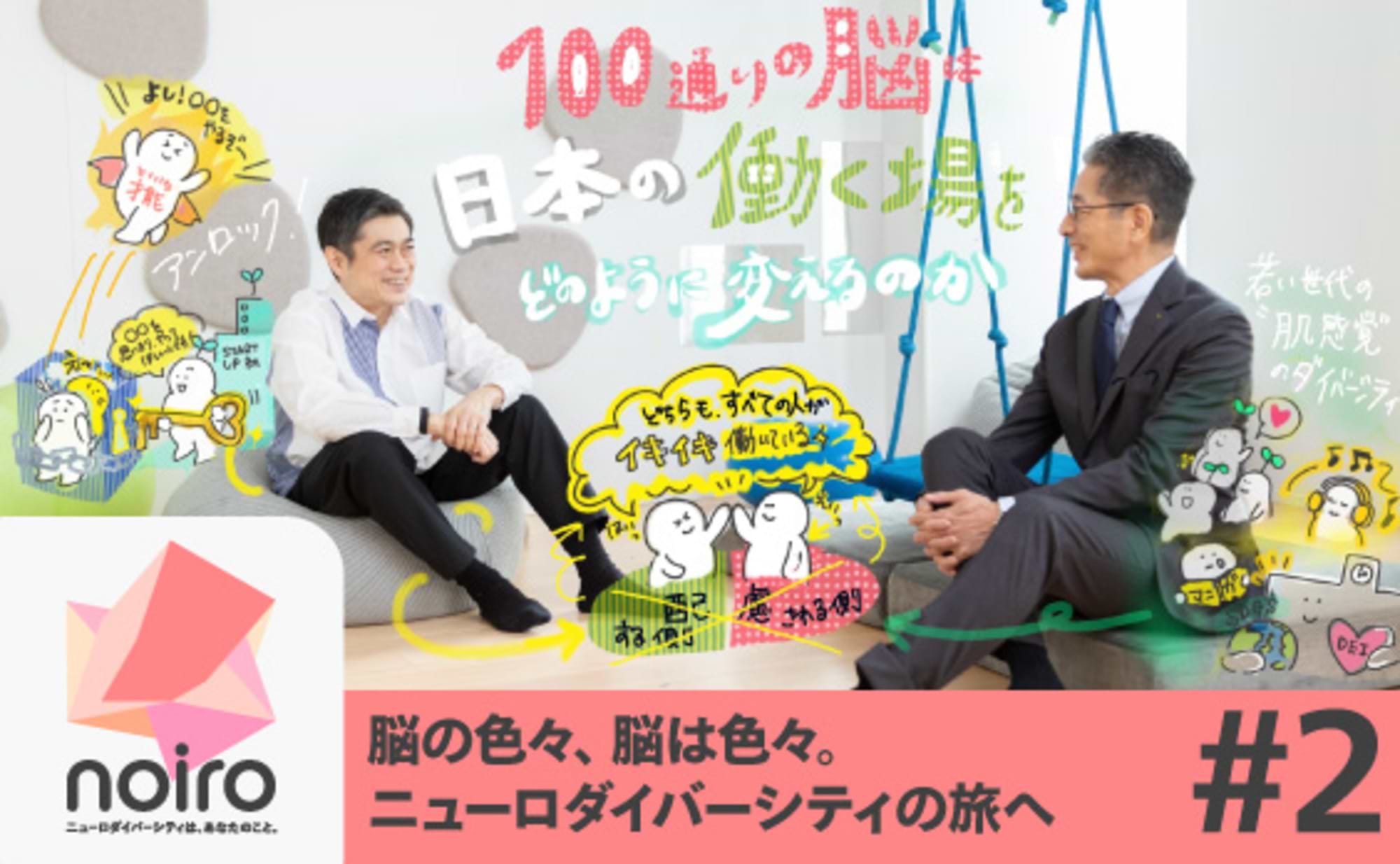
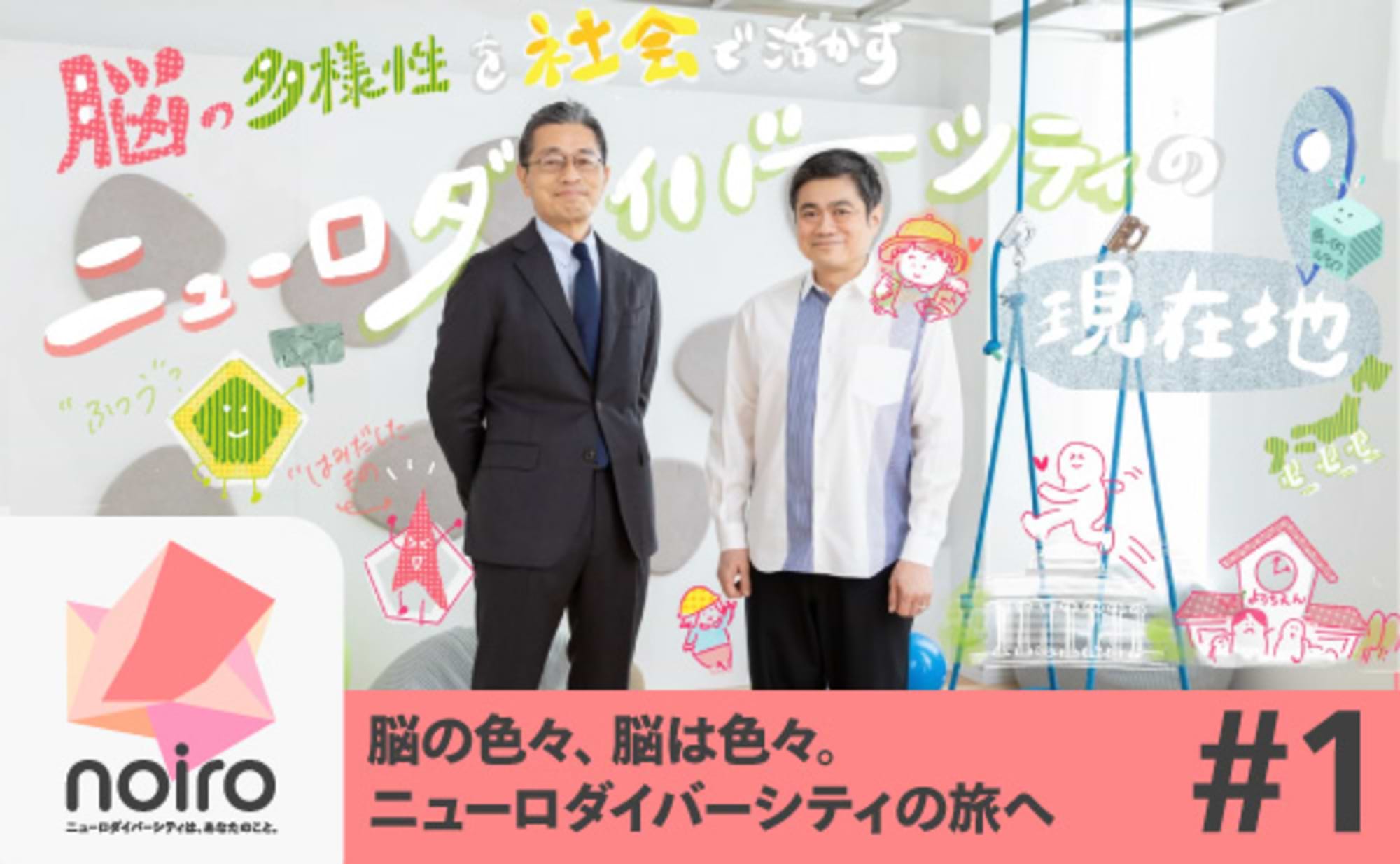
Photo-scribing: Chiharu Kai (Representative, Dentsu Inc. Graphic Recording Institute )
Are you familiar with the term “neurodiversity”?
This term, which expresses the idea of “viewing differences in individual characteristics stemming from the brain and nervous system as diversity, respecting one another, and leveraging these differences within society,” is not a new concept or buzzword; it originated in the 1990s. However, in recent years, driven by advances in technology and labor shortages, the Ministry of Economy, Trade and Industry (METI) and many companies are once again exploring new ways of working and employment models for the future, with neurodiversity as a starting point.
In 2021, the neurodiversity project “noiro” was launched by a group of volunteers from the Dentsu Group, including Dentsu Inc. and DENTSU SOKEN INC. In this series, noiro members will explore the concept of neurodiversity, its current state, and how it can be applied to the future workplace through dialogues with researchers, experts, and individuals with neurodiverse experiences.
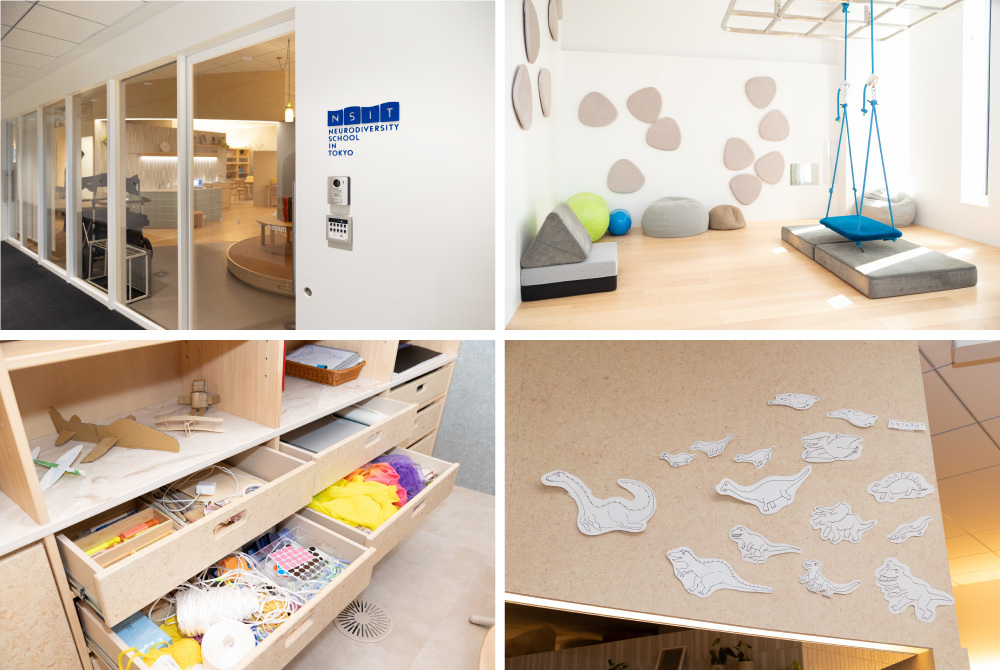
For the first installment, we welcome Dr. Joichi Ito, President of Chiba Institute of Technology and co-founder of the “Neurodiversity School in Tokyo” (5th Floor, Pola Aoyama Building, 2-5-17 Minami-Aoyama, Minato-ku, Tokyo;hereinafter NSIT), for the first installment of this series. The discussion, moderated by noiro’s Hidemitsu Kitamoto, features Mr. Joichi Ito and Mr. Katsumi Sekijima, former President and CEO of “DENTSU SOKEN BRIGHT INC.,” a special-status subsidiary of the DENTSU SOKEN Group. We will explore the current state, challenges, and future of neurodiversity from their respective perspectives in education and the corporate sector.
What is Neurodiversity?:
A term combining “neuro” (brain/nerves) and “diversity.”It is a concept that views differences in the brain, nervous system, and the various individual traits stemming from them as forms of diversity, promotes mutual respect, and seeks to leverage those differences within society. It regards neurodivergent development—such as Autism Spectrum Disorder (ASD) and Attention-Deficit/Hyperactivity Disorder (ADHD)—which differs from the neurotypical norm, not as a disability, a lack of ability, or a matter of superiority or inferiority, but as each person’s “natural difference.”Furthermore, this concept applies not only to neurodivergent individuals but to all people. Proposed in the 1990s by Australian sociologist Judy Singer, initiatives to leverage the characteristics—such as high levels of concentration and creative thinking—exhibited by individuals with developmental differences began to spread in the 2010s, primarily among IT companies overseas.
A new school founded based on the experiences of a parent of a person with neurodiversity
Kitamoto:“Most geniuses are autistic. However, most autistic people are not geniuses.”
These are the words of Temple Grandin, an animal behavior scientist who has publicly disclosed that she herself has what is commonly referred to as autism.I believe this quote is key to understanding neurodiversity. While some individuals with ASD possess innate high intelligence or unique talents, neurodiversity is not limited to just these select individuals, nor is it limited to those diagnosed with developmental disabilities. What matters is an attitude of embracing the “diverse characteristics of the brain” in all people. The Dentsu Group’s “noiro” project was launched based on this philosophy.
In this series, I hope to embark on a “journey” to encounter diverse perspectives and ways of thinking in order to better understand neurodiversity. While I’d like to focus this discussion on ASD—an area in which Mr. Ito has particular expertise—my ultimate goal is to convey what a society where neurodiversity is fully embraced might look like, as well as the hopes and expectations for achieving it.
To start, as a way of introducing yourselves, could you please share your backgrounds and the reasons or circumstances that sparked your interest in neurodiversity? Let’s begin with Mr. Ito.
Ito: I’ve been a bit different since I was little. Even in kindergarten, the teaching methods didn’t suit me—I’d run out of the classroom—and I was the type to study only the things that truly interested me. Also, my father, who was a chemist, was undoubtedly on the autism spectrum, even though he was never formally diagnosed, and I later realized my younger sister was as well.
In 2011, when I became Director of the MIT Media Lab at the Massachusetts Institute of Technology (hereinafter MIT) in Boston, I met many people with ASD, including students. According to a psychology professor at the university, 60 to 70 percent of students at MIT have autism (as diagnosed by a doctor). Because communication methods centered on them had been established, it was an environment where individuals with ASD could embrace their condition with pride.
My daughter, who was born while I was living in Boston, was diagnosed with ASD at age 3. When I returned to Japan, I needed to consider what kind of therapy she would receive here. Even before my daughter’s diagnosis, I had been interacting with people involved in ASD-related activities and researchers, and reviewing research findings published in the media. From a parent’s perspective, I began to think about the situation in Japan and what needed to be done to promote neurodiversity within that context.
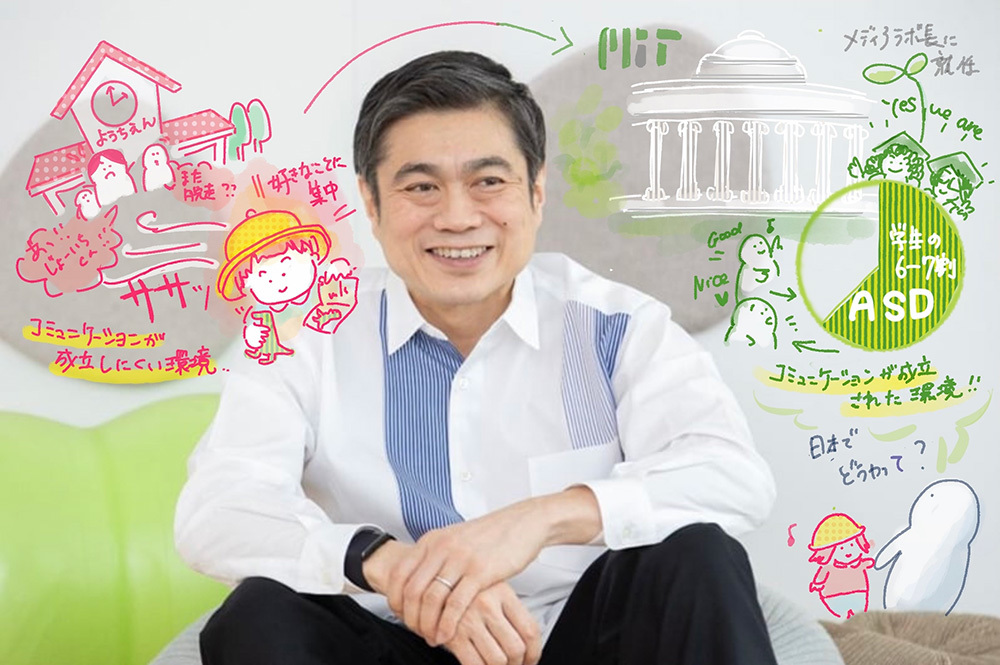
Kitamoto: So you established NSIT after being involved as a close family member of a person with ASD and continuing to be aware of various challenges arising from that experience. At NSIT, you provide an educational program that combines Floor Time*1 and the Reggio Emilia Approach*2 for a diverse group of children aged 3 to 12. What led you to decide to create a school with this approach in Japan?
*1: Floor Time
A support model that respects individual differences while supporting children’s development and their families. Based on the child’s natural interests and play, it helps enhance communication skills and the ability to build relationships with others.
*2: Reggio Emilia Approach
An educational method for children developed in the city of Reggio Emilia, Italy. The environment is considered the “third teacher,” and through activities such as art and their documentation, the approach aims to draw out children’s sensibilities and potential.
Ito: After my daughter received her diagnosis, we first tried ABA (Applied Behavior Analysis)※3, which is commonly practiced in Japan, but she didn’t respond very well to it. Then, following a suggestion from the medical director of a hospital specializing in autism, we had her participate in a five-day intensive Floor Time program offered by ICDL (The International Council on Development and Learning), an accredited Floor Time organization, and she responded positively.However, since there were no places in Japan practicing Floor Time, and even after researching other schools, we couldn’t find a place that was a perfect fit, we decided to establish a new school.
Our co-founder, Rizuki Matsumoto, had been practicing the Reggio Emilia approach. I had also observed this educational method in Boston and appreciated its experiential nature. So, I thought we could experimentally combine Floor Time and Reggio to explore what kind of education we could create. When I consulted the headquarters of both organizations, they expressed mutual interest, and the discussions moved forward.
Kitamoto: I read your book, *Living Beyond the Norm: An Introduction to Neurodiversity *. I deeply resonated with NSIT’s experimental approach—one that seeks to transform education toward respecting the individuality of every child, rather than standardizing them to fit a “normal” mold.
Ito: It may be difficult to adopt the initiatives here directly into the public education system, but I hope that as children educated at NSIT enter society, the future will gradually begin to change.
*3: ABA (Applied Behavior Analysis)
A support method that focuses not only on the “behavior” of children with developmental disabilities but also on its “triggers” and “consequences.” It approaches children’s behavior based on the principle that behaviors leading to positive “consequences” for the child will be repeated.
The Current State of Employment for People with Disabilities and Neurodiversity
Kitamoto: Mr. Sekijima, could you tell us about your career background, the challenges you’ve faced in addressing developmental disabilities within companies, and what sparked your interest in neurodiversity?
Sekijima: It has been exactly 40 years since I joined DENTSU SOKEN INC. For the first 20 years, I worked as a systems engineer; for the next 15 years, I served as Director of Human Resources; and for the past five years, I have been President of “DENTSU SOKEN BRIGHT INC.,” a special-status subsidiary of the DENTSU SOKEN Group.That means I’ve been involved in the employment of people with disabilities for about 20 years, but the reality of corporate employment practices for people with disabilities may be somewhat at odds with the ideal educational model we’ll likely hear about from Mr. Ito later.
The reason for this is that in Japan, each company is required by law to meet a statutory employment rate for people with disabilities, which currently stands at 2.5% and is expected to rise to 3.0% by 2030. As the term “obligation” suggests, the aspirations of people with disabilities and the corporate agenda may not always align.
Kitamoto: What is the current situation regarding the employment of people with disabilities?
Sekijima:There are approximately 1 2 million people with disabilities in Japan (about 10% of the population). The breakdown is as follows: over 4 million with physical disabilities, over 1 million with intellectual disabilities, and over 6 million with mental disabilities. Recently, as the number of people with mental disabilities has increased, so has the number of people with mental disabilities employed by companies. In our group as well, the recruitment of people with mental disabilities—particularly those with developmental disabilities—has been increasing year by year.
Kitamoto: Since 2018, people with mental disabilities have also been included in the statutory employment quota, haven’t they? Could you tell us what sparked your interest in neurodiversity, Mr. Sekijima?
Sekijima: Against this backdrop, we’ve increasingly been told, “DENTSU SOKEN INC. is making great strides in neurodiversity” simply because we hire a large number of people with developmental disabilities. However, I’ve always felt uneasy about that phrase. The reason is that the phrase “making great strides in neurodiversity” carries a nuance suggesting that “genius DX talent is engaged in cutting-edge IT work.”
I’m not trying to say whether people with developmental disabilities are geniuses or not. While there is debate over “what ‘normal’ means,” most people with developmental disabilities have abilities on par with the general population. Above all, I’ve seen and heard that people with developmental disabilities themselves feel uncomfortable and suffer because of the equation “developmental disability = genius,” which is why I became interested in neurodiversity.
Kitamoto: I see. So, does that mean there are still many people who hold a narrow interpretation, such as “developmental disability equals possessing exceptional talent”?
I think one of the key points in promoting neurodiversity is “engaging the general adult population” and raising awareness among those who hold such misconceptions. How does NSIT approach this issue?
Ito: When I think back on the adults involved with NSIT, the first group that comes to mind is the students’ parents, who form a community of their own. We’re currently working to expand our reach even further; for example, we’ve established a neurodiversity NPO to hold workshops and have invited advisors from overseas. Also, in terms of involving others, I believe it’s important to secure coverage from major media outlets running special features on neurodiversity and to introduce our community through those platforms.
Japan’s Aesthetic and Educational Tradition, Which Valuing “Order,” Makes It Difficult to Accept Diversity
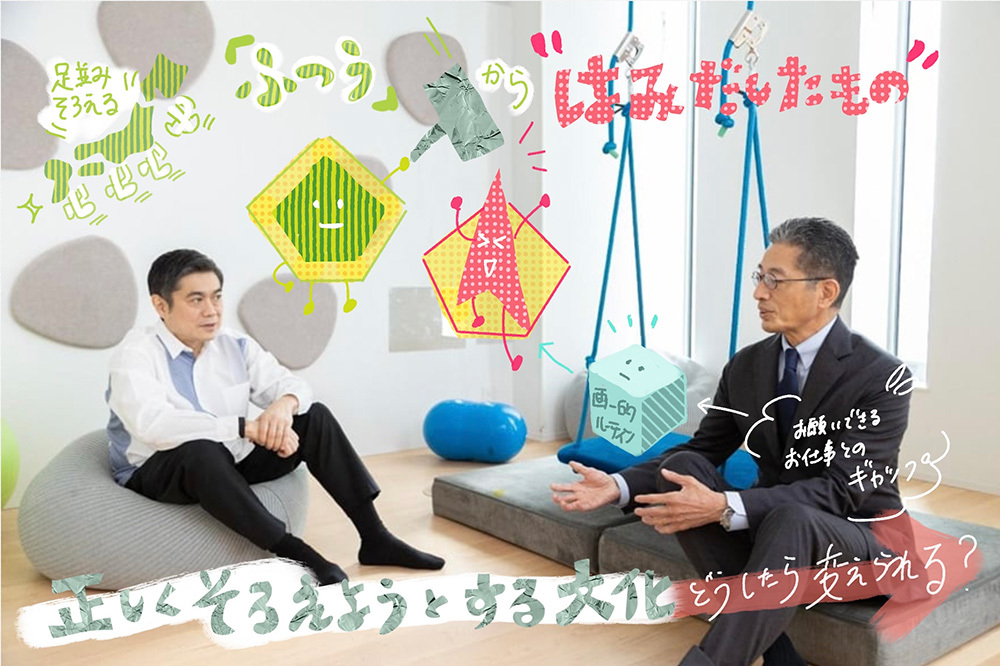
Ito: I think the actions I just mentioned are, in a sense, driving a shift in “culture.” In Japan, especially since the Industrial Revolution, there has been a tendency not to view diversity as an aesthetic value. Rather, there seems to be an aesthetic that finds beauty in things that are neatly aligned and orderly—or in standardized people working in lockstep—and, underlying that, a culture that values fairness.What’s important in neurodiversity isn’t standardization, but rather that each person approaches things in their own way. That doesn’t really align well with Japan’s aesthetics or educational methods.
Kitamoto: I’ve been involved in education-related work for a long time, and while there are various challenges, I personally believe the essence of Japan’s public education system is wonderful. However, I think it’s very important to change the mindset and approach that tries to make everyone conform to what’s “normal” or to “correctly align” those who stand out.
Ito: In a standardized society, people who simply do exactly as they’re told find it difficult to demonstrate outstanding talent.In education, there are two approaches: one focuses on raising students’ performance in areas where they struggle or have weaknesses, while the other focuses on developing their strengths. Under the Japanese system, the former is the primary focus—students work hard to eliminate their weaknesses rather than concentrating on their areas of strength. However, it is the latter approach that ultimately fosters distinctive talent. For example, as of 2024,there are28 Japanese Nobel laureates, whereas MIT has 105.
Kitamoto: I completely agree. It’s true that in Japan, there is a traditional educational philosophy that emphasizes “continuing to make efforts to overcome subjects you struggle with and turn them into strengths.” While the landscape is gradually changing with the introduction of inquiry-based learning and other initiatives, I believe that by nurturing what students “like” and are “good at,” we can develop unique individuals who make the most of their individual characteristics.
Sekijima: People with disabilities employed by companies also have diverse interests and varying strengths and weaknesses. While companies would ideally like to assign tasks based on what employees enjoy or excel at, many struggle with how much to accommodate individual preferences because, after all, it’s work. This dilemma may well be a direct extension of the one-size-fits-all Japanese education system that Mr. Ito mentioned. Furthermore, I think another factor is that, currently, many companies have limited job assignments available for people with disabilities—often consisting of routine tasks—which results in fewer options.
For people with developmental differences to reach their full potential, they need understanding from people other than their parents, along with generous love
Ito: Even though we use the term “neurodiversity,” it’s actually a very complex issue. Even among those diagnosed with ASD, everyone is truly unique. To identify and nurture their strengths, they need a great deal of love and support. When you hear stories about Nobel Prize-winning chemists and others, you realize that many of those called “geniuses” had their talents blossom thanks to support from someone other than their parents.Conversely, parents—who are the closest people to them—may sometimes find it difficult to recognize those strengths. For example, a chemistry teacher during their school years might have encouraged a student by saying, “You’re smart; you’re amazing,” which served as the catalyst for them to delve deeper into their interests.
Kitamoto: Have any children at NSIT had similar experiences?
Ito: It might be a little different, but among the therapists at NSIT, there is someone who loves every single child. Some parents who visit our school are shocked to see him—even though it’s their first meeting—show love for their child, “connect” with them, and communicate with them in such a joyful way.
Sekijima: By “shocked,” do you mean they’re reflecting on whether their own approach to their child was inadequate?
Ito: For example, there was a parent who said their child was always screaming and wouldn’t listen to them. When the child was screaming in front of the TV while watching a video of their favorite trains, the therapist, who was observing nearby, started screaming along with them. From there, they began communicating happily and even started counting the toy trains together. Seeing this, the parent was shocked, wondering, “Why is the therapist reacting like that—something we’ve never seen from them?”
Apparently, up until then, the parents had been yelling “Stop it!” whenever the child screamed. However, according to the therapist, the child’s screaming was an expression of “joy.” When the parents showed that they, too, were happy while the child was happy, their emotions “connected,” trust was built, and playing with trains led to learning. The parents realized that instead of trying to silence the child’s “joyful” cries and force them to learn from textbooks, there was a way to connect learning through the child’s favorite things.
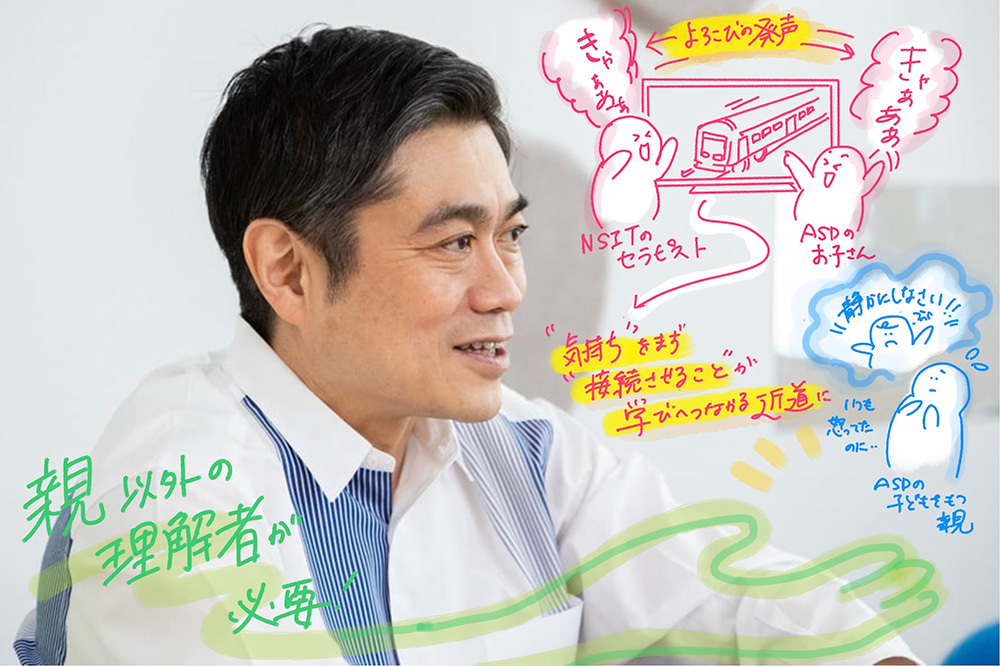
Ito: In that way, showing parents how to interact with their own children is also an important form of support. What I found interesting during the COVID-19 pandemic was that, because therapists couldn’t visit in person, training the parents themselves proved to be very effective. It’s obviously better for the parents—who are always with the child—to learn, rather than having someone who knows how to handle the situation come by occasionally for just an hour.
Kitamoto: For children, parents are naturally the most familiar and important figures in their lives, but it’s also crucial to have adults—like therapists—who believe in the child’s potential and give them a push forward. It’s similar to how having such figures present within a company can help employees’ talents truly blossom.
The Importance of Creating Systems That Don’t Sacrifice “Intrinsic Motivation”
Ito: I believe this educational approach is suitable for everyone. The reason I felt the traditional approach didn’t work for me was that the motivation given to children was based on “being praised.”
For example, children with ASD often struggle to make eye contact, so the conventional approach involves praising them and giving them a cookie as a reward when they do make eye contact. Normally, eye contact is meant to facilitate communication, but children with ASD avoid it because it feels uncomfortable to them. If we instill the motivation to make eye contact simply to receive a reward, they’ll end up holding out their hand the moment they walk into a room.
This applies to people other than those on the autism spectrum as well. While they should ideally study hard because they enjoy the subject, if they start studying just to be praised by parents or teachers, they’ll lose their intrinsic motivation by the time they become adults. As a result, some people become “praise-addicted,” capable only of diligently carrying out tasks exactly as instructed by others.
Kitamoto: So, it’s not just about being driven by the carrot and the stick; intrinsic motivation is key, isn’t it?
Ito: I think there are certainly situations where you have to work hard using the carrot-and-stick approach, but life as a whole is ultimately driven by curiosity—by the desire to do something because you want to. I’m not saying we should eliminate all experiences of doing things we don’t like, since they’re an important part of learning, but I feel that in many cases, doing too much of that ends up sacrificing curiosity and passion. I think the key is finding the right balance between the two.
Kitamoto: In companies as well, there are many cases where employees act based on extrinsic motivation—doing things to be evaluated or recognized by their superiors—rather than because of what they actually want to do. Mr. Sekijima, from your perspective of having worked with people with developmental disabilities, what are your thoughts on this?
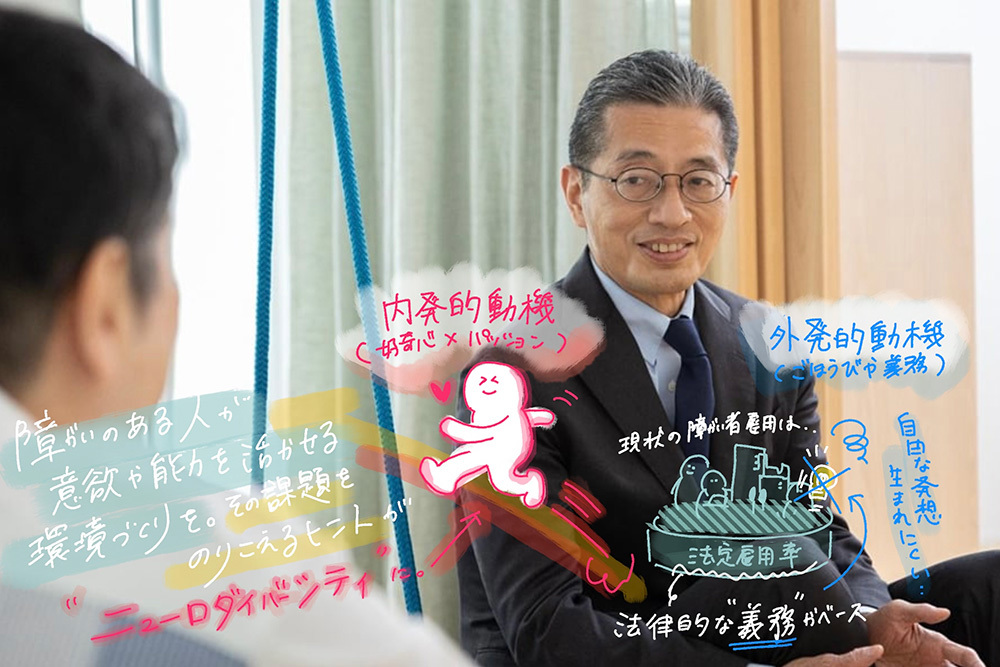
Sekijima: From the perspective of “intrinsic motivation” versus “extrinsic motivation,” the reality is that many people with disabilities currently work in environments shaped by statutory employment quotas—in other words, “legal obligations.” I believe it’s difficult for free thinking to emerge from such obligations, so under the current circumstances, it’s not necessarily the case that work styles based on true “intrinsic motivation” are being fully realized.
The ideal of work is for individuals to leverage their own interests and aptitudes, while companies respect that motivation and grow together. I believe that if environments expand where people with disabilities can take on the jobs they desire, and companies can utilize their motivation and abilities, this will lead to a more fulfilling way of working. And I think the concept of “neurodiversity” offers one clue to overcoming this challenge.
An approach that involves people with disabilities directly in the workplace, rather than a relationship of “giving” and “receiving” support
Ito: The researchers I’m currently working with at Chiba Institute of Technology are individuals with ASD, and their philosophy is that “people with ASD must be the ones to design it first.” They point out that the interfaces designed for ASD by neurotypical people often differ from what people with ASD actually want to do. However, since it’s difficult for neurotypical people to imagine this on their own, a recent trend in the U.S. has been to build organizations that invite people with ASD to collaborate on the design process.
Situations are emerging where solutions created based on the persistent misconception that people with disabilities are simply objects of support actually turn out to be ill-suited. Against this backdrop, the philosophy of design is shifting in the United States. To expand this trend, the concept of neurodiversity is essential.
Sekijima: In many corporate settings where people with disabilities are employed, it is common for those providing support to focus on “helping the person receiving support to work in a ‘normal’ way.” However, the definition of “normal” is vague, and I believe the current reality is that both parties are trying to communicate while being overly cautious due to this uncertainty. I think the concept of neurodiversity can be a useful solution to this challenge.By moving beyond the vague standard of “normal” and respecting work styles that leverage each individual’s unique characteristics, we should be able to build a more flexible environment.
Kitamoto: What those providing support consider “normal” may not be so for the individuals receiving support. To eliminate that sense of discomfort, we need an approach that involves co-creating solutions with neurodivergent individuals themselves. Is this similar to what’s known as inclusive design? Since the concept of neurodiversity itself was originally proposed by Judy Singer, who has ASD, I feel that the agency of the individuals involved is crucial.
Ito: In the U.S., the situation only began to change significantly once individuals with neurodiversity formed their own organizations. Furthermore, as is the case with DEI, there is a growing trend among U.S. organizations led by individuals with neurodiversity to refuse to do business with companies or organizations that do not have individuals with neurodiversity in leadership roles. I expect this trend will eventually reach Japan as well, and, much like DEI, it may be possible to successfully promote it in a way that aligns with Japanese culture.
In Part 2, I’ll discuss perspectives on bridging education and the corporate sector, as well as key points for integrating neurodiversity into society.
*In this series, the term “disability” is used at the request of our guests.
[Photo-scribing by: Chiharu Kai, Representative, Dentsu Graphic Recording Institute]
The Dentsu Graphic Recording Institute is a cross-functional project team within the Dentsu Group dedicated to providing visualization services—centered on graphic recording—and conducting related research. This article was created using a technique called “photo-scribing,” in which the content of the interview is drawn directly onto photographs. https://www.dentsu.co.jp/labo/grareco/index.html

Was this article helpful?
Share this article


Newsletter registration is here
We select and publish important news every day
For inquiries about this article
Author
Joichi Ito
Chiba Institute of Technology
President, Director of the Center for Transformation
Katsumi Sekijima
DENTSU SOKEN BRIGHT INC.
Former President and Representative Director
Hidemitsu Kitamoto
Dentsu Inc.
Future Business Creation Research Institute