Note: This website was automatically translated, so some terms or nuances may not be completely accurate.
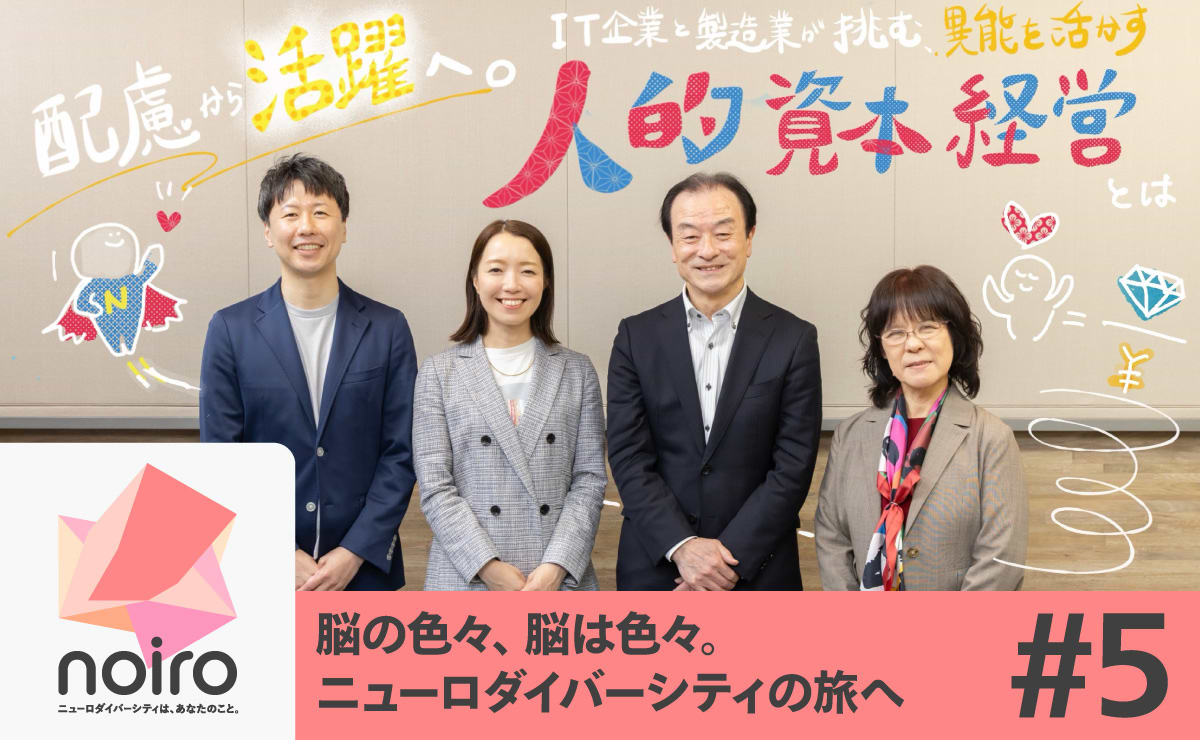
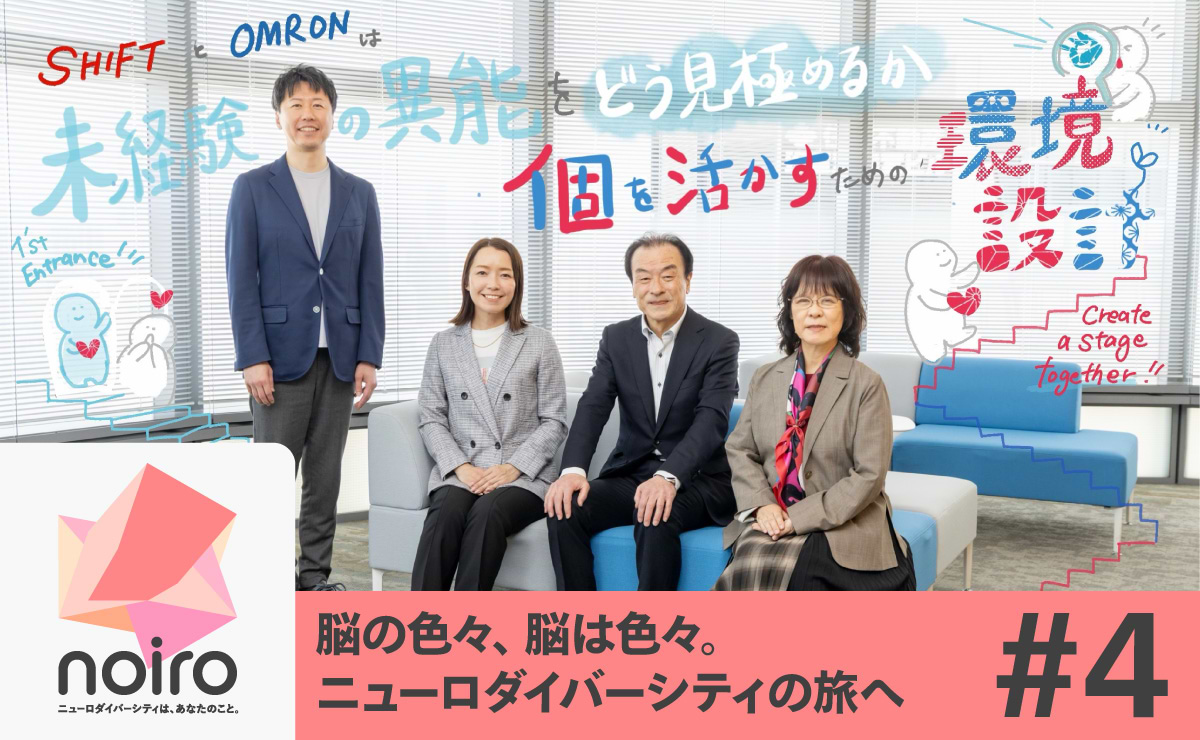
 The brain's many facets, the brain's many forms. Embark on a journey of neurodiversity. [2/5]
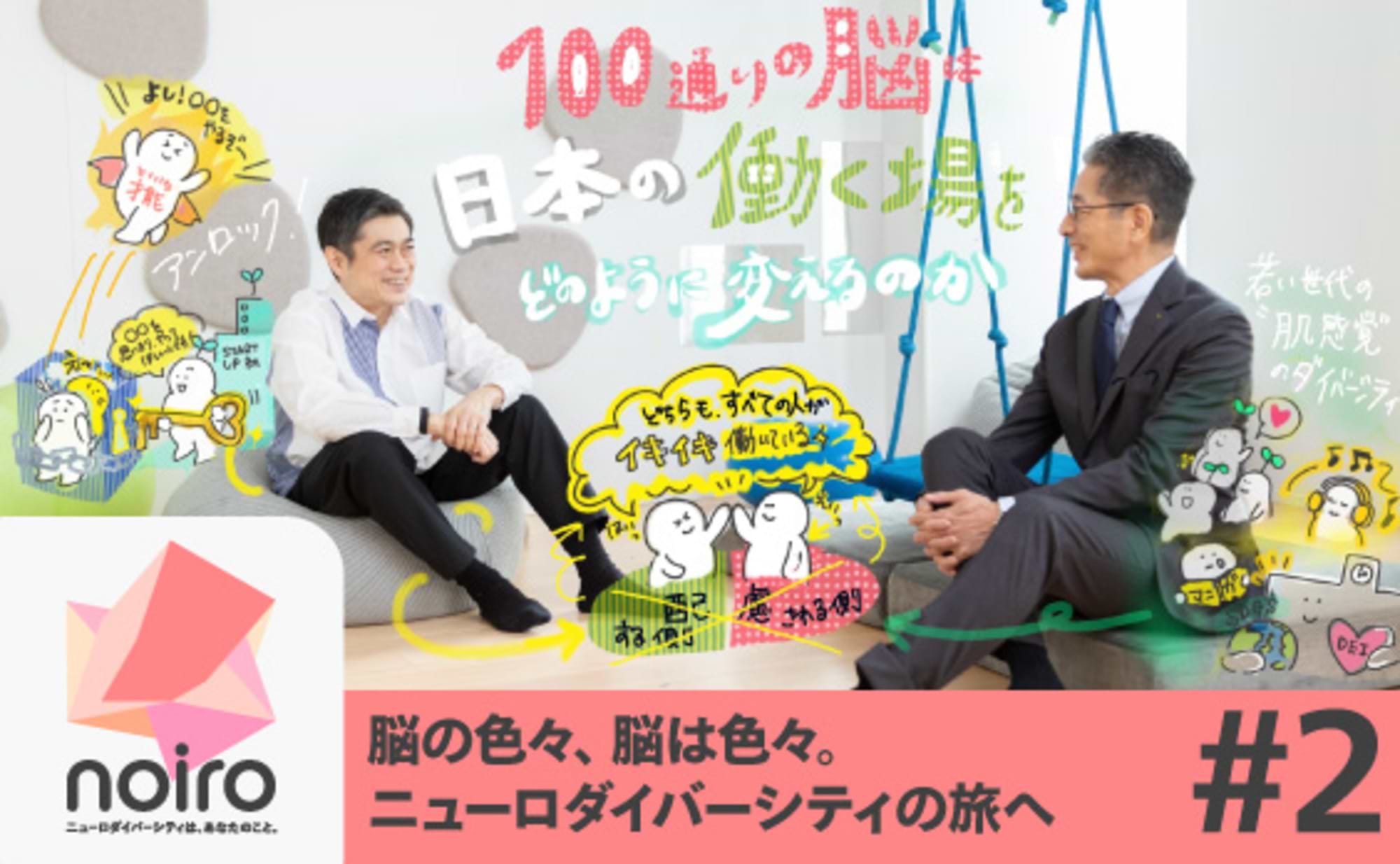
How Will “100 Ways of Thinking” Change the Japanese Workplace?
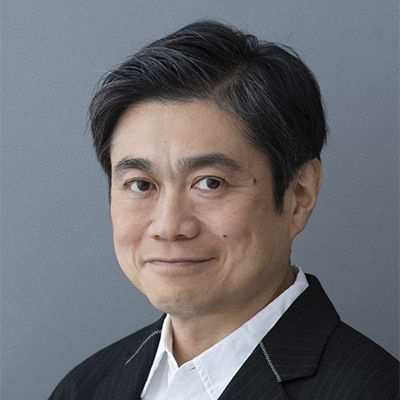
Joichi Ito
Chiba Institute of Technology
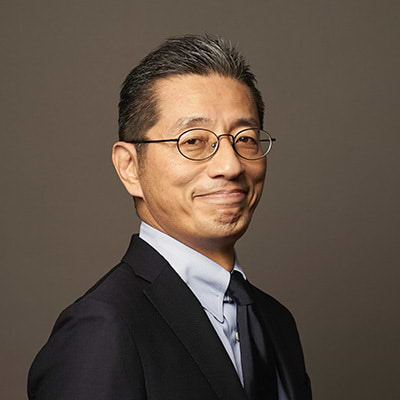
Katsumi Sekijima
DENTSU SOKEN BRIGHT INC.
Hidemitsu Kitamoto
Dentsu Inc.
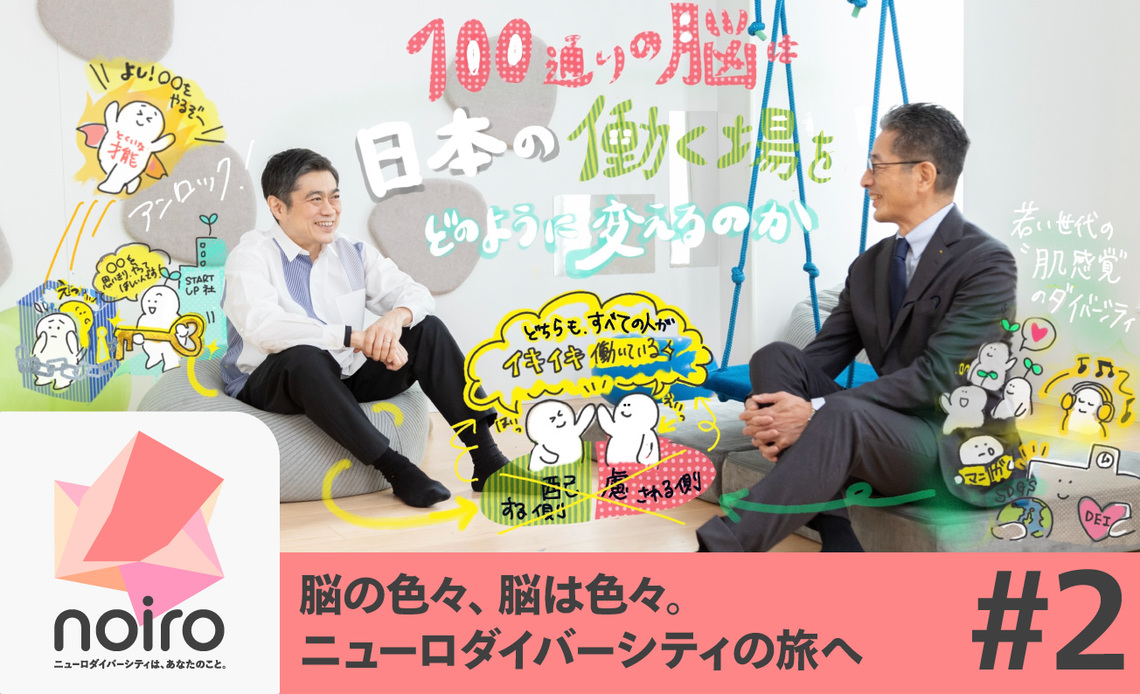
Photo-scribing: Chiharu Kai (Director, Dentsu Inc. Graphic Recording Institute ).
In 2021, a group of volunteers from the Dentsu Group—including Dentsu Inc. and DENTSU SOKEN INC.—launched the Neurodiversity Project [noiro]. In this series, members of the project will explore the concept of neurodiversity, its current state, and how it can be applied to the future workplace through dialogues with researchers, experts, and individuals with neurodiversity experiences.
*What is Neurodiversity?
A term combining “neuro” (brain/nerves) and “diversity.”It is a concept that views differences in the brain, nervous system, and the various individual characteristics stemming from them as forms of diversity; it promotes mutual respect and seeks to leverage these differences within society. It views neurodivergent development—such as autism spectrum disorder (hereinafter ASD) and attention-deficit/hyperactivity disorder (ADHD)—not as disabilities, lack of ability, or a matter of superiority or inferiority, but as natural differences unique to each person.This concept applies not only to neurodiverse individuals but to everyone. It was proposed in the 1990s by Australian sociologist Judy Singer, and since the 2010s, initiatives—primarily among international IT companies—have spread to leverage the characteristics exhibited by individuals with neurodiverse traits, such as high levels of concentration and creative thinking.
Following our previous installment, which covered the differences in perspective between education and the corporate sector as well as the current state and challenges of neurodiversity, this second installment—the second part of the series—is once again moderated by Hidemitsu Kitamoto of Dentsu Inc. Future Business Research Institute / noiro.
We feature Mr. Joichi Ito, President of Chiba Institute of Technology and co-founder of the “Neurodiversity School in Tokyo” (5th Floor, Pola Aoyama Building, 2-5-17 Minami-Aoyama, Minato-ku, Tokyo;hereinafter NSIT), we spoke with Mr. Joichi Ito, President of Chiba Institute of Technology and co-founder of NSIT, and Mr. Katsumi Sekijima, former President and CEO of “DENTSU SOKEN BRIGHT INC.,” a subsidiary of the DENTSU SOKEN Group established to support employees with disabilities. We asked them about their perspectives on bridging the gap between education and the corporate world, key points for integrating neurodiversity into society, and efforts to promote the active participation of neurodivergent individuals (those with developmental characteristics).
The key lies in how to “identify” capable individuals and transform their motivation.
Kitamoto: Mr. Ito founded NSIT with great passion and is striving to implement an educational approach that fosters the abilities of neurodivergent children (those with developmental disabilities such as ASD) through a combination of Floor Time*1 and the Reggio Emilia Approach*2. On the other hand, the current state of corporate support for individuals with developmental disabilities tends to create a division between “those who provide support” and “those who receive it,” rather than fostering empathy and understanding.Even if individuals have received an education designed to help them develop their own abilities, there is a possibility that the results of that education will not be put to use once they join a company.
With these points in mind, please share your thoughts on what you expect from corporate practices, as well as how you view the continuity between the educational approach you have implemented and the experiences of individuals after they join a company.
*1: Floor Time
A support model that respects individual differences while supporting children’s development and their families. Based on the child’s natural interests and play, it helps them build relationships with others and improve their communication skills.
*2: Reggio Emilia Approach
An educational approach for children developed in the city of Reggio Emilia, Italy. It views the environment as the “third teacher” and aims to draw out children’s sensibilities and potential through activities such as art and the documentation of those activities.
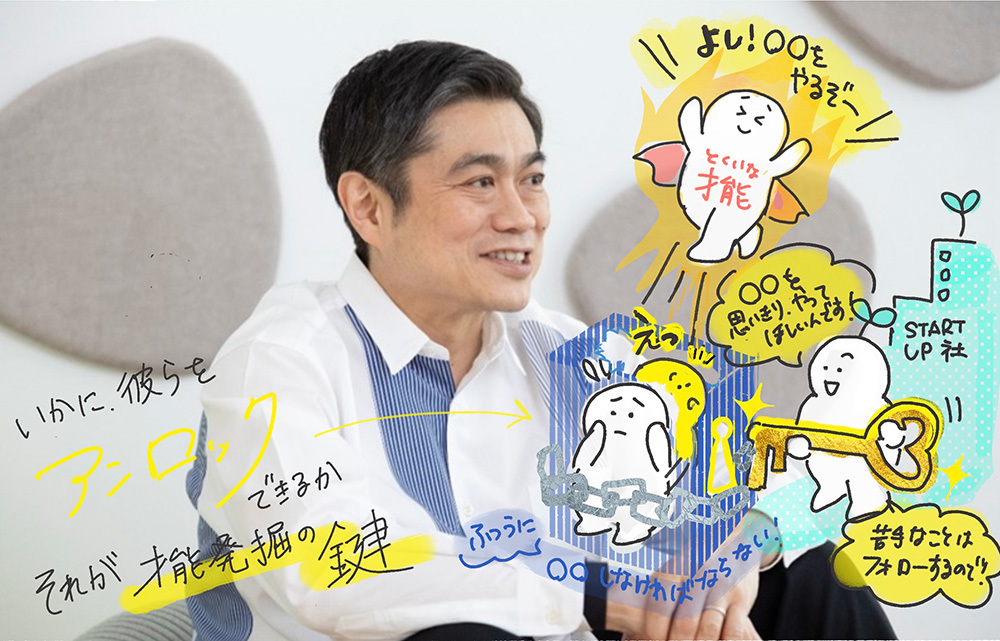
Ito: I also view this as a critical issue. That said, I wonder if the key might lie with startups. While it’s quite difficult to change rules and corporate culture within large companies, startups can shape their culture to a certain extent from the very beginning. Furthermore, even people who are perceived as unable to work due to developmental disabilities can sometimes suddenly demonstrate unique abilities once they are “unlocked”—that is, once the barriers they perceive as disabilities or constraints are removed.When considering these individuals in the context of work and companies, the challenge—and the key—lies in how to go about “uncovering” such potential.
This is just my personal observation, but I’ve noticed glimpses of this in the world of hobbies. For example, when I used to teach scuba diving in Dubai, there was a student who was considered unable to keep up in school but turned out to be the most enthusiastic and dedicated. Conversely, the top student in school would ask, “Does this have anything to do with my grades?” and lose motivation. In other words, I believe that even people who are labeled as “different” within a company and aren’t able to demonstrate their full potential can be “unlocked” if their motivation is shifted.
On the other hand, I think it’s also difficult to find ways to boost “motivation on the corporate side.” When it comes to hiring people with disabilities based on statutory employment quotas, the conversation inevitably tends to focus on cutting costs. But if companies were to view this as an opportunity to seek out “talent”—people who can demonstrate unique abilities depending on the environment—wouldn’t that shift their motivation at least a little?
Kitamoto: I think the statutory employment quota has many positive aspects, such as ensuring equal employment opportunities, but perhaps it’s time to rethink it.
Ito: When it comes to these key aspects of employment in society, there are positive economic motivations—such as the possibility that unlocking these opportunities might reveal untapped talent—as well as the idea of creating a barrier-free environment for everyone from the perspective of fairness. The KPIs differ completely depending on the company’s rationale for hiring. I feel that’s where the challenge lies with the neurodiversity project.
Everyone is “within” neurodiversity
Sekijima: After speaking with representatives from several IT companies that are making progress in neurodiversity, I noticed a common thread. In these companies, neurodiversity is not treated as merely one measure of “employment for people with disabilities,” but is viewed strictly from the perspective of “recruiting top-tier engineers.” Furthermore, they are implementing various measures to create systems that allow employees to fully demonstrate their abilities even after joining the company, as well as work environments that are conducive to productivity.
At one company, about half the employees had developmental disabilities or traits associated with them, yet both those with disabilities and the remaining half—who did not—were working with great enthusiasm. Seeing this, I realized that “a company where people with disabilities can work comfortably is a company where everyone can work comfortably.” In other words, I truly came to understand that advancing neurodiversity means that all employees—regardless of whether they have a disability—can demonstrate their abilities and work with enthusiasm.
Kitamoto: Even as the discussion of neurodiversity spreads in Japan going forward, we should be mindful that this isn’t simply about the employment of people with disabilities. We should recognize that everyone is part of this conversation.
Sekijima: When I’m involved in the employment of people with disabilities, I’m often told things like, “That’s admirable,” or “That must be a difficult job.” It’s true that people with disabilities have various characteristics, and there are times when they need support, but everyone has their own unique characteristics. Just because we employ people with disabilities doesn’t mean it’s particularly difficult. In fact, when people say, “That must be hard,” I feel misunderstood, and it’s disappointing.
Ito: It depends on the person, but I think there are actually many people with disabilities who don’t want to be seen as “pitiful.” It’s inevitably hard for people to maintain their pride when so many around them offer help just because they think the person is “pitiful.”
This might be a slightly different point, but I think assistive devices like canes often carry a somewhat pitying connotation in Japan. In countries like the UK, however, they produce canes and prosthetic legs with very stylish designs under the concept of “Disability Design.” Isn’t it important to create an environment where they can take pride in themselves?
Kitamoto: Even in DEI training in Japan, we often see an approach that divides people into “those who provide consideration” and “those who receive it,” emphasizing the need to show compassion toward the latter group. While understanding is certainly important, this approach inevitably keeps us trapped within a “provider-recipient” framework. To reiterate, neurodiversity concerns everyone. The fact that everyone is a stakeholder is a crucial perspective that has been missing from DEI efforts up until now.”
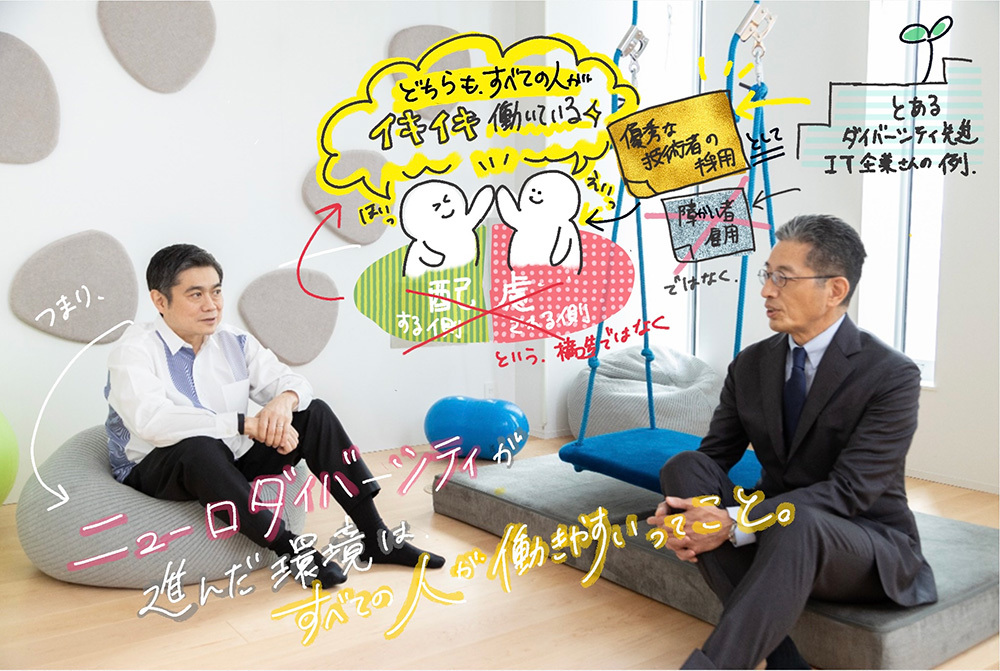
Ito: No matter who you are, it’s difficult to thrive in an uncertain or unstable environment. People with developmental disabilities are particularly vulnerable to such conditions. If we can create a supportive environment for these sensitive individuals, everyone will be happier.
Kitamoto: That’s true. To use a related concept, it’s like universal design. The idea is to shift that focus more toward the emotional aspect.
As things stand now, I think the general public’s understanding of neurodiversity is overwhelmingly low. People might have a vague understanding of physical or intellectual disabilities, but when it comes to diversity in the brain or mind, it’s quite difficult. If we’re talking about the brain, for instance, it’s crucial that everyone recognizes that, by nature, all 100 people out of 100 are different.It’s not about “those directly affected” versus “myself”—I hope everyone can truly internalize this as a personal issue so that all people can find their place within neurodiversity.
Ito: After all, there’s no such thing as a so-called “completely normal person.” I read in a research paper some time ago that there isn’t a single person who falls entirely within the average range—physically speaking, with an average weight and average physical characteristics. Yet, I think we’re under the illusion that such “normal people” actually exist.
I want to make the most of the flexible sensibilities young people have developed through education and the “atmosphere” around them.
Kitamoto: How can we effectively connect the children who have been learning independently at NSIT until the age of 12 to companies or careers? I’ve come to realize once again that this point of connection will be crucial going forward. As a hint for that, could you share the story from the new employee training program that Mr. Sekijima mentioned experiencing previously?
Sekijima: For the past few years, I’ve been giving a presentation on hiring people with disabilities—about 30 minutes long—as part of DENTSU SOKEN INC.’s new employee training program. After the presentation, I ask the new hires to submit a short report, and the content is actually quite good. For example, I’m seeing more and more opinions like, “Aren’t special-purpose subsidiaries running counter to the spirit of inclusion?” or “While agriculture and similar fields are great, shouldn’t we assign them work that directly contributes to the company’s core business?” This is truly wonderful.When I give the same talk to employees in their 50s and older, the reaction is completely different. It’s often disappointing to see them view the employment of people with disabilities solely from a welfare perspective or try to address the issue based on economic rationality.
I believe this is likely the result of DEI education—which is now being taught in schools alongside the SDGs and environmental issues—beginning to bear fruit. If young people with this kind of sensitivity continue to grow within companies, society as a whole will surely change. That is precisely why I feel there is a need for inclusion—that is, educating diverse people, regardless of whether they have a disability or not, in the same setting. Learning from a young age is truly important.
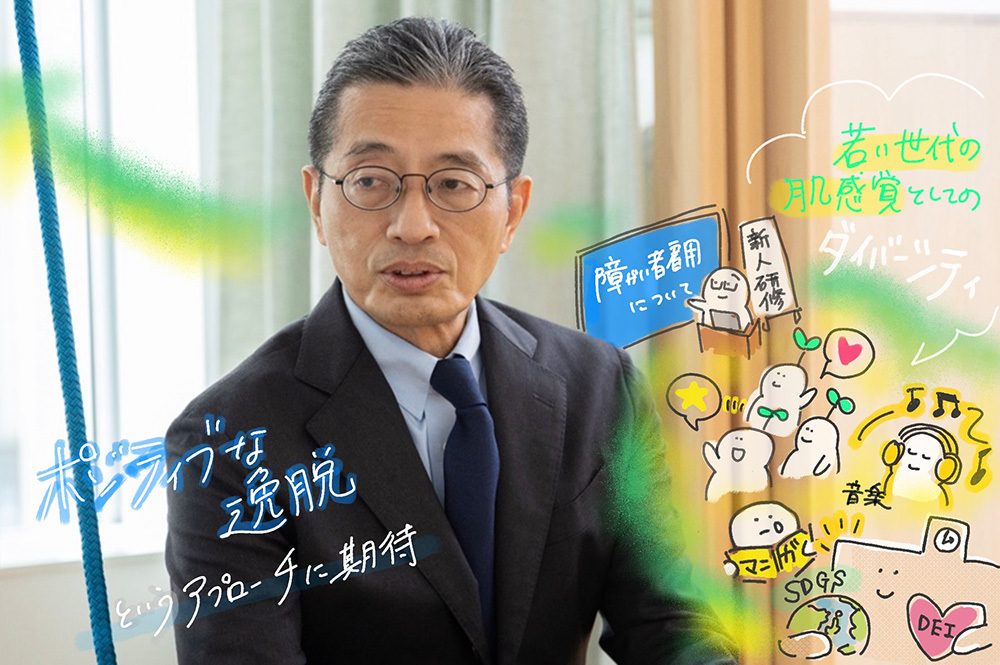
Ito: Young people’s worldviews are changing. Education certainly plays a role, but I think the overall atmosphere—including music, manga, and everyday life—is shifting as well. It’s fascinating to consider where the line lies between what stems from education and what stems from the current “vibe.”Also, as is true in any era, there may be a sense of discomfort or resistance toward the older generation. They feel that today’s environmental problems and social instability are the result of the actions of previous generations, and they want to break free from that. I think one aspect of that is a visceral sense of diversity.
Rather than having organizations like the United Nations launch various awareness campaigns “from above,” it might actually lead to a more natural movement if we skillfully nurture these instincts in young people. In that sense, I have very high hopes for the younger generation. There’s an approach called “Positive Deviance,” which involves finding solutions through the unusual, non-conforming behaviors of small minorities within society. I believe it would be better to expand such actions rather than trying to effect change from the top down.
The Rising Social Status of Engineers and the Evolution of AI: Expanding Opportunities for Neurodiverse Individuals
Kitamoto: Efforts to promote neurodiversity—not only within the Dentsu Group but across many companies—have only just begun, including discussions on recruitment, onboarding, and management practices. With that in mind, what kind of contributions can neurodiverse individuals make in this technology-driven society? Including not only those with ASD but also those with other developmental disabilities such as ADHD, what types of roles or fields do you think they can bring value to, Mr. Ito?
Ito: While many companies faced difficulties during the COVID-19 pandemic, for people with disabilities, it actually became easier in some ways to participate in the workforce. This is because remote work made it easier for people who prefer not to make eye contact or have limited mobility to work. For example, in a meeting where only one person is participating online, that person’s voice might not be heard as clearly, but if everyone is online, the playing field is leveled. In terms of being able to fully demonstrate one’s abilities, that kind of environment is one possibility.
Furthermore, fields in science and engineering are where people with ASD often demonstrate their unique abilities. Raising the social status of such engineers is crucial when considering ASD and neurodiversity. In the United States, science and engineering professionals lead top universities in these fields, such as the Massachusetts Institute of Technology (MIT), and the leadership of IT companies—including Elon Musk—is full of people with ASD, providing visible role models of success.
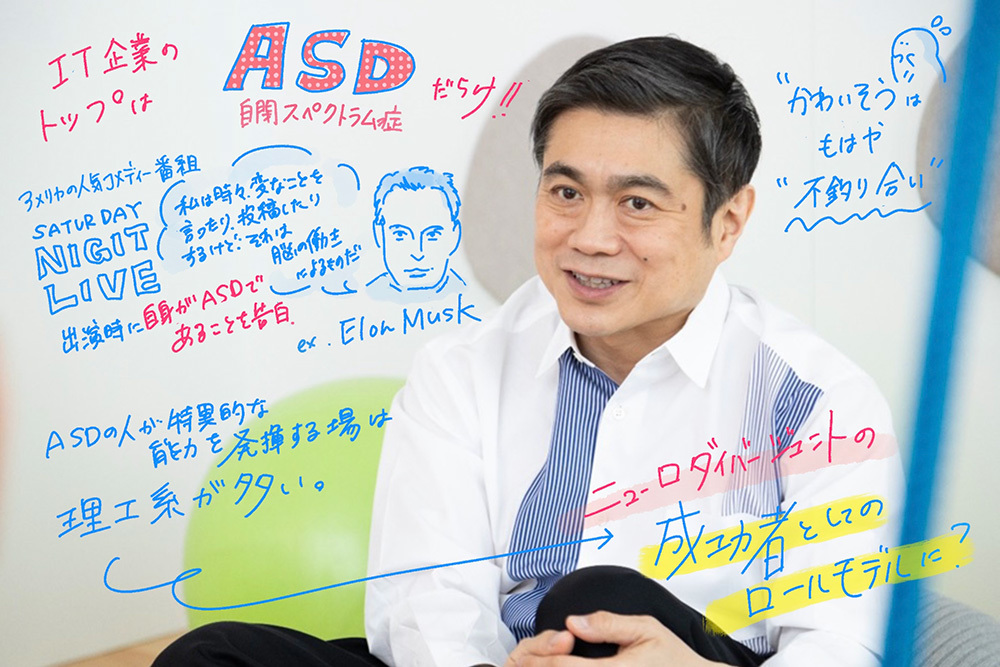
Sekijima: I believe the ideal is a society where people with disabilities can achieve self-fulfillment, and where both individuals and companies can grow together. I think neurodiversity lies at the core of this way of thinking. Furthermore, another ideal is the realization of a society where people can work independently, rather than simply being employed by companies. There is no doubt that cutting-edge technologies, including AI, will serve as useful tools for breaking down the blurred boundaries between neurodivergent and neurotypical individuals.
Kitamoto: Amid concerns that Japan’s current working-age population of 73 million will continue to decline rapidly, leading to a decline in the nation’s strength, I believe work styles will continue to evolve. In this context, companies could shift their hiring perspectives and develop ways to foster greater understanding and build a base of supporters for neurodivergent employees from the moment they join the company.In any case, unless we significantly expand our efforts, neurodivergent individuals will fall through the cracks in the workplace. I felt strongly that we must address this issue.
The key to neurodiversity lies in Japan’s unique communities
Kitamoto: To reiterate, neurodiversity is not merely a “policy for people with disabilities,” but rather about creating an environment where everyone can work while making the most of their unique traits. I feel that, ultimately, this leads to a more comfortable work environment for everyone. At the same time, regarding education—for example, how can Japan thrive in the future based on the lives of children with ASD currently at NSIT? From this perspective, Mr. Ito, please share your outlook for the future.
Ito: There are all kinds of children with ASD, and of course, some find it difficult to be independent. However, just because they cannot be independent does not mean they are not contributing to society. Communities have a variety of roles. Within that context, rather than being in a position where people help them out of “pity,” there have been quite a few situations in Japan where they’ve been given a role—such as, “Everyone is happy when this person is here.” For example, there are people who, while they may not have the skills to be fully independent, are loved by everyone for tending to the flowers and plants in their neighborhood.
Also, in Izumo, there are people called “community nurses” who participate in local gatherings—such as events where the elderly interact with young people and children—and conduct health checks. It’s a system that leverages the community to promote the happiness and well-being of local residents. Even elderly people who aren’t working can find their own roles by looking after children or passing on their knowledge. When people have roles like that within the community, it becomes a comfortable place for everyone.
Kitamoto: I see. Personally, I believe in the power of neurodivergent individuals as well as that of children. They possess qualities that we do not have. I strongly feel that what is needed is not a mindset of “giving” or “receiving” support, but rather an attitude of living together within the community.
Ito: I feel that a well-established community possesses great resilience, and within that, a model where people look out for one another and become like family members is one viable way forward. Japanese concepts like mutual aid and coexistence within the community may seem weak from the perspective of startups or competition, but they are good for peace. I believe the key lies in that kind of “village-like” culture and community.
In a corporate setting, it is inevitably the “people who are hired” who shape the environment and the product. Nothing will change unless the workplace itself changes. Therefore, the conclusion at a broader level is that it is crucial to transform the front lines of large corporations like Dentsu Inc. through the very activities you are all engaged in right now. I think it would be beneficial to focus primarily on that and conduct case studies on “positive deviance.”
Kitamoto: Thank you very much. Listening to both of you, I felt a sense of hope that as the concept of neurodiversity spreads throughout society, every child will be able to live a joyful life and everyone will find it easier to work. NSIT’s mission is to “create a ‘New Standard’ for the environment of future children,” and looking toward a future where neurodiversity is widely accepted, I hope we can work together to aim for nothing less than “creating a ‘New Standard’ for the working environment of the future.”
A Glimpse of a Future Where Neurodiversity Is Embedded
Joichi Ito’s Vision
“A Society Where Individual Talents Shine”
Katsumi Sekijima’s Vision
“Bringing Vibrancy to Work. There’s More Than One Way to Shine.”
*In this series, the term “disability” is used at the request of the guests.

Was this article helpful?
Share this article


Newsletter registration is here
We select and publish important news every day
For inquiries about this article
Back Numbers
Author
Joichi Ito
Chiba Institute of Technology
President, Director of the Center for Transformation
Katsumi Sekijima
DENTSU SOKEN BRIGHT INC.
Former President and Representative Director
Hidemitsu Kitamoto
Dentsu Inc.
Future Business Creation Research Institute