Note: This website was automatically translated, so some terms or nuances may not be completely accurate.
 Shinmeikai "Strategic PR" [8/51]
Popular Sequel: "PR Etiquette You Think You Know but Often Forget" Part 2
Hello everyone. This time, we bring you a sequel to the well-received "PR Etiquette You Think You Know but Often Forget." This series revisits "basic PR etiquette," and this installment covers three key points for holding PR events and press conferences targeting media that we couldn't cover last time:
・"When to hold it?"
・"Where will it be held?"
・"Who will attend?"
We'll focus on the last one: "Who will attend?"
The media gathering at talent-focused press conferences is a mixed bag
Talent-based press conferences themselves emerged as a strategy to gain exposure in a slightly different format than corporate information, under conditions where opportunities to be covered as "economic news" had drastically decreased due to intensifying competition. The basic methods used for press conferences and briefings aimed at economic journalists were integrated into these talent-based press conferences.
Common sense dictates that talent-driven press conferences and economic briefings attract media with distinct characteristics, gathering reporters from different beats like "Culture & Entertainment" versus "Economics." Ideally, separate events should be held, carefully providing each participating media outlet with information optimized for them. Even the explanations given at the event might require different wording for journalists with industry expertise versus entertainment reporters. In other words, industry jargon can be understood differently depending on the audience, leading to questions of "what works/what doesn't."
However, holding a press conference involves costs and manpower for the venue, decorations, operations, and proceedings. From the company's perspective, they might think, "Couldn't the media understand this?" For some media outlets, this "talent press conference" means their valuable reporting time is tied up with content outside their area of focus, which is indeed a hardship. Still, they understand the client's situation and often concede, thinking, "Well, it can't be helped."
Entertainment wants pictures, Business wants numbers
Consequently, press conferences typically attract two distinct media groups: the "Business/Economy" and "Culture/Entertainment" departments. Content is therefore tailored to appeal to both. This often results in an overwhelmingly packed agenda, leading reporters from each department to perceive the non-relevant information as a "waste of time." Reducing this negative perception and efficiently guiding each media group through the coverage is where the PR professional's skill lies.
A key point to remember is that the "Culture and Entertainment Department" wants easily understandable "visuals." On the other hand, the "Business Department" seeks corporate "numbers." Providing these to each group in a timely manner is essential. This requires various ingenious approaches. Everything must be anticipated: stage routes, the running script, and even the venue setup.
Furthermore, since this is a one-time event, we must ensure crucial moments aren't missed. This means meticulously briefing cameramen arriving early to capture speakers' movements before the opening, or scheduling talent photo sessions midway through the program if many TV crews plan to leave early for live broadcasts. While adhering to the basic structure, we adapt flexibly and prepare so the on-site director and MC can constantly coordinate.
This is where we focus our greatest attention, and when it goes well, we're enveloped in a powerful sense of elation. The ecstasy in moments like these is simply indescribable. In fact, it seems scientifically proven that success achieved amidst risk heightens that pleasure.
But I digress... Furthermore, the timing is crucial for those intense one-on-one interviews with celebrities you often see on TV. The so-called "hanging questions"—where multiple media outlets bombard a talent with questions—is also the moment when media enthusiasm peaks. After all, the talent's genuine, unfiltered reactions heighten viewer interest, so many media outlets persistently press for answers. However, due to the overall flow of the event or the talent's schedule, we must skillfully bring this segment to a close. Managing the questions and filming to ensure multiple media outlets capture the best possible "shots" is another crucial role.
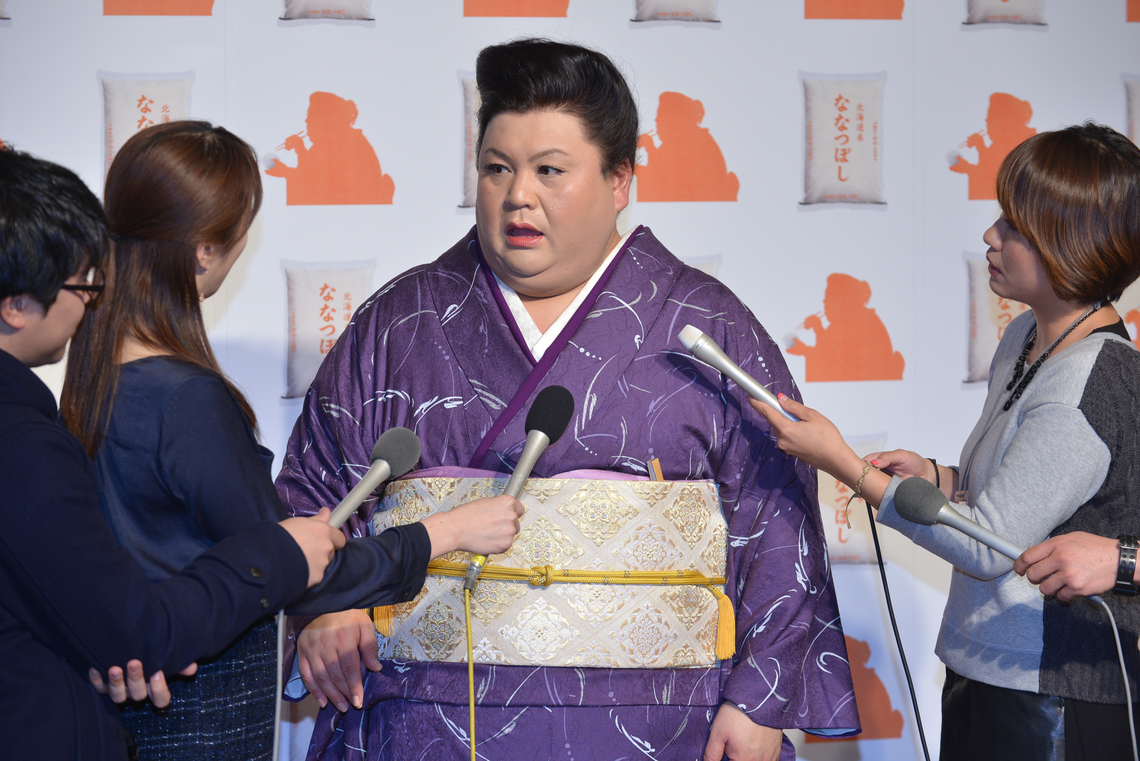
The climax of a talent announcement event is the "surround interview." Meticulous attention is paid to its execution to ensure each media outlet can capture solid footage within the limited time.
Is the venue setup actually optimized for PR?
This "hanging around" isn't just popular with entertainment reporters; business journalists love it too. But their targets are different. While keeping an eye on the talent press scrum, economic reporters launch an interview offensive targeting corporate executives, board members, and responsible officers. They're eager not only for the "prepared statements" made during the proceedings but also to capture the "raw voice" of these executives. The economic department aims for unreleased "numbers" – the future business developments hidden behind these statements and the anticipated economic impact.
They bombard their subjects with questions for this purpose, but what's particularly important here is whether they can get an exclusive scoop. What economic reporters value most is the scoop. Scoops exist not only in entertainment but also in economic news. We try to get quotes from company representatives to fill in the final piece of the puzzle, constructed from various peripheral information. In reality, fierce battles take place here too, with corporate PR officers acting as the guardians of information. Of course, we are careful not to cross the line with excessive questioning. The relationship between companies and the media isn't just mutually beneficial; it can also be severe. We cannot disrupt this ecosystem (?).
To ensure these intense interview battles proceed smoothly, the venue setup itself is carefully designed. We guide talent and company representatives to separate areas for enclosed interviews. This is a crucial point that must be planned from the outset to avoid crowding on stage. It's not just about how polished the stage looks; the decorations and traffic flow designed with post-event interviews in mind significantly influence how media evaluates the company.
Incidentally, photographers come in two types: still photographers capturing images and videographers shooting video for TV or other media. Properly designating their shooting locations is crucial. Still photographers need space near the stage to get close-up shots. However, if this space is too cramped, it becomes difficult to shoot. If the stage is too high, photos taken from below will be unflattering. Therefore, settings must be adjusted according to the specific venue and stage size each time.
For video, since tripods are used, a camera platform is set up at the rear of the venue. This ensures they don't obstruct other media while still allowing for proper framing. Depending on the number of attending media outlets, securing this platform can become a fierce battle, so clear demarcation here is crucial. We assign spots strictly in order of registration. For cameras that can't secure space at the designated platform, we provide a separate platform. If that's not possible, we find and offer other better angles. This kind of consideration is what makes for a pleasant press event experience—it embodies the spirit of "omotenashi," or hospitality.
What do you think? Pretty detailed, right? Attention to detail is essential for PR professionals.
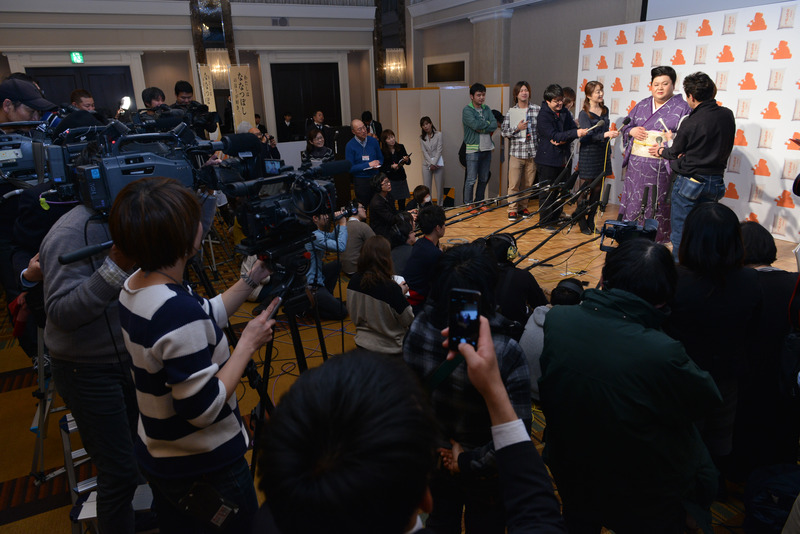
Stepping back to view the scene, you see reporters packed in this tightly. This coordination skill can impact the client's reputation depending on the situation, so you can't afford to let your guard down.
Evolving Presentation Styles
Finally, a look at the latest trends. Previously, we've invited bloggers to presentations, asking them to share their perspectives on the announcements. However, since their interests differ from traditional media, Q&A sessions often led to questions from a completely different layer, causing confusion. As a result, recent approaches often limit who can ask questions.
What we're seeing more often now is the press conference format where everyday consumers participate simultaneously. This differs from inviting media to cover events aimed at consumers. The purpose of this approach is to showcase consumers who value the "new values presented by the company," thereby fostering media understanding.
Even the most perceptive media professionals can't keep up with every trend or phenomenon, especially when it involves entirely new concepts. Yet, these products and services do exist. Some consumers are quick to evaluate them. By showing the media that many such consumers exist and directly demonstrating their enjoyment, the aim is to make the phenomenon more visible. Indeed, hearing real consumer voices is far more convincing than a one-sided presentation.
Recent launch events take on diverse forms and incorporate various innovations. We PR professionals constantly monitor these trends, experiment with them, and accumulate experience. Even the basic press conference continues to evolve daily, brimming with inspiration. To those who think PR is just about the fundamentals—why not join us in exploring the latest trends together?
Was this article helpful?
Share this article


Newsletter registration is here
We select and publish important news every day
For inquiries about this article
Back Numbers
Author
Inokuchi Tadashi
PR Consulting Dentsu Inc.
Executive Officer
Chief PR Planner
Shinmeikai "Strategic PR"Long time no see! CRAFTPRMeasuring PR Effectiveness: Supporting Management with Data-Driven InsightsNow is the time to reexamine the essence of PR / Its futureThe Future of Corporate Museums as PR AssetsBeyond Conference Report【Special Discussion】Public Relations Enters a New Era: Proposals for PR 4.0